
En bref :
- Registering a yacht internationally requires meticulous preparation, documentation, and strategic flag selection to avoid delays and costs.
- The process involves choosing the right flag, gathering essential documents, scheduling inspections, and ensuring ongoing compliance.
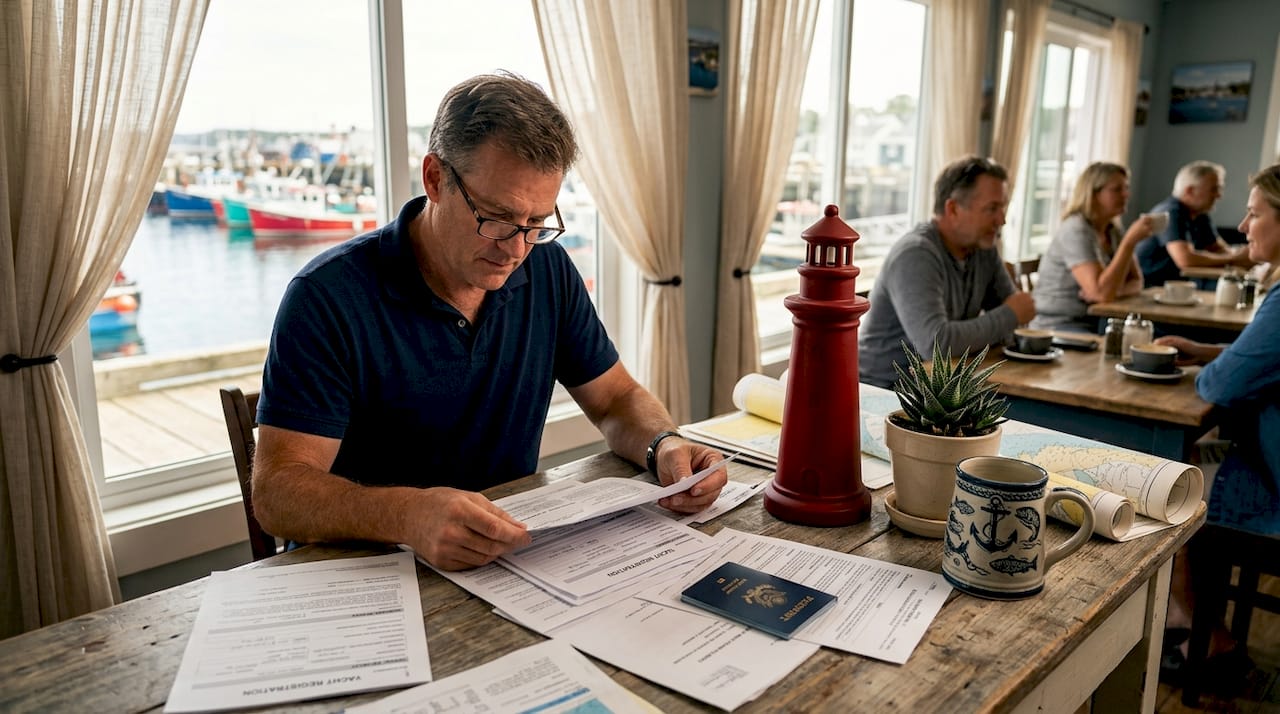
Registering a yacht internationally is one of the most document-heavy, deadline-sensitive tasks an owner can face. Miss a submission window, pick the wrong flag state, or show up to a port with incomplete paperwork, and you could be looking at weeks of delays and yard fees that pile up fast. Understanding the international yacht registration steps before you start saves money, protects your operating schedule, and ensures your vessel is legally recognized in every port you enter. This guide walks you through the entire process, from initial document prep to ongoing compliance, with the specific detail that actually matters.
Table des matières
- Understanding international yacht registration requirements
- Preparing for registration: key documents and flag state selection
- Step-by-step execution of the yacht registration process
- Verifying registration and maintaining compliance
- The overlooked challenges and strategic choices in yacht registration
- Streamline your international yacht registration with Vessel Flag services
- Foire aux questions
Understanding international yacht registration requirements
Before you submit a single form, you need to understand what registration actually does. International yacht registration grants your vessel nationality and legal status for navigation under maritime law, which means border authorities, port officials, and insurers treat your yacht as a recognized vessel from a specific country. Without it, you cannot legally sail in international waters, enter most commercial ports, or obtain proper insurance coverage.
The choice of flag state, meaning the country whose laws govern your vessel, is one of the most consequential decisions in the entire registration workflow. It determines which courts have jurisdiction over disputes, what nationality your crew must hold, and whether charter companies or commercial partners will work with you. International yacht registration gives vessels nationality and legal status for navigation under maritime law, but the practical implications vary widely between open registries like Panama and Liberia versus closed or exclusive registries like the UK Part 1 or Malta.
Core documents you will need across virtually every flag state include:
- Proof of ownership (bill of sale, purchase agreement, or title deed)
- Builder’s certificate (for new builds) or deletion certificate from previous registry
- Tonnage certificate measuring gross and net tonnage
- Radio license application for MMSI and AIS assignment
- Valid insurance documentation
- Crew list with certifications depending on vessel size and use
- Completed registration application forms specific to the flag state
Many flag states also require appointing a local registered agent or representative who acts as the liaison with maritime authorities. This is not optional bureaucracy. That agent is your point of contact for annual renewals, inspection scheduling, and any regulatory changes that affect your vessel.
Pro Tip: Review the global compliance steps for your shortlisted flag states before collecting documents. Requirements vary significantly, and gathering the wrong paperwork wastes weeks.
Preparing for registration: key documents and flag state selection
Document preparation is where most first-time registrants lose time. The process looks straightforward until you discover that your builder’s certificate needs notarization, or that your previous flag state requires a deletion application before the new registry will accept your submission. Getting ahead of these dependencies early is what separates a two-month registration from a six-month one.
Follow this sequence when preparing for registration:
- Identify your yacht’s intended use: private cruising, commercial charter, or corporate ownership. This directly affects which flags are available and what safety certifications you will need.
- Check vessel age limits for your preferred flag state before investing in document collection.
- Request the deletion certificate from your current registry if transferring flags. This process alone can take 2 to 4 weeks.
- Gather proof of ownership, builder’s certificate or previous registration documents, tonnage certificate, insurance binder, and any survey reports.
- Compile crew certification records if required for your vessel’s class or intended use.
- Confirm whether a physical survey or inspection is required pre-registration and schedule it early.
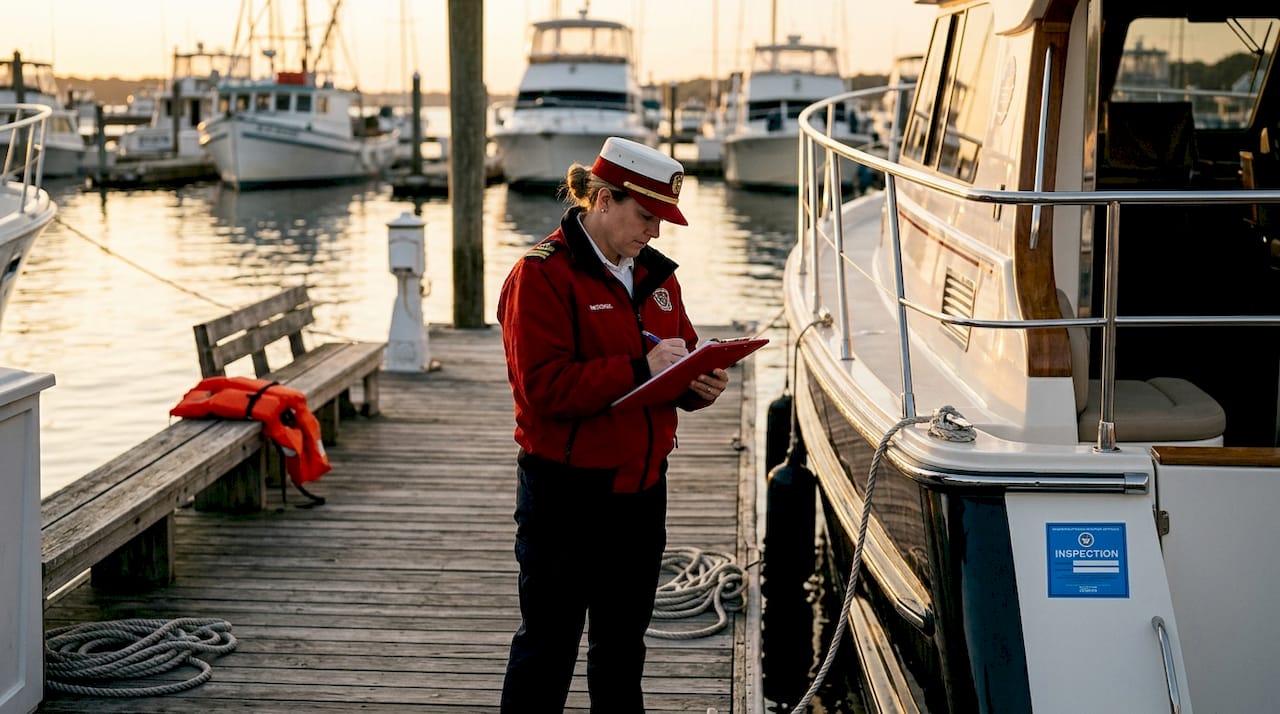
Age restrictions are a real consideration, not a footnote. Transport Malta rejects vessels over 20 years old for registration to modernize and increase safety standards, which catches many buyers off guard when purchasing older yachts with plans to register under the Malta flag. If your vessel is approaching that threshold, you need to make this decision before purchase, not after.
For a comparative overview of popular flag states, here is a practical reference:
| Flag state | Vessel age limit | Approximate fees | Typical timeline | Key notes |
|---|---|---|---|---|
| Malte | 20 years max | €1,500 to €4,000 | 4 to 10 weeks | Strict safety standards |
| Îles Marshall | No formal limit | $2,000 to $4,000 | 4 to 8 weeks | Strong commercial acceptance |
| Royaume-Uni, 1re partie | No formal limit | £300 to £800 | 6 to 12 weeks | Recognized globally |
| Panama | No formal limit | $500 to $1,500 | 2 to 4 weeks | Open registry, fast process |
| Saint-Marin | Varies by vessel | Contact pour un devis | 4 to 8 weeks | Landlocked flag, widely used |
Detailed guidance on Enregistrement d'un yacht à Malte and the Marshall Islands registration guide will help you compare requirements side by side if either flag is on your shortlist.
Pro Tip: Engage a maritime attorney or registration agent before finalizing your flag state. Their knowledge of current inspection fees, best registration practices, and processing backlogs can save you from committing to a registry that adds months to your timeline.
Step-by-step execution of the yacht registration process
Once you have chosen your flag state and gathered your documents, execution is about sequencing correctly and not missing any procedural triggers that restart the clock.
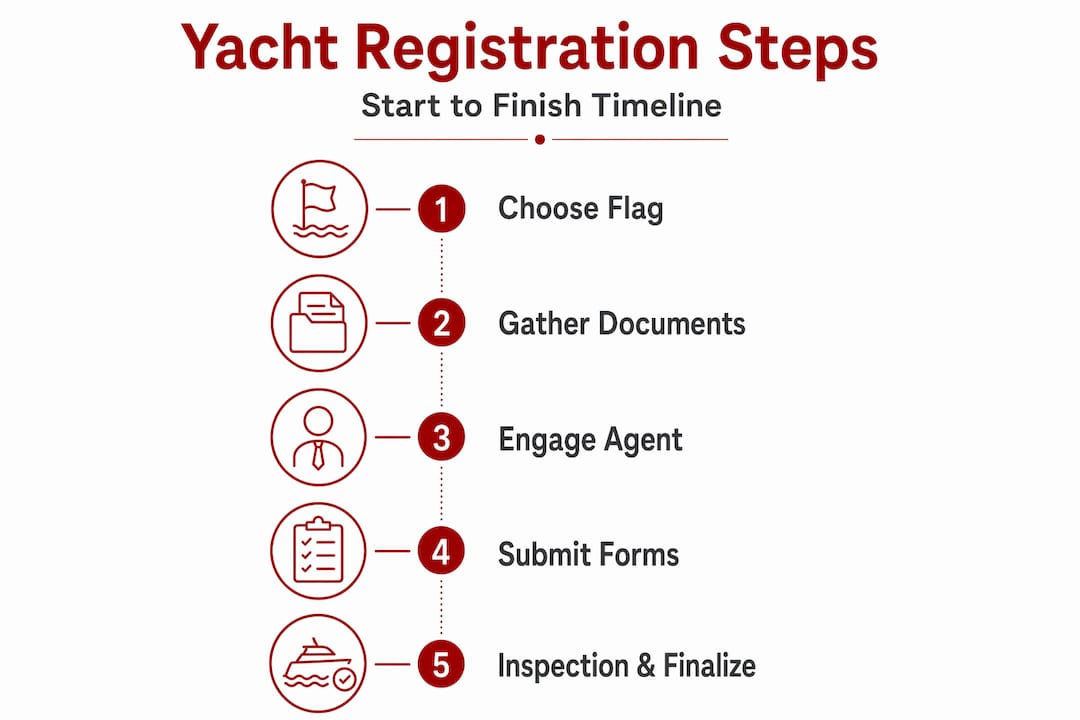
The registration process follows this numbered sequence:
- Engage a maritime attorney or registration agent. For complex flags with local representative requirements, this is mandatory. For simpler registries, it still accelerates the process significantly.
- Prepare and submit the registration application with all supporting documents, paying the required application fees upfront. Incomplete submissions are the most common cause of rejection and delay.
- Await document review. Flag state authorities will verify ownership chain, check for existing encumbrances or liens, and confirm compliance with their specific requirements. This stage typically takes 2 to 4 weeks.
- Schedule the physical inspection with an approved marine surveyor. This is the single largest variable in the entire process.
- Address any inspection deficiencies. Fire suppression systems, life-saving equipment, and navigation instruments are common areas requiring remediation. Fix them immediately to avoid reinspection delays.
- Receive your provisional certificate. This allows legal operation of your vessel for 3 to 6 months while final processing completes.
- Receive your permanent certificate once all documentation and inspection results are verified and approved.
- Begin ongoing compliance. Annual inspections, documentation renewals, and crew certification maintenance start from the moment your permanent certificate is issued.
Le registration timeline from start to finish is not always predictable. The international superyacht registration process typically takes 2 to 6 months, with physical inspections creating the largest timeline variability. Physical inspections can take 1 to 3 months depending on surveyor availability and your vessel’s location.
For cost benchmarking, Enregistrement des Îles Marshall involves attorney fees around $2,000 to $4,000 and a 4 to 8 week process including document prep and certificate issuance, making it a frequently chosen option for commercially operated yachts.
| Registration step | Typical duration | Responsible party |
|---|---|---|
| Agent engagement and document collection | 1 to 3 weeks | Owner and agent |
| Application submission and fee payment | 1 to 2 days | Agent |
| Document review and ownership verification | 2 to 4 weeks | Flag state authority |
| Physical inspection scheduling | 2 to 6 weeks | Surveyor and owner |
| Deficiency remediation (if needed) | 1 to 8 weeks | Owner and shipyard |
| Provisional certificate issuance | 1 to 2 weeks post-inspection | Flag state authority |
| Permanent certificate issuance | 4 to 12 weeks total | Flag state authority |
Pro Tip: Initiate registration immediately after signing the purchase agreement, not after the closing date. Waiting until the deal closes can cost you weeks of preparation time and result in costly yard storage fees while you wait for certification.
Verifying registration and maintaining compliance
Registration does not end at certificate issuance. It begins a cycle of annual obligations that, if neglected, can result in your vessel being detained at port or your operating privileges being suspended.
Key compliance activities to maintain after registration:
- Confirm registration validity directly with the flag state authority at least once per year. Do not assume renewals process automatically.
- Complete annual safety inspections covering fire suppression, life-saving appliances, navigation equipment, and structural condition.
- Keep all crew certifications current and aligned with your vessel’s class and commercial or private use designation.
- Renew insurance coverage on schedule and ensure your policy meets flag state minimums.
- Monitor flag state communications for regulatory changes that may affect equipment standards or documentation requirements.
- Address any inspection deficiencies or compliance notices within the required response window to avoid escalation.
Ongoing compliance includes annual safety inspections, crew-certification maintenance, insurance renewals, and regular reporting to the flag state authority. This is not discretionary. It is a legal obligation that runs for the entire life of your registration.
Reviewing your registration validity process annually is worth building into your calendar as a recurring task, not something you handle reactively when a renewal notice arrives late.
Warning: Failure to maintain registration compliance risks vessel detention at port, suspension of your operating license, and in serious cases, forced cancellation of your registration. Recovery from a suspension is significantly more expensive and time-consuming than preventing one.
Pro Tip: Keep your permanent certificate displayed aboard at all times. Port authorities in many jurisdictions require it for clearance, and not having it physically present can cause delays even if your registration is fully valid in the system.
The overlooked challenges and strategic choices in yacht registration
Most guides on registering a yacht abroad focus on the paperwork and stop there. What they miss is that the biggest costs and delays rarely come from document prep. They come from decisions made before a single form is filled out.
Physical inspection timing is the variable that most owners underestimate. Physical inspections cause the largest variable in registration timelines, and deficiencies discovered during inspection can extend delays significantly. If your vessel is berthed in a location with limited approved surveyors, you may wait two months just to schedule the initial visit. Factor geographic surveyor availability into your flag state selection, not just fees and processing speed.
Flag state selection also carries long-term operational consequences that go beyond the initial registration. Choosing a flag state strategically affects legal jurisdiction, crewing flexibility, and commercial acceptance. An open registry might cost less and process faster, but if your yacht operates commercially in European waters, a stricter flag like Malta or UK Part 1 may be required by charter brokers and marinas to even dock or list your vessel.
Corporate ownership structures add another layer of complexity that many owners discover too late. If your yacht is owned by an LLC, a BVI company, or another corporate entity, the document trail extends to include corporate registration certificates, director lists, and shareholder structures. These take time to certify and apostille. Engaging a maritime attorney who handles registration best practices with corporate ownership from day one prevents a last-minute scramble.
The financial math on delayed registration is stark. Yard storage at a major marina can run $1,000 to $3,000 per week for a mid-size yacht. If a mismanaged registration drags two months past your planned cruising date, that is a five-figure cost from a process that could have been started earlier and managed better.
“Start early and choose your flag state not just on cost, but on your yacht’s intended use and compliance demands.”
Streamline your international yacht registration with Vessel Flag services
Navigating the international yacht registration steps alone is possible, but it is also the slowest and most error-prone way to do it. Vessel Flag provides dedicated registration support across major flag states worldwide, including Malta, Marshall Islands, San Marino, Palau, and more.
Our team handles document preparation, compliance verification, and direct liaison with maritime authorities so you spend time on the water instead of chasing paperwork. Whether you need guidance through the complete yacht registration guide process or specific support with Malta yacht registration requirements or Marshall Islands registration workflows, we cover every step with precision. We also provide MMSI radio licensing, vessel insurance coordination, and ongoing compliance monitoring as part of our service offering. Bring us in at the purchase stage and avoid the costly gaps that come from starting too late.
Foire aux questions
How long does the international yacht registration process typically take?
The registration process typically takes 2 to 6 months, with physical inspections alone requiring 1 to 3 months depending on surveyor availability and your vessel’s location.
What age restrictions apply when registering a yacht under the Malta flag?
Transport Malta no longer accepts vessels over 20 years old for Malta flag registration, a policy introduced to raise safety and modernization standards across the fleet.
Can I operate my yacht immediately after submitting a registration application?
Provisional certificates allow operation for 3 to 6 months during final processing, but your permanent certificate must be displayed aboard for port clearances once issued.
Why is selecting the right flag state important for yacht operations?
Flag state choice affects legal jurisdiction, crewing rules, commercial acceptance, and compliance requirements, all of which directly shape where and how you can operate your vessel.
What ongoing compliance is required after registering a yacht internationally?
Ongoing compliance includes annual safety inspections, crew certification maintenance, insurance renewals, and regular reporting to your flag state authority throughout the life of your registration.