

Preparing your paperwork? Use our full yacht registration documents checklist – Vessel Flag prepares all documents for you.
Securing the right registration and documentation for a luxury yacht often means balancing national requirements, tax obligations, and operational flexibility across different jurisdictions. Yacht owners and brokers navigating this process face legal complexities that shape a vessel’s global status and financial opportunities. This guide clarifies the crucial distinctions between yacht registration and vessel documentation, helping you choose frameworks that enhance compliance, safeguard your investment, and support seamless international cruising.
Table of Contents
- Defining Yacht Registration and Documentation
- Global Variations: National vs International Flags
- Legal Requirements and Flag State Frameworks
- Key Benefits, Risks, and Choosing the Right Option
- Costs, Compliance, and Common Mistakes
Key Takeaways
| Point | Details |
|---|---|
| Understanding Registration vs. Documentation | Yacht registration is a state-level process, while vessel documentation is recognized federally and internationally. These processes serve different legal purposes and should be clearly differentiated. |
| Flag State Selection is Critical | Choosing between national and international flags impacts regulatory compliance, tax obligations, and operational flexibility. Owners must consider strategic advantages when selecting a flag state. |
| Compliance is Essential | Yacht owners must adhere to specific legal requirements and maintain meticulous documentation to prevent costly mistakes and ensure operational legitimacy. |
| Costs Involve More Than Fees | Beyond initial application costs, ongoing compliance expenses become significant. Owners should anticipate renewal fees, safety certifications, and potential legal consultations as part of budget planning. |
Defining Yacht Registration and Documentation
Yacht registration and documentation are critical processes that establish a vessel’s legal identity and operational parameters within international maritime frameworks. Vessel documentation serves as a formal federal recognition that confirms a yacht’s nationality, ownership status, and international legitimacy.
The fundamental differences between yacht registration and documentation emerge from their distinct legal and administrative scopes:
- Yacht Registration: A state-level process typically managed by local maritime authorities
- Vessel Documentation: A federal-level registration recognized internationally
- Key Purpose: Establishing legal jurisdiction and operational permissions
Registration fundamentally involves enrolling a yacht with a local maritime authority, which assigns the vessel to a specific legal jurisdiction. This process attaches the yacht to a country’s flag and governs its operation under specific national regulations regarding safety, taxation, and charter permissions.
Documentation, by contrast, represents a more comprehensive national registration process. When a yacht is documented, it receives official identifying marks including an authorized name, designated hailing port, and a unique official number. This federal recognition provides stronger credentials for international travel, financing opportunities, and theft prevention.
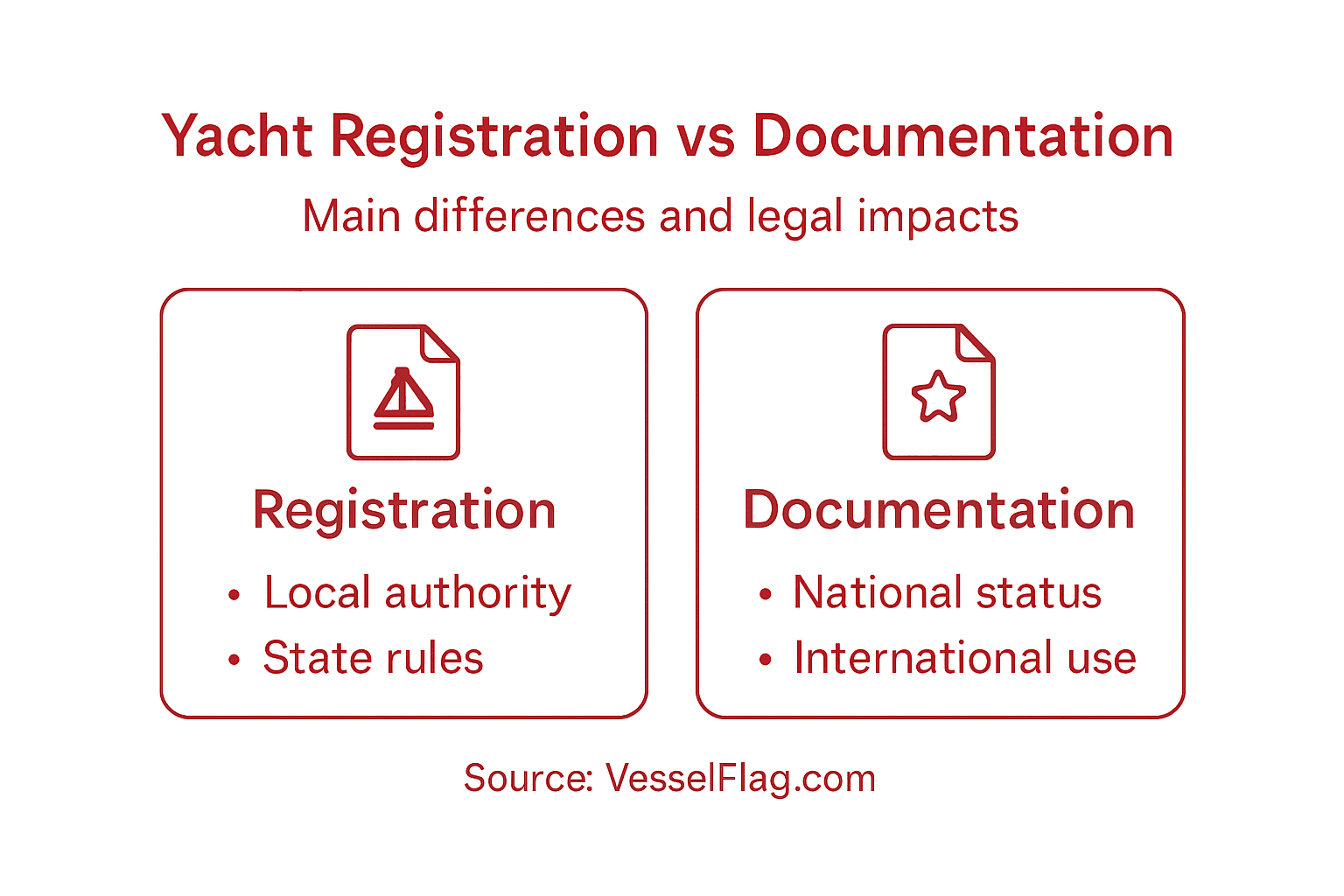
Here’s a concise comparison of yacht registration and vessel documentation features:
| Aspect | Yacht Registration | Vessel Documentation |
|---|---|---|
| Authority Level | State/local government | Federal/national government |
| International Validity | Limited | Broad and globally accepted |
| Typical Vessel Types | Recreational, smaller yachts | Larger, commercial vessels |
| Operational Benefits | Local flexibility | Enhanced travel, financing |
| Risk Protection | Basic | Advanced legal safeguards |
This summary table helps clarify the business impact of each process.
International yacht owners must understand that registration and documentation are not interchangeable processes, but complementary legal mechanisms for establishing a vessel’s legal standing.
Pro tip: Before finalizing your yacht’s registration, consult maritime legal experts to ensure complete compliance with both federal and local regulations.
Global Variations: National vs International Flags
The world of yacht registration presents complex legal landscapes where the choice of flag dramatically impacts a vessel’s operational capabilities. Vessel registration systems vary significantly across different global jurisdictions, creating nuanced challenges for yacht owners seeking optimal legal frameworks.
National flags and international flags represent two distinct approaches to maritime registration:
National Flags: Issued by the yacht’s home country
- Strict regulatory compliance
- Direct governmental oversight
- Potential geographic limitations
International/Offshore Flags: Issued by alternative jurisdictions
- More flexible regulatory environments
- Potential tax advantages
- Broader cruising permissions
International flags, such as those from the Marshall Islands or Cayman Islands, offer yacht owners strategic advantages by providing simplified registration procedures and more permissive operational standards. These offshore registries often prioritize commercial flexibility over stringent national restrictions, making them attractive for vessels intended for extensive international travel.
The selection of a flag state involves carefully weighing multiple strategic considerations. Owners must evaluate factors like tax implications, safety regulations, crew requirements, and potential cruising restrictions. Some international registries provide significant economic incentives, such as lower taxation rates and reduced bureaucratic complexity, which can make them particularly appealing for commercial and private yacht operations.
Yacht owners must recognize that flag selection is not merely an administrative detail, but a critical strategic decision with profound legal and financial implications.
Pro tip: Consult maritime legal specialists who can provide personalized guidance on selecting the most advantageous flag jurisdiction for your specific yacht’s operational profile.
Legal Requirements and Flag State Frameworks
Flag states play a critical role in establishing the legal foundation for yacht operations, implementing comprehensive ship registration and documentation requirements that ensure maritime safety and regulatory compliance. These jurisdictional frameworks define the operational parameters for vessels across international waters.
Key legal requirements for yacht registration typically encompass multiple critical dimensions:
Ownership Documentation
- Proof of vessel ownership
- Nationality verification
- Title transfer records
Safety Compliance
- International maritime safety standards
- Regular vessel inspections
- Crew certification requirements
Operational Regulations
- Environmental protection protocols
- Taxation obligations
- International maritime law adherence
The flag state assumes comprehensive responsibility for monitoring and enforcing these legal frameworks. This includes conducting safety inspections, verifying crew qualifications, and ensuring the vessel meets international maritime conventions such as SOLAS (Safety of Life at Sea) and MARPOL (Marine Pollution) treaties.
Non-compliance with flag state regulations can result in significant legal consequences. Yacht owners may face penalties ranging from financial sanctions to port detentions, potentially compromising their vessel’s operational status. The complexity of these legal requirements underscores the importance of selecting a flag state that aligns with a yacht’s specific operational profile and strategic objectives.
Yacht registration is not merely an administrative process, but a critical legal commitment that defines a vessel’s global maritime identity and operational permissions.
Pro tip: Engage maritime legal specialists to conduct a comprehensive review of potential flag state requirements before finalizing your yacht’s registration.

Key Benefits, Risks, and Choosing the Right Option
Navigating the complex landscape of yacht registration requires a strategic approach to understanding vessel documentation options. Each registration method presents unique advantages and potential challenges that yacht owners must carefully evaluate.
Key considerations for selecting the appropriate registration approach include:
Documentation Benefits
- International legal recognition
- Enhanced financing opportunities
- Clear ownership verification
- Improved theft recovery prospects
Registration Considerations
- Lower administrative costs
- Simpler compliance requirements
- More accessible for smaller vessels
- Local operational flexibility
Comparative Risk Assessment:
- Evaluate vessel size and intended use
- Analyze cruising locations and international travel plans
- Consider tax implications
- Review financing requirements
- Assess long-term operational goals
The selection process demands a nuanced understanding of how different registration approaches impact vessel ownership. Documentation typically provides more robust legal protections and international recognition, particularly for larger vessels engaged in commercial or extensive maritime operations. Conversely, traditional registration might offer more straightforward and cost-effective solutions for recreational yacht owners with limited international travel plans.
Yacht registration is a strategic decision that extends far beyond paperwork, directly influencing your vessel’s legal standing, operational capabilities, and financial opportunities.
Pro tip: Consult maritime legal experts who specialize in international vessel registration to develop a personalized strategy tailored to your specific yacht ownership objectives.
Costs, Compliance, and Common Mistakes
Understanding the financial and legal intricacies of yacht registration requires careful navigation through vessel documentation complexities. Yacht owners must be prepared for a multifaceted landscape of expenses and regulatory requirements.
Typical Cost Components for Yacht Registration:
Initial Application Fees
- Government processing charges
- Legal documentation preparation
- Administrative processing costs
Ongoing Compliance Expenses
- Annual renewal fees
- Safety equipment certification
- Mandatory inspection charges
- Tax filing requirements
Critical Compliance Mistakes to Avoid:
- Missed documentation renewal deadlines
- Incomplete ownership information
- Overlooking flag-state specific regulations
- Neglecting mandatory safety inspections
- Failing to update maritime records
The financial implications of yacht registration extend beyond simple fee structures. Yacht owners must budget for comprehensive expenses including government fees, survey costs, legal consultations, and potential tax obligations. Each jurisdiction presents unique financial and regulatory challenges that demand meticulous attention to detail and proactive management.
For quick reference, here’s a summary of typical cost and compliance mistakes for yacht owners:
| Expense Type | Approximate Impact | Compliance Mistake Example |
|---|---|---|
| Application Fees | Moderate, one-time | Incorrect document submissions |
| Renewal Fees | Recurring, ongoing | Missed annual renewal deadlines |
| Safety Certifications | Essential for operation | Skipping mandatory inspections |
| Legal Consultations | Can prevent major issues | Failing to verify regulations |
This table offers a structured overview for better financial planning.
Successful yacht registration is not about minimizing costs, but strategically investing in comprehensive legal compliance and operational flexibility.
Pro tip: Maintain a dedicated compliance calendar with all registration, renewal, and inspection deadlines to prevent costly administrative oversights.
Simplify Your Yacht Registration and Documentation Process Today
Navigating the complex legal differences between yacht registration and documentation can feel overwhelming. This article highlights key challenges such as understanding flag state frameworks, international compliance, and operational benefits. If you want to avoid costly mistakes and ensure your yacht’s legal standing worldwide, expert guidance is essential. With the right support, you can secure smooth registration under the ideal flag jurisdiction while benefiting from faster processing and full compliance.
Discover how VesselFlag.com removes the hassle from vessel registration by offering fast, transparent services for multiple international flags. Whether you are looking for comprehensive documentation or state-level registration, our platform covers it all. Explore our Flag Registration services, learn from detailed resources on Uncategorized – Vessel Flag, and get personalized assistance at VesselFlag.com. Act now to protect your yacht’s legal identity and operational freedom with expert maritime registration solutions designed specifically for owners like you.
Frequently Asked Questions
What is the difference between yacht registration and vessel documentation?
Yacht registration is a state-level process that assigns a vessel to a specific legal jurisdiction, while vessel documentation is a federal recognition that provides international legitimacy and stronger credentials for travel and financing.
What are the key benefits of yacht documentation compared to registration?
Vessel documentation offers international legal recognition, enhanced financing opportunities, and improved theft recovery prospects, making it more suitable for larger and commercial vessels engaged in international travel.
What are the potential risks of not complying with flag state regulations?
Non-compliance can lead to financial penalties, port detentions, and could compromise your vessel’s operational status, emphasizing the importance of understanding and adhering to legal frameworks.
How can I determine the best flag state for my yacht?
Assess factors such as tax implications, safety regulations, crew requirements, and cruising permissions associated with different flag states to determine the most advantageous option for your yacht’s operational profile.
Recommended
- What Is Yacht Registration Tax – Costs and Global Rules – Vessel Flag
- Boat Registration Process Explained: Legal Impact Overseas
- How to Register a Yacht: Complete Guide for Owners
- 7 Yacht Registration Best Practices for Global Compliance
- Example of Bill of Lading – Key Elements and Legal Impact – Worldwide Express, Inc.