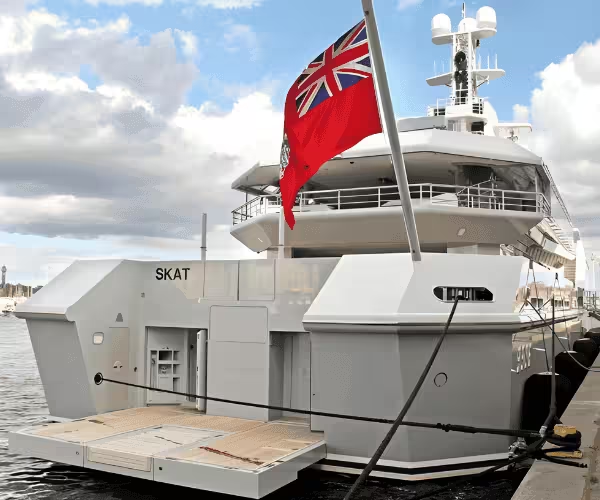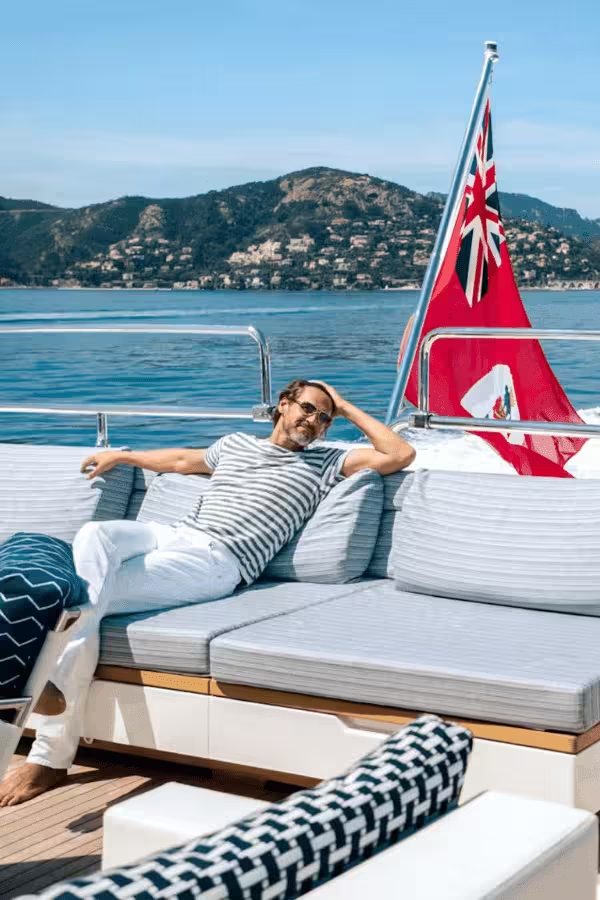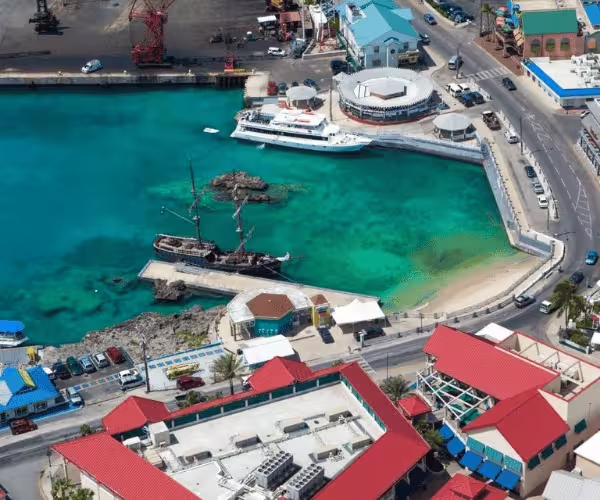
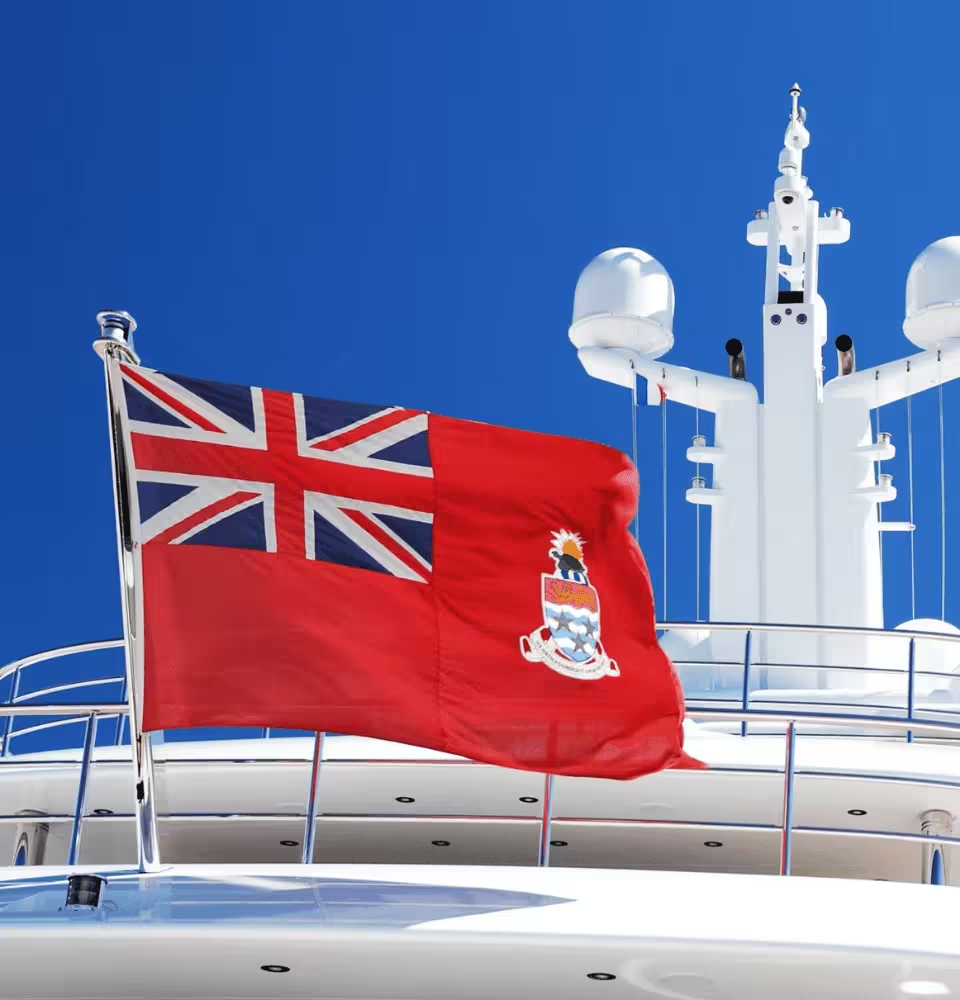
Cayman Islands Yacht Registration | British Red Ensign Flag
Register your yacht under the Cayman Islands flag – a British Red Ensign registry recognised worldwide
Registry
British Category 1 (Red Ensign Group)
Survey Obligation
Certificate of survey and tonnage certificate
Registration types
Full, interim, term (up to 90 days), under construction
Recognition
Worldwide
Local representative
Required if not resident – we arrange it
How Cayman registration is priced
How Cayman registration is priced
VesselFlag service fee: €450, plus the official Cayman Islands registry fees. The registry (MACI) sets them in US dollars in Shipping Notice CISN 04/2026 (Rev 1.1, January 2026). The amounts below are converted to euros at the ECB rate of 1.1081 USD per EUR (12 November 2026) and are approximate; the final euro amount follows the exchange rate when you pay. The main fees for a yacht are:
- Registration of a vessel up to 400 GT: about €1,580 (400 GT and above: about €2,030)
- Optional 3-year term registration for pleasure yachts under 24 m, which includes the initial registration and three years of the annual tonnage fee: about €2,480; renewal for a further 3 years: about €1,350
- Annual tonnage fee, minimum for vessels up to 400 GT: about €540 a year
- Tonnage survey and certificate for vessels under 24 m, where required: about €510
- Vessel name reservation (valid 12 months): about €630
- Certificate of Registry or transcript: about €270
- Registration of a transfer of ownership: about €1,350
Send us the yacht’s length, tonnage and current flag, and we confirm the total, including registry fees and the representative person, before you commit.
Up to 400 GT – Annual
Approx. € at ECB rate · our service fee €450 added- Registration, transfer or deletion up to 400 GT: about €1,580
- Annual tonnage fee: from about €540 a year
- Tonnage survey under 24 m, where required: about €510
- + VesselFlag service fee: €450
- Local representative for non-resident owners arranged by us, cost confirmed in your quote
Under 24 m – 3-year term
Approx. € at ECB rate · our service fee €450 added- Initial registration plus 3 years of annual tonnage fee: about €2,480 (pleasure yachts under 24 m)
- Renewal for a further 3 years: about €1,350
- Tonnage survey under 24 m, where required: about €510
- + VesselFlag service fee: €450
- Local representative for non-resident owners arranged by us, cost confirmed in your quote
400 GT and above
Approx. € at ECB rate · our service fee €450 added- Registration, transfer or deletion, 400 GT and above: about €2,030
- Annual tonnage fee: minimum about €720 a year
- + VesselFlag service fee: €450
- Local representative for non-resident owners arranged by us, cost confirmed in your quote
Name and changes
Approx. € at ECB rate · optional services- Name reservation, valid 12 months: about €630
- Certificate of Registry or transcript: about €270
- Registration of a transfer of ownership: about €1,350
- Change to a vessel’s details: about €630 per change
- Mortgage registration: about €990
Flexible registration types
Full, interim, term (up to 90 days), under-construction and demise charter registration are all available.
British Red Ensign status
A Category 1 British registry backed by the reputation of the Red Ensign Group.
Private or commercial use
Pleasure yachts in private use, or yachts engaged in trade under the Yacht Engaged in Trade (YET) rules.
Mortgage-friendly
Marine mortgages can be registered on the Cayman register – valued by lenders for financed yachts.
Experienced registry
Clear guidance notes, official checklists and online vessel name reservation.
Experienced registry
Clear guidance notes, official checklists and online vessel name reservation.
Why choose the Cayman Islands flag?
The Cayman Islands Shipping Registry, run by the Maritime Authority of the Cayman Islands (MACI), is a British Category 1 registry and a member of the Red Ensign Group. A Cayman-flagged yacht receives a Certificate of British Registry, which carries the reputation of the British flag in ports, with insurers and with lenders.
The registry is a popular choice for large private and charter yachts. Pleasure yachts in private use follow a lighter set of minimum requirements, while yachts engaged in trade can be registered under the Yacht Engaged in Trade (YET) rules. Marine mortgages can be registered, which is important for financed yachts.
Cayman Islands Yacht Registration
Register your yacht under the Cayman Islands flag
VesselFlag prepares your Cayman Islands application, checks the vessel name with the registry, coordinates the survey and tonnage measurement, and arranges the local representative that non-resident owners need. We work directly with the Cayman Islands Shipping Registry and handle new registrations, transfers in from other flags, and deletions or transfers out of Cayman – for example to UK Part 1.
Who can own a Cayman-flagged yacht?
A Cayman yacht must be majority-owned by a qualified owner:
- Individuals who are nationals or citizens of an approved country (see the registry’s Guidance Note 03/2024, section 2.2).
- Companies and shipping entities incorporated, established or registered in an approved country, including Cayman companies and partnerships.
- Foreign companies registered in Cayman as a foreign company with a place of business on the islands.
Owners who do not qualify may still hold up to 31 of the 64 shares, as long as a qualified owner holds the majority. If the owner is not resident or incorporated in the Cayman Islands, a resident representative person must be appointed before the application is filed – VesselFlag arranges this for you.
How VesselFlag helps
✓ Eligibility check of your ownership structure before you start
✓ Vessel name check and reservation with the registry
✓ Preparation of all forms (CISR 854, 855, 856) and supporting documents
✓ Coordination of survey, tonnage measurement and radio licence
✓ Local representative arrangement for non-resident owners
✓ Clear pricing: €450 service fee + official registry fees
Cayman Islands registration step by step
- Qualifying vessel and name – we confirm the yacht qualifies and that the name is available with the registry.
- Qualifying ownership – we check that the owner is eligible and holds legal title, with no conditions preventing registration.
- Local representative – a resident representative person is appointed for non-resident owners.
- Documents and fees – forms, supporting documents and registry fees are submitted; requirements depend on the vessel’s type, size and use.
- Certificate of British Registry – the registry assigns an official number and issues the certificate.
- Carving and marking – within 21 days, the yacht is marked with its port of registry, official number and tonnage.
If the certificate of survey is not yet available, a term registration valid for up to 90 days can bridge the gap.
Documents usually needed for Cayman registration
- Proof of ownership: bill of sale or builder’s certificate
- Certificate of survey
- International tonnage certificate
- Deletion certificate or closed transcript, if the yacht was registered elsewhere
- For companies: certificate of incorporation and certificate of good standing
- Appointment of an authorised / representative person (form CISR 855)
- Vessel registration application (form CISR 856) and name reservation (CISR 854)
- For private yachts: declaration that the yacht is not engaged in trade
The exact list depends on the yacht and the owner. We send you a personalised checklist after a short review.
Why Cayman Islands Flag?
- Member of the Red Ensign Group – a British Category 1 registry.
- Certificate of British Registry recognised worldwide.
- Full, interim, term and under-construction registration.
- Private yachts and yachts engaged in trade (YET).
- Marine mortgages can be registered.
- Local representative arranged for non-resident owners.
- Transfers in from other flags and deletions handled.
- Service fee €450 + official registry fees.
FREQUENTLY ASKED QUESTIONS
Who can register a yacht in the Cayman Islands?
The yacht must be majority-owned by a qualified owner: individuals who are nationals of an approved country, or companies and shipping entities established in an approved country (including Cayman companies and foreign companies registered in Cayman with a place of business there). Non-qualified owners can hold up to 31 of the 64 shares.
Do I need a local representative in the Cayman Islands?
Yes, if the owner is not resident or incorporated in the Cayman Islands. A resident representative person must be appointed before the registration application is submitted. VesselFlag arranges this as part of the service.
Can I register before the survey is finished?
Yes. If the registry does not yet have the certificate of survey, a term registration can be issued, valid for up to 90 days. The certificate of survey must be sent within that period to complete the full registration.
How much does Cayman Islands yacht registration cost?
VesselFlag’s service fee for Cayman Islands registration is €450. On top of that come the official registry fees, which depend on the yacht’s tonnage and the type of registration, and the fee for the local representative person if you are not resident. We confirm the full amount before you start.
How much does yacht flag registration cost?
It depends on the flag, the yacht’s size and its use. For the Cayman Islands, our service fee is €450 plus the official registry fees. Compare all flags.
How long does yacht flag registration take?
Yacht flag registration time varies depending on the country of flag chosen and the application process. In some cases it may take a few days, in other cases it may take several months.
What are the documents required for yacht flag registration?
Required documents may vary by country, but generally an identity document that meets the legal requirements of the country in which the yacht will be registered, such as technical documentation, the yacht owner’s identity document and proof of payment are required.
What should be taken into consideration after yacht flag registration?
Once the yacht flag is registered, it is important to update it regularly in certain processes and operate it in accordance with the legal requirements of the country in which the yacht is registered. In addition, international maritime rules and the regulations of the country where the yacht is registered must be followed in the navigation and maintenance of the yacht.