

Most yacht owners assume registering in their home country is the obvious choice. That belief costs them thousands in taxes and limits their operational flexibility. Yacht registration is a strategic legal decision that determines your vessel’s nationality, tax obligations, and international rights. This guide walks you through choosing the right flag state, meeting compliance requirements, understanding costs, and completing registration efficiently in 2026.
Table des matières
- What Is Yacht Registration And Why It Matters
- How To Choose The Right International Flag For Your Yacht
- Legal Compliance And Documentation Requirements
- Costs Associated With Yacht Registration
- Comparison Of Major International Yacht Flag States And Benefits
- Additional Services Related To Yacht Registration
- Common Misconceptions About Yacht Registration
- Practical Steps To Register Your Yacht Successfully
- Take The Next Step With Vessel Flag
Key takeaways
| Point | Détails |
|---|---|
| Legal nationality is essential | Yacht registration confers nationality required for international navigation and port access under maritime law. |
| Flag choice impacts operations | Your flag state determines tax exposure, compliance obligations, and legal protections for your vessel. |
| Documentation drives success | Ownership proof, build certificates, tonnage records, and AML checks are mandatory for all registrations. |
| Costs vary significantly | Registration fees range from $1,000 to $10,000 depending on flag state, vessel size, and services. |
| Strategic planning saves time | Following structured steps and choosing faster registries reduces processing from weeks to days. |
What is yacht registration and why it matters
Yacht registration is the legal process that assigns nationality to your vessel under a specific flag state’s jurisdiction. This isn’t paperwork for paperwork’s sake. International maritime law requires every vessel operating beyond territorial waters to carry the nationality of a recognized state.
Without proper registration, your yacht cannot legally enter foreign ports, obtain insurance, or claim protection under international treaties. The nationality your vessel receives under UNCLOS determines which laws govern operations, disputes, and safety standards.
Ownership and nationality are separate concepts. You might be a U.S. citizen owning a yacht registered under the Maltese flag. The vessel’s nationality comes from its flag state, not your citizenship.
Key reasons registration matters:
- Enables legal entry into international ports and territorial waters
- Establishes jurisdiction for maritime disputes and legal proceedings
- Qualifies vessels for insurance coverage and financing options
- Determines applicable tax regimes and compliance obligations
- Provides diplomatic protection under the flag state’s authority
Registration transforms your yacht from a floating asset into a legally recognized vessel with defined rights, obligations, and protections under international law.
The registration certificate serves as your vessel’s passport. Port authorities, maritime agencies, and insurers verify this document before granting access or services. Operating without valid registration exposes you to fines, detention, and liability.
How to choose the right international flag for your yacht
Your flag state choice shapes tax exposure, regulatory burden, and legal protections for years. Over 70% of global yachts sail under flags different from their owners’ nationality because strategic registration delivers financial and operational advantages.
Popular flag states offer distinct benefits. San Marino provides fast processing and robust legal frameworks. Pologne balances affordability with EU credibility. UK Part 1 registration suits commercial operations requiring recognized certification. Malta leverages EU membership and extensive tax treaties.
Evaluate these criteria when selecting your flag:
- Tax implications: Some jurisdictions impose VAT, tonnage taxes, or income levies while others operate tax-neutral regimes
- Registration speed: Processing ranges from 48 hours to eight weeks depending on flag state efficiency
- Legal reputation: Established maritime registries provide stronger dispute resolution and international recognition
- Compliance complexity: Requirements vary from minimal documentation to extensive ongoing reporting
- Cost structure: Initial fees, annual renewals, and mandatory service costs differ substantially
Match your flag choice to vessel use. Private yachts benefit from streamlined registries with minimal reporting. Charter yachts need flags recognized by insurance underwriters and charter markets. Commercial vessels require certifications accepted by port states and regulatory bodies.
Pro Tip: Don’t choose flags based solely on lowest fees. Cheap registrations often come with weak legal protections, poor international recognition, or hidden compliance costs that exceed initial savings.
Geographic considerations matter. Mediterranean cruising favors EU flags for seamless movement. Caribbean operations benefit from flags with strong regional agreements. Trans-oceanic passages require flags providing reliable consular support worldwide.
Explore comprehensive vessel flag registration services comparing options for your specific situation. The right flag balances immediate costs with long term operational flexibility and legal security.
Legal compliance and documentation requirements
Registration demands specific documents proving ownership, vessel specifications, and compliance with anti-money laundering regulations. Missing or incorrect documentation causes 80% of registration delays.
Essential documents for all flag states:
- Proof of ownership: Bill of sale, builder’s certificate, or previous registration showing clear title chain
- Tonnage certificate: Official measurement document calculating gross and net tonnage
- Build certificate: Builder’s statement confirming construction details, materials, and specifications
- Survey reports: Recent condition surveys verifying seaworthiness and safety equipment
- Identity documentation: Passport copies and proof of address for all registered owners
- Corporate documents: If registering under a company, articles of incorporation and beneficial ownership declarations
Anti-money laundering checks have intensified across all reputable registries. Expect to provide source of funds documentation, beneficial ownership declarations, and background verification. These checks protect legitimate owners and maintain flag state credibility.
Key documents d'immatriculation de yacht must be current, accurate, and properly certified. Outdated surveys or incomplete ownership chains trigger rejection. Original documents or certified copies are mandatory for most registries.
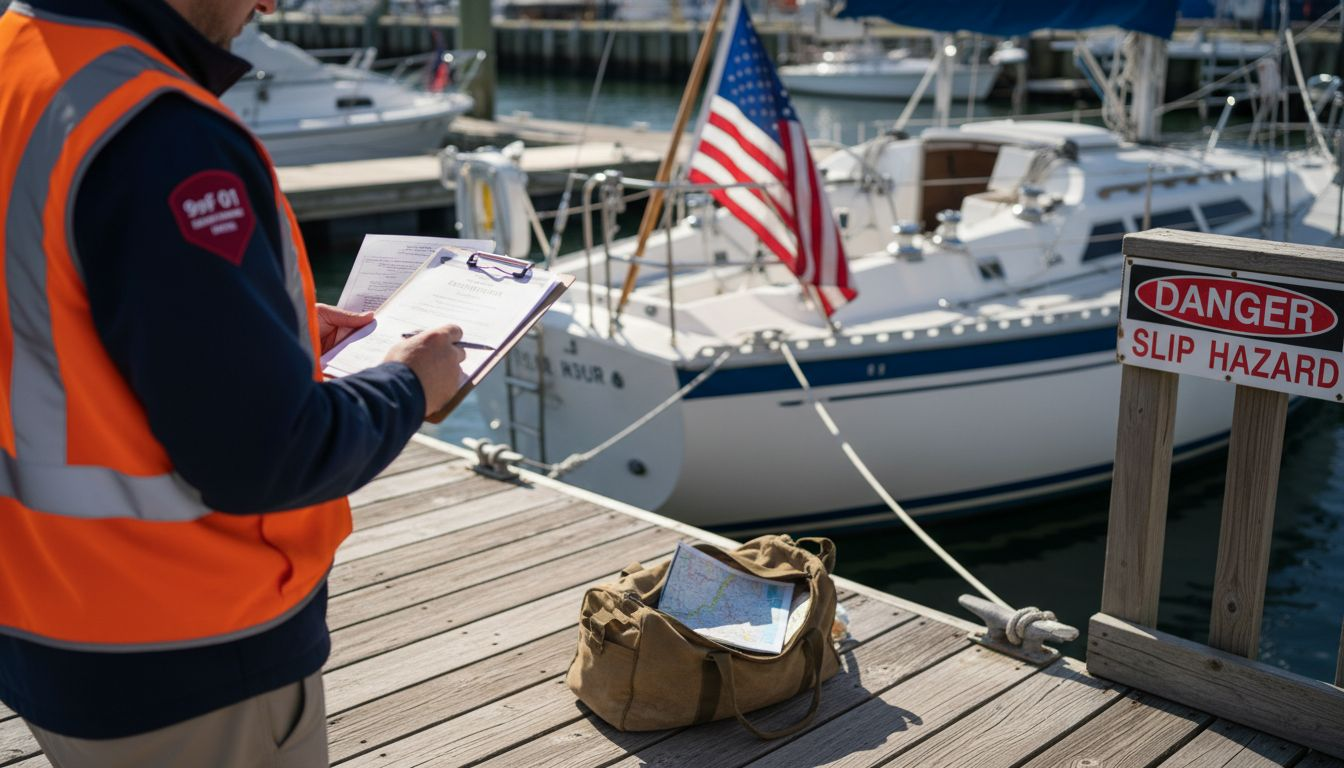
Compliance requirements extend beyond initial registration. Annual renewals require updated surveys, insurance certificates, and fee payments. Operating without current registration voids insurance and creates legal liability.
Common documentation pitfalls include:
- Submitting expired survey reports older than 12 months
- Incomplete ownership chains missing intermediate transfers
- Unsigned or improperly notarized documents
- Translation errors on foreign language certificates
- Missing beneficial owner declarations for corporate registrations
Maintain organized digital and physical files. Registrars often request additional documentation during processing. Quick responses prevent delays.
Navigating yacht registration compliance challenges requires understanding each flag’s specific requirements. Standards vary significantly, making professional guidance valuable for complex situations.
Costs associated with yacht registration
Yacht registration costs vary dramatically based on flag state, vessel size, and required services. Registration fees typically range from $1,000 to $10,000, but total costs include multiple components beyond basic filing fees.
Typical cost breakdown:
- Flag state registration fees: $500 to $5,000 depending on tonnage and jurisdiction
- Taxes annuelles de renouvellement: $300 to $2,000 for maintaining active registration
- Survey and inspection costs: $800 to $3,000 for mandatory condition assessments
- MMSI and radio licensing: $150 to $500 for communication system registration
- Documentation and translation: $200 to $1,000 for proper certificate preparation
- Professional services: $500 to $3,000 for registration consultancy and processing support
Vessel size directly impacts costs. Yachts under 24 meters face lower tonnage fees. Larger vessels trigger higher registration tiers and more extensive survey requirements.
Flag complexity affects pricing. Straightforward registries like San Marino or Poland charge transparent flat fees. Complex jurisdictions with multi-stage approvals cost more in processing time and professional fees.
Processing speed creates cost variations. Expedited registration services charging premium fees complete in days. Standard processing takes weeks but costs less.
Budget for hidden expenses. Insurance requirements increase with certain flags. Port fees vary by registration. Tax obligations differ substantially, potentially dwarfing registration costs over time.
Comprendre yacht registration tax rules and costs prevents surprises. Some flags impose annual tonnage taxes. Others require VAT payments. Several operate tax-free for private yachts.
Compare total cost of ownership across facteurs de coût de l'immatriculation des bateaux, not just initial fees. A $2,000 registration with zero annual taxes beats a $500 registration with $3,000 yearly levies.
Cheapest isn’t best. Low cost flags often lack legal protections, face blacklisting risks, or require expensive compliance remediation later. Balance cost against reputation, legal security, and operational requirements.
Comparison of major international yacht flag states and benefits
Four flag states dominate the private yacht market, each offering distinct advantages for different operational profiles and owner priorities.
| Flag State | Registration Fee | Processing Time | Key Benefits | Considerations |
|---|---|---|---|---|
| Saint-Marin | $2,500 to $4,000 | 3 to 5 days | Fast processing, strong legal framework, no tonnage tax | Requires professional representation |
| Pologne | $1,200 to $2,500 | 2 to 3 weeks | EU flag status, affordable fees, moderate compliance | Longer processing than San Marino |
| Royaume-Uni, 1re partie | $3,000 to $6,000 | 4 to 6 weeks | Commercial credibility, worldwide recognition, comprehensive protections | Higher costs, extensive documentation |
| Malte | $2,800 to $5,500 | 3 to 4 weeks | EU membership, tax treaties, strong maritime tradition | Annual tonnage tax, complex corporate structures |
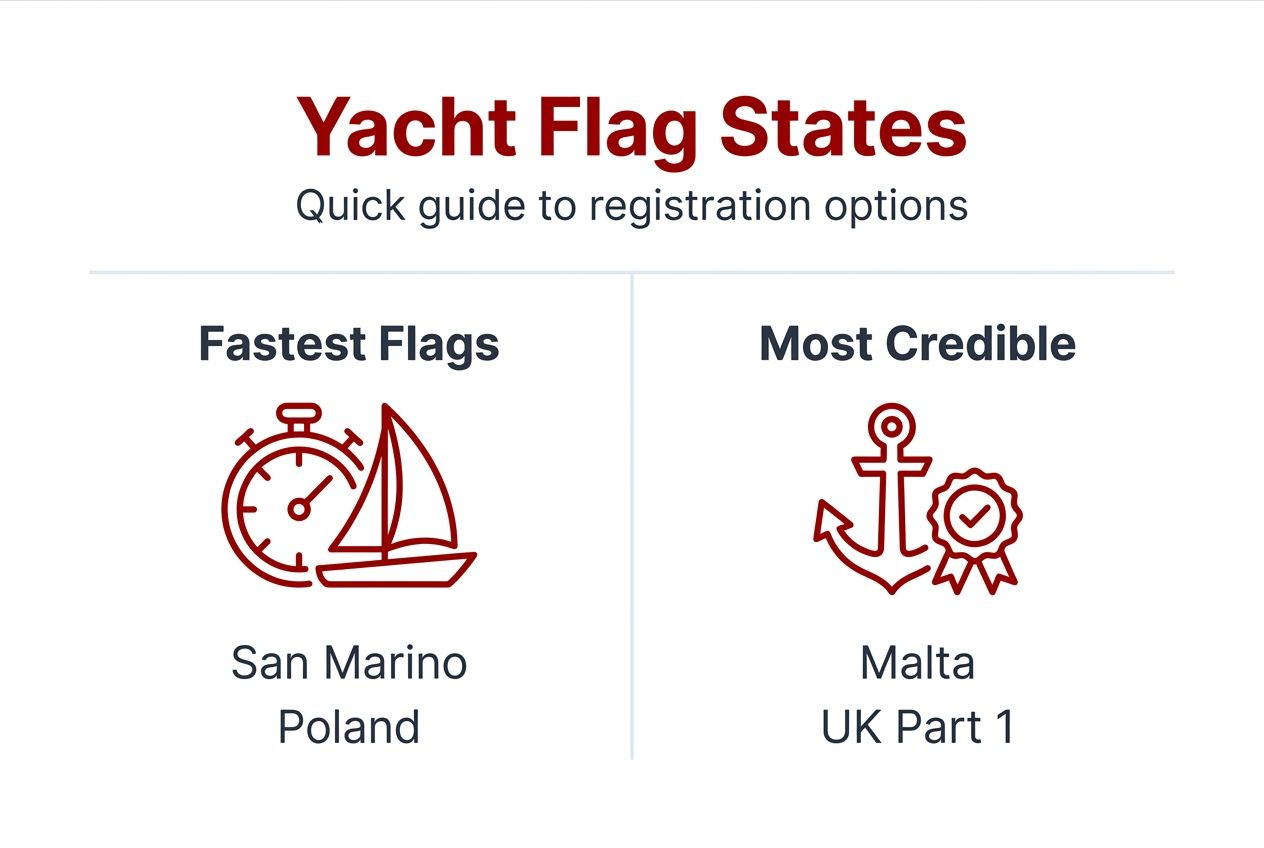
Saint-Marin delivers the fastest turnaround for private yachts. The streamlined process requires minimal bureaucracy while maintaining strong legal protections. No tonnage tax makes it cost effective long term. The registry enjoys excellent international recognition despite being landlocked.
Pologne provides EU flag benefits at moderate cost. The registry suits owners prioritizing affordability while maintaining credibility. Processing takes longer than San Marino but remains reasonable. EU membership simplifies Mediterranean cruising.
Royaume-Uni, 1re partie registration targets commercial operations and charter yachts requiring maximum credibility. The flag commands universal respect in maritime commerce. Extensive documentation requirements and higher costs make it less attractive for purely private use.
Malte combines EU advantages with extensive tax treaties. The flag particularly benefits corporate yacht ownership structures. Annual tonnage taxes add ongoing costs. Strong maritime infrastructure supports operations.
Choosing among these options depends on:
- Usage patterns: Private cruising versus commercial charter operations
- Geographic focus: Mediterranean, Caribbean, or global operations
- Timeline urgency: Immediate need versus planned registration
- Budget constraints: Initial costs versus long term tax implications
- Legal priorities: Maximum protection versus streamlined administration
Explore detailed comparisons in this vessel registration guide covering San Marino, Malta, and Poland. Each flag suits different owner profiles and vessel uses.
No single flag works for everyone. Match your choice to operational reality, not marketing claims. Professional guidance helps identify optimal fit for your specific circumstances.
Additional services related to yacht registration
Registration unlocks operations but requires complementary services for full compliance and functionality. Three essential services integrate with registration to enable safe, legal yacht operations.
MMSI and AIS setup establishes your vessel’s communication identity. Maritime Mobile Service Identity numbers enable VHF radio communication, distress signaling, and vessel tracking. Automatic Identification Systems broadcast position to other vessels and authorities. Both systems are mandatory for vessels operating internationally. Registration and MMSI application occur together, ensuring communication compliance matches legal status.
Corporate registration offers operational and tax advantages for yacht ownership. Registering vessels under corporate entities simplifies ownership transfers, provides liability protection, and enables tax efficient structures. Many flag states require or strongly favor corporate ownership for larger yachts. Corporate structures also facilitate multi-owner arrangements and charter operations. Jurisdiction choice for the corporate entity matters as much as flag state selection.
Insurance coverage links directly to registration status. Underwriters require valid registration before issuing policies. Flag state affects insurance costs, with established registries commanding lower premiums than obscure flags. Coverage must meet flag state minimums and port requirements. Some flags mandate specific insurance types or coverage levels.
Related service benefits:
- Streamlined processing when bundling registration with MMSI and insurance applications
- Single point of contact reducing coordination complexity
- Package pricing delivering cost savings versus separate providers
- Compliance assurance through integrated service delivery
- Ongoing support for renewals and regulatory changes
Pro Tip: Choose service providers with direct registry relationships and proven track records. Inexperienced intermediaries cause delays, errors, and compliance gaps that cost more to fix than proper handling initially.
Comprehensive yacht registration services bundle these elements into cohesive packages. Integrated approaches reduce timeline, minimize errors, and ensure all compliance pieces fit together.
Review the complete guide to register a yacht covering registration and essential ancillary services. Understanding the full service ecosystem prevents gaps in compliance or functionality.
Common misconceptions about yacht registration
Misconceptions about yacht registration lead owners into expensive mistakes, compliance failures, and operational limitations. Clearing up these myths prevents poor decisions.
Myth: Home country registration is always best. Most owners assume registering where they live makes sense. Reality shows over 70% of yachts globally sail under flags unrelated to owner nationality. Home registration often brings higher taxes, slower processing, and more complex compliance. International flags frequently offer superior benefits.
Myth: All registrations take the same time. Processing varies from 48 hours to three months depending on flag state and documentation quality. San Marino completes registrations in days. Traditional maritime nations take weeks. Assuming uniform timelines causes planning failures and missed operational windows.
Myth: Documentation requirements are standard. Each flag state maintains unique requirements. Some demand extensive surveys and certifications. Others accept minimal documentation. Assuming standard requirements across flags leads to incomplete applications and rejections.
Myth: Registration is one and done. Initial registration is just the beginning. Annual renewals require updated documentation, fee payments, and compliance confirmations. Surveys expire and need renewal. Insurance must stay current. Treating registration as a single event rather than ongoing obligation creates compliance gaps.
Myth: Cheapest flag delivers best value. Low registration costs often signal weak legal frameworks, poor international recognition, or hidden compliance burdens. Flags on international watch lists save money upfront but create operational headaches and liability exposure. Total cost of ownership matters more than initial fees.
Additional misconceptions:
- Believing registration equals insurance coverage (separate requirements)
- Assuming all flags provide equal legal protections (varies dramatically)
- Thinking vessel location determines registration options (nationality is portable)
- Expecting instant processing without proper documentation (preparation matters)
Informed decision making requires understanding these realities. Research specific flag requirements, compare total costs, and consider long term operational needs rather than accepting conventional assumptions.
Practical steps to register your yacht successfully
Successful registration follows a structured process minimizing delays and ensuring compliance. These steps work across all major flag states with minor variations.
Evaluate operational requirements. Define where you’ll cruise, whether you’ll charter, and what legal protections matter most. Geographic patterns influence optimal flag choice. Commercial use requires different flags than private cruising.
Gather essential documentation. Collect ownership proof, build certificates, tonnage measurements, recent surveys, and identity documents before starting applications. Having complete files prevents mid-process delays.
Select flag state and authorized representative. Choose your flag based on the criteria discussed earlier. Engage authorized registrars or professional services with direct registry relationships. Verify credentials and track records.
Complete compliance checks. Submit AML documentation, beneficial ownership declarations, and source of funds proof. Obtain necessary insurance coverage meeting flag requirements. Arrange MMSI licensing if not bundled with registration.
Submit application and supporting documents. File complete applications with all required attachments. Pay applicable fees through approved channels. Confirm receipt and tracking information.
Receive registration certificate and complete setup. Once approved, obtain your registration certificate, radio licenses, and flag documentation. Install MMSI and AIS systems. Update insurance and port documentation with new registration details.
Expected processing timelines:
- San Marino: 3 to 5 days with complete documentation
- Poland: 2 to 3 weeks for standard processing
- Malta: 3 to 4 weeks including corporate setup
- UK Part 1: 4 to 6 weeks with inspections
Pro Tip: Start registration 60 to 90 days before you need active status. This buffer absorbs unexpected delays, missing documents, or additional requirements without disrupting operational plans.
Common delay causes:
- Incomplete or expired documentation
- Unsigned or improperly notarized forms
- Insufficient AML verification materials
- Payment processing issues
- Communication gaps with registries
Follow the structured liste de contrôle pour l'enregistrement des yachts ensuring nothing gets missed. Systematic approaches prevent errors and accelerate approvals.
Consult the comprehensive guide on how to register a yacht for detailed flag-specific procedures. Professional support navigates complexity, especially for first-time registrations or unusual circumstances.
Take the next step with Vessel Flag
Yacht registration complexity demands expertise, but you don’t need to navigate it alone. Vessel Flag specializes in streamlining registration across all major flag states, from San Marino’s rapid processing to Malta’s EU advantages.
Our platform provides everything you need: detailed registration guides, comprehensive checklists, and direct access to authorized registrars. We handle documentation, compliance verification, and coordination so you focus on enjoying your yacht.
Whether you’re registering your first vessel or optimizing an existing registration, Vessel Flag delivers transparent guidance, competitive pricing, and proven results. Start your registration journey with confidence today.
FAQ
What documents are essential for yacht registration?
Ownership proof, build certificates, tonnage measurements, and AML documentation form the core requirements. Most flags also require current surveys, insurance certificates, and owner identification. Check specific flag state requirements as additional documents may apply to your situation.
How long does yacht registration usually take?
Processing ranges from 3 days for San Marino to 6 weeks for UK Part 1 registration. Timeline depends on flag state efficiency, documentation completeness, and whether you use expedited services. Planning 60 to 90 days ahead accommodates unexpected delays.
Can I register my yacht in a country different from my nationality?
Absolutely. More than 70% of yachts worldwide sail under flags unrelated to their owners’ citizenship. Flag choice depends on operational benefits like tax treatment, compliance requirements, and legal protections, not your passport country.
What is MMSI and why is it important?
MMSI is your vessel’s unique radio identification number required for VHF communication and safety systems. It enables distress signaling, position broadcasting, and maritime communication. Registration and MMSI licensing typically occur together for compliance.
Recommandé
- Comment immatriculer un yacht : Guide complet pour les propriétaires
- 2025 Processus d'immatriculation des bateaux - Guide stratégique complet pour les propriétaires de yachts - Vessel Flag
- Documents requis pour la conformité et l'immatriculation des yachts en 2026
- 6 étapes pour une immatriculation en douceur Liste de contrôle pour l'immatriculation d'un yacht