
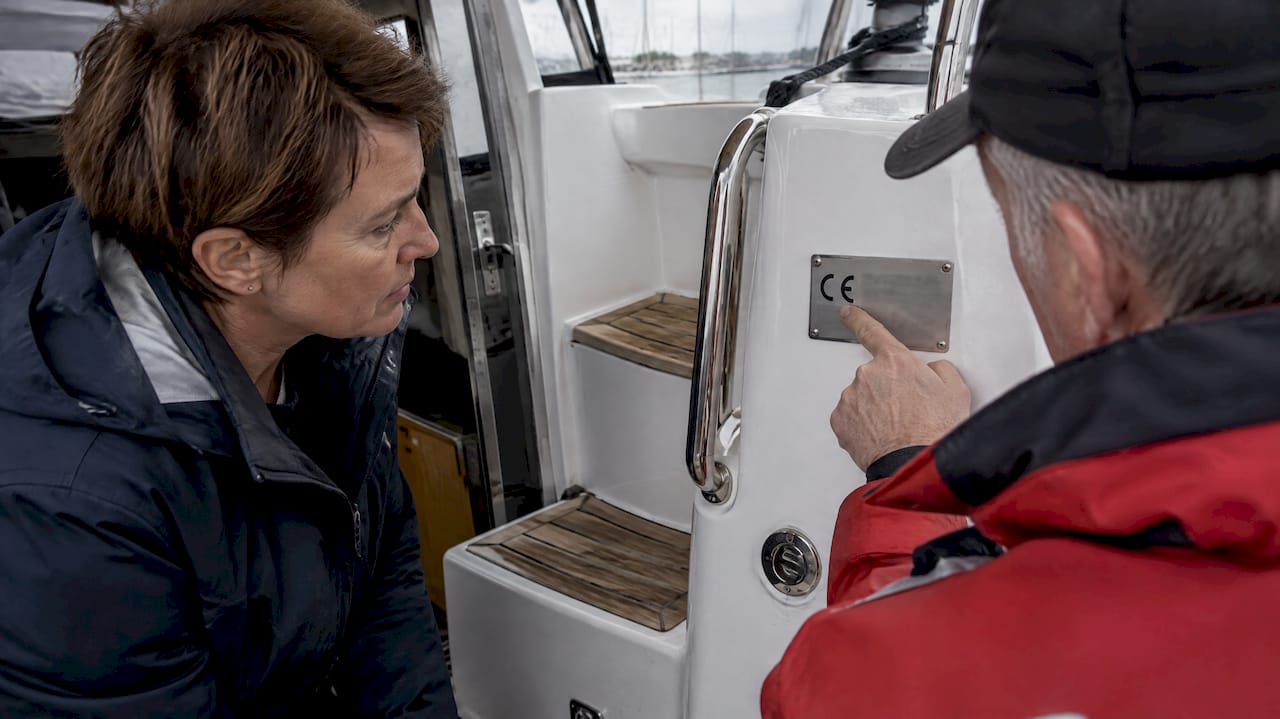
CE marking shows that a recreational craft conforms to EU safety, health and environmental requirements under Directive 2013/53/EU, and it is mandatory for boats between 2.5 and 24 meters placed on the EEA market. The manufacturer, or the importer when the boat comes from outside the EEA, carries legal responsibility for the marking, the Declaration of Conformity and the supporting technical file.
TL;DR:
- CE marking applies only to boats between 2.5 and 24 meters in the EEA, with responsibility falling on the manufacturer or importer for compliance documentation.
- Design categories from A to D indicate the sea conditions a boat was built to handle, not its quality, and owners should verify the category matches their intended use.
- Conformity is demonstrated through modules ranging from self-certification for simple craft to third-party assessment by a Notified Body for larger vessels.
- Missing or incorrect documentation, such as builder’s plates or Declaration of Conformity, can delay registration, insurance, or legal use within the EEA.
- Non-compliance can lead to border detention, costly post-construction assessments, or refusal of resale, especially if major modifications occur without re-certification.
Table of Contents
- Who the Directive Covers and Who Is Responsible
- Reading Design Categories A Through D
- How Conformity Is Actually Demonstrated
- Paperwork and Markings Worth Checking Before You Buy
- What Happens When a Boat Is Not Compliant
- Owner Checklist and Common Pitfalls
- Why CE Compliance Shapes Resale and Legal Access
- Getting Help With Registration and Paperwork After CE Compliance
- FAQ
- Sources
Who the Directive Covers and Who Is Responsible
Directive 2013/53/EU sets the hull length threshold at 2.5 to 24 meters for recreational craft, and the same framework extends to certain engines and components fitted to those boats, not just the hull itself. A boat built or sold within that range for the EEA market needs a CE mark before it changes hands or gets placed into service.
Responsibility splits depending on where the boat was built. A manufacturer based in the EEA must prepare the technical file and sign the Declaration of Conformity before sale. When a boat arrives from outside the EEA, that same burden shifts to the importer, who has to secure conformity documentation or pursue an alternative route to compliance.
Some craft fall outside the scope entirely:
- Boats built before 1998 and already in use before the earlier directive took effect
- Craft built for competition, including racing boats and their trial versions
- Canoes, kayaks, gondolas and pedal boats, which the directive treats separately
- Historic or replica vessels built using traditional materials and methods
If a boat you are considering falls into one of these categories, ask the seller directly how compliance was handled, since the usual CE paperwork may not apply.
Reading Design Categories A Through D
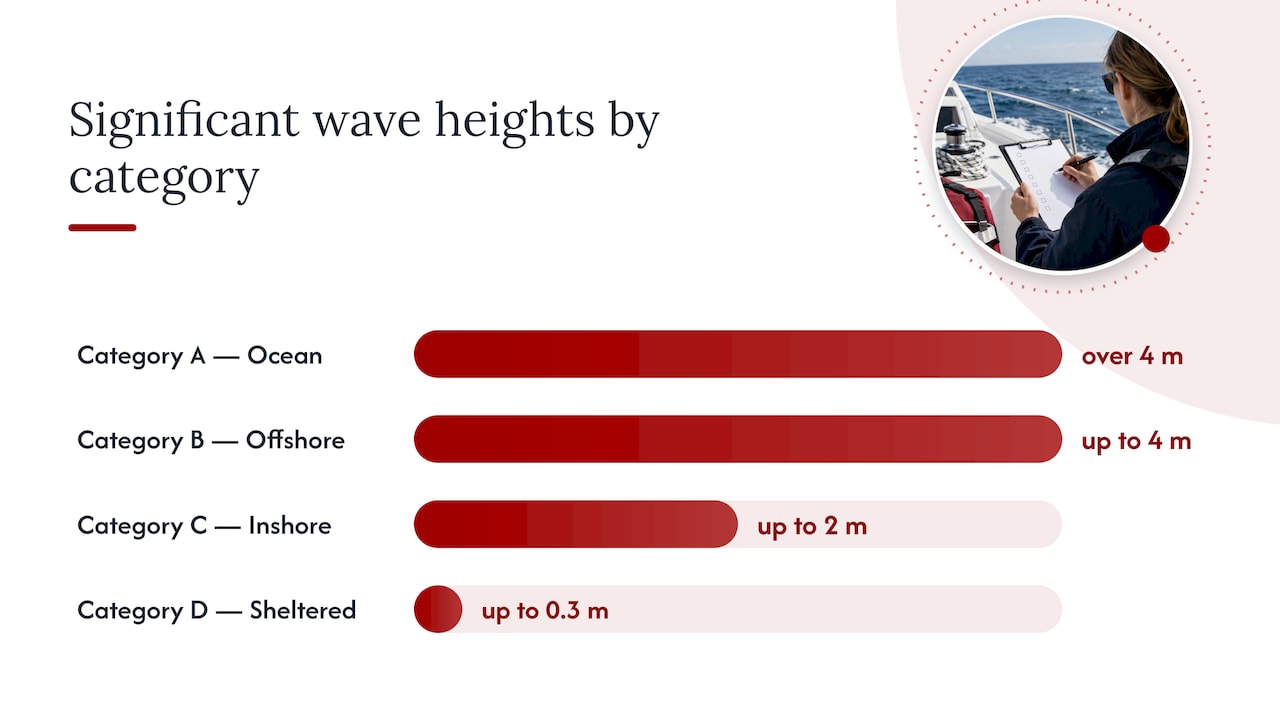
A builder’s plate lists a design category, and that letter tells you the sea conditions the boat was engineered to handle, not how well it was built. Category A covers ocean conditions with wind above force 8 and significant wave heights over 4 meters. Category B covers offshore use in winds up to force 8 and waves up to 4 meters. Category C is for inshore waters, with wind up to force 6 and waves up to 2 meters. Category D covers sheltered waters, small lakes and rivers, with wind up to force 4 and waves up to 0.3 meters.
A common misunderstanding is treating the category as a quality grade. A Category C boat can be built from excellent materials and finished to a high standard. It just was not designed for the sea states a Category A boat is meant to handle.
Before buying, check these points:
- Confirm the category stamped on the builder’s plate matches what the seller describes verbally
- Ask how the boat has actually been used, since owners sometimes push a boat beyond its rated category
- Compare the category against where you intend to cruise, not just where the previous owner cruised
Pro Tip: Keep a copy of the builder’s plate photo with your purchase paperwork. It becomes useful if you ever need to prove the design category to an insurer, a flag registry or a buyer down the line.
How Conformity Is Actually Demonstrated
The directive sets out conformity assessment modules, labeled A through H, and which one applies depends on boat size, design category and how it was built. Smaller, simpler craft can often rely on internal production control, essentially self-certification backed by the technical file. Larger or more complex vessels, particularly those in higher design categories, typically need a Notified Body to carry out an independent assessment.
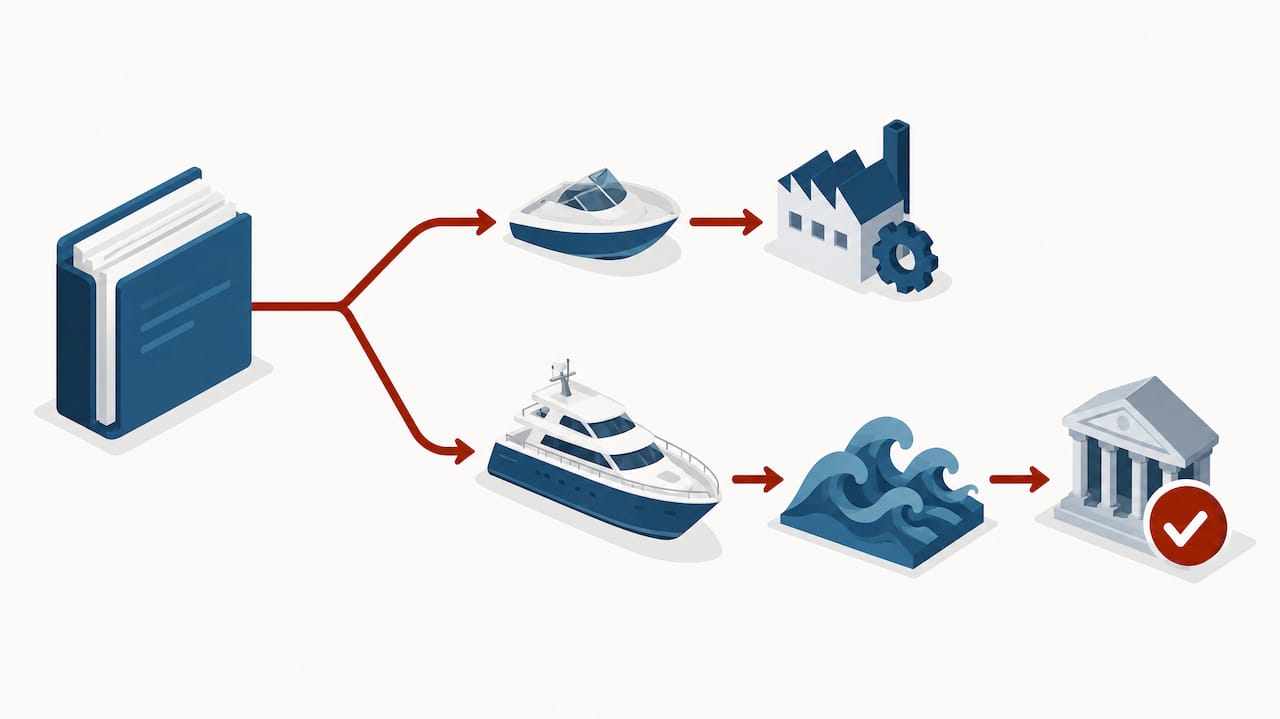
A Notified Body’s identification number stamped next to the CE mark on the builder’s plate signals that an independent third party, not just the manufacturer, reviewed the boat’s conformity. That number matters when you are verifying paperwork on a used boat, since it lets you trace which body issued the original assessment.
Post-construction assessment, or PCA, exists for a narrow set of situations, mainly private imports where no manufacturer’s Declaration of Conformity exists. Industry guidance from RINA confirms that CE marking is obligatory for new-build recreational craft up to 24 meters to gain free circulation in the EEA, and PCA is not a shortcut around that requirement. Member States report owners misusing PCA in commercial resale situations where it was never intended to apply, which leads to rejected applications and wasted time.
Paperwork and Markings Worth Checking Before You Buy
Before signing anything, work through this short list:
- Builder’s plate. It must show the manufacturer’s name, the CE mark, the design category, and the maximum recommended load or number of persons.
- Watercraft Identification Number (WIN). This is usually molded or stamped into the starboard side of the transom, and it ties the boat to its original build records.
- Declaration of Conformity. This document, signed by the manufacturer or importer, is your evidence that the boat met the applicable essential requirements when placed on the market.
- Technical file. Manufacturers and importers must retain this for at least 10 years after the boat was placed on the market, and market surveillance authorities can request it at any time.
Our guide to yacht documentation for compliance and registration walks through how these documents fit into a broader registration file.
What Happens When a Boat Is Not Compliant
Customs authorities can stop a non-CE-marked boat at the border, and that holds true whether the boat arrived by ship, trailer or its own hull. Once held, the importer generally has two options: pursue a post-construction assessment to bring the boat into compliance, or arrange for it to leave the EEA.
- PCA often demands a full technical file reconstruction, sea trials and sometimes physical modifications to meet essential requirements
- These steps add real time and cost, particularly on older boats with incomplete build records
- Major conversions, such as swapping engines or altering the hull structure, commonly trigger a requirement for a fresh conformity assessment, since the original Declaration no longer reflects the boat as it now exists
Owners planning a significant refit should budget for this possibility rather than discovering it mid-project.
Owner Checklist and Common Pitfalls
Before you buy or import a boat, confirm four things: a visible builder’s plate, a matching WIN, a Declaration of Conformity, and evidence that no major systems were swapped without re-certification. The most frequent mistakes we see are owners assuming CE marking equals build quality, skipping re-certification after an engine change, and discovering too late that the technical file was never kept.
- Missing paperwork slows down flag registration and insurance applications alike
- A registration specialist can help manage importer obligations, prepare paperwork, and coordinate MMSI and AIS setup alongside the flag process
Pro Tip: If you are refitting an older boat, pair any structural or mechanical work with a marine ceramic coating review from a specialist like Diamondbrite so the hull finish and protection records stay documented alongside your compliance file.
Why CE Compliance Shapes Resale and Legal Access
CE documentation is not paperwork for its own sake. It protects your legal right to use EEA waters and gives a buyer confidence that the boat’s history is traceable. We recommend verifying the Declaration of Conformity and technical file early in any transaction, before money changes hands.
— VesselFlag
Getting Help With Registration and Paperwork After CE Compliance
Once CE compliance is confirmed, the next step for most owners is flag registration, and that is where paperwork tends to pile up fastest. We handle flag registration, documentation review and MMSI or AIS setup across multiple jurisdictions, including San Marino, UK LTD. and USA LLC company setup for owners who want registration and corporate structuring handled together.
If your boat is crossing a border as part of the deal, our partner at Worldwide Express covers export declarations and customs documentation in more detail. When you are ready to register, request a quote through our San Marino registration page and we will walk you through the paperwork specific to your vessel and intended flag.
FAQ
What happens if you sell without CE marking?
Selling a non-compliant boat within the EEA can lead to customs holds on future imports, fines, and a requirement to complete a post-construction assessment before the boat can be legally placed on the market. The seller or importer typically bears responsibility for resolving the gap, which can delay a sale by weeks or months.
What is the 10% rule for yachts?
There is no “10% rule” defined in Directive 2013/53/EU itself. Definitions circulating online vary, so treat any specific percentage threshold with caution and confirm requirements directly against the directive’s text or with a Notified Body.
What does CE mean on a boat?
CE marking on a boat means it conforms to the essential safety, health and environmental requirements set out in Directive 2013/53/EU. It is not a quality rating, it is a conformity indicator tied to design category, construction standards and documentation.
Can I self-certify for CE marking?
Self-certification, known as internal production control, is permitted for some smaller or simpler craft configurations. Larger or more complex boats, particularly those in higher design categories, typically require assessment by a Notified Body rather than manufacturer self-certification alone.
Sources
- Directive 2013/53/EU of the European Parliament and of the Council
- RINA — CE marking for pleasure craft
- Compliance FAQs on CE marking — NIST