Five methods move yachts around the world: lift-on/lift-off (LoLo), float-on/float-off (FloFlo), container or flat-rack shipping, road transport on a trailer, and delivery under the yacht’s own power. The right choice comes down to accurate measurements, confirmed weight, and the route you need to cover, not personal preference. Before contacting anyone, get your LOA, beam, air draft, and displacement written down, then take those figures to a specialist freight forwarder for a quote.
TL;DR:
- LoLo suits yachts from about 8 meters, but owners should verify crane capacity, certified safe working load, cradle design, and sling placement before booking.
- FloFlo handles yachts beyond practical crane limits, but fewer ports can support its depth and maneuvering needs, and specialist vessels require tighter scheduling.
- Container and flat rack shipping generally suits boats under 12 meters, while wider road loads require permits, route surveys, and sometimes police escorts.
- Record LOA, beam, air draft, and displacement accurately; carriers size equipment from these figures, while shippers need weight and stowage details before loading.
- Transit insurance usually costs 0.25% to 1.5% of insured value; standard cruising policies generally exclude ocean transit, so confirm lifting coverage and deductibles.
Table of Contents
- How do the main yacht transport methods compare?
- Lift-on/lift-off: cradle, lift, and port requirements
- Float-on/float-off for very large yachts: process and constraints
- Container and flat-rack options for smaller yachts
- Road transport and delivery under power: which fits your move?
- What to prepare before handover: measurements, surveys, and paperwork
- Insurance gaps, cost drivers, and reading a quote correctly
- Risks and how to manage them by transport method
- Environmental and regulatory factors that affect method choice
- Weighing the trade-offs: which method wins in practice
- What professional yacht transport companies actually handle
- Why paperwork timing decides your transport schedule
- How VesselFlag supports a smoother yacht transport
- FAQ
- Sources
How do the main yacht transport methods compare?
Each method suits a different vessel size, budget, and timeline, and most owners narrow their options fast once they know their numbers. There are four primary international methods, plus road transport for shorter or coastal moves, and the fit depends heavily on LOA, beam, height, and displacement.
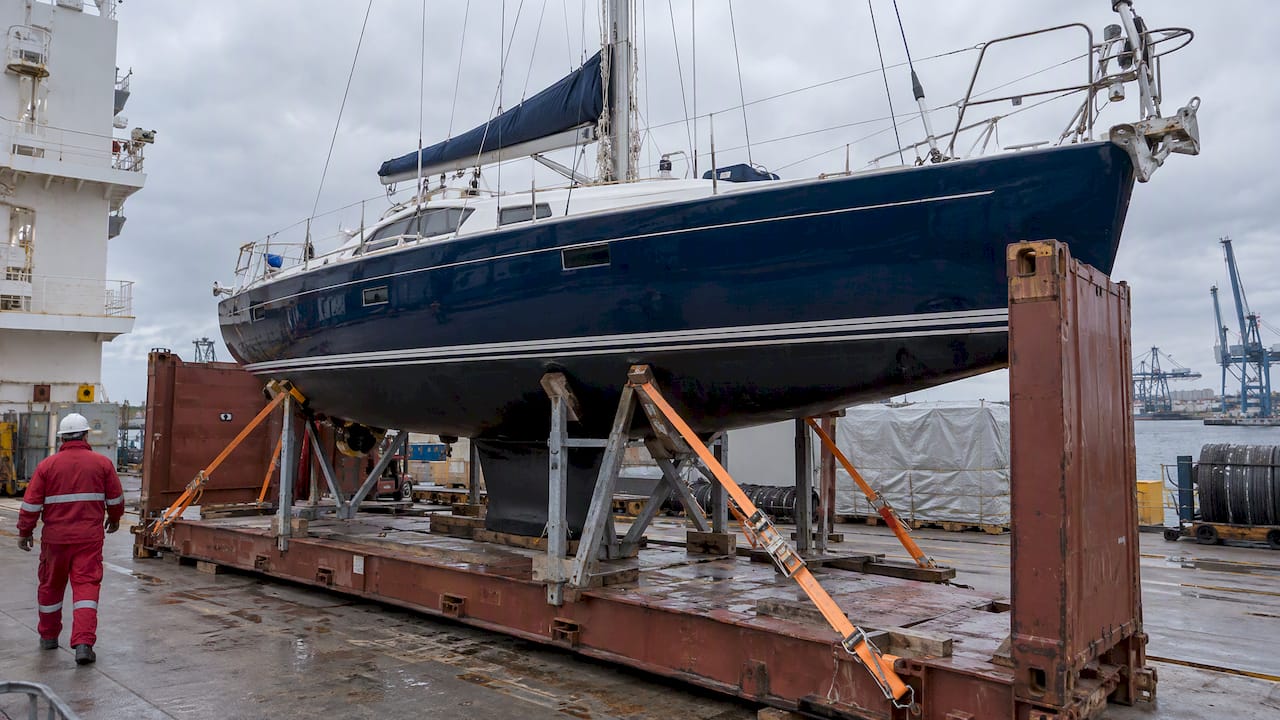
- LoLo lifts the yacht aboard a cargo ship with cranes and suits boats from roughly 8 meters up to 40 meters and beyond.
- FloFlo submerges a transport vessel so the yacht floats on and off, a method reserved for very large or heavy yachts that exceed practical crane limits.
- Container or flat-rack shipping works for smaller boats, often under about 12 meters, since standard container dimensions limit what fits.
- Road transport on a trailer handles coastal and inland moves for yachts within local permit and bridge clearance limits.
- Delivery under own power uses a professional or owner crew to sail or motor the yacht to its destination.
When you call a shipper, ask which method they recommend for your exact dimensions, what the all-in quote includes, and how they handle a change in route or schedule.
Lift-on/lift-off: cradle, lift, and port requirements
LoLo remains the most common method for yachts above small-boat sizes, and many vessels over 40 feet move this way. The shipper verifies your yacht’s fit against the vessel’s crane capacity and deck space using the measurements and weight you provide, so accuracy at this stage avoids costly surprises later.
- Confirm the cradle type: a shipper-supplied custom cradle or an owner-supplied support, since incorrect pick points can concentrate loads and distort the hull.
- Ask for the crane’s certified safe working load (SWL) and the sling or spreader arrangement planned for your vessel.
- Request a pre-load condition survey and confirm whether your route involves transshipment, which adds a second lift.
Pro Tip: Get the cradle and lift plan in writing before you book, not after the crane is scheduled.
Float-on/float-off for very large yachts: process and constraints
FloFlo becomes the practical choice once a yacht’s size or weight pushes past what cranes can safely handle, and specialist forwarders reserve it for rare, very large cases rather than routine shipments. The transport vessel ballasts down, the yacht motors or is floated into position over the submerged deck, and the ship then de-ballasts to lift the yacht clear of the water.
- Port selection matters more here than with LoLo, since only certain terminals have the depth and maneuvering room for semi-submersible operations.
- Scheduling tends to be tighter and costs higher, reflecting the specialized vessel and crew involved.
- Loading supervision and marine transit insurance both need separate confirmation, since this lift method carries different risk exposure than a crane lift.
Container and flat-rack options for smaller yachts
Standard shipping containers and flat-rack platforms work well for boats that fit within tight dimensional limits, which rules out most yachts over roughly 12 meters. A flat-rack carries a yacht on an open platform rather than inside a box, which avoids some disassembly but still usually requires removing a tower, bimini, or other tall fittings.
- Flat-rack shipping suits boats whose beam and height exceed a closed container but still fit within crane and vessel deck limits.
- Expect to budget time for securing arrangements, since the yacht sits exposed rather than enclosed.
- Deck stowage aboard a container ship is sometimes chosen instead, placing the yacht on deck rather than on a flat-rack, usually for slightly larger boats that a port’s crane can still handle.
Road transport and delivery under power: which fits your move?
Coastal or regional moves often come down to two very different choices: put the yacht on a trailer, or run it there under power with a delivery crew.
- Road transport depends heavily on beam. Owners with a beam around 8.5 feet can often trailer the boat themselves with a standard permit, while wider beams require specialized permits, route surveys, and police escorts.
- Delivery under own power means paying for fuel, crew, and the mechanical wear that comes with long-range running, plus exposure to weather delays along the route.
- Weigh the decision on time available, the mechanical risk you’re willing to accept, any charter obligations tied to the yacht’s schedule, and a straight cost comparison against commercial shipping.
Pro Tip: Price out shipping and delivery under power side by side. Many owners now choose shipping specifically to avoid engine wear and crew costs on long legs.
What to prepare before handover: measurements, surveys, and paperwork
A clean handover starts with numbers, not paperwork. Collect LOA, beam, air draft (height), and displacement before you request quotes, since carriers and cradle builders size their equipment directly from these figures and a wrong measurement can mean a rejected booking at the dock.
- Gather registration documents, the bill of sale, proof of taxes paid, and current ownership papers before the shipper asks for them.
- Commission a pre-load condition survey with photos, and plan for a matching post-delivery survey at arrival.
- Confirm the cradle or lift plan, including whether the shipper supplies a custom cradle or expects owner-supplied supports.
Shippers and forwarders carry a direct legal duty here. Under MGN-699-M guidance implementing SOLAS Chapter VI, cargo must be stowed and secured according to the ship’s Cargo Securing Manual, and the shipper or forwarder must supply the master with weight, stowage, and segregation information in advance. Ask your shipper how they document this compliance step, and build in time for port and work permit scheduling well before your lift window.
Insurance gaps, cost drivers, and reading a quote correctly
Standard cruising insurance typically stops covering your yacht once it leaves the water, so marine transit insurance is a separate purchase most owners need to arrange specifically for the move. Premiums commonly run in the range of roughly 0.25% to 1.5% of the insured value, depending on route, declared value, and the specific risks involved, so a $1 million yacht could see transit premiums anywhere from around $2,500 to $15,000 for a single move.
- Confirm declared value, deductibles, and whether packing and lifting operations are covered under the policy.
- Ask about the claims process in writing before you sign, not after something goes wrong mid-transit.
- Watch for add-ons many quotes leave out: mast unstepping and re-rigging, cradle hire, scheduled crane windows, inland haulage, and customs clearance fees.
A properly itemized quote separates each of these costs so you can compare shippers on equal terms rather than guessing what’s bundled in.
Risks and how to manage them by transport method
Damage risk concentrates at specific points in each method, and knowing where lets you ask sharper questions before you book. With LoLo, the highest-risk moment is the lift itself: incorrect sling placement or an undersized cradle can stress the hull at the pick points, so confirming SWL certificates and cradle design in advance matters more than almost any other prep step. FloFlo carries less lifting risk but more maneuvering risk, since the yacht motors into position under its own power over a submerged deck, which puts a premium on calm conditions and an experienced captain at the helm during loading.
Container and flat-rack shipments expose the yacht on an open deck for the full voyage, so weather exposure, not lifting, is the main concern. Confirm how the shipper secures the vessel against green water and wind loads over a multi-week crossing. Road transport introduces its own set of risks: bridge strikes, route miscalculations, and tire or axle failure on long hauls, which is why route surveys and escort vehicles exist for wider loads.
Delivery under own power carries the broadest risk profile since it combines mechanical failure, crew fatigue, and open-ocean weather over days or weeks rather than hours. Mitigation looks different for each case, but the common thread across every method is the same: a documented pre-load survey, a clear securing plan, and marine transit insurance that actually matches the method you chose.
Environmental and regulatory factors that affect method choice
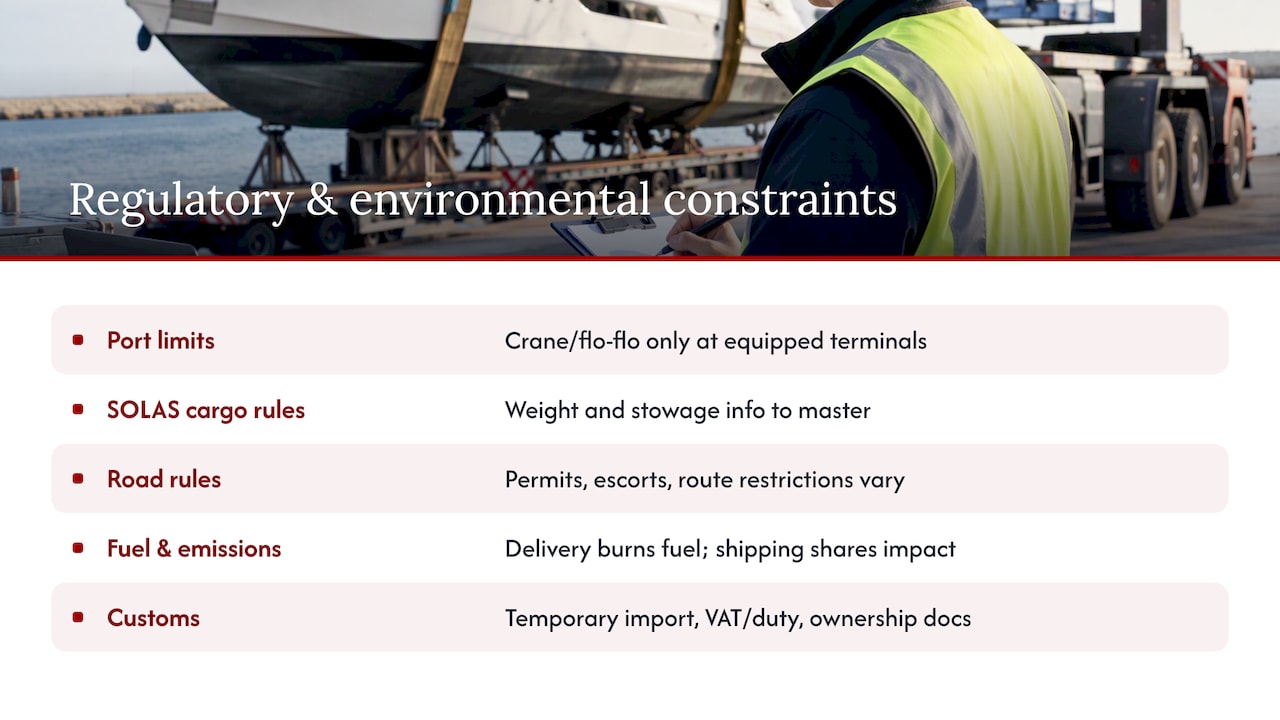
Regulatory requirements shape which method is even available to you before cost ever enters the conversation. Port authorities increasingly restrict crane operations and FloFlo submersions to specific terminals equipped to handle the draft, ballast water management, and spill containment standards those operations demand, which narrows your port options for larger yachts.
Cargo securing obligations under SOLAS Chapter VI apply regardless of method once your yacht is aboard a commercial vessel, and shippers must provide the ship’s master with accurate weight and stowage information in advance. Road transport carries its own layer of local rules: permit requirements, escort mandates, and route restrictions through environmentally sensitive areas or weight-restricted bridges vary by jurisdiction and need confirmation well ahead of a move.
Fuel consumption and emissions also factor into method choice for owners weighing delivery under own power against shipping. A long-range delivery burns significant fuel and adds engine hours, while consolidated shipping spreads environmental impact across many vessels moved per voyage. Customs and import regulations add another layer: a temporary import permit, a VAT or duty assessment, and proof of ownership documents all need to be in order before the yacht clears at the destination port, and getting that paperwork wrong can hold a vessel at port far longer than any mechanical or weather delay would.
Weighing the trade-offs: which method wins in practice
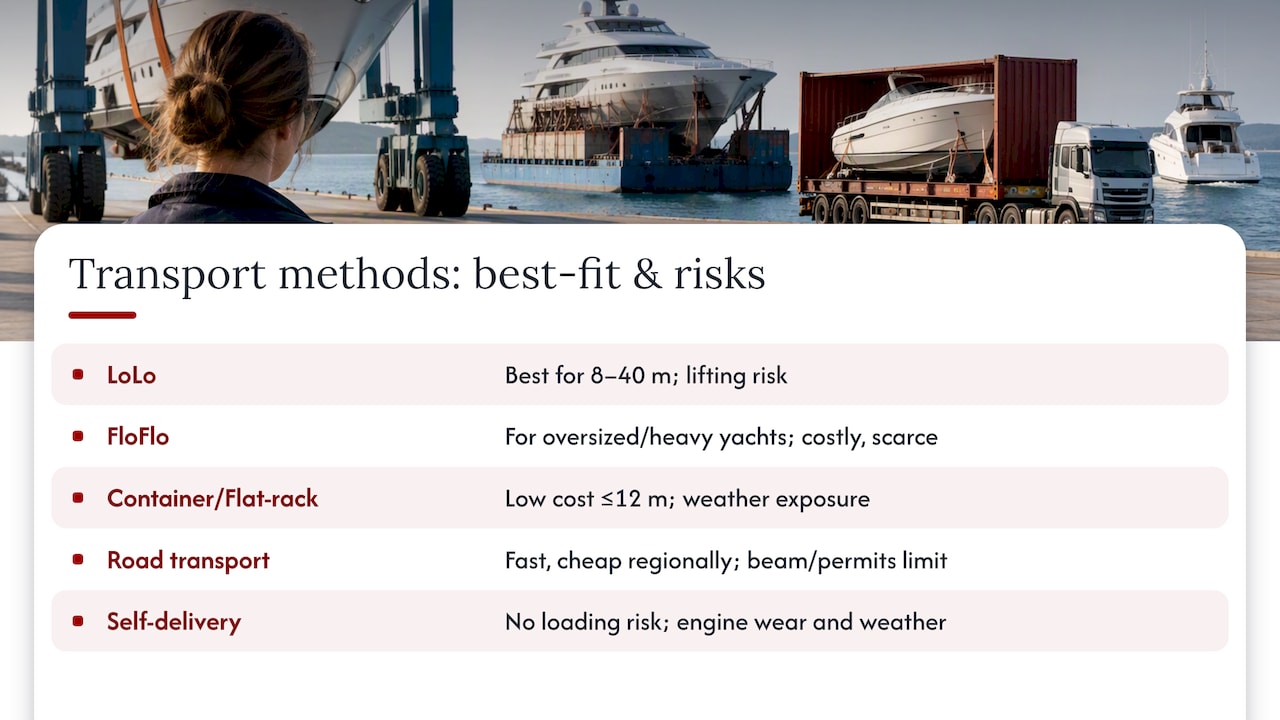
No single method wins across every scenario, which is why forwarders ask for measurements before recommending anything. LoLo offers the best balance of cost and reliability for most yachts in the 8 to 40-meter range, and it benefits from being the most widely available method at ports worldwide. Its main drawback is the lifting risk at loading and unloading, which makes cradle and SWL verification essential rather than optional.
FloFlo solves the size problem for yachts too large or heavy for cranes, but it comes at a real cost premium and requires more advance scheduling since fewer ports and vessels support it. Container and flat-rack shipping keep costs down for smaller yachts, but the dimensional ceiling rules it out for most cruising sailboats and motor yachts over about 12 meters, and flat-rack exposure means weather becomes a bigger factor over a long crossing.
Road transport wins on speed and cost for regional moves within beam and height limits, but it stops being competitive the moment a yacht’s beam pushes into specialized-permit territory. Delivery under own power avoids loading risk entirely and lets the yacht arrive ready to use, but it trades that for engine wear, crew costs, and weeks of weather exposure that many owners now choose to avoid by booking a ship instead.
What professional yacht transport companies actually handle
A professional forwarder does more than book a crane slot. Their core job is matching your yacht’s measurements and route to the right method, then coordinating every party involved: the port terminal, the crane or FloFlo vessel operator, customs brokers at both ends, and often the insurance underwriter for transit coverage.
Expect a competent shipper to provide an itemized quote covering haulage, lift or float fees, cradle costs, port handling, and customs clearance, rather than a single bundled number that hides what you’re actually paying for. They should also manage scheduling conflicts, since crane windows and FloFlo vessel availability often set the real timeline for your move, not the other way around. Early engagement with a forwarder and pre-cleared documentation are what separate a smooth handover from a yacht sitting in port storage while paperwork catches up.
Before you hand the yacht over, make sure the hull and running gear are properly cleaned and protected. A fouled hull adds weight and complicates condition surveys, so completing hull cleaning and antifouling work ahead of a scheduled haul out is worth finishing before the shipper’s crane window arrives rather than after.
Why paperwork timing decides your transport schedule
Transport delays rarely come from the lift itself. They come from documentation that wasn’t ready when the crane window opened. We’ve seen enough handovers to say plainly that measuring first, confirming registration and ownership paperwork next, and only then booking specialist shipping is the sequence that avoids port storage fees and missed crane slots. Pre-booking crane windows and confirming cradle availability early removes the two most common causes of last-minute delay.
— VesselFlag
How VesselFlag supports a smoother yacht transport
Clean registration paperwork is the single biggest lever you control before a transport booking, and we handle that piece directly. We arrange flag registration across jurisdictions including San Marino, Malta, and UK Part 1, alongside MMSI licensing and vessel documentation support, so your ownership and compliance papers are ready before a shipper ever asks for them.
- We prepare registration, MMSI licensing, and ownership documentation that customs officers expect to see at both ends of a move.
- We offer yacht transportation coordination alongside registration, so measurements, paperwork, and shipping line up on one timeline.
- We introduce owners to marine insurance options to cover gaps standard cruising policies leave open during transit.
If your yacht’s next move involves a change of flag, a documentation refresh, or coordinated transport planning, reach out through our registration and transport services to get a specific quote for your vessel.
FAQ
What are the main types of water transport for yachts?
The main methods for moving a yacht are lift-on/lift-off (LoLo), float-on/float-off (FloFlo), container or flat-rack shipping, road transport by trailer, and delivery under the yacht’s own power. Commercial shipping more broadly also includes bulk carriers, tankers, and container ships, but those four plus road transport are the options relevant to yacht owners.
How much does it cost to transport a yacht?
Cost depends on method, size, weight, route, and what the quote includes, since add-ons like mast unstepping, cradle hire, and customs clearance are often billed separately from the base haulage or lift fee. Always request an itemized quote so you can compare shippers on the same set of line items.
What is a crossing on a yacht?
A crossing refers to an ocean passage where the yacht sails or motors under its own power across open water, typically with a professional delivery crew aboard. It differs from shipping, where the yacht travels aboard a cargo vessel rather than moving under its own engine or sails.
What documents do I need before shipping my yacht internationally?
You need current registration papers, the bill of sale, proof of taxes paid, and ownership documents, along with a recent condition survey before handover. Shippers and forwarders also need accurate weight and stowage information to meet Cargo Securing Manual and SOLAS Chapter VI requirements.
Is marine transit insurance different from regular yacht insurance?
Yes. Standard cruising insurance generally excludes ocean transit, so owners need a separate marine transit policy for the move.
Sources
- YachtWorld — Boat transport research
- Gov
- YachtAidMarine — How to ship a yacht: step-by-step checklist
- Crown & Caliber — Shipping superyachts across oceans