

Ensuring swift vessel registration without running into fragmented paperwork, delayed flag documentation, or scattered compliance records is still a major hurdle for maritime businesses. Most existing vessel registration services obscure their true lead times behind sales calls or lack bundled support for MMSI, insurance, and operational records, forcing owners to coordinate across multiple providers. This comparison highlights five direct alternatives so you can match a vessel registration service to your operational speed, compliance needs, and onboard workflow requirements.
Table des matières
- Vessel Flag
- SeaLogs
- ShipDocs
- Navozyme
- Onboard Platform
- Comparing VesselFlag with Top Alternatives in Vessel Registration Services
Vessel Flag

En bref
VesselFlag’s marketing materials state provisional registration in 1–7 days, with some registries advertised at 2–3 days, letting owners use a vessel while final documents clear. The service combines registration, MMSI setup, insurance, and logistics across registries like San Marino, Poland, UK Part 1, Palau, Langkawi, and Malta.
Caractéristiques principales
- Provisional registration with short advertised turnaround so owners can meet cruising or charter deadlines while paperwork completes.
- Configuration MMSI et AIS and coordinated vessel insurance to get a boat operational immediately after registration.
- Wide flag options that include tax advantage and prestige jurisdictions, plus logistics support for transport and relocation.
- Clear timelines and paperwork checklists, plus local registry expertise in primary maritime jurisdictions.
Key Differentiator
The platform positions itself on the combination of the fastest provisional registration windows and hands-on, jurisdiction-specific support. That pairing matters when a broker needs a temporary legal identity for a vessel before a sale or when a charter operator must meet a departure date under a particular flag.
Pour
Deep registry know-how. VesselFlag documents experience across San Marino, Poland, UK Part 1, Palau, Langkawi, and Malta, which helps when a choice requires fine regulatory distinctions.
Fast provisional route. The provisional timeline above reduces downtime for owners who need immediate paperwork to pass port checks or to start a charter contract.
End-to-end operational support. VesselFlag bundles MMSI licensing, insurance placement, and logistics coordination rather than leaving owners to stitch services together.
Transparent scope and pricing. The site lists typical inclusions and exclusions which helps brokers scope budgets before engaging legal counsel.
Localized presence. Having staff familiar with specific registries reduces the back-and-forth that usually delays cross-border registration.
Cons
- Pricing and delivery speed vary by jurisdiction and vessel details, so the quoted turnaround and fees are contingent on registry rules and the yacht’s paperwork.
Pour qui ?
Yacht owners, boat brokers, and maritime operations managers who must register vessels quickly under specific flags and want a single point of contact for MMSI, insurance, and transport. Not aimed at non-maritime legal needs or small recreational craft outside international cruising.
Proposition de valeur unique
A provisional certificate in days changes scheduling and cashflow for brokers and owners. By delivering that provisional window alongside MMSI setup and insurance coordination, VesselFlag turns a fragmented set of registration tasks into a single executable plan that meets departure or sale milestones.
Cas d'utilisation dans le monde réel
A UK owner with a 24-meter yacht needs immediate documentation to begin an international cruise. Using the provisional pathway the vendor cites, VesselFlag arranges a UK Part 1 provisional entry, handles MMSI activation and temporary insurance, and keeps the vessel legal for port checks while permanent registration completes.
Site web : https://vesselflag.com
SeaLogs
En bref
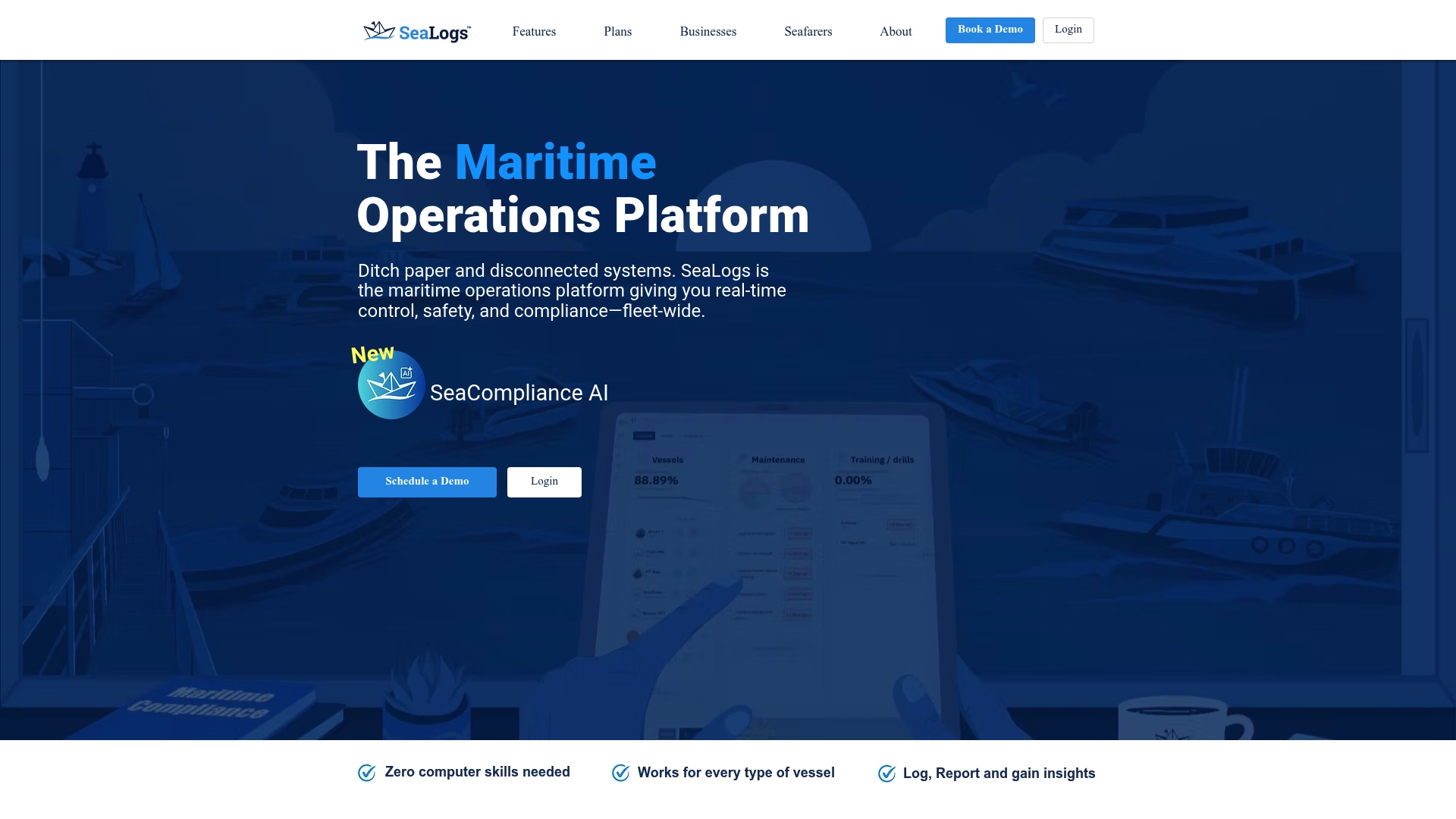
SeaLogs markets itself as requiring zero computer skills to operate its digital logbooks and shipboard tools, a claim aimed at making adoption possible for every crew member. That zero-skills claim frames the product as a hands-on replacement for paper logs and on-deck paperwork.
Caractéristiques principales
SeaLogs groups vessel record keeping, maintenance, safety, and reporting into a single interface designed for onboard use with minimal training.
- Digital logbooks for watchkeeping, bunkering, and operational records.
- Planned maintenance and inventory modules to track spare parts and service intervals.
- Safety reporting tools for incidents and near-misses, plus structured compliance exports.
- Task management to reduce machinery downtime and generate detailed performance reports.
Key Differentiator
The vendor emphasizes a user-friendly approach that automates routine entries and operational data capture so crew can focus on seamanship rather than data entry. That zero-skills claim positions SeaLogs for operators who want a system usable at the gangway, not just in the office.
Pour
- Designed for mixed-ability crews; the interface targets minimal training time so junior seafarers can complete reports with low supervision.
- Covers core vessel workflows in one product: logs, maintenance, inventory, tasking, and compliance reporting reduce cross-tool handoffs.
- Automation of routine data collection reduces manual transcription from paper and lowers the risk of lost entries during port rotations.
- Customization options let fleet managers adapt log templates and report formats to local flag or company procedures.
- Reporting exports support audits and safety reviews, helping captains present consistent compliance records.
Cons
- Public user reviews and comparative feedback are sparse, so independent performance evidence is limited.
- Pricing is not published and appears to be quoted only after demos, which slows procurement for small operators on tight timelines.
- The vendor lists no out-of-the-box integrations, so fleets that need direct AIS, PMS, or ERP connections should verify connectivity before committing.
Pour qui ?
Fleet operators, vessel managers, and maritime businesses replacing paper logbooks who need a simple, shipboard-ready system. Best for operators prioritizing ease of use across mixed-ability crews rather than deep onshore analytics out of the box.
Cas d'utilisation dans le monde réel
A regional operator replaces paper logs across ten fisheries vessels. Deck officers enter watch and safety reports on tablets while the office receives consolidated compliance exports weekly, cutting administrative double entry and clarifying maintenance backlogs for the fleet manager.
Tarification
Pricing is not explicitly published. SeaLogs appears to offer tailored quotes after a product demo or consultation, with costs likely varying by fleet size, modules chosen, and deployment model.
Site web : https://sealogs.com
ShipDocs
En bref
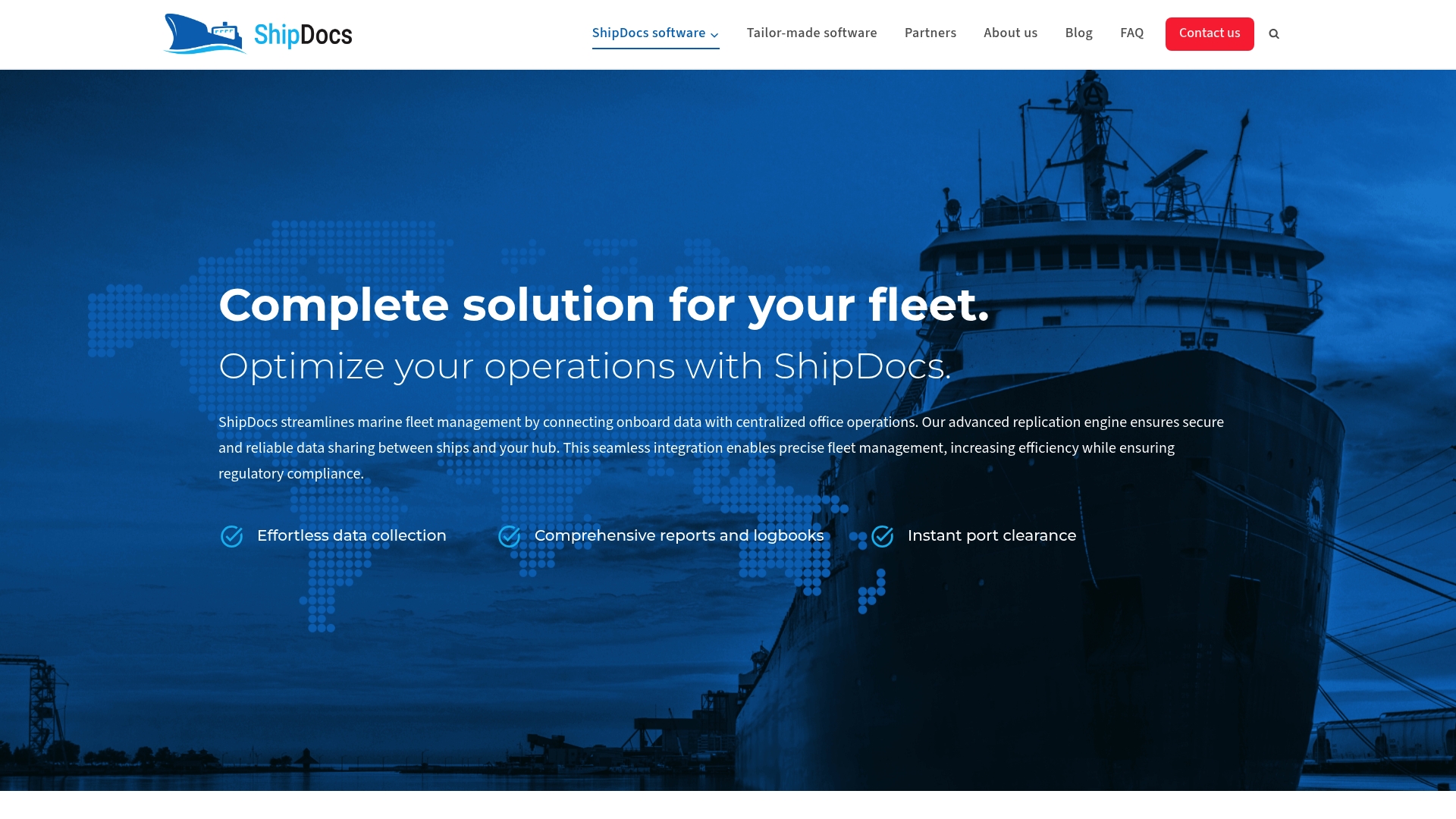
Built on what the vendor describes as 40 years of maritime experience, ShipDocs combines port clearance automation, electronic logbooks, and operational reporting in a single suite. The vendor states compliance with IMO, MARPOL, and SOLAS, which underpins its regulatory templates and port-specific forms.
Caractéristiques principales
- Port Docs automation with pre-filled, compliant forms that reduce manual entry and paperwork for port clearance.
- e-LogBook for voyage, maintenance, and operational records in an auditable digital format.
- Operational reporting with real-time data sharing and analytics to support shore teams and captains.
- Seamless integration with onboard and shore systems and customizable port templates for global use.
Key Differentiator
ShipDocs emphasizes deep maritime experience in its product design and templates. That vendor emphasis shows up as ready-made, regulation-focused modules and the offer of tailor-made software development to match a fleets specific procedures. The result is a system built to mirror maritime workflows rather than force them into generic menus.
Pour
- Highly integrated solution that reduces duplicate data entry between bridge systems and shore offices.
- Automation lowers paperwork and routine errors, freeing officers to focus on navigation and safety tasks.
- The vendor-updated templates keep form language aligned with current regulations, which helps compliance teams.
- Scalable configuration adapts from regional fleets to larger liner operators without rewriting core modules.
- Real-time reporting delivers actionable operational data to charterers and fleet managers.
Cons
- Independent third-party reviews and benchmarks are limited, so performance claims rest mainly on vendor materials.
- The suites breadth creates a learning curve for crews and administrators who use digital tools infrequently.
- Pricing is not listed publicly and is tailored per customer, which obscures budgeting until you engage sales.
When It May Not Fit
If you operate a very small fleet or move vessels infrequently, the implementation effort and configuration may outweigh the productivity gains. Teams lacking a local IT contact or change management capacity will face longer onboarding. Buyers who require transparent list pricing up front will find the vendors sales process mandatory.
Pour qui ?
Mid-sized to large shipping companies, technical managers, and fleet operations teams seeking integrated, compliance-oriented management tools. Ideal where port clearance speed, auditability of logs, and centralized operational reporting drive commercial or safety decisions.
Cas d'utilisation dans le monde réel
A shipping line automated port clearance with pre-filled Port Docs, moved paper logs into the e-LogBook, and fed voyage metrics into the reporting module. The fleet reported fewer form rejections at ports and faster turnaround for shore-side analytics and route adjustments.
Tarification
Pricing is bespoke. ShipDocs requires direct contact for a tailored quote that typically covers licensing, implementation, and any custom development. Expect a formal needs review before receiving an estimate.
Site web : https://ship-docs.com
Navozyme
En bref
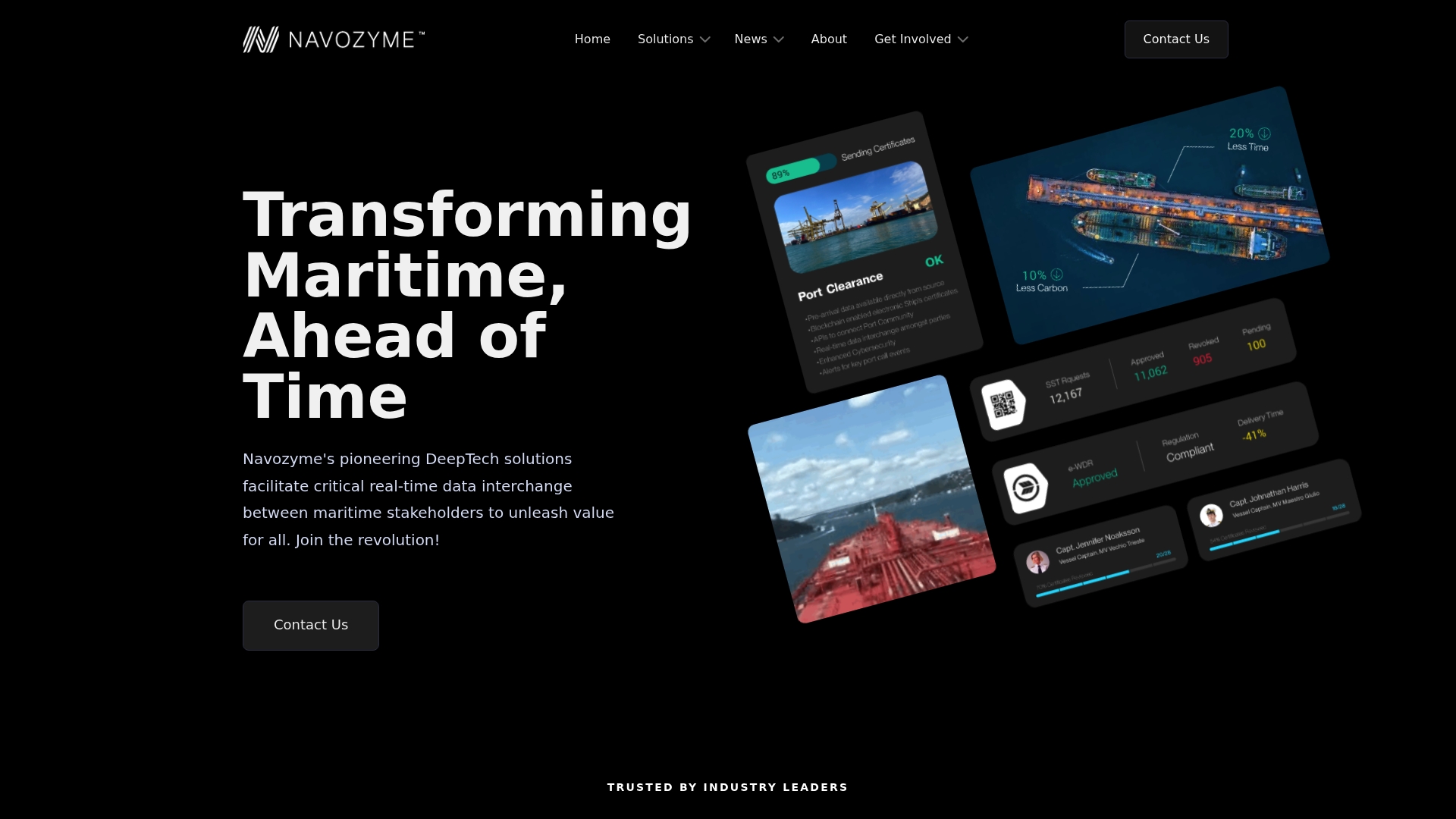
Offers blockchain-enabled digital seafarer credentials stored in a digital wallet and ties those credentials to real-time port events. The company operates across Singapore, Spain, Portugal, UK, France, and Germany and positions itself at the intersection of maritime compliance, automation, and decarbonization.
Caractéristiques principales
- Real-time data exchange between ports, ship operators, and terminals to shorten handoff times and reduce manual confirmation loops.
- Blockchain-enabled electronic certificates and documentation for verifiable ownership, compliance records, and audit trails.
- Port call administration tools that standardize arrival, berth, and bunkering data across stakeholders to cut administrative friction.
- Seafarer credential management through a digital wallet that consolidates licenses, training records, and medical certificates.
- AI-driven analytics and distributed ledger technology to improve data veracity and flag anomalies for compliance reviews.
Key Differentiator
Navozyme blends blockchain and AI to unify multiple maritime processes on a single platform rather than offering point tools for one workflow. That combination aims to make records tamper resistant while using analytics to surface actionable exceptions during port calls and compliance checks.
Pour
- Real-time linking of port events to certificates reduces back-and-forth paperwork and speeds approvals for port clearance.
- The digital wallet model moves crew documents off paper and email which cuts verification time during audits and inspections.
- Blockchain-backed records create an auditable trail that helps with regulatory reporting and dispute resolution.
- AI analytics focus on data veracity which helps operators spot incorrect entries or suspicious patterns before fines accumulate.
- Public positioning on decarbonization and circular blue economy initiatives makes the offering relevant for ports prioritizing emissions targets.
Cons
- Public material highlights industry focus but offers limited independent feedback on day-to-day software usability.
- There is little third-party review data on customer support responsiveness or onboarding speed for large fleets.
- Limited evidence of widespread user adoption outside the markets listed suggests possible gaps in international scale or local integrations.
Pour qui ?
Maritime authorities, port operators, ship owners, maritime training institutions, and logistics providers that want to move crew credentials, compliance documents, and port call data into a verifiable digital flow rather than maintaining paper trails.
Cas d'utilisation dans le monde réel
A port authority uses Navozyme to automate port call handshakes and attach verified certificates to arrival records. That process reduces manual checks, lowers documentation errors during MARPOL and safety audits, and shortens the average dwell time for arriving vessels.
Tarification
Public materials list the product as informational only and do not publish standard pricing tiers. Contacting Navozyme is required for quotes, deployment timelines, and scope for custom integrations or advisory services.
Site web : https://navozyme.com
Onboard Platform
En bref
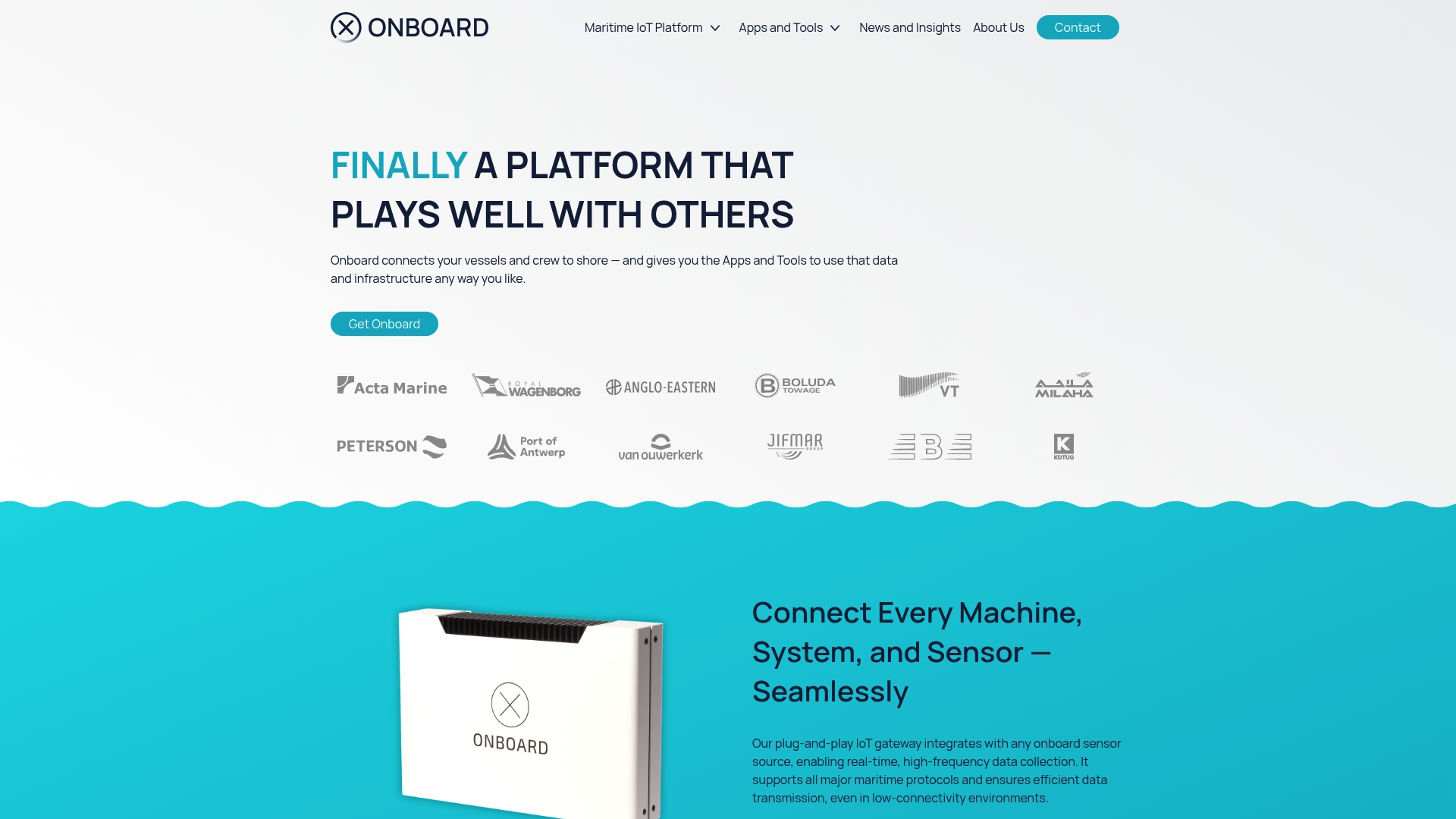
The vendor reports a 33% reduction in fuel consumption after deploying Onboard across a fleet, a concrete outcome tied to its apps and gateways. Onboard focuses on bringing high frequency vessel sensor data ashore while keeping crew communication and analytics within the same platform.
Caractéristiques principales
- Maritime IoT gateway for real time, high frequency data collection from onboard sensors and systems.
- Two way communication between vessel and shore for messages, alerts, and small file exchanges.
- Apps for fuel efficiency, emission control, vessel monitoring, and a digital logbook for voyage records.
- Open Vessel API that exposes sensor streams and event data for custom workflows and third party tools.
- Plug and play installation with remote device management to reduce downtime during rollout.
Key Differentiator
Onboard pairs sensor level connectivity with crew communication and an open API, which lets technical teams pull raw telemetry into their own analytics. That focus makes it a platform for operational teams who want sensor accuracy and custom data flows rather than a registration or compliance portal like VesselFlag.
Pour
- Real time collection and shore side ingestion give operations timely visibility for routing and fuel decisions. This is useful when minutes of delay matter.
- Supports many maritime protocols and sensor types so you rarely need custom hardware adapters. Integrations are often configuration rather than engineering heavy.
- Modular apps let teams adopt fuel or emissions tooling one at a time instead of buying an all or nothing suite.
- Open API enables bespoke analytics, automated reports, and data exports to third party systems you already run.
- Remote management cuts vessel visits for routine updates and keeps installations cleaner during busy trading schedules.
Cons
- Public third party reviews and verified customer feedback are limited, which makes independent validation harder.
- Dependence on onboard sensors and connectivity means performance drops in extremely remote regions or on hardware constrained vessels.
- Integration complexity will vary with legacy systems. Expect professional services for nonstandard sensor stacks.
- Pricing is not published, so budgeting requires a direct quote and technical scoping.
When It May Not Fit
If your fleet operates where satellite windows are extremely narrow and you cannot add edge buffering hardware, Onboard’s real time promise will be hard to meet.
If you need widely published customer references before buying, this vendor has limited public case studies and third party ratings.
If your team lacks a systems integrator or IT resource, the open API and custom workflows will add upfront work.
Pour qui ?
Shipping companies, offshore fleet operators, and maritime logistics teams that have on board sensors and an appetite for custom analytics. Best for operators who want to turn live telemetry into operational decisions rather than buy a fixed reporting product.
Cas d'utilisation dans le monde réel
A fleet operator installed Onboard gateways and the vendor apps across multiple vessels. The platform fed live consumption data to shore analytics and automated emissions reports. That 33% figure above is the company reported outcome used to justify a wider rollout.
Tarification
Onboard does not publish list pricing. The vendor positions pricing as custom based on fleet size, hardware footprint, and integration scope, so expect a scoped quote and a technical assessment before a firm figure.
Site web : https://onboard-platform.com
Comparing VesselFlag with Top Alternatives in Vessel Registration Services
Choosing the vessel registration service involves considering workflow efficiency, registration scope, and the strategic benefits of each provider. Here’s how VesselFlag and competing services compare:
Turnaround Times and Immediate Utilization
VesselFlag’s key differentiation is its focus on enregistrement provisoire within 1–7 days, making it well-suited for owners requiring immediate operational readiness. In contrast, services like SeaLogs focus on digital transitions for daily vessel records, which—while useful for ongoing management—lack VesselFlag’s expediency in registration.
Specialized Operational Tools
While VesselFlag offers assistance in MMSI, insurance, and logistics alongside registration, competitors like ShipDocs excel in presenting integration between operational reporting and port-clearance documentation. However, as ShipDocs emphasizes fleet-level compliance and reporting, its strengths differ from VesselFlag’s specialization in individual and swift vessel registration setups.
Best Fit for Specific Scenarios
- For immediate readiness, including MMSI and insurance setups, Vessel Flag addresses urgent scheduling challenges during a vessel’s sale or charter.
- For fleets prioritizing crew-friendly interfaces and basic record digitization, SeaLogs simplifies maintenance and safety reporting.
- For compliance-heavy, large-scale fleet management, ShipDocs excels in port clearance and regulatory workflows.
Our Pick
VesselFlag stands out due to its expertise in provisional vessel registration combined with integrated administrative services, making it the go-to choice for operators facing tight deadlines or complex registry requirements. However, larger shipping companies or those prioritizing operational analytics might find ShipDocs more suitable.
Vessel Registration Services Compared
Choosing the right vessel registration service depends on provisional speeds, service scope, and user-specific features.
| Service | Key Features | Ideal For | Tarification | Primary Limitation |
|---|---|---|---|---|
| Vessel Flag | Fast provisional registration, MMSI setup, logistics support | Yacht owners needing rapid registration and extensive jurisdiction options | Not disclosed | Pricing varies by jurisdiction and vessel specifics |
| SeaLogs | Digital logbooks, maintenance tracking, safety reporting | Operators inexperienced with digital tools adopting shipboard operational software | Not disclosed | No public reviews or pricing, limited verified performance feedback |
| ShipDocs | Port clearance automation, e-logbook, compliance tools | Medium to large fleets prioritizing integration and regulatory compliance | Not disclosed | Broad feature set leads to higher learning curve during onboarding |
| Navozyme | Blockchain-backed certifications, digital wallet, AI verification | Maritime authorities focused on digital credentialing and compliance accuracy | Not disclosed | Minimal user adoption feedback and integration availability described |
| Onboard | Real-time IoT, open API, fuel and emission-focused analytics | Fleet operators seeking custom analyses from real-time telemetry | Not disclosed | Remote area functionality and complex integration requirements |
Find Fast and Reliable Vessel Registration with VesselFlag
Choosing the right boat flagging solution in 2026 is critical when time and compliance are nonnegotiable. VesselFlag understands the need for quick provisional registrations, with options from San Marino to UK Part 1, ensuring your vessel is legal and ready for charter or sale within days. Their expert support eases the complexity around MMSI licensing, insurance, and logistics, saving you from fragmented service headaches.
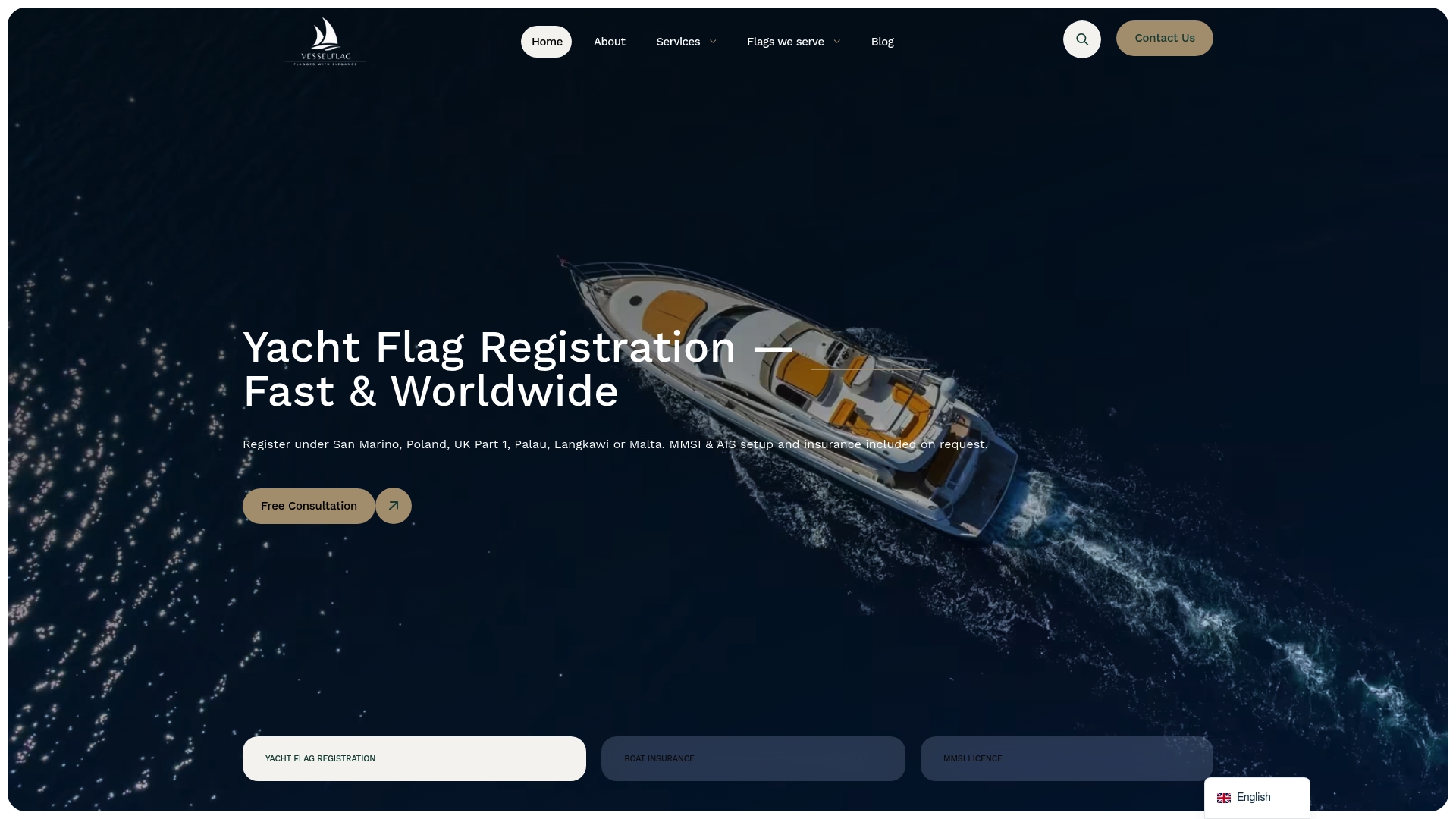
Ready to speed up your vessel’s registration process while maintaining full compliance? Explore Enregistrement du pavillon - Pavillon du navire for detailed flag choices and timelines. Visit VesselFlag.com now to access transparent pricing and end-to-end maritime registration services. Get provisional documentation and MMSI setup in as little as 1–3 days and set sail without delay.
Questions fréquemment posées
How fast can I get provisional registration with VesselFlag?
VesselFlag offers provisional registration in 1–7 days, allowing you to start using your vessel quickly. This speed is crucial for owners needing to meet cruising or charter deadlines while the final paperwork clears. You can expect to meet your deadlines efficiently with their expedited service.
What is the main advantage of SeaLogs over VesselFlag?
SeaLogs emphasizes a zero-skills required approach, making it exceptionally user-friendly for crew members. While VesselFlag provides comprehensive vessel registration services, SeaLogs focuses on replacing paper logs and simplifying onboard record-keeping, which may be better for operations prioritizing ease of use aboard.
How does the pricing of VesselFlag compare to ShipDocs?
VesselFlag has transparent pricing that lists typical inclusions, which can help you budget before engaging legal counsel. In contrast, ShipDocs requires direct contact for a tailored quote, making it less predictable for budgeting until the sales process begins.
Can I rely on VesselFlag if I need support in multiple jurisdictions?
Yes, VesselFlag boasts local expertise across registries like San Marino, Poland, and Malta, which is crucial for minimizing delays in cross-border registration. This localized presence ensures that your registration process is managed smoothly, enabling you to navigate complex regulations more effectively.
What types of operational support does VesselFlag provide?
VesselFlag bundles services like Configuration MMSI et AIS, insurance coordination, and logistics to help you get your boat operational immediately after registration. This end-to-end operational support simplifies the process, allowing you to focus on enjoying your vessel rather than managing separate service providers.