

International yacht registration often derails from unexpected fees, unclear documentation demands, and jurisdictional confusion. This practical checklist equips you with actionable criteria, cost transparency, and jurisdiction comparisons to secure faster, compliant registration. You will learn key selection factors, mandatory documents, cost structures, and jurisdiction benefits to avoid delays and maximize operational freedom.
Table des matières
- How To Choose The Right Yacht Registration: Selection Criteria
- Common Documentation And Compliance Checklist
- Comparison Of Yacht Registration Jurisdictions And Benefits
- Step-By-Step Yacht Registration Process Internationally
- Cost Breakdown And Hidden Fees In Yacht Registration
- Flag State Legal And Operational Implications
- Summary Comparison And Situational Recommendations
- Get Expert Help With Your Yacht Registration
Principaux enseignements
| Point | Détails |
|---|---|
| Selection Criteria | Legal implications, fee transparency, processing speed, flag reputation, and compliance complexity determine optimal jurisdiction choice. |
| Mandatory Documentation | Proof of ownership, builder’s certificate, seaworthiness evidence, personal identification, and complete registration forms are essential. |
| Cost Variations | Base fees differ widely, with hidden charges adding 20-30% for surveys, MMSI licenses, and administrative costs across registries. |
| Flag State Impact | Reputable flags reduce inspections and ease port access, while black/grey listed flags increase operational restrictions by 50%. |
| Situational Recommendations | Choose Marshall Islands for speed, Panama for cost effectiveness, Malta for EU compliance, and US for strong legal protections. |
How to Choose the Right Yacht Registration: Selection Criteria
Your jurisdiction choice directly impacts your yacht’s legal status, tax obligations, and operational efficiency. Legal and tax implications vary dramatically between registries and shape your long term ownership costs and liability exposure. According to industry analysis, legal and tax implications of jurisdictions are among the highest importance in selection.
Fee transparency separates hassle from smooth registration. Registries with clear upfront pricing let you budget accurately, while others conceal charges that emerge mid process. Processing efficiency determines when you legally operate; some jurisdictions deliver certificates within days, others take months.
Flag state reputation affects inspection frequency and port reception worldwide. Well regarded flags mean fewer delays and smoother clearance. Documentation complexity varies; simpler registries suit straightforward ownership structures, while complex ones demand extensive corporate documentation.
Consider these core factors when evaluating jurisdiction legal and tax considerations:
- Tax treatment of yacht ownership and operational income
- International maritime law compliance and treaty participation
- Processing timelines from application to certificate issuance
- Inspection and safety regulation stringency
- Documentation demands for ownership structure and vessel specifications
- Annual renewal costs and administrative burdens
Common Documentation and Compliance Checklist
Successful registration hinges on complete, accurate documentation submitted upfront. Missing or incorrect paperwork creates delays that stretch weeks into months. Common documentation includes proof of ownership, builder’s certificate, seaworthiness evidence, registration forms, and owner IDs.

Proof of ownership establishes legal title through bills of sale or previous registration certificates. Builder’s certificates verify vessel construction details and specifications. Seaworthiness certificates or survey reports demonstrate the yacht meets safety and structural standards for its intended waters.
Personal identification must be current and match ownership documents exactly; discrepancies trigger verification delays. Registration forms vary by jurisdiction but universally require accurate vessel dimensions, engine specifications, and intended use declarations. Tonnage certification often needs professional measurement, especially for commercial operation eligibility.
Research shows comprehensive self checks reduce processing delays by up to 60%. Prepare this mandatory documentation checklist:
- Original or certified copies of purchase agreements and bills of sale
- Builder’s certificate with hull identification number matching vessel
- Marine survey report dated within 12 months
- Valid passport or government issued identification for all owners
- Completed jurisdiction specific registration forms with notarization where required
- Tonnage measurement certificate if vessel exceeds size thresholds
- Corporate formation documents if registering under business entity
- Previous registration cancellation proof if transferring flags
Conseil de pro : Create a digital folder with scanned copies of all documents before starting your application. Many registries now accept electronic submissions that accelerate processing times compared to mail based systems.
Following key compliance steps systematically prevents common pitfalls that derail applications.
Comparison of Yacht Registration Jurisdictions and Benefits
Jurisdiction selection determines your operational framework, cost structure, and international mobility. Panama dominates global yacht registration with over 9,000 vessels registered due to low fees and favorable policies.
The Marshall Islands offers same day registration backed by global support offices in major maritime centers. This speed advantage serves owners needing immediate legal status for urgent departures or transactions. Cayman Islands and Malta attract tax conscious owners seeking offshore advantages combined with EU compliant flags for Mediterranean cruising.
Onshore flags like the United States provide robust legal protections and straightforward domestic enforcement but impose stricter crewing, safety, and operational regulations. Flag state reputation directly impacts port state control inspections; respected registries face minimal scrutiny while questionable flags trigger frequent boardings and delays.
| Jurisdiction | Processing Time | Base Cost Range | Key Benefits | Considerations |
|---|---|---|---|---|
| Panama | 2-4 weeks | $800-$2,000 | Largest registry, low cost, minimal restrictions | Spanish language documents, annual tonnage fees |
| Îles Marshall | Same day to 1 week | $1,500-$3,500 | Fastest processing, global offices, strong reputation | Higher initial costs, complex corporate requirements |
| Îles Caïmans | 2-3 weeks | $1,200-$2,800 | Tax advantages, British legal system, crew flexibility | Periodic safety inspections required |
| Malte | 3-4 weeks | $2,000-$4,000 | EU flag, Mediterranean access, commercial advantages | Higher fees, stricter compliance standards |
| United States | 4-8 weeks | $500-$1,500 | Strong legal framework, domestic protections | Citizenship requirements, Jones Act restrictions |
Implementing best practices means matching jurisdiction attributes to your operational profile. Review detailed jurisdiction guidance to align registry choice with your specific cruising plans and ownership structure.
Step-by-Step Yacht Registration Process Internationally
Systematic execution prevents errors that cause rejections and restart cycles. Evidence shows gathering complete documentation upfront reduces processing delays by up to 60%.
-
Collect and Verify Documentation: Assemble all ownership proofs, certificates, surveys, and identification documents. Cross check every detail for accuracy and completeness before submission. Missing signatures or outdated surveys trigger immediate rejections.
-
Select Optimal Flag State: Match your operational needs with jurisdiction benefits using cost, timeline, legal, and access criteria. Consider where you cruise most, tax implications, and reputation factors affecting inspections.
-
Submit Complete Application: File all forms and supporting documents according to registry specifications. Many jurisdictions now offer online portals that expedite processing compared to postal submissions.
-
Respond Promptly to Queries: Registries often request clarifications or additional documentation. Fast turnaround on these requests keeps your application moving; delays compound into weeks lost.
-
Obtain Registration Certificate: Once approved, your certificate confirms legal status for operation, port clearance, and insurance purposes. Keep certified copies aboard and digitally backed up.
Follow detailed registration steps tailored to your chosen jurisdiction. Understanding and addressing common challenges proactively ensures smooth processing.
Conseil de pro : Establish direct communication with your registry contact person early in the process. Having a responsive liaison dramatically accelerates query resolution and approval timelines.
Cost Breakdown and Hidden Fees in Yacht Registration
Budgeting accurately requires understanding both visible and concealed costs across the registration lifecycle. Initial registration fees form the advertised base but rarely tell the complete story.
Annual renewal fees contribute ongoing expenses that vary from nominal to substantial depending on jurisdiction and vessel size. Additional charges accumulate through mandatory services: tonnage measurement surveys cost $300 to $800, MMSI radio licenses add $50 to $200, and administrative processing fees range from $100 to $500.
Analysis reveals hidden fees such as tonnage surveys, MMSI licenses, and admin charges can add 20-30% to the base registration cost. Registries with transparent fee structures help you avoid budget overruns and plan accurately.
Typical cost components include:
- Base registration fee (varies by vessel length and tonnage)
- Annual renewal and flag state dues
- Tonnage measurement and certification surveys
- MMSI number allocation and radio licensing
- Document authentication and notarization fees
- Courier and handling charges for physical certificates
- Agent or intermediary service fees if using representation
| Cost Category | Typical Range | When Applied | Avoidability |
|---|---|---|---|
| Enregistrement initial | $500-$4,000 | Application submission | Mandatory |
| Annual Renewal | $200-$1,500 | Yearly | Mandatory |
| Tonnage Survey | $300-$800 | Initial and periodic | Mandatory for most |
| MMSI License | $50-$200 | Initial setup | Mandatory for radio |
| Administrative Processing | $100-$500 | Throughout process | Often bundled |
| Agent Services | $500-$2,000 | Optional | Discretionary |
Comprehensive cost factor analysis helps you compare true total expenses across jurisdictions. Managing hidden fees effectively protects your budget from surprises.
Flag State Legal and Operational Implications
Your flag choice establishes the legal framework governing your yacht’s operation, liability, and international standing. Flags appearing on Paris MoU or Tokyo MoU black and grey lists face 50% more frequent inspections and travel restrictions.
Well regarded flags facilitate smooth port clearance worldwide and minimize bureaucratic complications. Legal jurisdiction determines which courts hear disputes, what liability standards apply, and how maritime law governs your vessel. Choosing flags with favorable treaty participation eases obtaining cruising permits and reduces entry formalities.
Key operational impacts include:
- Inspection frequency at foreign ports affecting schedule reliability
- Crew nationality and certification requirements influencing hiring options
- Insurance availability and premium rates tied to flag reputation
- Access to exclusive or restricted waters based on diplomatic relationships
- Dispute resolution jurisdiction in case of accidents or claims
“The flag you fly is not just a piece of cloth; it’s your yacht’s passport, determining where you can go, what inspections you face, and which legal protections govern your vessel. Choose wisely, because changing flags later involves the entire registration process again.”
Comprendre flag state legal impacts helps you anticipate long term operational implications beyond initial registration convenience. The impact of flag reputation on inspections and port access cannot be overstated for owners planning extensive international cruising.
Summary Comparison and Situational Recommendations
Consolidating all factors enables informed decision making tailored to your specific situation. Panama’s registry surpasses others in size and cost effectiveness with over 9,000 registered vessels, making it ideal for budget conscious owners prioritizing low fees over processing speed.
| Priority | Recommended Jurisdiction | Rationale | Typical Timeline |
|---|---|---|---|
| Fastest Processing | Îles Marshall | Same day to 1 week approval with global office network | 1-7 days |
| Lowest Cost | Panama | Minimal fees and ongoing charges, largest registry | 2-4 weeks |
| Tax Optimization | Panama or Cayman Islands | Offshore advantages with favorable tax treatment | 2-4 weeks |
| EU Compliance | Malte | Recognized EU flag for Mediterranean cruising and commercial use | 3-4 weeks |
| Legal Protections | United States | Robust domestic legal framework and enforcement | 4-8 weeks |
| Balanced Option | Îles Marshall | Strong reputation, reasonable costs, efficient processing | 1-2 weeks |
Final checklist for efficient registration:
- Verify all ownership documents are current and accurate
- Obtain recent marine survey within past 12 months
- Confirm personal identification matches ownership records exactly
- Budget for total costs including hidden fees (add 25-30% buffer)
- Research flag state reputation and inspection implications for your cruising area
- Prepare digital copies of all documents for electronic submission where available
- Establish registry contact for direct communication during processing
Consult comprehensive registration guidance and review detailed jurisdictional comparisons to finalize your optimal choice. Expert services provide personalized assistance navigating complex requirements and accelerating approvals.
Get Expert Help with Your Yacht Registration
Navigating international yacht registration demands expertise that prevents costly mistakes and accelerates approvals. Vessel Flag offers specialized guidance across all major jurisdictions, ensuring your documentation meets exact requirements and your flag choice aligns with operational needs.
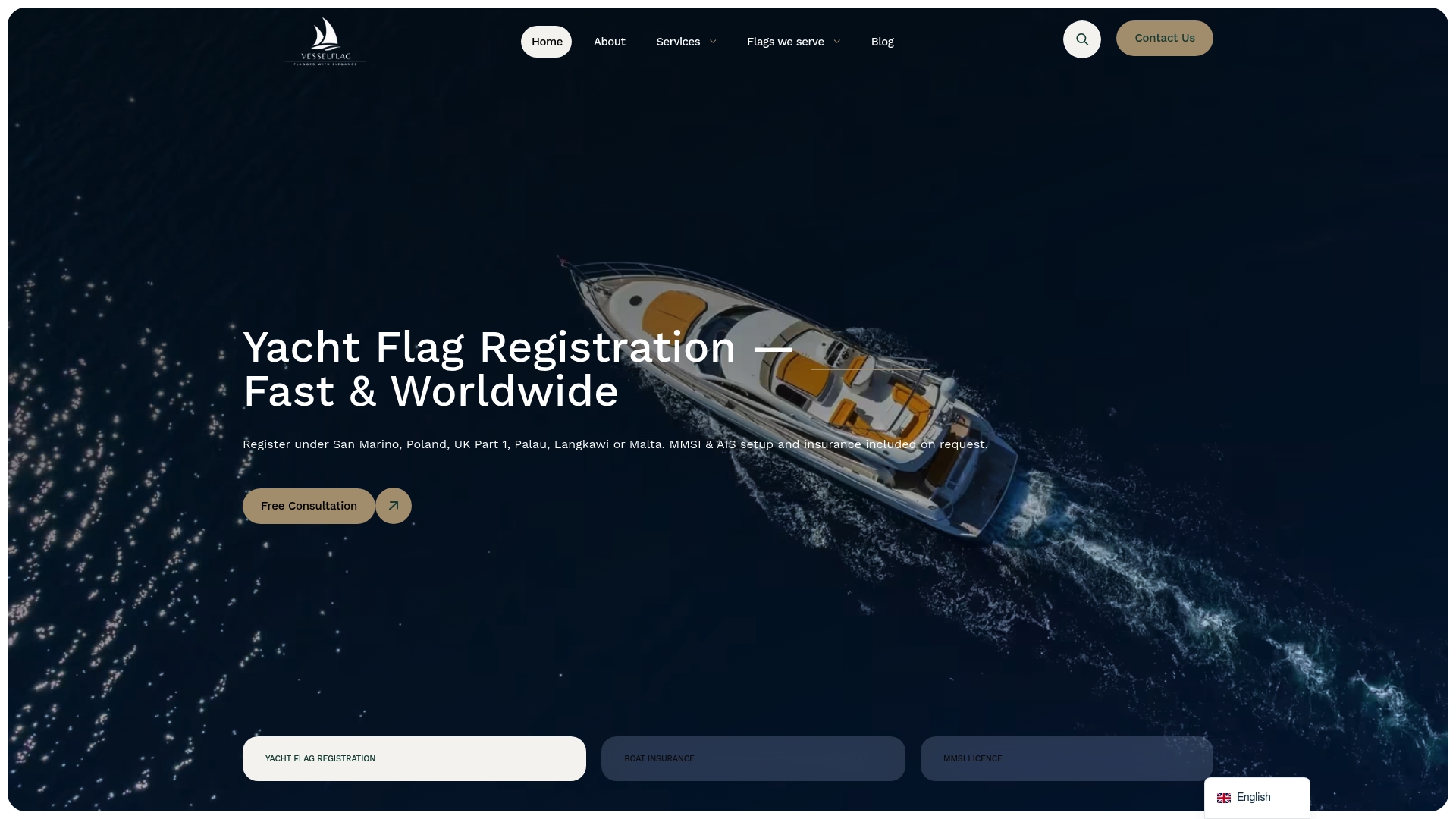
Our team helps you avoid hidden fees, compliance pitfalls, and processing delays that plague self managed registrations. We provide transparent cost breakdowns, handle complex paperwork, and maintain direct registry relationships that expedite your application. Whether you need comprehensive registration guidance, help navigating compliance challenges, or clarity on cost factors, our proven processes deliver results. Start your smooth registration journey with confidence today.
FAQ
What documents are absolutely required to register my yacht internationally?
Proof of ownership through bills of sale, builder’s certificate with hull identification, seaworthiness certificate or recent survey, personal identification for all owners, and completed registration forms are universally required. Requirements vary slightly by jurisdiction, so confirm specific registry guidelines before submission. Review required documentation details for comprehensive checklists.
How can I avoid unexpected fees during the yacht registration process?
Request a complete fee breakdown from your registry before starting, covering base registration, annual renewals, surveys, MMSI licensing, and administrative charges. Budget an additional 20-30% above quoted base fees to accommodate typical hidden costs. Choosing registries with transparent pricing structures eliminates surprises. Learn strategies to avoid hidden fees systematically.
Why does the choice of flag state matter for my yacht?
Your flag determines inspection frequency, port access ease, legal jurisdiction for disputes, and operational restrictions. Reputable flags reduce inspections and travel complications, while flags on international black or grey lists increase scrutiny by 50% and face entry restrictions. Flag choice affects insurance rates, crew requirements, and long term compliance burdens. Understand flag state importance for operational planning.
What is the fastest way to register a yacht internationally?
Choose registries like the Marshall Islands offering same day to one week processing with global office networks supporting rapid approvals. Prepare complete, accurate documentation beforehand to eliminate verification delays. Electronic submission through online portals accelerates processing compared to postal methods. Explore fastest registration options by jurisdiction.
Should I use a yacht registration service or handle it myself?
Professional services prevent documentation errors, hidden fee surprises, and regulatory pitfalls that delay or reject self managed applications. They streamline complex processes, maintain direct registry contacts, and provide expertise navigating jurisdiction specific requirements. Services deliver faster approvals and owner peace of mind, especially for first time international registrations. Consider professional registration services for efficient, compliant outcomes.
Recommandé
- Conformité de l'immatriculation des bateaux : Pourquoi c'est important au niveau mondial
- 6 exigences clés en matière de conformité des yachts pour faciliter l'enregistrement
- Explication de la procédure d'immatriculation des bateaux : Impact juridique à l'étranger
- Principaux défis en matière d'immatriculation et de conformité des yachts et comment les relever en toute confiance - Vessel Flag