

Choosing a flag? See our complete guide How to Choose the Right Flag for Your Yacht with prices for 6 flags, or compare Poland vs San Marino vs UK Part 1.
TL;DR:
- Selecting a yacht’s flag is a strategic decision with far-reaching operational, legal, and financial implications throughout the vessel’s lifecycle.
- Owners must carefully consider eligibility, registration requirements, and evolving IMO regulations to ensure compliance and optimize port access, insurance, and chartering prospects.
Selecting a flag for your yacht is one of the most consequential legal decisions you will make as a vessel owner, yet most owners treat it as a box to check after the purchase. The reality is that maritime flag choice considerations reach into every corner of your vessel’s operational life, from the ports you can enter freely to the insurance premiums you will pay and the financing terms you can negotiate. Flag choice has far-reaching consequences that no serious yacht owner can afford to ignore. This guide cuts through the complexity so you can make a decision that protects your vessel and your investment.
Table of Contents
- Why flag choice matters: regulatory and operational impact
- Key eligibility and documentation requirements by flag registry
- Navigating new IMO registration guidelines and anti-fraud measures
- Comparing flags: operational flexibility, costs, and reputational factors
- Practical steps to choose and maintain the right flag for your yacht
- Rethinking flag strategy: quality over convenience in 2026 and beyond
- Explore expert yacht registration services to simplify your flag choice
- Frequently asked questions
Key Takeaways
| Point | Details |
|---|---|
| Flag choice impact | Selecting a flag affects your yacht’s legal status, compliance, and operational freedom. |
| Registry requirements differ | Each flag registry has unique eligibility rules and documentation standards. |
| New IMO rules | Expect stricter ownership and vessel verification under 2026 international guidelines. |
| Strategic flag use | Using multiple flags can optimize chartering, compliance, and financing flexibility. |
| Professional support helps | Expert guidance streamlines the registration process and ensures regulatory adherence. |
Why flag choice matters: regulatory and operational impact
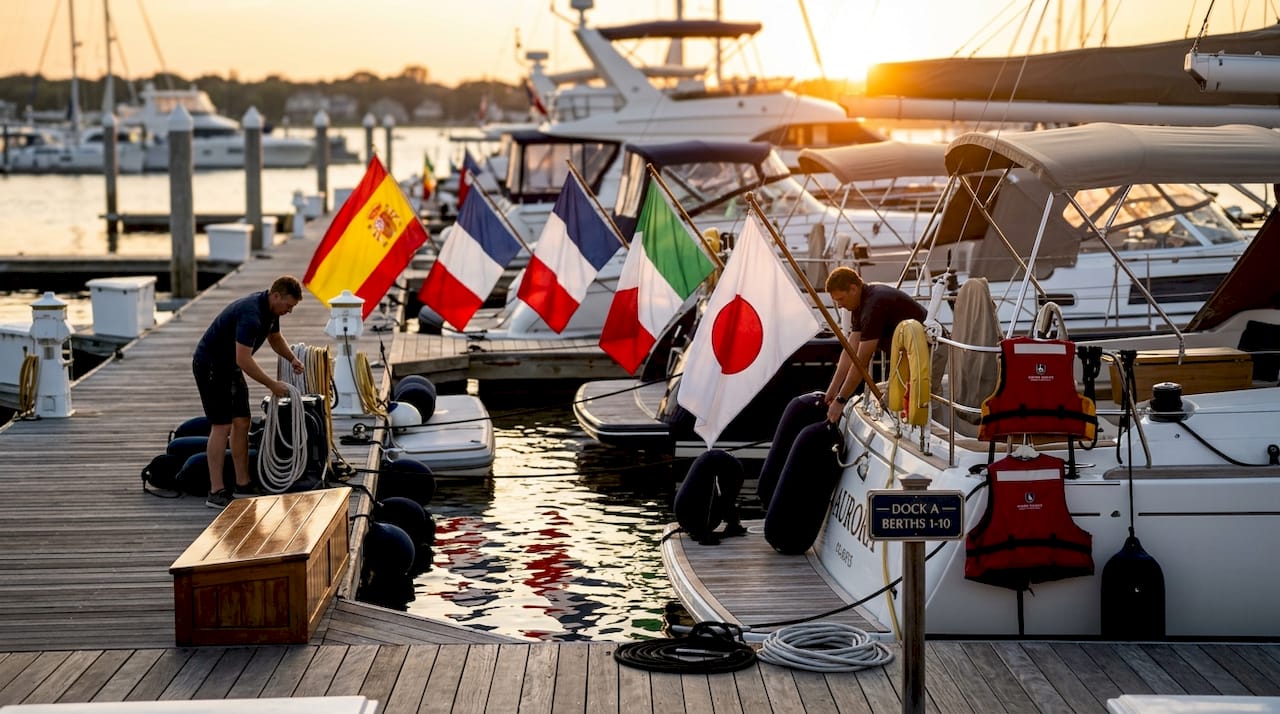
Your flag is not just a piece of fabric at the stern. It is the legal identifier that determines which country’s maritime law governs your vessel, how port authorities treat you, and whether your charterers and lenders will work with you at all. Every port access and logistics impact traces back, in some form, to the flag you fly.
Here is where yacht owners consistently underestimate the stakes:
- Legal jurisdiction. Your flag state sets the rules for crew certification, safety equipment, and environmental compliance. Choose a flag with gaps in its oversight, and you carry that legal exposure everywhere you sail.
- Port state control (PSC) inspections. Port authorities classify flags by their inspection track records. Vessels flying flags on high-risk lists face more frequent and more intensive inspections, which translates directly into delays and potential detentions.
- Charterer restrictions. Major charter brokers maintain approved flag lists. An unlisted or low-quality flag can block you from the most lucrative charter markets entirely.
- Insurance and financing. Underwriters and lenders scrutinize flag reputation. A poorly regarded flag can raise your premium or narrow the pool of willing lenders.
- Crew requirements. Some flags mandate specific nationality ratios or certification standards. If your crew does not qualify, you face operational gaps before you even leave the dock.
“The wrong flag can create port access and regulatory and insurance friction, while the right flag improves operational efficiency and reduces long-term risk.” Strategic flag decisions matter far more than most owners realize when they are focused on completing a purchase.
Choosing maritime flags without weighing these factors is like selecting a business jurisdiction without understanding its tax code. The upfront decision shapes every downstream outcome. To understand how these factors intersect in practice, choosing the right yacht flag requires matching your vessel’s profile to the registry’s actual regulatory environment, not just its fees.
Key eligibility and documentation requirements by flag registry
Once you accept that flag choice is strategic, the next question is practical: which flags can you actually register under? The answer depends on a set of eligibility criteria that vary more than most owners expect.
Vessel size and tonnage thresholds. Many registries set minimum or maximum vessel size requirements. Maltese registry requires pleasure vessels over 6 meters and commercial vessels over 12 meters, and some registries demand mandatory tonnage measurement surveys while others do not. Know your vessel’s gross tonnage before you start shopping flags.
Nationality and residency of owners. Some flags limit registration to nationals or residents of that country. Others, often called open registries, accept owners from any nationality, giving you broader flexibility if your ownership structure is international.
Corporate vs. individual ownership. If your vessel is held through a company, certain flags may require that company to be incorporated in a specific jurisdiction, or they may impose additional documentation on beneficial owners.
Commercial vs. private use classification. A yacht used for private recreation and one used for commercial charter face different compliance requirements. Choosing a flag that is well-suited to private use but has gaps in its commercial framework will create problems the moment you take your first paid charter.
Survey and inspection requirements. Some registries require a pre-registration survey conducted by an approved classification society. Others offer a streamlined process with a post-registration inspection window. If your vessel is not yet in survey-ready condition, the registry’s inspection timeline matters to your launch schedule.
Documentation accuracy under verification regimes. Incorrect or incomplete ownership documents are now a primary cause of registration delays. Under newer verification standards, even minor discrepancies in beneficial ownership records can pause your application entirely.
Understanding these requirements before you approach a registry is not just good preparation. It is the difference between a registration that completes on schedule and one that drags on for months. The efficient vessel registration requirements for 2026 reflect how sharply these standards have tightened in recent years.
Navigating new IMO registration guidelines and anti-fraud measures
The regulatory backdrop for flag registration shifted meaningfully in 2026. If you are registering a vessel now or considering re-flagging, you are operating under a stricter set of international expectations than existed even two years ago.
The International Maritime Organization (IMO) introduced guidelines that place greater responsibility on registries to verify who actually owns a vessel and to confirm the vessel’s identity is accurately represented. IMO’s 2026 guidelines focus on due diligence, ownership verification, and preventing fraudulent registrations, increasing requirements for vessel identity confirmation across participating registries.
What this means for you as a yacht owner:
- Beneficial ownership disclosure. You will need to provide clear documentation of who ultimately controls the vessel, not just the registered entity. Shell company structures without proper supporting documentation will face pushback.
- Vessel identity verification. Hull identification numbers, IMO numbers, and prior registration records will be cross-checked more thoroughly than before.
- Longer approval timelines. Registries handling high volumes of applications under the new rules are taking more time. Build buffer time into any transaction that depends on registration completion.
- Proactive documentation assembly. Owners who arrive at registration with a complete, verified documentation package move through the process far faster than those who submit and then respond to information requests reactively.
“Registries that operate with insufficient governmental oversight risk becoming vectors for fraud and sanctions evasion. The IMO’s new framework specifically targets registries that function as for-profit businesses without genuine regulatory connection to their flag state.”
Pro Tip: Compile your ownership documentation, including corporate structure charts, beneficial owner IDs, and vessel history records, before you submit a single form. The registries moving fastest in 2026 are the ones processing complete files, not incomplete ones. For a step-by-step breakdown, the IMO registration guidelines for 2026 give you a clear process to follow.
Comparing flags: operational flexibility, costs, and reputational factors
Not all flags that pass the eligibility test perform equally in practice. The comparison below covers the dimensions that matter most to yacht owners focused on charter, financing, or simply smooth port operations.
| Flag registry | PSC inspection risk | Charter market acceptance | Registration cost range | Crew nationality restrictions | Processing speed |
|---|---|---|---|---|---|
| Malta | Low | High | Moderate | None | 5 to 10 days |
| UK Part 1 | Low | High | Moderate to high | None | 10 to 20 days |
| Palau | Low to moderate | Moderate to high | Low to moderate | None | 5 to 7 days |
| San Marino | Low | Moderate to high | Low to moderate | None | 3 to 7 days |
| Poland | Low | Moderate | Moderate | None | 7 to 14 days |
A few observations that rarely appear in standard flag comparisons:
- Charter market perception is self-reinforcing. Charterers maintain approved flag lists because their own insurers require it. Lower-quality flags require extra vetting, which delays charters and affects market access. Once a flag falls off those lists, getting back on is slow and difficult.
- Cost comparisons must include compliance costs, not just registration fees. A flag with low upfront fees but complex ongoing compliance requirements, annual audits, mandatory class surveys, or crew certification costs often ends up more expensive over a five-year horizon.
- Multi-flag strategies are not just for large commercial fleets. If you own more than one vessel, it may make sense to register them under different flags based on their individual trade routes, size profiles, or charter patterns. This requires expert coordination but can meaningfully reduce your overall regulatory burden.
Pro Tip: When evaluating flag options for yachts, ask each registry for its Paris MOU or Tokyo MOU detention rate. These published figures give you an objective, third-party view of how port authorities actually treat that flag in practice.
Practical steps to choose and maintain the right flag for your yacht
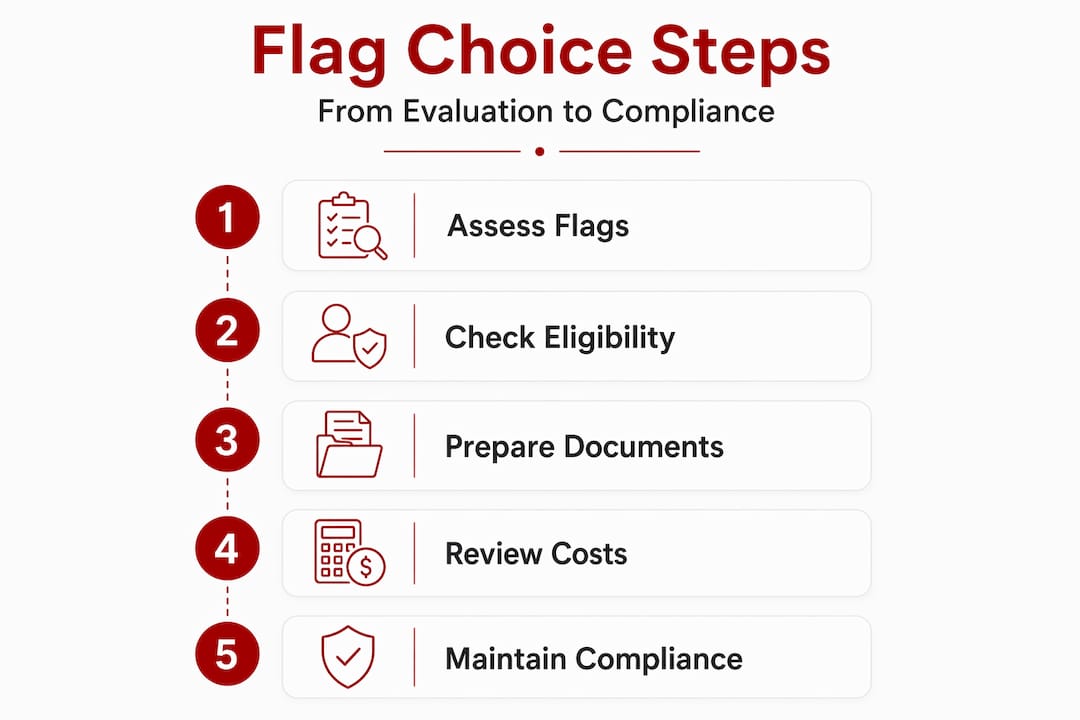
Strategy and research only pay off if you execute the registration process correctly. Here is how to approach flag selection as a disciplined, repeatable process rather than a one-time guess.
Define your vessel’s operational profile. Where will you sail? Will you charter commercially? What financing do you need? What is your ownership structure? The answers narrow your flag options before you even look at a registry list.
Assemble your documentation package first. Under 2026 verification rules, re-flagging rewards owners who provide full ownership and identity evidence upfront. Gather your bill of sale, corporate documents, beneficial owner identification, vessel survey certificates, and prior registration records before you apply anywhere.
Check for current sanctions or port access restrictions. Some flags carry geopolitical risk that limits port entry in specific regions. If your sailing plans include ports that scrutinize certain flag states, verify access before committing.
Monitor regulatory changes on an ongoing basis. Flag registration is not a set-and-forget decision. International maritime regulations evolve, and a flag that is optimal today can become a liability if its registry falls into compliance problems. Staying updated on maritime regulations is part of responsible ownership.
Reassess your flag at natural decision points. When you renew insurance, refinance, change your charter plans, or acquire an additional vessel, run through the flag assessment again. What worked three years ago may not be optimal now.
Engage expert support for complex decisions. Multi-jurisdiction ownership structures, vessels switching from private to commercial use, and re-flagging under tighter verification rules all benefit from professional guidance.
The benefits of maintaining proper yacht flag compliance extend beyond avoiding penalties. A clean compliance record strengthens your position with insurers, lenders, and charterers simultaneously, and those advantages compound over time.
Pro Tip: Create a simple flag review calendar. Set an annual reminder to check your flag registry’s PSC detention statistics and scan for any sanctions or regulatory changes affecting your registry. Fifteen minutes a year can prevent a very expensive surprise.
Rethinking flag strategy: quality over convenience in 2026 and beyond
Here is the perspective you will not read in most registration guides: the yacht owners who suffer the most expensive flag-related problems are rarely the ones who made reckless choices. They are the ones who made lazy ones. They chose a flag because it was fast, cheap, or because their broker mentioned it first. And for a while, it worked fine.
The 2026 regulatory environment has compressed the margin for that kind of thinking. Flags operating as for-profit businesses without genuine regulatory connection to their flag state are now actively targeted by IMO guidelines. The consequences of registering under one of these flags now include not just inspection risk, but potential cancellation of registration and liability for fraudulent documentation.
The conventional advice has always been to balance cost against compliance. That framing is outdated. Cost is a real factor, but the actual calculation is: what is the total cost of a flag that fails you? A single PSC detention costs more than several years of premium registry fees. A charter deal lost because your flag is not on an approved list costs more than the difference between a cheap and a quality registry. One financing deal that falls through because your lender does not recognize your flag’s regulatory framework costs more than anything you saved upfront.
The boat flag selection guide for 2026 reflects this shift, and the owners who are engaging with it seriously are the ones building long-term operational advantages. Ownership verification requirements are not going away. They will intensify. The owners who build their registration strategy around quality, transparency, and complete documentation now are positioning themselves to move faster and cheaper through every future regulatory cycle, because they have already done the hard work once.
Multi-flag strategies are worth considering seriously, but only with expert coordination. A poorly managed multi-flag structure creates more compliance complexity than it resolves. Done well, it is a genuine competitive advantage for owners with multiple vessels or diverse operational profiles.
The bottom line: treat your flag the way you treat your vessel’s insurance structure, as a decision that deserves proper analysis, expert input, and periodic review.
Explore expert yacht registration services to simplify your flag choice
Understanding maritime flag choice considerations is one thing. Executing the right strategy across a complex regulatory landscape is another. At VesselFlag.com, we work with yacht owners at every stage of the registration process, from initial flag selection through documentation preparation, compliance monitoring, and re-flagging decisions.
Our team brings direct experience across registries including Malta, UK Part 1, San Marino, Palau, Poland, and more, so we can match your vessel’s specific profile to the flag that delivers the best operational and commercial outcomes. We handle the documentation requirements that trip up even experienced owners under the new IMO verification standards. Whether you are learning how to register a yacht for the first time, comparing options in the yacht vs. boat registration guide, or focused on ensuring your yacht registration validity across global jurisdictions, VesselFlag.com gives you the expertise and the process to get it right the first time.
Frequently asked questions
Why is choosing the right maritime flag important for yacht owners?
The flag determines your vessel’s legal identity and regulatory exposure, directly shaping port access, insurance costs, financing terms, and charter market eligibility. Getting this decision wrong creates friction at every level of operations.
What recent international regulations affect yacht flag registration?
IMO’s new 2026 guidelines enforce stricter ownership and vessel identity verification across registries, requiring thorough documentation and due diligence to prevent fraudulent registrations and reduce sanctions evasion.
How do eligibility requirements vary between yacht flag registries?
Registries differ significantly on vessel size minimums, nationality restrictions, and survey requirements. For example, Maltese eligibility is size-constrained, requiring vessels over 6 meters for pleasure use and over 12 meters for commercial, while other registries impose no equivalent thresholds.
Can a yacht owner use multiple flags strategically?
Yes. Sophisticated operators adopt multi-flag strategies to match each vessel’s trade routes, financing needs, or risk profile with the most suitable registry, but this approach requires professional coordination to avoid creating compliance gaps.
What documentation should yacht owners prepare for flag registration in 2026?
You need complete proof of ownership, vessel identity documents, corporate structure records if applicable, and beneficial owner identification. Tighter 2026 verification regimes reward owners who submit full documentation upfront, significantly reducing approval delays.