Preparing your paperwork? Use our full yat tescil belgeleri kontrol listesi – Vessel Flag prepares all documents for you.
Özetle:
- Getting vessel insurance right the first time depends on providing organized, up-to-date documentation that clearly evidences major risk factors. Underwriters prioritize precise proof of vessel identity, recent surveys, maintenance history, safety gear compliance, and liability coverage to streamline approval; missing or inconsistent records can cause delays. Maintaining a living, well-organized digital file and ensuring your operational behavior matches your declared profile significantly reduce underwriting friction and coverage surprises.
Getting vessel insurance right the first time requires more than filling out an application. Underwriters reviewing your marine coverage checklist want evidence, dates, and documented clarity across every major risk category. Missing a single item, like an undated survey or an unsigned maintenance log, can stall your quote by days or trigger follow-up requests that slow down coverage. This article breaks down a practical vessel insurance checklist, drawn from current underwriting standards, to help you walk into the process prepared. Whether you own a coastal cruiser or a bluewater passage maker, these are the vessel policy essentials that actually move the needle.
Önemli noktalar
| Nokta | Detaylar |
|---|---|
| Documentation clarity matters more than volume | Underwriters prioritize high-impact, dated evidence over large amounts of disorganized paperwork. |
| Safety gear directly affects your coverage | Compliant safety equipment signals a risk management mindset and can improve claim outcomes. |
| Liability proof opens facility access | Many marinas and boatyards require evidence of liability coverage before granting slip access or services. |
| International ops require advanced documentation | Vessels carrying oil or operating globally face stricter liability and financial security requirements under maritime law. |
| Digital organization beats paper filing | Structured, audit-ready digital files speed underwriting and reduce unnecessary follow-ups from insurers. |
1. Your vessel insurance checklist starts with proof of identity
Before underwriters evaluate anything else, they need to know exactly what they are insuring. That means your registration certificate, the Hull Identification Number (HIN), the Certificate of Documentation if your vessel is federally documented, and any title records. These are non-negotiable starting points.
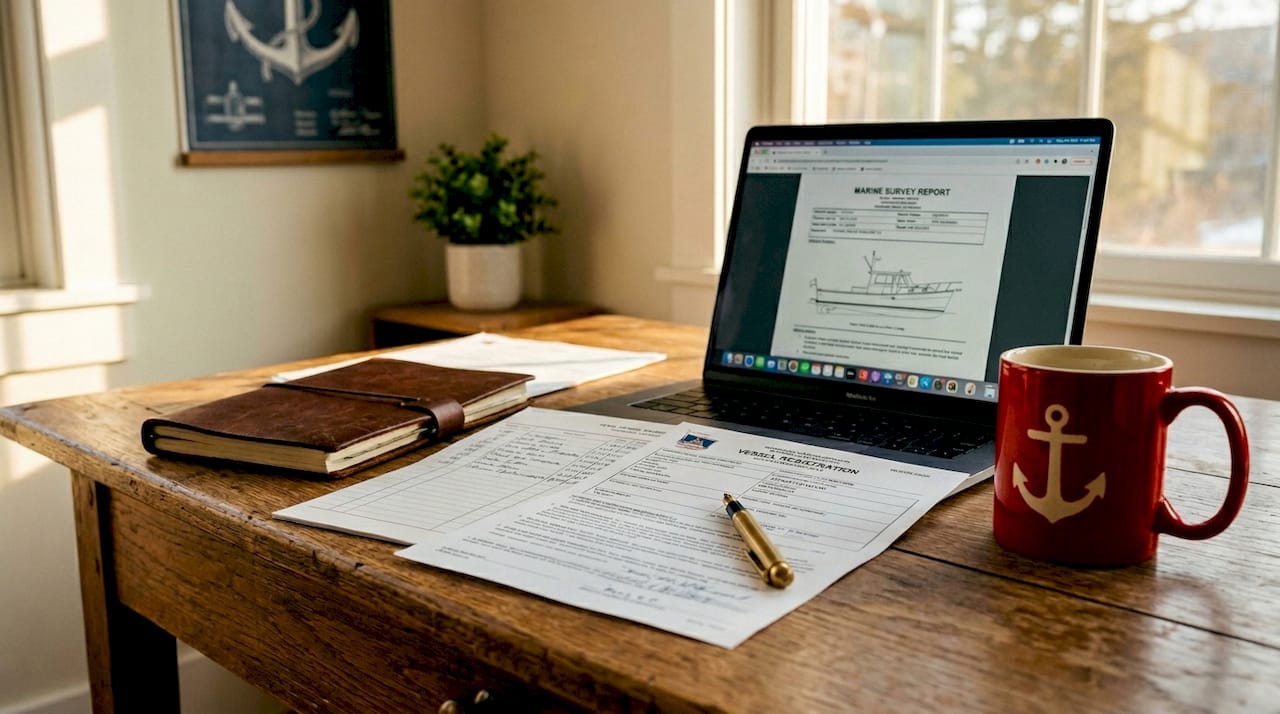
This is where your vessel registration compliance status directly affects how smoothly your insurance application moves forward. An expired registration or a registration that doesn’t match the vessel’s current name or hailing port creates immediate friction.
Profesyonel İpucu: If you’ve recently changed your vessel’s name or hailing port, update your registration before submitting insurance documents. Mismatches between your certificate and your application trigger automatic follow-up requests.
2. Recent survey and inspection reports
A current marine survey is the backbone of any yacht insurance requirement. Underwriters want a condition and valuation (C&V) survey completed by an accredited surveyor, typically within the last two to five years, depending on the insurer. Older vessels or those returning from extended offshore passages may need a more recent one.
Beyond the survey itself, follow-up documentation matters. If the surveyor identified deferred maintenance or deficiencies, insurers expect evidence that those items were addressed. A 2026 underwriting checklist from True North Yacht Advisors confirms that vessel identity and surveys are primary evidence categories. Submitting a survey without any follow-up records is a known bottleneck.
3. Engine, mechanical, and generator service history
Dated maintenance records for your main engine, generator, and any significant auxiliary systems carry real weight with underwriters. They want to see that your vessel receives regular service, not just that it runs. Oil change intervals, impeller replacements, belt inspections, and coolant flushes with dated receipts all build the picture of a maintained vessel.
For sailboats, rigging age and records of standing rigging inspections or replacements belong in the same category. Underwriters factor the age and condition of your rig directly into coverage eligibility for bluewater or offshore policies. Undocumented rigging on an older vessel is a red flag, not a neutral data point.
4. Through-hulls, seacocks, hoses, and electrical systems
This section covers what a marine surveyor would call the “underwater risk” documentation. Through-hulls and seacocks that are not regularly exercised or that show signs of deterioration are a primary source of sinking claims. Insurers know this. Including records of through-hull inspections, seacock operation dates, and hose replacement history directly reduces underwriting uncertainty.
Electrical and battery system condition documentation follows the same logic. Wiring fires and battery failures are among the most common causes of vessel loss. Document the age of your battery bank, any recent rewiring, and the installation dates of bilge pumps and float switches. These details tell the underwriter that you understand your vessel’s risk profile.
5. Key vessel safety equipment and its insurance implications
The U.S. Coast Guard sets federal minimums for onboard safety equipment, and those minimums form the baseline for any boat insurance guide in American waters. According to the GEICO 2026 safety checklist, federally required safety gear includes:
- U.S. Coast Guard-approved life jackets (one per person aboard)
- Visual distress signals (flares or electronic devices meeting type requirements)
- Fire extinguishers (type and quantity based on vessel length and fuel type)
- Sound-producing devices (horn or whistle meeting decibel requirements)
- Navigation lights compliant with COLREGS or Inland Rules
State regulations layer on top of federal requirements and vary significantly. Florida, for example, has additional requirements for personal watercraft. California mandates life jacket wear for children under 13 while underway. Non-compliance with state laws does not just risk a citation. It can affect your coverage defensibility if you file a claim following an incident where you were out of compliance.
Profesyonel İpucu: Safety gear compliance reflects a risk management mindset that insurers notice and reward. Going beyond the legal minimum with items like a life raft, EPIRB, and PLBs can support rate discussions with your broker.
Beyond minimums, strongly consider including jacklines, tethers, inflatable PFDs with inspection tags, a throwable rescue device, and a manual bilge pump in your documented inventory. These items matter in open-water and offshore policies especially.
6. Proof of liability coverage for marina and haul-out access
Many yacht owners treat liability insurance as a policy line item. In practice, it functions as a credential. Some marinas and facilities require documented proof of liability coverage before allowing slip access or approving services that involve welding, open flames, or commercial painting.
Here is what to keep ready for facility access:
- A current certificate of insurance naming the marina as an additional insured where required
- Liability coverage minimums that meet or exceed the facility’s stated requirements (commonly $300,000 to $1,000,000)
- Documentation of coverage for any liveaboard or extended stay arrangements
- Records of prior claims, if any, prepared with a brief explanatory note
The legal picture on mandatory boat insurance varies. Most U.S. states do not legally require boat insurance, but that doesn’t mean you can operate without it. The practical reality is that marinas, boatyards, and anchorages in foreign waters increasingly require proof. If you’re planning a trip to the Bahamas or the Eastern Caribbean, liability proof is a hard requirement at many popular facilities, not a polite suggestion.
7. International oil pollution liability for larger vessels
If your vessel carries more than 2,000 tons of oil as cargo or fuel, you fall under the CLC 1992 liability framework, which imposes strict liability for oil pollution damage along with mandatory insurance financial security requirements. For most recreational yacht owners, this threshold is not a concern. For commercial operators, superyacht owners with large fuel loads, or those operating cargo-capable vessels, it absolutely is.
Under CLC 1992, liability limits and supplementary compensation through the IOPC Fund can total hundreds of millions in Special Drawing Rights (SDRs). Vessels subject to these rules must carry a state-issued insurance certificate as proof of financial security.
This is an area where your vessel’s flag state matters directly. Different registries have different processes for issuing CLC certificates, and the timeline for obtaining one needs to factor into your operational planning. Vessels without the certificate face port state control detentions and inability to operate in signatory waters.
8. Operational behavior documentation and underwriting validation
Modern marine underwriting does not rely solely on what you submit. AI tools cross-reference AIS data, flag changes, port histories, and declared operational areas against submitted documents. Gaps in AIS transmission, frequent flag changes, or declared port calls that don’t match historical data trigger additional scrutiny or declines.
For yacht owners and operators, this has a practical implication: your vessel’s actual behavior needs to match your declared operational profile. If you declare coastal cruising but AIS data shows repeated offshore passages or international transits, expect questions. Keeping a voyage log and maintaining consistent AIS operation gives underwriters data that corroborates your application rather than complicates it. This is one of the most underappreciated ship insurance tips in today’s digital underwriting environment.
9. Comparing documentation methods: paper versus digital
How you organize your vessel documentation affects how fast your application moves, and in some cases, whether it gets approved at clean or flagged for follow-up.
| Method | Strengths | Weaknesses |
|---|---|---|
| Paper and PDF filing | Simple, widely accepted | Disorganized files create delays; hard to update quickly |
| Digital folder by risk category | Fast retrieval; easy to share securely | Requires discipline to maintain current versions |
| Integrated compliance platforms | Automated alerts; audit-ready | Setup investment; works best for multi-vessel operators |
| Broker-managed documentation service | Expert guidance; reduces owner burden | Ongoing cost; requires trust in the broker’s system |
Practitioners who organize documentation around risk controls rather than arbitrary filing categories report fewer underwriting follow-up questions. The logic is simple: insurers assess risk in categories. If your file mirrors their framework, they find what they need without asking.
Profesyonel İpucu: Create a master folder with subfolders labeled Identity, Surveys, Maintenance, Safety, Liability, and Operations. Review and update each folder at the start of every season. Sixty minutes of annual organization can save you days during a quote cycle.
My take on what actually holds up vessel insurance applications
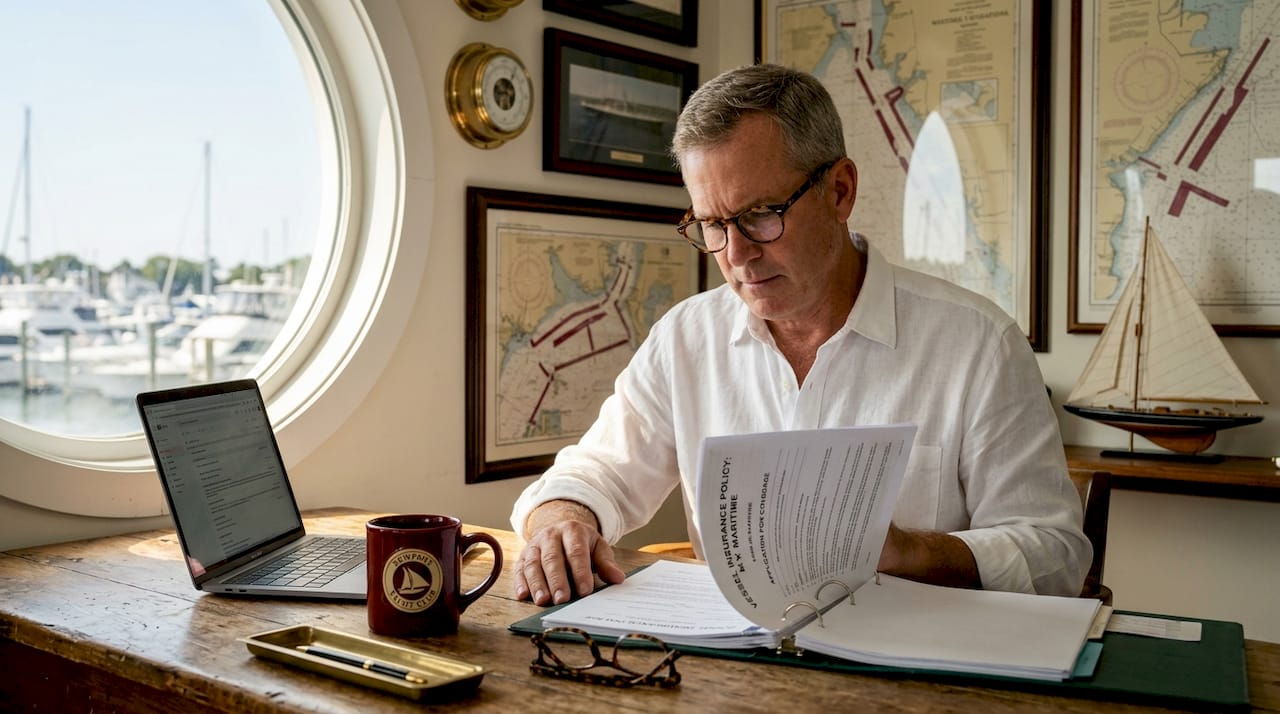
I’ve seen a consistent pattern working across vessel documentation and registration cases: underwriters are not frustrated by too much information. They are frustrated by missing the one critical piece they need to assess a specific risk. A 200-page binder with no dated engine service records is worse than a lean file with everything current and organized.
The second pitfall is what I call the documentation-behavior mismatch. Your records say one thing. Your AIS track says another. That gap creates suspicion, not just inefficiency. Owners who maintain consistent, verifiable operational profiles face dramatically shorter underwriting cycles.
Safety equipment compliance is the third area most owners underestimate. Keeping your flares current, your life jackets serviceable, and your fire extinguishers in date is not bureaucratic busywork. It demonstrates to an insurer that you take loss prevention seriously, and that perception carries real weight when a claim gets reviewed. The owners who get the smoothest claim experiences are the ones who maintained the file before anything happened.
My recommendation: treat your insurance file like a living document, not an annual chore. Review it quarterly. Update it after every significant passage, repair, or equipment replacement. The owners who do this rarely face quote delays, and they almost never get surprised by a coverage gap when they need it most.
— VesselFlag
How Vesselflag helps you meet insurance and compliance requirements
Getting your vessel documentation in order for insurance is tightly connected to having correct, current registration in place. At Vesselflag, we work with yacht owners and commercial vessel operators to make sure their registration, flag documentation, and compliance records are organized and verifiable from day one. Gaps in registration or flag status create exactly the kind of underwriting friction this checklist is designed to help you avoid.
If you’re sorting out yacht registration requirements for the first time, or reviewing whether your current flag gives you the operational flexibility and compliance standing you need, Vesselflag provides step-by-step support across multiple flag states. You can also explore the differences in yacht vs. boat registration to make sure your vessel is classified and documented correctly before you submit your next insurance application.
SSS
What documents do underwriters need for vessel insurance?
Underwriters require proof of vessel identity, a current marine survey, dated maintenance records, safety equipment logs, and photos or receipts for major repairs. Organized, clear documentation by risk category speeds the review process significantly.
Is boat insurance legally required in the U.S.?
Most U.S. states do not legally mandate boat insurance, but many marinas, boatyards, and foreign facilities require proof of liability coverage for access and services. Practical necessity makes coverage a near-universal requirement regardless of law.
How does AIS data affect my vessel insurance application?
Modern underwriters cross-reference your AIS history against your declared operational area and port calls. Gaps or inconsistencies between your submitted documents and vessel behavior data can delay or complicate your application.
What safety equipment is required for a federally documented U.S. vessel?
The U.S. Coast Guard requires life jackets, visual distress signals, fire extinguishers, a sound-producing device, and navigation lights. State regulations may add additional requirements depending on vessel type and operating waters.
How often should I update my vessel insurance documentation file?
Review your file at the start of each boating season and update it after any significant repair, equipment replacement, or offshore passage. Annual reviews at minimum reduce underwriting delays and keep your coverage current with your vessel’s actual condition.