
Yacht delivery logistics is the full process of planning, coordinating, and executing the safe transport of a vessel from one location to another, whether that means sailing it under professional crew or loading it onto a specialized cargo ship. It covers far more than just moving a boat. The process integrates regulatory compliance, customs documentation, insurance, crew qualifications, port coordination, and real-time tracking into a single managed operation.
Two primary categories define how yachts move:
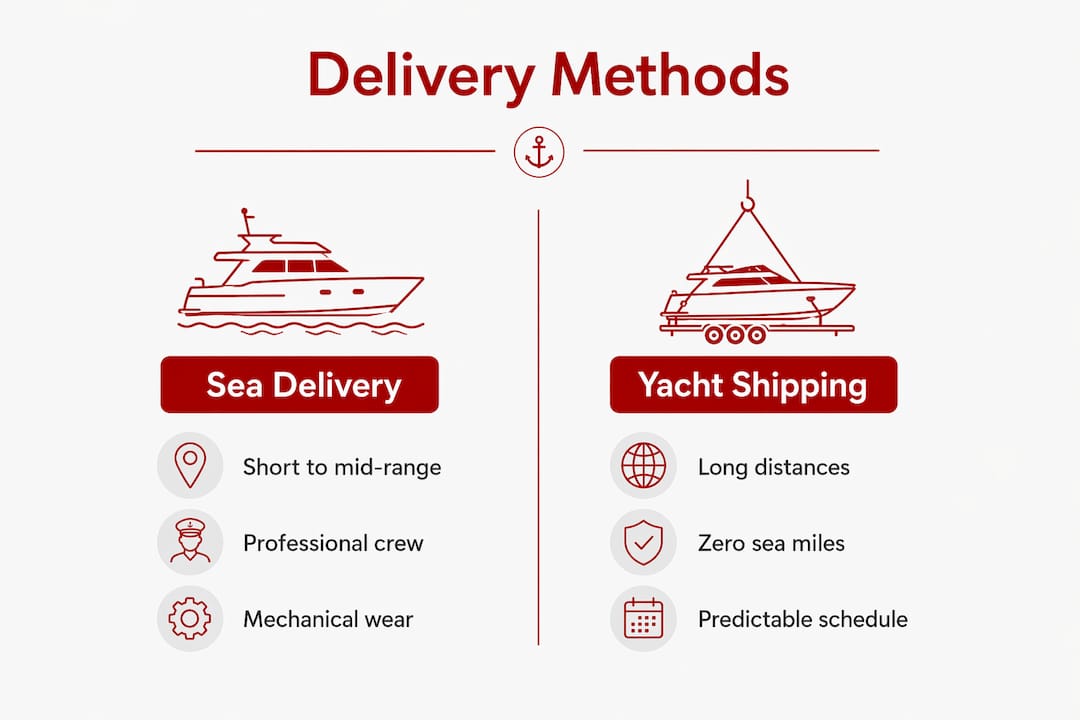
- Sea Delivery: A professional captain and crew sail or motor the vessel to its destination under its own power.
- Yacht Shipping: The vessel is transported aboard a specialized cargo ship using one of four main methods: Lift-on/Lift-off (LoLo), Float-on/Float-off (Flo-Flo), Roll-on/Roll-off (RoRo), or container shipping (typically for vessels up to 12 meters).
The right method depends on vessel size, distance, urgency, and how much mechanical wear the owner is willing to accept. A 45-foot cruiser heading from Florida to the Bahamas is a different problem than a 90-foot motoryacht crossing the Atlantic. Regulatory compliance, flag-specific documentation, and coordination with customs authorities are woven through every method. Platforms like Vesselflag help owners manage the registration and documentation side of that equation before the vessel ever leaves the dock.
How sea delivery and yacht shipping actually compare
The choice between sailing a yacht to its destination and shipping it on a cargo vessel comes down to a few hard variables: size, distance, condition, and timing.
Sea delivery puts the vessel in the water under professional crew. It works well for shorter or coastal passages, costs less on fuel-light sailboats, and gives the owner flexibility on departure timing since professional crews are not tied to a cargo ship’s schedule. The tradeoff is engine hours, hull wear, and the real possibility of weather delays extending a 10-day passage to three weeks.
Yacht shipping removes those variables. The vessel accumulates zero sea miles, arrives on a predictable schedule, and is protected from ocean conditions. The cost is higher, and the owner must work around fixed port rotations and booking windows that can run 8–12 weeks in advance for LoLo and semi-submersible services on busy routes.
| Method | Best for | Key advantage | Main limitation |
|---|---|---|---|
| Sea Delivery (crew) | Short to mid-range passages | Flexible departure, lower base cost | Engine hours, weather risk |
| LoLo (crane lift) | Mid-size yachts, varied ports | Wide port access | Requires rated cradle, crane booking |
| Flo-Flo (semi-submersible) | Large and superyachts | Minimal handling stress | Highest cost, longest lead time |
| RoRo | Trailerable boats | Simple loading process | Limited to trailer-compatible vessels |
| Container shipping | Vessels up to ~12m | Maximum weather protection | Size restriction |
Road transport is a fifth option for smaller vessels on domestic moves, offering quick turnaround and no dependence on maritime schedules.
What regulatory compliance actually requires during transport
Customs authorities treat yachts as high-value assets, and the paperwork requirements reflect that. Missing or inconsistent documentation is one of the most common causes of delay in international yacht transport, and the consequences range from storage fees to full seizure.
The core documentation package for any international shipment includes:
- Proof of ownership: title documents and bill of sale
- Current vessel registration under the applicable flag
- Proof of tax payment on the vessel
- Customs declarations for temporary or permanent import
- Insurance verification covering transit and handling
- Condition report with timestamped photos, completed before handover
Timing is not flexible. Most carriers require customs paperwork filed a minimum of 72 hours before loading. Filing late does not just slow the process; it can pull the vessel off the loading schedule entirely. Owners handling international moves should engage a licensed customs broker early, well before the vessel reaches the port. Understanding maritime compliance requirements for the destination country is equally critical, since some jurisdictions require specific safety or emissions certifications on arrival.
Insurance deserves separate attention. Standard annual hull policies often do not cover professional delivery or cargo transit. Owners need to notify their insurer and obtain either a navigation extension or a separate transit policy before the vessel changes custody.
Planning a yacht delivery the right way
The single most expensive mistake in yacht delivery logistics is starting too late. Begin logistics planning as soon as a purchase agreement is signed, not after closing, when timelines tighten and the best transport slots are already gone.
Best practices from experienced maritime logistics professionals:
- Strip and secure the vessel early. Remove loose equipment, secure all systems, and document everything with detailed photos and video. This protects against disputes at handover and supports customs declarations.
- Run a sea trial under load before any crewed delivery. A pre-departure sea trial identifies latent mechanical issues that are far cheaper to fix at the dock than offshore.
- Verify cradle compatibility. For LoLo and Flo-Flo shipments, cradle design must match the hull’s load paths precisely. An incorrect cradle concentrates stress and can deform the hull during transport. Confirm in writing whether the carrier or the owner supplies it.
- Book port equipment early. Cranes, travel lifts, and stevedore labor at both origin and destination must be reserved in advance. Last-mile port logistics are the most common source of unforeseen delays and demurrage fees.
- File a formal float plan for all crewed deliveries and maintain daily position reports throughout the passage.
- Build a contingency buffer of 20–30% above base cost estimates to cover weather delays, mechanical issues, and route changes.
Conseil de pro : For luxury transfers at the destination end, services like TranspOnyx on the French Riviera coordinate last-mile yacht and crew logistics, which is worth factoring into the overall delivery plan for European arrivals.
Crew qualifications matter as much as planning. A delivery captain handling offshore passages should hold a valid Master license, STCW95 safety training, and a marine radio license. Coastal deliveries have lower requirements, but the captain still needs documented offshore experience for any passage that takes the vessel out of sight of land.
How Vesselflag supports yacht delivery compliance and registration
Yacht delivery logistics and vessel registration are inseparable. A yacht without current, valid registration under the correct flag cannot clear customs, cannot obtain the right insurance coverage, and creates legal exposure at every port of call.

Vesselflag provides immatriculation internationale des yachts across multiple flag states, including San Marino, Poland, UK Part 1, Palau, Langkawi, and Malta, with documented timelines and transparent costs for each jurisdiction. For owners managing a delivery, that means having the right flag documentation in place before the vessel moves.
Key services Vesselflag provides that directly affect the delivery process:
- Multi-flag registration with clear processing timelines and fee structures
- MMSI and AIS setup, required for legal operation and tracking during transit
- Vessel insurance coordination, including coverage relevant to the delivery period
- Corporate registration support for commercially operated vessels
- Documentation consultancy to align ownership records, bills of sale, and registration with customs requirements at both origin and destination
Owners who understand yacht registration requirements before initiating a delivery avoid the most common compliance failures: expired certificates, flag mismatches, and missing documentation that holds a vessel at the terminal. Vesselflag’s expertise in flag-specific regulatory requirements reduces those risks directly.
Start your registration or compliance review at Pavillon du navire before your next delivery.
Principaux enseignements
Yacht delivery logistics requires early planning, correct documentation, and the right transport method chosen before the vessel leaves its berth.
| Point | Détails |
|---|---|
| Start planning early | Begin logistics coordination at contract signing, not after closing, to preserve transport options. |
| Match method to vessel | Sea delivery suits shorter passages; LoLo, Flo-Flo, and container shipping suit longer or larger moves. |
| File documents on time | Customs paperwork must be filed at least 72 hours before loading to avoid delays and storage fees. |
| Verify cradle and port logistics | Confirm cradle compatibility and book cranes early; port logistics cause the most common delivery delays. |
| Register before you move | Valid flag registration and current documentation are required for customs clearance at every international port. |
FAQ
What is yacht delivery logistics?
Yacht delivery logistics is the coordinated process of transporting a vessel from one location to another, covering transport method selection, regulatory compliance, customs documentation, insurance, crew management, and port coordination.
What are the main methods for transporting a yacht?
The primary methods are sea delivery by professional crew, and cargo shipping via LoLo, Flo-Flo, RoRo, or container, with the right choice depending on vessel size, distance, and budget.
How far in advance should customs paperwork be filed?
Most carriers require customs documentation filed at least 72 hours before loading; for complex international routes, starting the paperwork process weeks earlier prevents costly delays.
Does standard yacht insurance cover delivery and transport?
Standard annual hull policies often exclude professional crew delivery and cargo transit, so owners must obtain a navigation extension or separate transit policy before the vessel changes hands.
How does vessel registration affect yacht delivery?
Valid registration under the correct flag is required for customs clearance, legal port entry, and proper insurance coverage during transit; platforms like Vesselflag handle multi-flag registration to keep documentation current before a delivery begins.