

Registering your yacht internationally can feel overwhelming, especially when navigating the maze of flag state regulations, documentation requirements, and compliance standards. Many yacht owners struggle to understand which flag offers the best legal protection, tax advantages, and operational freedom for their specific cruising plans. This guide breaks down the vessel registration process into clear, actionable steps while comparing popular international flags to help you make informed decisions. You’ll learn how to avoid common pitfalls, streamline documentation, and ensure full compliance with maritime regulations in 2026.
Inhaltsübersicht
- Understanding The Vessel Registration Process
- Choosing Your International Flag: Comparing Registration Options
- Navigating The Vessel Registration Steps Efficiently In 2026
- Ensuring Full Legal Compliance With Ancillary Maritime Services
- Streamline Your Yacht Registration With Expert Services
- Häufig gestellte Fragen
Key takeaways
| Punkt | Einzelheiten |
|---|---|
| Registration requires specific legal documentation | Proof of ownership, tonnage certificates, and safety compliance documents are mandatory across jurisdictions. |
| Flag state choice impacts operations significantly | Different flags offer varying tax benefits, legal protections, and international port access advantages. |
| MMSI licensing complements vessel registration | Maritime Mobile Service Identity numbers are essential for legal radio communications and emergency response. |
| Compliance maintains operational validity | Regular renewals and adherence to flag state regulations prevent costly penalties and operational disruptions. |
| Professional guidance accelerates the process | Expert assistance navigates complex international requirements and reduces registration timelines substantially. |
Understanding the vessel registration process
Vessel registration establishes your yacht’s legal identity and nationality under a specific flag state’s jurisdiction. This process creates an official record that proves your ownership, grants you the right to fly a particular flag, and ensures your vessel complies with international maritime laws. Without proper registration, you risk fines, detention at ports, and invalidation of insurance coverage.
Every flag state requires core documentation to verify your vessel’s legitimacy and seaworthiness. You’ll need original proof of ownership such as a bill of sale or builder’s certificate, which establishes your legal right to register the vessel. Tonnage certificates measure your yacht’s internal volume and determine applicable fees and regulations. Safety certificates demonstrate compliance with international standards for equipment, fire suppression, and navigation systems.
The flag state you choose becomes your vessel’s regulatory authority, governing everything from crew requirements to tax obligations. Popular options include San Marino for streamlined processes, Malta for EU benefits, and Marshall Islands for commercial advantages. Each registry maintains different standards for inspections, documentation, and ongoing compliance reporting.
Common terminology you’ll encounter includes the registration certificate, which serves as your vessel’s official identity document similar to a passport. The call sign is a unique radio identifier assigned during registration. Your MMSI number enables digital selective calling for safety communications. Understanding these terms prevents confusion when dealing with maritime authorities and service providers.
Pro Tip: Research your chosen flag state’s reputation among port authorities in regions where you plan to cruise, as some flags face more scrutiny than others during inspections.
Key documents typically required include:
- Original bill of sale with notarized signatures
- Builder’s certificate or previous registration documents
- Tonnage measurement certificate from an approved surveyor
- Safety equipment inventory and inspection reports
- Passport copies and proof of address for all owners
- Corporate documentation if registering under a company structure
Following the boat registration process guide systematically ensures you gather all required materials before submission, preventing frustrating delays.
Choosing your international flag: Comparing registration options
Selecting the right flag state represents one of your most strategic decisions as a yacht owner. Different flag states offer varied legal, tax, and operational benefits which impact your vessel’s compliance requirements, operating costs, and international acceptance. The wrong choice can result in excessive taxation, complicated crew regulations, or difficulties accessing certain ports.
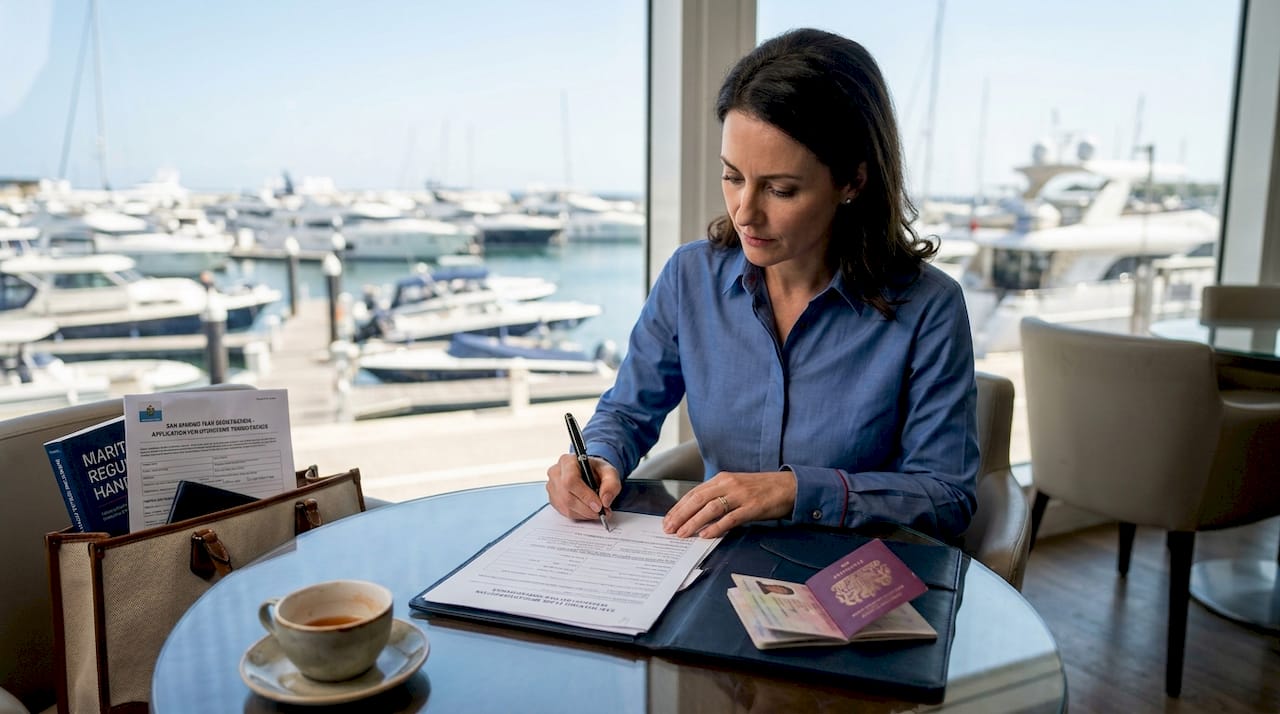
San Marino has emerged as a popular choice for private yachts due to its efficient processing, typically completing registrations within 5 to 7 business days. The registry imposes minimal tonnage taxes and doesn’t require VAT for vessels over 24 meters. San Marino accepts both individual and corporate ownership structures, providing flexibility for asset protection strategies. However, it’s a landlocked country, which occasionally raises questions from port authorities unfamiliar with the flag.
Malta offers significant advantages for EU-based owners, providing full European Union benefits while maintaining competitive tax structures. The Malta registry is well-respected internationally and rarely faces additional scrutiny during port inspections. Registration fees start around €1,200 annually for yachts under 24 meters, with additional costs for larger vessels. Malta requires more extensive documentation than some flags, including detailed ownership verification and comprehensive safety inspections.
Marshall Islands attracts commercial yacht operators and charter vessels due to favorable corporate structures and crew regulations. The registry allows bareboat charter arrangements and offers streamlined processes for commercial operations. Annual fees range from $1,500 to $3,000 depending on vessel size. The flag maintains excellent international standing but requires more rigorous compliance reporting than leisure-focused registries.
British Virgin Islands provides strong legal protection through English common law and maintains a prestigious reputation among luxury yacht owners. The BVI registry offers confidential ownership options through corporate structures, appealing to privacy-conscious owners. Registration costs approximately $2,000 to $4,000 annually, with additional survey requirements every five years.
Pro Tip: Match your flag choice to your primary cruising grounds, as some Mediterranean countries impose additional requirements on non-EU flagged vessels, while Caribbean nations may scrutinize certain offshore registries.
| Flag State | Processing Time | Annual Cost Range | Key Advantage | Main Consideration |
|---|---|---|---|---|
| San Marino | 5-7 Tage | €800-€2,000 | Fast processing, low taxes | Landlocked flag recognition |
| Malta | 2-3 weeks | €1,200-€4,500 | EU benefits, strong reputation | Higher documentation requirements |
| Marshallinseln | 1-2 weeks | $1,500-$3,000 | Commercial flexibility | More compliance reporting |
| British Virgin Islands | 2-4 weeks | $2,000-$4,000 | Legal protection, privacy | Higher costs, survey requirements |
Consider these critical factors when evaluating vessel registration guide for popular flags:
- Tax implications including VAT, tonnage taxes, and import duties
- Crew nationality and certification requirements
- Inspection and survey frequency mandates
- Port state control detention statistics
- Ease of documentation apostille and legalization
- Registry’s responsiveness to owner inquiries
Exploring international flag registration options thoroughly before committing prevents expensive flag changes later.
Navigating the vessel registration steps efficiently in 2026
Following a structured yacht registration checklist reduces delays and ensures compliance across jurisdictions. The registration process follows a logical sequence, though specific requirements vary by flag state. Understanding each step prevents common mistakes that cause rejections and restart the entire timeline.
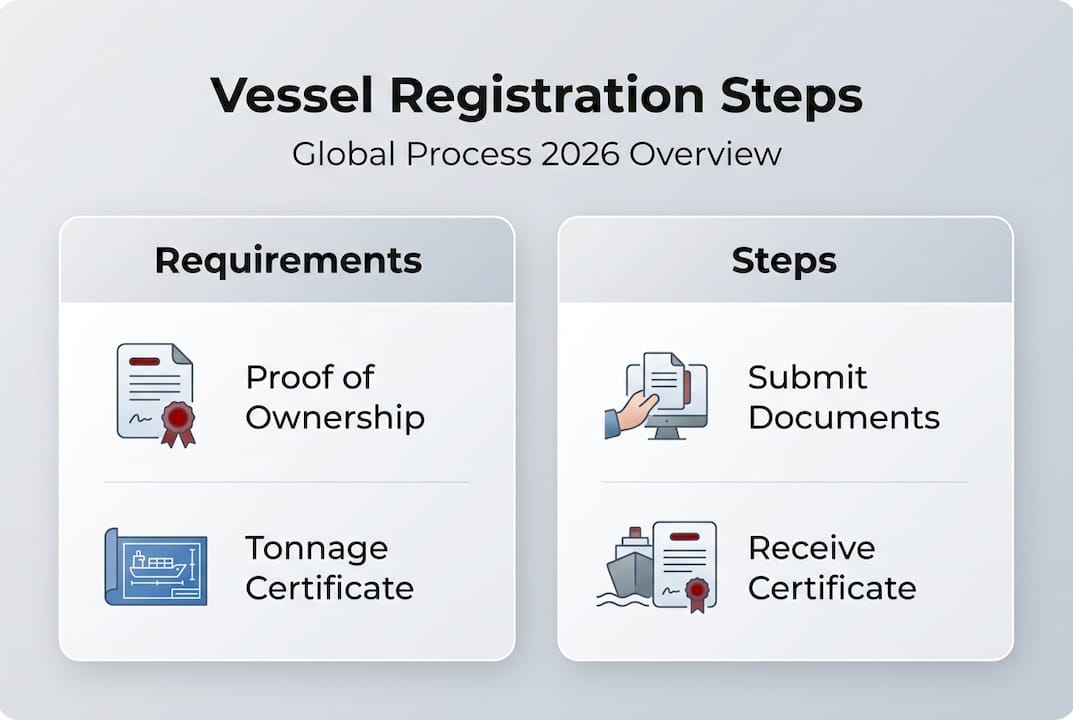
Gather foundational ownership documents. Collect your original bill of sale, previous registration certificates if applicable, and builder’s documentation. Ensure all signatures are notarized and dates are current. If purchasing from a previous owner, obtain a properly executed deletion certificate from the prior registry. Missing or improperly executed ownership documents represent the most common cause of application rejection.
Select and contact your chosen flag state registry. Research the specific requirements for your selected flag through official registry websites or authorized agents. Many registries require pre-approval before accepting applications, particularly for vessels over certain tonnage thresholds. Submit preliminary vessel details including length, tonnage, build year, and intended use to confirm eligibility.
Obtain required surveys and certificates. Arrange for an accredited marine surveyor to conduct tonnage measurements and safety inspections. The surveyor must be recognized by your chosen flag state, as some registries only accept specific classification societies. Safety certificates verify compliance with SOLAS regulations for equipment, fire suppression, navigation lights, and life-saving apparatus. These inspections typically take 1 to 3 days depending on vessel size.
Complete application forms and pay registration fees. Fill out official registry forms with precise details matching your supporting documents exactly. Any discrepancies between your application and certificates will trigger requests for clarification. Registration fees vary widely, from €500 for small vessels under permissive flags to over $5,000 for large yachts under premium registries. Many flags also charge annual renewal fees and tonnage-based taxes.
Submit complete application package for processing. Send all documents to the registry through approved channels, which may include authorized agents, maritime lawyers, or direct submission portals. Include certified translations if your documents are in languages not accepted by the registry. Most modern registries accept electronic submissions, significantly reducing processing times compared to traditional mail.
Receive official registration certificate and maintain compliance. Once approved, you’ll receive your registration certificate, call sign assignment, and flag state endorsement. Display your registration certificate prominently aboard the vessel as required by international maritime law. Set reminders for renewal deadlines, as expired registrations can result in fines or vessel detention. Some flags require periodic re-surveys every 2 to 5 years to maintain validity.
Common pitfalls that delay registration include submitting photocopies instead of original documents, missing apostille stamps for international document recognition, and providing outdated safety certificates. Incomplete ownership chains, where previous transfers weren’t properly documented, create significant complications requiring legal intervention to resolve.
Essential documents for most registrations:
- Notarized bill of sale with complete buyer and seller details
- Passport copies and proof of residence for all registered owners
- Deletion certificate from previous registry if applicable
- Tonnage measurement certificate from approved surveyor
- Safety equipment certificate valid for at least 12 months
- Insurance certificate showing adequate coverage
- Corporate formation documents if registering under a company
Following the yacht registration checklist systematically ensures you address each requirement before submission.
Ensuring full legal compliance with ancillary maritime services
Successful vessel registration represents just one component of full maritime compliance. An MMSI number is mandatory for safe and legal marine radio communications and is often linked to the vessel registration process. This nine-digit identifier enables your vessel to send and receive digital selective calling (DSC) distress signals, communicate with coast guard stations, and participate in the Global Maritime Distress and Safety System.
Your MMSI number connects directly to your vessel’s registration details, including flag state, call sign, and owner information. When you activate your DSC radio’s distress button, the MMSI automatically transmits your vessel’s identity and position to rescue coordination centers. Without a valid MMSI, your distress calls lack critical identification data, potentially delaying emergency response when minutes matter most.
Obtaining an MMSI typically occurs parallel to vessel registration, though the processes remain separate. In most jurisdictions, you apply for your MMSI through your flag state’s telecommunications authority or an authorized licensing agency. The application requires your vessel’s official registration number, proof of ownership, and radio equipment serial numbers. Processing usually takes 2 to 5 business days, and the license remains valid as long as your vessel registration stays current.
Some flag states automatically issue MMSI numbers as part of the registration package, while others require separate applications. Verify your flag’s specific procedures to avoid operating without this critical safety identifier. Using an MMSI from a different country than your flag state creates confusion during emergencies and may violate international telecommunications regulations.
Operating a vessel without a valid MMSI number not only violates maritime safety regulations but also jeopardizes your crew’s safety by preventing effective emergency communication with rescue services worldwide.
Additional compliance requirements that complement registration include:
- Marine insurance with coverage meeting flag state minimum requirements
- Annual safety inspections for vessels over specific tonnage thresholds
- Crew certification verification for commercially operated yachts
- Environmental compliance certificates for waste management systems
- Navigation equipment calibration records
- Ship security plan for vessels operating in high-risk areas
Many yacht owners overlook the importance of maintaining current insurance certificates that specifically name the registered flag state. Insurance companies must acknowledge your vessel’s registry, as coverage disputes often arise when policies don’t align with registration details. Ensure your insurer provides a certificate of insurance formatted for maritime authorities, not standard recreational boat coverage.
Understanding what is an MMSI number and integrating it into your registration planning ensures you can legally operate communication equipment from day one. This integration prevents last-minute scrambles when you discover port authorities require proof of MMSI licensing during clearance procedures.
Streamline your yacht registration with expert services
Navigating international vessel registration requirements demands specialized knowledge of maritime law, flag state regulations, and compliance documentation. Professional guidance transforms a potentially months-long process into a streamlined experience, ensuring your application meets all technical requirements on first submission. Expert services provide peace of mind that your registration will withstand scrutiny from port authorities worldwide.
Vessel Flag specializes in comprehensive yacht registration solutions tailored to your specific operational needs and cruising plans. Whether you’re registering a new build, transferring from another flag, or seeking the optimal registry for tax efficiency, experienced maritime consultants guide you through every step. Access detailed how to register a yacht guide resources that explain complex requirements in straightforward terms.
Professional services include thorough documentation review before submission, eliminating common errors that trigger rejections. Experts verify that your ownership chain is complete, safety certificates meet current standards, and all required apostilles are properly affixed. This upfront diligence prevents frustrating delays and additional surveyor fees for re-inspections.
Benefit from established relationships with flag state registries that expedite processing times significantly. Authorized agents often receive priority handling and can resolve questions directly with registry officials, bypassing lengthy email exchanges. Understanding yacht registration validity and compliance requirements across multiple jurisdictions ensures your vessel maintains legal status wherever you cruise. Following a proven yacht registration checklist developed from thousands of successful registrations minimizes stress and maximizes efficiency throughout the process.
Frequently asked questions
What documents are essential for vessel registration?
Every flag state requires proof of ownership such as a notarized bill of sale or builder’s certificate establishing your legal right to the vessel. You’ll need a tonnage measurement certificate from an approved surveyor and safety equipment certificates demonstrating compliance with international maritime standards. Additional documents include passport copies, proof of residence, deletion certificates from previous registries if applicable, and corporate formation papers for company-owned vessels. Some flags also require insurance certificates and detailed vessel specifications including engine details and construction materials.
How long does the yacht registration process usually take?
Processing times vary significantly by flag state and documentation completeness, ranging from 5 business days for streamlined registries like San Marino to 4 weeks for more rigorous programs like Malta or UK registries. Fast-track services available through some flags can reduce timelines to 48 hours for urgent situations, though these typically involve premium fees. Delays most commonly occur due to incomplete documentation, missing apostilles, or outdated safety certificates requiring re-inspection. Preparing all documents in advance and using experienced agents typically keeps the process within 2 weeks for most recreational yacht registrations.
Can I change the flag state after registration?
Changing your vessel’s flag state is completely permissible but requires formal deregistration from your current flag followed by a complete new application to your chosen registry. You must obtain a deletion certificate from your existing flag state proving no outstanding fees, liens, or legal issues. The new flag will require fresh documentation including updated surveys, ownership verification, and compliance certificates meeting their specific standards. This process typically takes 3 to 6 weeks total and involves paying new registration fees while potentially losing any prepaid time on your previous registry. Strategic planning around renewal dates minimizes financial loss during flag changes.
Why is an MMSI number important for vessels?
The Maritime Mobile Service Identity number serves as your vessel’s unique identifier for all radio communications, enabling Digital Selective Calling distress signals that automatically transmit your position and vessel details to rescue coordination centers. Coast guard stations and other vessels use your MMSI to identify your communications and respond appropriately to safety calls. Operating VHF DSC radios, satellite communication systems, and AIS transponders all require a valid MMSI linked to your vessel’s registration. Many ports now require proof of MMSI licensing during clearance procedures, making it essential for legal international cruising.
What costs should I expect during registration?
Initial registration fees range from €500 for budget-friendly flags to over $5,000 for premium registries, with most popular options falling between $1,200 and $3,000 for recreational yachts under 24 meters. Additional costs include surveyor fees for tonnage measurement and safety inspections, typically $800 to $2,500 depending on vessel size and location. You’ll pay for document notarization, apostille stamps, and translations if required, adding $200 to $600 to total costs. Annual renewal fees vary by flag and tonnage, ranging from €300 to $4,000 per year. Budget for agent fees if using professional services, typically 15% to 25% of base registration costs, though these often prove worthwhile by preventing expensive mistakes and delays.