

Özetle:
- The total cost of yacht flagging extends well beyond initial registration fees, often reaching hundreds of thousands of dollars annually.
- Choosing the right flag depends on vessel size, use, cruising region, and ownership structure, significantly affecting compliance and costs.
What does yacht flagging actually cost? A full breakdown
The total cost of flagging a yacht runs far beyond the government registration fee most owners see first. Initial registration fees range from $3,000 to $25,000 depending on flag and vessel size, while annual renewal fees run $1,500 to $15,000. For a 40–60m yacht, total annual compliance, including flag fees, class society fees, mandatory surveys, and documentation, typically ranges from $80,000 to $250,000 depending on flag and operational profile.
Here is what the full yacht flagging cost breakdown looks like across every major line item:
- Initial registration fee: $3,000–$25,000, scaled by flag and gross tonnage
- Annual flag renewal fee: $1,500–$15,000 per year
- Tonnage survey (initial): $200–$2,000 for private yachts; $1,000–$3,000+ for commercial
- Periodic surveys (every 2–5 years): $2,000–$4,000 annualized, required by most flags
- MCA coding survey (commercial use): $5,000–$25,000+ depending on vessel length
- Local agent or representative fee: $500–$2,000 per year
- Corporate entity formation (if applicable): $1,700–$2,850 first year
- Annual entity maintenance: $950–$1,550 per year
- MMSI assignment and radio licensing: $100–$300 one-time, with $100–$200 annual renewal
- Professional service fees (registrar/consultant): $800–$5,000 depending on vessel complexity
- Class society and ISM/ISPS audit fees: Variable; often the largest single line for commercial yachts
Flag choice drives most of this variability. A private 15m sailing yacht registered in the British Virgin Islands runs roughly $2,700 all-in for year one. A 45m commercial charter vessel under the same flag runs closer to $25,800. The flag you choose sets the compliance regime, and the compliance regime sets the bill.
What actually drives the cost of yacht registration?
Vessel size and commercial status
Gross tonnage is the primary fee multiplier across nearly every registry. A 200GT vessel pays materially less than a 500GT one under the same flag, and commercial registration adds a separate layer of survey and certification costs that private registration does not require. If your yacht will carry paying passengers or operate under charter, expect MCA coding or an equivalent commercial survey to be the single largest first-year expense.
Mandatory surveys and periodic inspections
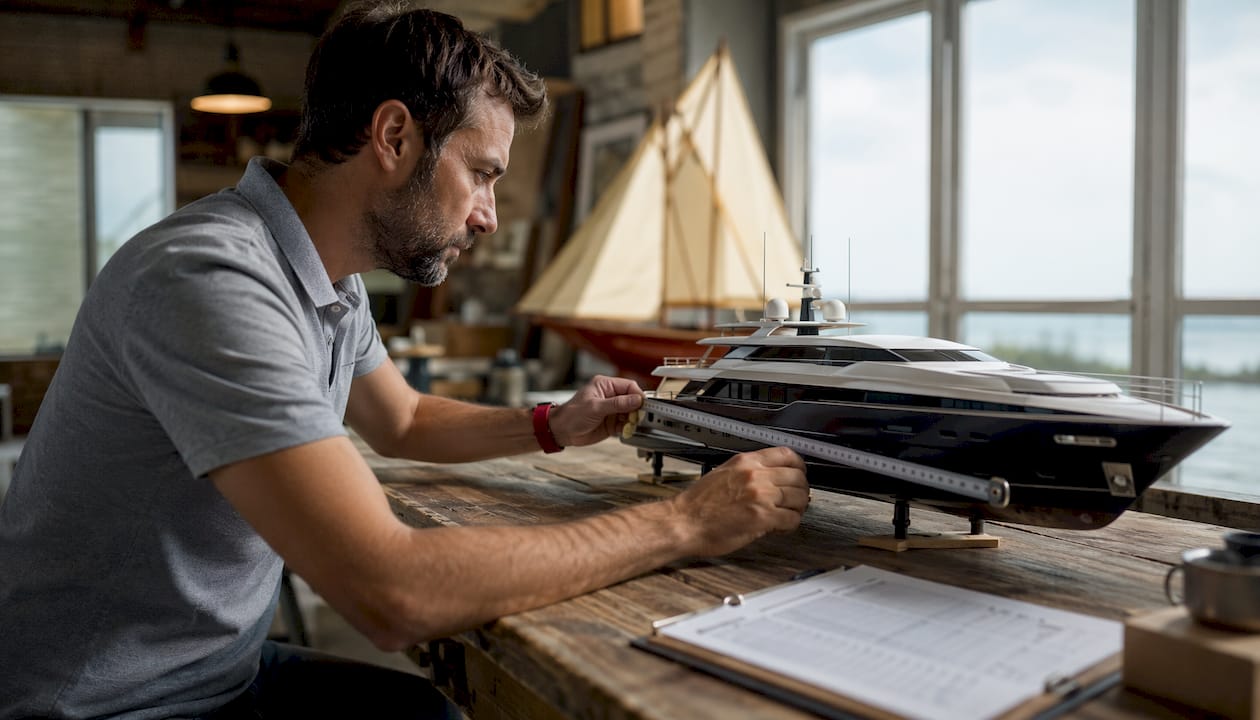
Most flags require an initial tonnage survey before registration and periodic inspections on a 2–5 year cycle. Survey costs average $2,000–$4,000 every 2–5 years when annualized. The Marshall Islands flag does not generally require periodic survey inspections for private yachts, which reduces annual compliance costs compared to flags that do. Cayman Islands requires those surveys, so the annualized cost is higher even when the headline fee looks similar.
Corporate entity maintenance
Many flag states require or strongly incentivize vessel ownership through a legal entity, typically an offshore company. That entity carries its own annual costs: registered agent fees, registered office fees, and government license fees. For a BVI International Business Company, annual entity maintenance runs $950–$1,550 per year on top of the registry fees. Owners who overlook this line item routinely underestimate their total annual ownership costs.
Crew nationality, safety equipment, and environmental rules
Some flags impose crew certification requirements tied to their national standards, which can limit your hiring pool or require additional training costs. Flags in the Red Ensign Group, including Cayman Islands and BVI, generally provide smoother port entry and more straightforward visa handling for international crew. Environmental regulations under certain flags, particularly those aligned with MARPOL Annex VI standards, may require specific equipment upgrades that add to the initial compliance bill.
Profesyonel İpucu: Before committing to a flag, request a full compliance checklist from the registry, not just the fee schedule. The checklist reveals the survey cycle, crew certification requirements, and equipment standards that determine your real annual cost.
How do the top flag options compare on cost?
The five flags most relevant to US yacht owners each carry a distinct cost profile. The headline registration fee is the smallest line. What matters is total annual compliance cost, which includes flag fees, class society fees, mandatory surveys, ISM and ISPS audits for commercial vessels, and the overhead of running the documentation.
| Bayrak | Initial registration | Annual flag fee | Total annual compliance (50m yacht) | Tax implications | Insurance impact |
|---|---|---|---|---|---|
| Cayman Adaları | $5,000–$15,000 | $3,000–$8,000 | $100K–$160K | Zero tax on vessel-owning entity | Lower premiums; Red Ensign Group recognition |
| Marshall Adaları | $3,500–$10,000 | $1,500–$5,000 | $80K–$130K | Zero tax on vessel-owning entity | Standard market rates |
| Malta | $5,000–$15,000 | $5,000–$12,000 | $140K–$220K | EU VAT advantages for charter ops | Standard; EU charter license access |
| Panama | $3,000–$8,000 | $1,500–$4,000 | Lower end, varies | No income tax on foreign earnings | Accepted; some underwriters apply surcharge |
| USCG (US flag) | $15,000–$25,000 | $10,000–$15,000 | $160K–$250K | Subject to US tax law | Favorable for US-based financing |
Cayman Adaları
Cayman is the default flag for private-use yachts above 40m and accounts for roughly 40% of the 40m+ fleet. Its Red Ensign Group affiliation provides British consular support and the Large Yacht Code as the operative compliance regime, which is well-understood by class societies, insurers, and charter management companies worldwide. Annual fees and compliance costs sit in the middle of the pack for private use. For US owners planning Mediterranean charters, Cayman is the standard choice.
Marshall Adaları
Marshall Islands costs $3,000–$8,000 less per year than Cayman for comparable private yachts, with minimal practical difference for Caribbean and Americas cruising. Both US Customs and Border Protection and Caribbean port authorities treat the two flags similarly. The absence of mandatory periodic surveys for private yachts is a genuine cost advantage. For a US buyer basing a 120ft motor yacht in the Bahamas, a Delaware LLC owning a Marshall Islands-flagged vessel is a common and cost-effective structure, with annual registry costs running approximately $6,000–$8,000.
Malta
Malta carries the highest compliance cost of the major flags, running $30,000–$60,000 more annually than Cayman on a 50m yacht. That premium exists because of charter compliance overhead, not registry inefficiency. Maltese flag combined with Maltese corporate ownership produces favorable VAT treatment on charter operations under EU rules, and Malta’s charter licensing access makes it the dominant flag for yachts intending serious Mediterranean commercial operation. For private-use yachts with no EU charter plans, the Malta premium is unjustified.
Panama
Panama offers lower upfront and annual fees than the Red Ensign Group flags, making it attractive for cost-sensitive owners. Port acceptance is broad globally, and Panama imposes no income tax on foreign earnings of vessel-owning entities. The trade-off is that some marine underwriters apply a modest rate surcharge compared to Red Ensign Group flags, and charter management companies in the Mediterranean occasionally prefer Cayman or Malta for commercial operations.
United States Coast Guard (USCG)
USCG documentation is the most expensive option on this list, with initial costs of $15,000–$25,000 and annual fees of $10,000–$15,000. The compliance regime is the most demanding. The primary advantage for US owners is financing: US-flagged vessels qualify for preferred ship mortgages under the Ship Mortgage Act, which matters if you are financing a large purchase through a US lender. For owners who do not need US financing and plan to cruise internationally, the USCG flag adds cost without proportional benefit.
How do you choose the right flag for your yacht?
The right flag depends on four variables: vessel size, private versus commercial use, primary cruising region, and ownership structure. Getting this wrong costs real money, either in unnecessary compliance overhead or in reflagging expenses later.
Key selection criteria:
- Vessel size: Flags scale fees by gross tonnage. For smaller yachts under 24m, the fee differences between flags narrow considerably. The compliance regime differences matter more than the fee differences at that size.
- Private vs. commercial charter: Commercial use triggers MCA coding or equivalent surveys, ISM and ISPS requirements, and charter licensing obligations. Malta is the clear choice for EU charter operations. For Caribbean charter, Cayman and Marshall Islands both work well.
- Cruising region: Red Ensign Group flags enjoy smoother port entry across most of the world. If you cruise primarily in the Caribbean and Americas, Marshall Islands saves money with no meaningful operational penalty. Mediterranean cruising favors Cayman or Malta.
- Ownership structure: Corporate ownership through a zero-tax jurisdiction reduces tax exposure but adds annual entity maintenance costs. A Delaware LLC owning a Marshall Islands-flagged vessel is a clean, well-understood structure for US owners.
- Duration of ownership: Reflagging mid-ownership requires a new full survey to verify compliance with the new flag’s standards, a significant one-time expense. Choose a flag you can live with for the full ownership cycle.
- Insurance and financing: Red Ensign Group flags attract lower premiums from Lloyd’s and other marine underwriters. USCG documentation is required for preferred ship mortgages under US law.
Profesyonel İpucu: If you plan to charter occasionally but primarily use the yacht privately, Marshall Islands offers a formal Dual Use framework allowing up to 84 charter days per year, which is a cleaner structure than trying to manage occasional charter under a flag with no clear dual-use provision.
Understand the full cost implications of each flag before signing any purchase agreement. Brokers often default to the seller’s existing flag, which may not suit your use case or budget.
Why flag prestige affects your total cost more than the fee schedule shows
The “10% rule” in yacht insurance refers to the underwriter practice of pricing hull and liability premiums partly based on flag state quality. Red Ensign Group flags like Cayman Islands carry a measurable premium advantage because insurers view them as lower-risk registrations with stronger oversight and enforcement. On a large superyacht with a $5 million hull value, even a 0.1% difference in insurance rate represents $5,000 per year, enough to close a meaningful portion of the annual fee gap between Cayman and Marshall Islands.
Flag prestige also affects charter acceptance. Charter management companies operating in the Mediterranean consistently prefer Cayman-flagged yachts over less-recognized flags, and some will not take on management of vessels under flags they consider substandard. That preference is not just aesthetic. It reflects the compliance certainty that comes with a well-regulated registry, and it directly affects your charter revenue potential.
Lifecycle costs are where most owners get surprised. Beyond the annual registry fees, the full picture includes periodic surveys, agent fees, entity maintenance, and the cost of any reflagging during ownership. Switching flags requires a new full survey, and the administrative and agent fees alone run into the thousands before any survey costs are counted. Owners who choose a cheap flag at purchase and then need to switch to Cayman for a charter program pay for that decision twice.
The flag you choose sets the compliance regime, the insurance rate, the charter acceptance, and the port experience for the entire ownership period. Higher upfront fees under a prestigious flag often reduce total cost of ownership through insurance savings, simpler compliance, and broader operational access.
Ready to register under the right flag?
Vesselflag handles the full yacht registration process across multiple international jurisdictions, from initial flag selection through MMSI setup, corporate entity formation, and ongoing compliance management. Whether you are registering a private cruiser under Marshall Islands or a commercial charter yacht under Malta, Vesselflag provides transparent, itemized cost guidance before you commit to a flag. Start with a clear picture of what registration will actually cost you.
Önemli Noktalar
Choosing the wrong flag at purchase can lead to significantly higher costs in reflagging, insurance, and compliance overhead that far exceed initial registration fees. Annual compliance costs and various operational expenses are the main cost drivers. Flag prestige influences insurance premiums, which can meaningfully impact total ownership costs.
SSS
Yatlar için 10% kuralı nedir?
The “10% rule” refers to the underwriter practice of pricing insurance premiums partly based on flag state quality, with Red Ensign Group flags like Cayman Islands typically attracting lower rates than less-regulated registries. On a large superyacht, even a small rate difference can offset thousands of dollars in annual flag fees.
What is the 12-person rule on a yacht?
A yacht carrying more than 12 paying passengers is classified as a passenger vessel under international maritime law, triggering a significantly more demanding safety and certification regime than the Large Yacht Code. Most charter yachts are structured to carry 12 or fewer guests specifically to avoid this classification and its associated compliance costs.
What is the 24m rule for yachts?
Yachts over 24 meters in length cross into a higher regulatory tier under most flag states, requiring formal tonnage measurement, class society certification, and in commercial use, compliance with the Large Yacht Code or equivalent. Registration fees, survey costs, and annual compliance overhead all increase materially above the 24m threshold.
Initial Cayman Islands registration fees run $5,000–$15,000, annual flag fees run $3,000–$8,000, and total annual compliance costs for a 50m yacht are typically $100,000–$160,000 including class society costs, surveys, and documentation.
Can you change your yacht’s flag state after registration?
Yes, reflagging is administratively straightforward but requires a new full survey to verify compliance with the new flag’s standards, plus administrative and agent fees. The reflagging process usually takes several weeks and incurs fees in the thousands, excluding any necessary survey costs.
[…] Yacht Flagging Cost Breakdown: 2026 Guide for US Owners […]