

Choosing a flag? See our complete guide Yatınız İçin Doğru Bayrağı Nasıl Seçersiniz? with prices for 6 flags, or compare Poland vs San Marino vs UK Part 1.
Özetle:
- Your vessel’s flag represents a legal declaration that influences inspection frequency, safety compliance, and operating costs across international waters. Most yacht owners choose flags based on outdated perceptions or cost alone, overlooking how flag performance affects detentions, insurance, resale value, and operational efficiency. Selecting a white list flag with a strong safety record and minimal detention rates ensures smoother voyages, fewer delays, and better long-term value.
Your vessel flag is not a sticker on a hull. It is a legal declaration that determines who inspects you, how often, what rules you follow, and ultimately what it costs to keep your yacht operating smoothly across international waters. Yet most yacht owners treat flag selection as an afterthought, choosing based on a friend’s recommendation or the cheapest option they can find. White list flags face fewer inspections and far lower detention rates than grey or black list alternatives, which means your flag choice has real, measurable financial and operational consequences from day one.
İçindekiler
- The real impact of vessel flag choice
- What a vessel flag determines: compliance, cost, and freedom
- Comparing popular flag states: performance and reputation
- How to evaluate and choose the best vessel flag for your needs
- Our take: what most yacht owners miss about flag choice
- Make your vessel flag decision with confidence
- Sıkça sorulan sorular
Önemli Noktalar
| Nokta | Detaylar |
|---|---|
| Flag choice affects compliance | The vessel’s flag controls what rules, inspections, and legal standards your yacht must meet. |
| White list flags mean fewer hassles | Choosing a reputable flag state can reduce unexpected inspections, detentions, and operational costs. |
| Match flag to operational needs | Different flag states offer varying freedoms, costs, and support—select based on how and where you plan to use your yacht. |
| Reputation impacts resale and insurance | A respected vessel flag can increase your yacht’s resale value and lower insurance risk. |
The real impact of vessel flag choice
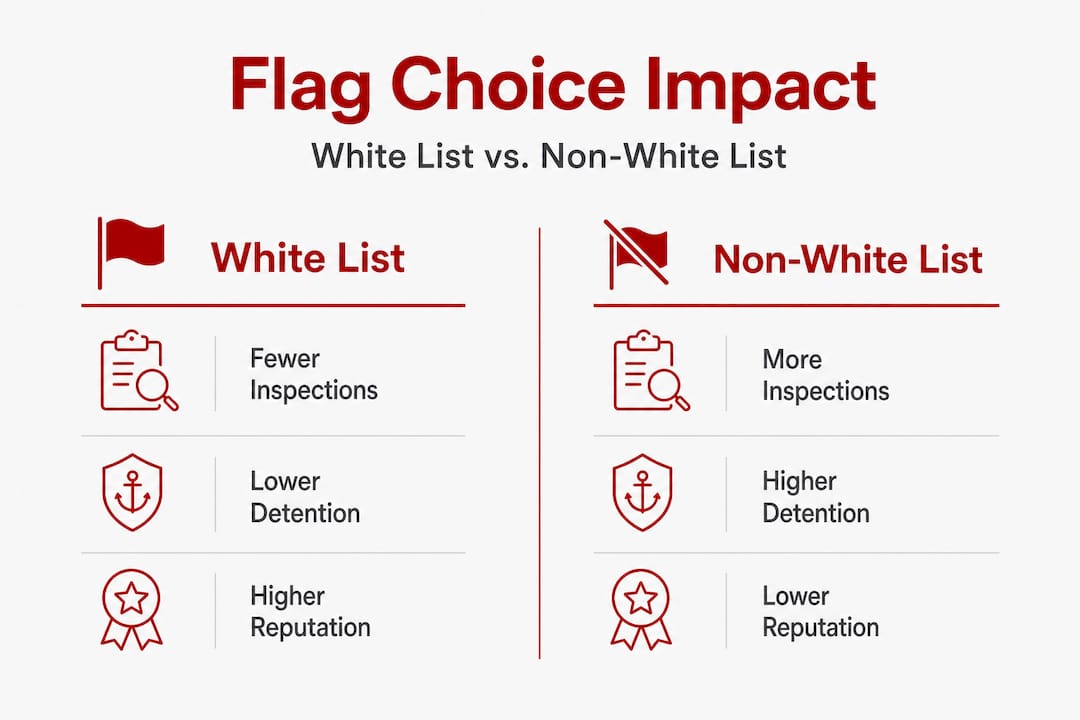
Every time your yacht enters a foreign port, port state control officers have the authority to inspect it. How aggressively they do that depends significantly on your flag. A vessel flying a flag from a jurisdiction ranked poorly by the Paris Memorandum of Understanding on Port State Control becomes an immediate target for thorough, time-consuming inspections. A vessel registered under a well-regarded flag often passes through with minimal disruption.
The distinction between white list, grey list, and black list flags is not bureaucratic noise. It reflects real-world patterns of safety compliance across thousands of vessels and inspections. Understanding where your flag stands on that list changes how you plan voyages, budget for port calls, and think about resale value.
“A detention at port can cost a yacht owner thousands of dollars in delays, rescheduled charters, and crew costs before the vessel is even allowed to leave. The flag you chose two years earlier is often the root cause.”
Here is what flag status actually affects for yacht owners:
- Inspection frequency: Grey and black list vessels are targeted for priority inspections under Paris MoU and Tokyo MoU regimes, meaning more time at anchor and more scrutiny.
- Detention risk: A detained vessel cannot depart until deficiencies are corrected. Corrections take time and money.
- Charter and insurance implications: Charter brokers and insurers review flag status as part of underwriting and booking decisions. A poor flag raises premiums and limits opportunities.
- Resale value: Buyers and brokers look at flag history. A vessel with a pattern of detentions or a problematic flag is harder to sell at fair market value.
Understanding the cost factors for yacht flags goes far beyond the registration fee itself. Operational costs tied to inspections, compliance requirements, and port access can dwarf the upfront savings from a cheaper registry. Explore the full range of flag registration options to see how different jurisdictions compare on both price and performance.
The Paris MoU white list includes registries like Marshall Islands, which recorded 5,470 inspections with only 181 detentions in recent reporting periods. That is a detention rate under 3.5 percent, which reflects strong flag state oversight and vessel compliance.
What a vessel flag determines: compliance, cost, and freedom
The flag your yacht flies ties you to a specific legal framework. That framework governs your safety equipment standards, crew labor regulations, tax obligations (in some jurisdictions), and the frequency with which port state control officers will scrutinize your vessel. Choosing the wrong framework does not just mean paperwork headaches; it can restrict where you sail, who will insure you, and how easily you can bring crew aboard in certain regions.
Flags of convenience are often criticized for lax safety standards, but the data increasingly shows that major open registries can be top safety performers. The term “flag of convenience” has become a shorthand for concern rather than an accurate descriptor of performance. Many of today’s open registries invest heavily in fleet management systems, mandatory audits, and port state liaison programs precisely because their business model depends on being on the white list.
Here is how flag choice breaks down across four critical dimensions:
| Factor | Strong flag (white list) | Weak flag (grey/black list) |
|---|---|---|
| Inspection frequency | Low to moderate | High, often targeted |
| Detention risk | Below 5% typically | Can exceed 10-15% |
| Insurance premium impact | Neutral to favorable | Often elevated |
| Charter market access | Broad | Restricted in some regions |
Step-by-step framework for understanding your compliance obligations:
- Identify the waters you intend to sail. Different port state control regions (Paris MoU, Tokyo MoU, Indian Ocean MoU) have distinct targeting policies.
- Research your candidate flag’s current white/grey/black list status in each relevant MoU region.
- Review the flag state’s annual inspection and detention data for the most recent reporting period.
- Evaluate the flag state’s technical requirements for safety equipment, crewing, and maintenance documentation.
- Factor in any tax treatment or corporate structure advantages the flag state offers for your ownership model.
Pro Tip: Not all open registries are equal. Registries like Marshall Islands, Liberia, and Malta operate sophisticated maritime administrations with dedicated technical staff and global port state liaison networks. Some smaller or newer registries cannot offer the same level of administrative support, which can translate into problems during inspections.
Achieving vessel registration efficiency requires matching your flag to your operational realities, not just your budget. Owners who invest time here save significantly over a vessel’s lifetime. For a deeper look at how the right flag creates long-term advantages, review the detailed breakdown of yacht flag compliance benefits.
Comparing popular flag states: performance and reputation
Theory matters less than actual data when you are deciding where to register your yacht. Here is a practical comparison of registries commonly chosen by private and commercial yacht owners, based on their recent port state control performance and administrative reputation.
| Flag state | MoU white list status | Detention rate (approx.) | Notes |
|---|---|---|---|
| Marshall Adaları | Paris MoU white list | ~3.3% | Strong global network, 5,470+ inspections tracked |
| Liberya | Paris MoU white list | ~3.8% | Major open registry, strong technical support |
| Malta | Paris MoU white list | ~3.5% | EU flag, strong for Med operations |
| Panama | Grey list (varies by period) | ~5-7% | Large registry, variable performance |
| Palau | Regional recognition | Variable | Smaller registry, growing compliance record |
Marshall Islands and Liberia have maintained consistent white list status with inspection and detention data that competes favorably with traditional national registries. That is significant because it directly counters the assumption that open registries are inherently risky.

The logistics impact of flag choice extends beyond just port entry. Charter operators report that vessels under well-regarded flags face fewer last-minute pre-charter inspections and crew documentation challenges, which translates directly to smoother client experiences and repeat bookings.
When evaluating a flag for your vessel, keep these considerations in mind:
- Intended use matters. A privately owned cruising yacht has different risk exposure than a commercially chartered vessel operating in multiple MoU regions.
- Route planning is affected by flag. High-priority inspection regimes in certain regions can add days to passage planning if your flag is flagged for scrutiny.
- Resale market responds to flag reputation. EU flags like Malta give buyers in European markets greater confidence, which can meaningfully affect sale price and time on market.
- Corporate ownership structures interact with flag choice. Some flag states work more smoothly with specific corporate ownership models, affecting how you register and manage your vessel legally.
Explore how streamlining global compliance is possible with the right flag choice and registration approach. For a broader overview of your options, the guide on maritime registration types is an essential starting point.
How to evaluate and choose the best vessel flag for your needs
With the landscape mapped out, the next question is: how do you make the decision for your specific vessel? This is where many owners go wrong by applying a one-size-fits-all approach.
A practical, step-by-step decision framework:
- Define your primary use case. Private leisure cruising, commercial charter, liveaboard, or a mix? Each use case has different compliance obligations and exposure to port state scrutiny.
- Map your primary sailing regions. Identify which port state control MoU regions you will operate in most frequently. This tells you which white/grey/black list rankings actually matter for your operations.
- Evaluate flag state technical support. Does the registry have a physical presence or recognized surveyors in your primary operating region? Remote administrations can slow down certificate renewals and deficiency resolutions.
- Review port state control records. Use publicly available MoU annual reports to check the real-world inspection and detention data for any flag you are considering.
- Check financial and legal implications. Some flags offer tax advantages through specific ownership structures. Others carry obligations that affect crew hiring and insurance requirements.
- Factor in resale strategy. If you plan to sell within five to seven years, choose a flag with broad buyer recognition and a strong safety reputation.
White list flags like Marshall Islands offer fewer inspections and fewer detentions, making them attractive for both compliance-focused owners and those prioritizing operational efficiency. The data is clear: flag status has a direct, measurable impact on how smoothly your vessel moves through international waters.
Pro Tip: Review the most recent Paris MoU and Tokyo MoU annual reports before finalizing any flag choice. These documents are publicly available and give you actual detention statistics broken down by flag, not just general reputation. Real numbers beat secondhand opinions every time.
Do not overlook the compliance impact on logistics when vessels move through tightly regulated port environments. The parallel to freight logistics is direct: the more scrutiny your flag invites, the more your schedule and budget suffer.
A complete flag selection guide for 2026 walks through these steps with jurisdiction-specific detail, so you can apply this framework to the registries most relevant to your situation.
Our take: what most yacht owners miss about flag choice
Here is what we see repeatedly, working with yacht owners across multiple jurisdictions: the biggest mistakes in flag selection come from treating the decision as static. An owner registers under a flag in 2019 based on advice that was accurate at the time, and then never revisits the decision as that flag’s port state performance shifts. By 2026, the vessel is operating under a registry that has slipped from white to grey list, and the owner is absorbing the costs in higher insurance premiums and more frequent detentions without connecting the dots.
The flags of convenience debate is a perfect example of how outdated narratives create poor decisions. The criticism of open registries was largely valid in the 1980s and 1990s, when regulatory oversight was genuinely lax. Today, the best open registries have invested enormous resources into compliance infrastructure because their commercial viability depends on staying on the white list. Dismissing Marshall Islands or Liberia as “flags of convenience” without checking current data is like refusing to fly a specific airline because you read a bad review from a decade ago.
The other pattern we see is owners over-indexing on upfront registration cost. A registry that saves you $800 in registration fees but results in two detentions over three years has cost you far more in delays, crew overtime, and rescheduled charters. Total cost of flag ownership is the right metric.
What separates the yacht owners who navigate this well? They treat flag selection the way they treat insurance or survey: as a decision that requires current data, expert input, and periodic review. Understanding real yacht flag benefits from a compliance and operational perspective is the foundation of that approach.
Make your vessel flag decision with confidence
Choosing the right vessel flag is one of the most consequential decisions you will make as a yacht owner, and it deserves more than a quick online search or a tip from the dock.
VesselFlag.com provides detailed, jurisdiction-specific resources designed to make this decision clear and actionable. Whether you are comparing registries for the first time or reconsidering an existing registration, the guides on yacht vs boat registration ve global yacht compliance give you the grounded, practical information you need. If you are ready to move forward, the step-by-step boat registration process guide takes you through every stage with clarity. Our team is available to provide personalized guidance tailored to your vessel type, operating region, and ownership structure.
Sıkça sorulan sorular
What does “white list” vs “black list” mean for vessel flags?
A “white list” flag indicates strong regulatory compliance with low inspection and detention rates, while black list flags face more scrutiny, more delays, and elevated costs at port.
Can a flag of convenience be as safe as a national registry?
Yes. Open registries like Marshall Islands match or exceed traditional national registries on safety metrics, consistently maintaining white list status with low detention rates.
How does vessel flag choice affect resale value?
A well-regarded flag boosts resale value by reducing buyer concerns over compliance history, detention records, and the costs of switching registries before sale.
What is the biggest mistake owners make when choosing a vessel flag?
Most owners focus on the upfront registration fee alone, not accounting for the long-term compliance costs, inspection frequency, and detention risk tied to a poorly performing flag.