
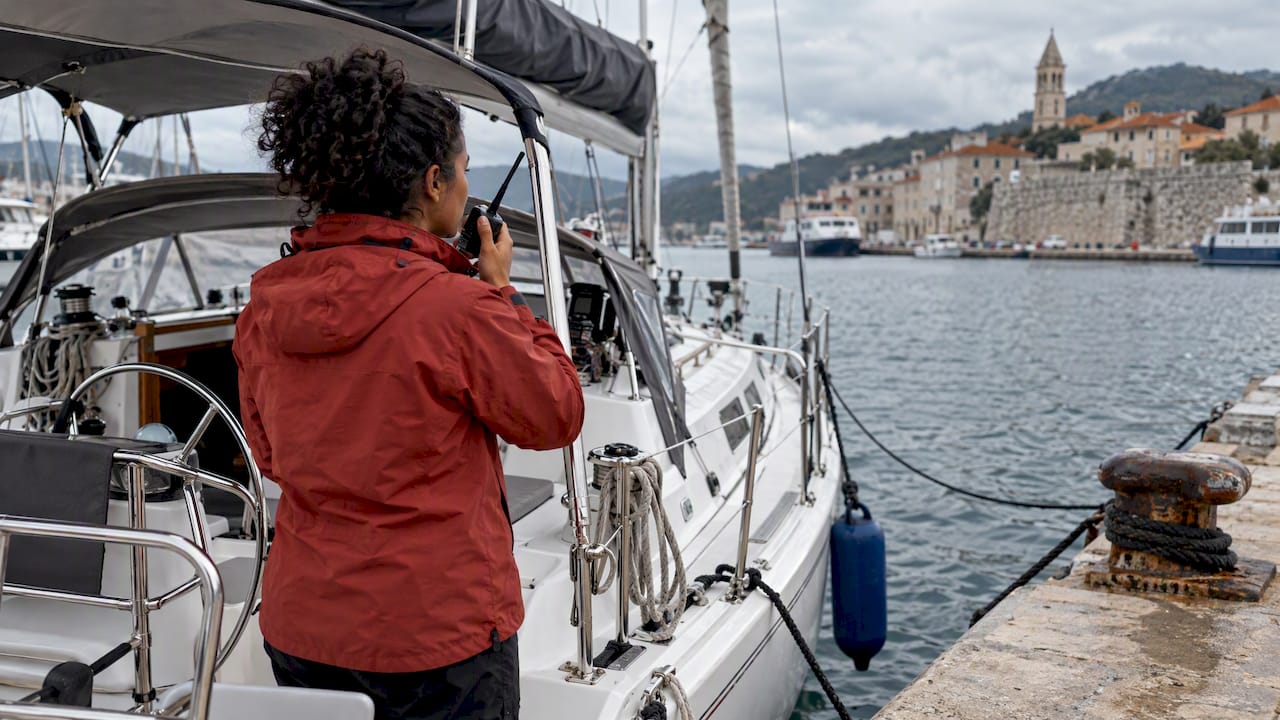
If your yacht stays in US waters and you only use VHF, you do not need a radio operator license. The moment you dock in a foreign port or talk to a foreign coast or ship station, you need two things: a ship station license for the vessel and a Restricted Radiotelephone Operator Permit for the person using the radio. Those are two different documents, and mixing them up is the most common mistake owners make.
This guide separates the operator’s paper from the boat’s paper, shows what applies under US rules, and explains what changes under other flags. It also covers how the call sign and MMSI fit in.
TL;DR
- Voluntary vessels that stay in US waters need no license to use marine VHF, radar or an EPIRB.
- Foreign ports change the answer: you then need a ship station license for the yacht and an operator permit for the person on the radio.
- The station license belongs to the vessel and the operator permit belongs to the person. They are issued separately and do not substitute for each other.
- Outside the US, rules follow the flag and the cruising area. The UK, for example, expects a Short Range Certificate for anyone operating the radio.
- Your MMSI comes with the station license process, so plan the radio paperwork together with registration.
İçindekiler
- Operator permit versus station license
- What the US requires for yacht owners
- Why your flag changes the answer
- Call sign and MMSI: how they connect
- Getting qualified: what training involves
- Perspective: pair the radio paperwork with the flag decision
- Make the radio part of your registration
- A practical checklist before you sail abroad
- SSS
- Kaynaklar
Operator permit versus station license
The phrase “radio operator license” covers two separate things.
A ship station license authorizes the radio equipment aboard a specific vessel. The FCC explains that this license covers the ship’s equipment, while an operator permit authorizes an individual to communicate with foreign stations or use certain radio equipment.
An operator permit or certificate is about the person. It says someone is entitled, and in some countries competent, to operate the radio. The Royal Yachting Association makes the same split: operator certificates concern competence, while a Ship Radio Licence authorizes the installation and use of equipment on a named ship.
In practice:
| Ship station license | Operator permit or certificate | |
|---|---|---|
| Attaches to | The vessel | The person |
| What it authorizes | The installed radio equipment | Operating the radio |
| Gives you | Call sign and MMSI | Entitlement to operate |
| Transferable? | Not when the boat is sold or the radio moves to another boat | Stays with the holder |
The FCC’s navigation center states that a ship station license is not transferable if the boat is sold or the radio equipment is moved to another boat. A buyer applies for a new one.
What the US requires for yacht owners
Staying in US waters
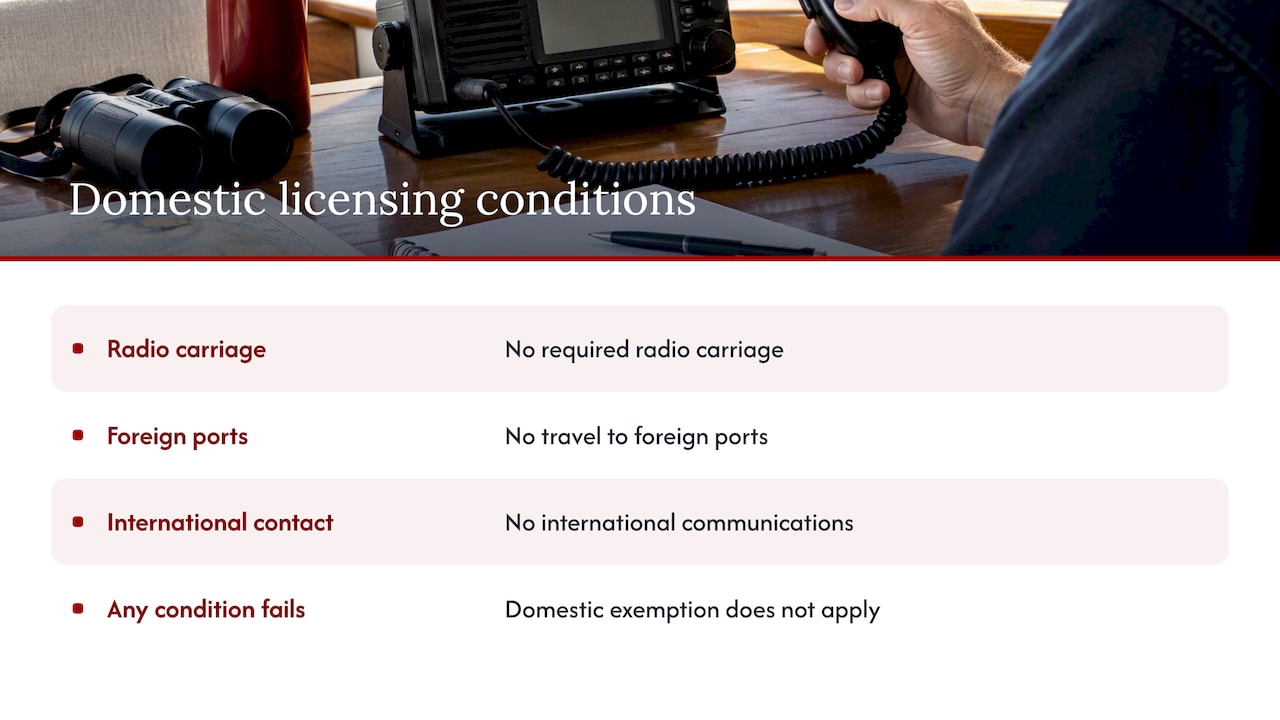
Under FCC rules, voluntary ships operating domestically do not need a license to operate marine VHF radio, radar or EPIRBs. The regulation behind this is 47 CFR Part 80: a ship station is licensed by rule when it is not subject to statutory, treaty or agreement radio-carriage requirements, does not travel to foreign ports and does not make international communications.
All three conditions must hold. A weekend cruiser on a lake or the coast usually meets them. A yacht that is required to carry a radio by law, or that sails to the Bahamas or Mexico, does not.
Crossing into foreign waters
If you travel to a foreign port, the FCC says a ship station license and an operator permit are both required. Otherwise, maritime stations are licensed individually or by fleet.
The operator permit most yacht owners need is the Restricted Radiotelephone Operator Permit. Per the FCC, it is required if you dock in a foreign port or communicate with foreign coast or ship stations. It is valid for the holder’s lifetime and does not require a test.
The ship station license for a voluntary vessel is valid for ten years, and renewals are filed electronically through the FCC Universal Licensing System. Put the expiry date in your calendar when you receive it, because an expired station license on a boat headed abroad is an easy problem to prevent and a hard one to fix in a foreign harbor.
When the permit is not enough
The restricted permit is the entry-level document. Commercial vessels, larger ships and vessels with mandatory GMDSS equipment fall under different rules, and the operator requirements rise accordingly. The FCC’s Marine Radio Operator Permit, for example, covers radiotelephone stations aboard certain vessels, including those over 300 tons. If your yacht is chartered commercially or approaches that size, confirm the requirement with the FCC and your flag administration before you sail.
Why your flag changes the answer
The US rules above apply to US-flagged vessels and US operators. Many yacht owners fly a different flag, or charter a boat abroad, and then a different regulator decides what you need.
Three things drive the requirement:
- Flag state. The registry’s country usually issues the station license and assigns the call sign and MMSI.
- Cruising area. Domestic use, coastal international use and ocean passages each have different expectations for equipment and operator qualification.
- Vessel type and equipment. Pleasure yachts, commercial yachts and SOLAS ships are treated differently, and DSC, HF and satellite equipment add requirements.
Birleşik Krallık
Ofcom’s ship radio licences stipulate that radio equipment may be operated only by, or under the direct supervision of, a person holding a Certificate of Competence and Authority to Operate. The minimum certificate for VHF, including DSC in GMDSS Sea Area A1, is the Short Range Certificate, administered by the RYA.
Avustralya
The Australian regulator splits the field by use. The AWQ is for casual boaters using VHF in Australian waters, while a GMDSS radio operator’s certificate is required for certain stations, including vessels subject to Commonwealth survey. Registered training organizations provide AWQ testing, and the same page notes that aviation radio qualifications are not recognized as equivalent to any marine radio qualification.
Hong Kong
A ship station licence is required for radiocommunications stations on ocean-going and river trade vessels. Per the regulator’s guidelines it is valid for two years and costs $300 (Hong Kong dollars in that document). Applicants need a Hong Kong registry certificate and an acceptance document from a recognized Accounting Authority to settle the ship’s radio traffic account.
Chartering abroad
US sailors who charter in Europe often hit this problem first. A US boater can legally run VHF at home with no paperwork, then find the charter base in the Mediterranean asks for a VHF certificate before handing over the keys. Many such bases accept a Short Range Certificate or equivalent. Ask your charter company which certificate it accepts before you book, not at the dock.
Call sign and MMSI: how they connect
The station license is what produces your vessel’s identity on the radio. According to Ofcom’s guidance, a vessel’s station license assigns a unique call sign and MMSI number for identification in the maritime mobile service, and the MMSI is typically obtained during the station license application through the national telecommunications regulator.
That has two practical effects:
- The MMSI follows the flag. If you re-flag a yacht, expect the radio identity to be reissued by the new administration. Your DSC radio and AIS transponder then need to be reprogrammed with the new number.
- The MMSI belongs to the vessel record. Because the license is not transferable on sale, a buyer starts the radio paperwork again, and the seller should delete or update the old record.
We handle the radio side together with registration for several flags. Our published fees are €149 for a Polish MMSI license, €150 for UK Part 1 MMSI (Ofcom) registration and €649 for an MMSI application under the Malta registration. Our dedicated guides cover the Malta radio license and the Poland radio license in detail, including the ship station permit, MMSI and operator certificate.
Getting qualified: what training involves
What you do depends on the country.
- US: the restricted permit needs no exam. You apply through the FCC and receive a lifetime permit.
- UK: you take a Short Range Certificate course and assessment through an RYA-recognized provider. The course can usually be done in any country, which helps owners who are not UK residents.
- Australia: testing for the AWQ runs through registered training organizations, and the Australian Maritime College manages the higher-level exams.
- Commercial and GMDSS vessels: the International Maritime Organization says it is very important that the responsible radio operator holding a General Operator’s or Restricted Operator’s Certificate is properly instructed and trained to use GMDSS radio equipment. The same circular says the radio license and operator certificates should be checked during a radio installation survey on SOLAS ships.
A certificate is not the same as competence. Whatever paper you hold, rehearse a DSC distress call with everyone who might be at the helm. A crew member who has never pressed the red button is a weak link. Equally, testing the VHF before you leave the dock is a habit worth keeping on every trip, owned or rented.
Perspective: pair the radio paperwork with the flag decision
We see the same pattern with US owners again and again. They treat the radio license as a late, minor item and register the yacht first. Then they find that the call sign, the MMSI and the operator requirement all depend on the flag they just chose.
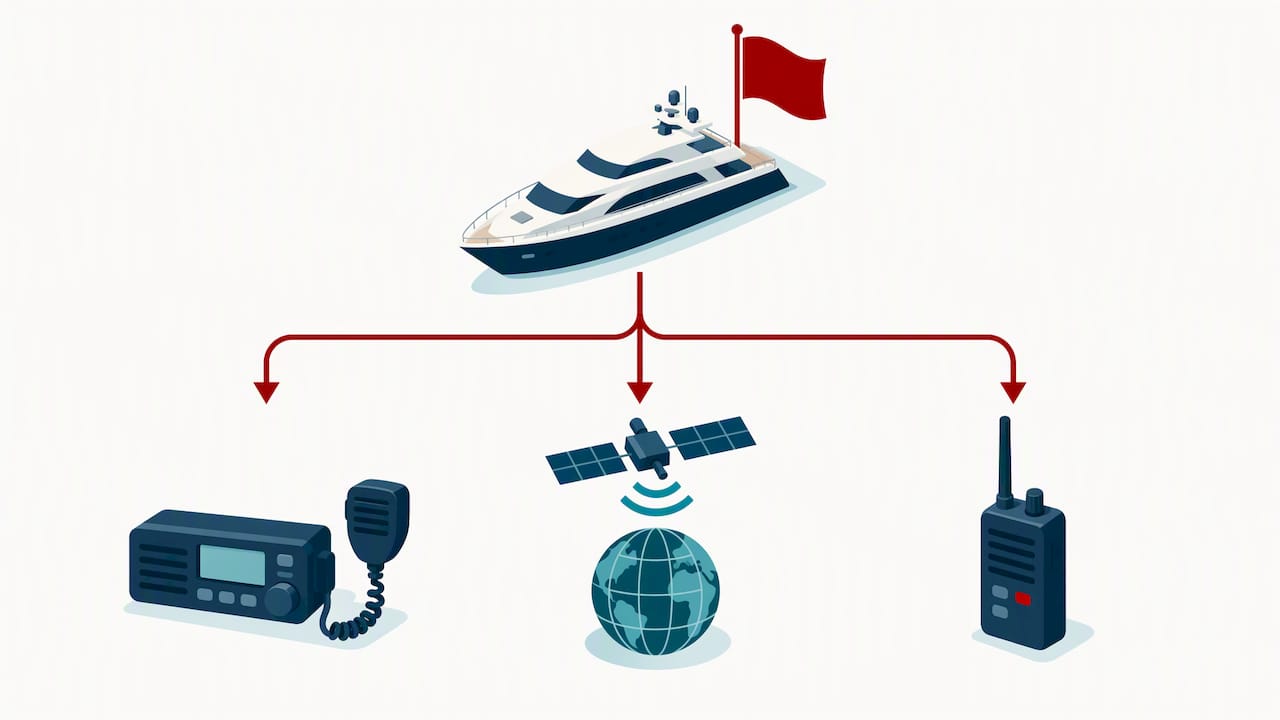
We work daily across six major registries, and each handles radio identity differently. Some flags issue the station license and MMSI in a straightforward way alongside the registration. Others want the radio documents produced by a separate authority, in a specific order, with documents that may need translation. Decide the cruising area and the operator qualifications first, then pick the flag and the timeline. Doing it in that order saves the re-programming and re-filing that come from changing the radio identity after the fact.
One more point: use decides whether a yacht is treated as private or commercial, not how it is paid for. That classification flows through to the radio and operator requirements, so settle it early. Our guide on private versus commercial registration explains how that works.
— VesselFlag
Make the radio part of your registration
If you are registering a yacht under a foreign flag, we can run the registration and the radio licensing as one file. Provisional registration typically takes 1 to 7 days depending on the flag, and we manage the paperwork from end to end, including the MMSI where the flag requires one.
Our published registration fees range from €290 to €2,990 for San Marino, €320 to €550 for Poland, €550 to €1,050 for UK Part 1 and €780 to €2,420 for Malta, with the amount depending on the vessel and package. If you are a US owner weighing a foreign flag, start with our guide to foreign yacht registration for US owners, then look at the flag registration options that fit your cruising plans.
A practical checklist before you sail abroad
Work through this before the first foreign passage:
- Confirm the flag’s radio rules. Ask the registry or your agent whether the station license, call sign and MMSI come with registration or need a separate application.
- Check the vessel’s station license. Is it in the right name, for the right vessel, and still valid? Remember it does not move to a new boat.
- Name your operators. List everyone who may use the radio and check each holds the operator document the countries on your route expect.
- Match the radio to the paperwork. The MMSI programmed into the DSC radio and AIS must be the one on the license.
- Carry originals. Keep the station license and operator certificates aboard. Charter bases and port officials often want the original, not a photo.
- Plan for sale or transfer. If you sell, the station license will not pass to the buyer. If you buy, budget time for a new one.
- Check documents for translation needs. Some registries require translated paperwork. Our note on yacht document translation lists what usually needs it.
SSS
Do I need a license to use a marine radio on my yacht in the US?
Not if the vessel is a voluntary ship that stays in US waters, does not make international communications and is not required by law to carry a radio. In that case the FCC says no license is needed for marine VHF, radar or an EPIRB. A foreign port or a foreign contact changes that.
What is the difference between a ship station license and an operator permit?
The ship station license authorizes the radio equipment on one vessel and assigns its call sign and MMSI. The operator permit authorizes a person to use the radio. You may need both when going abroad, and neither replaces the other.
Does the FCC Restricted Radiotelephone Operator Permit expire?
No. The FCC describes it as valid for the holder’s lifetime, and it requires no test. It is needed if you dock in a foreign port or talk to foreign stations. The ship station license, by contrast, runs ten years and must be renewed.
How do I get an MMSI for my yacht?
Usually through the ship station license application with the national regulator of the vessel’s flag. The license assigns the call sign and MMSI together. If you change flag, expect a new number and reprogram your DSC radio and AIS.
Does my US permit cover me in Europe or Australia?
Not automatically. Other countries set their own operator qualifications, such as the UK Short Range Certificate or the Australian AWQ. Check the requirement of the country whose waters you will use, or whose flag you will fly.
Kaynaklar
- Ship Radio Stations Licensing, FCC
- Ship Radio Stations Operations, FCC
- 47 CFR Part 80 Subpart B, eCFR
- FCC Radio Licenses, USCG Navigation Center
- Ship Radio Licences: Guidance notes for licensing, Ofcom
- Licensing onboard electronics, RYA
- Marine radio qualifications, ACMA
- Guidelines for application for ship station licence, Hong Kong
- Harmonization of GMDSS requirements for radio installations, IMO
- Multi-day boat rental tips: testing VHF and USCG gear