
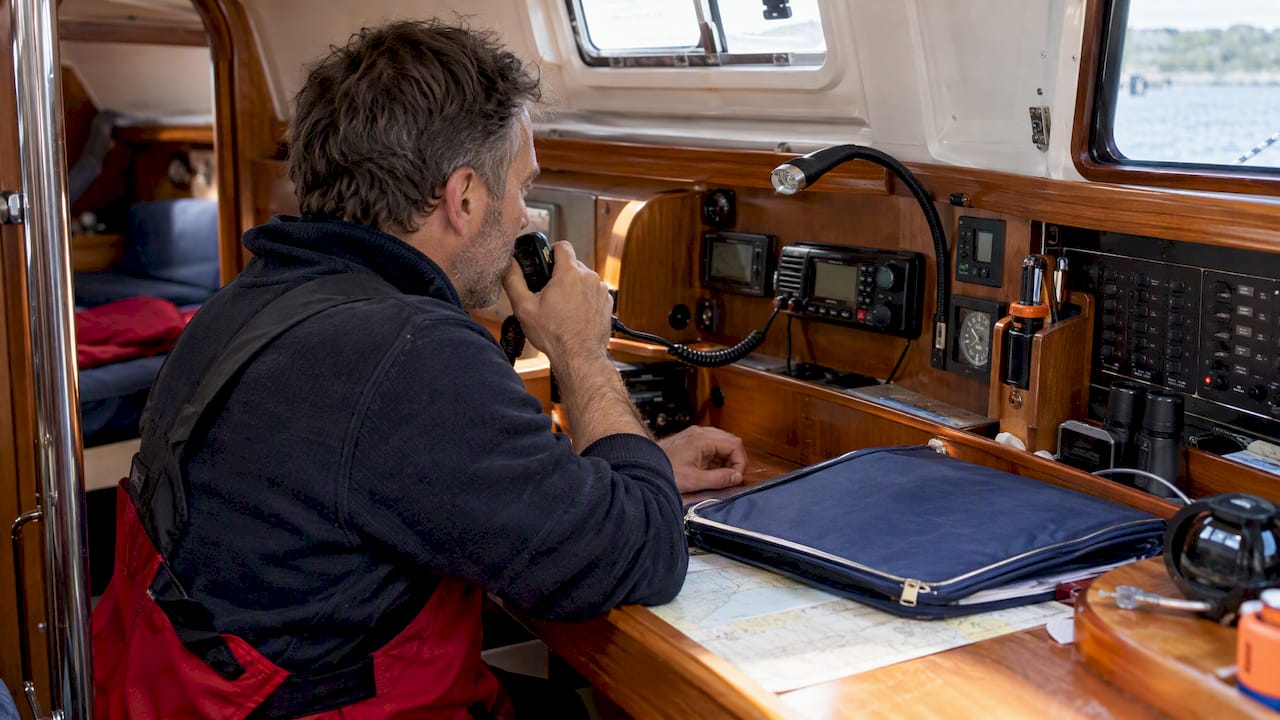
A Poland radio license for a yacht is really two documents. The first is the ship radio licence (the ship station permit), issued by Poland’s Office of Electronic Communications (UKE). It carries your call sign and your MMSI. The second is a personal radio operator certificate, usually the SRC, held by at least one person on board. If you fly the Polish flag and carry a VHF, AIS unit or EPIRB, you need both. This guide covers who needs what, what it costs, which documents UKE asks for and where owners lose time.
TL;DR
- The Polish ship radio licence is issued by UKE for a maximum of 10 years, and your MMSI is assigned inside it.
- Register the vessel first. The radio licence is a separate application to a separate authority, made after the registration certificate exists.
- UKE’s state fee is 82 PLN, or 99 PLN if a representative files for you under a power of attorney. Our Polish MMSI License is 149 EUR one-off.
- At least one crew member must hold a valid operator certificate such as the SRC. The exam fee is 175 PLN, and exam registration closes 14 days before the session.
- UKE has asked for paper originals, so allow for postal time. The published standard timeline is up to 6 weeks.
İçindekiler
- What a Polish radio license actually covers
- The order of operations
- Documents UKE asks for
- What it costs
- Timeline: plan for weeks, not days
- The operator certificate (SRC)
- Hand-held VHF and coastal limits
- Our perspective
- Let us handle the Polish MMSI License
- SSS
- Kaynaklar
What a Polish radio license actually covers
People search for “Poland radio license” and find three different things mixed together: the ship station licence, the operator certificate, and the amateur radio permit. For a yacht owner only the first two matter.
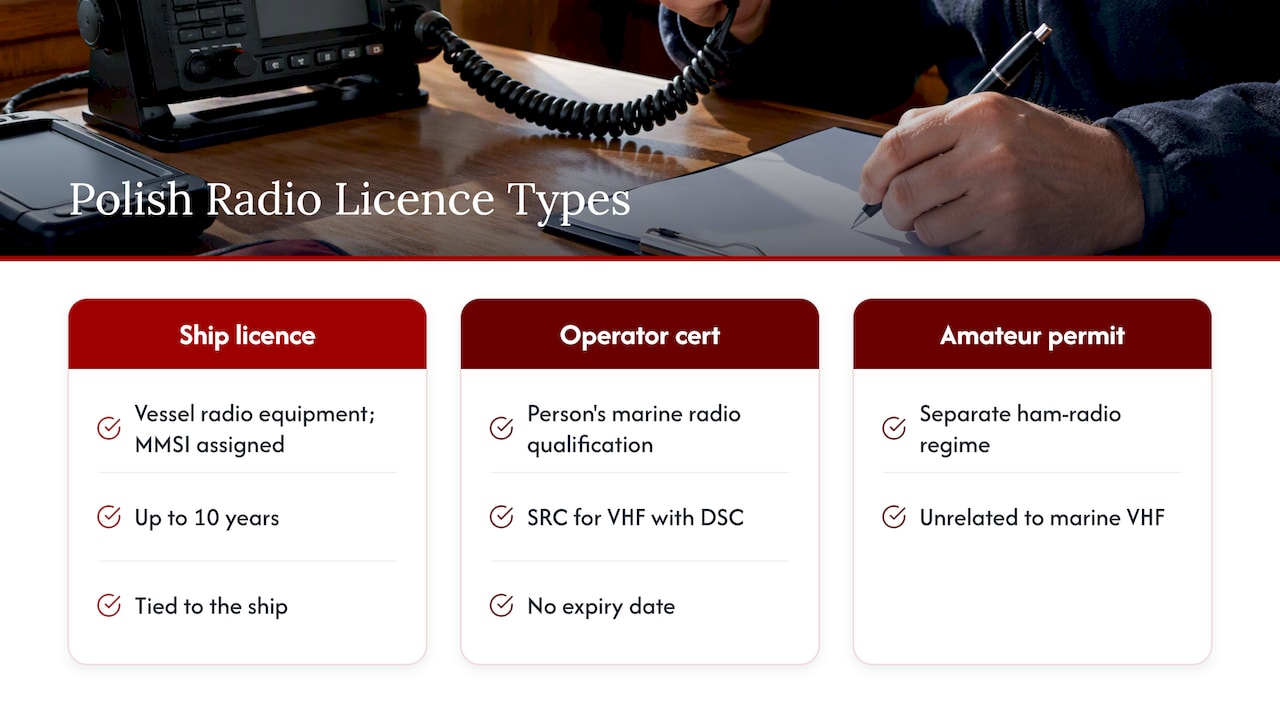
Ship radio licence. UKE describes it as a licence given for a maximum of 10 years, with the MMSI assigned in it. It authorizes the radio equipment on the vessel: fixed VHF, AIS, radar transponders, EPIRB and similar. It is tied to the ship, not to the person at the helm.
Operator certificate. This is the human qualification. For recreational yachts on VHF with DSC it is normally the Short Range Certificate (SRC). A practitioner guide on exam registration notes UKE is the only Polish body that runs these exams and issues the certificates, and that the certificate has no expiry date.
Amateur radio. A ham license is a different regime and has nothing to do with marine VHF. Skip it unless you actually hold a ham station.
Who needs it
Any vessel registered under the Polish flag that carries radio equipment. A guide to registering yachts under the Polish flag states that operating a yacht under that flag requires a license for the radio equipment on board, applied for through UKE. Boat owners on the YBW forum also reported in 2023 that vessels navigating the seas are expected to hold a ship station licence with call sign and MMSI, while vessels on inland waters only can do without.
If you are a US owner thinking about the FCC side, that is a separate regime. Our page on ship station license requirements for US boat owners explains how the US rules differ.
The order of operations
The sequence matters because each step feeds the next.
- Register the vessel under the Polish flag. The same practitioner guide explains that registration is a prerequisite, but the radio licence is managed by UKE and applied for separately once the registration certificate is issued.
- Confirm who will be the licence holder. UKE says the applicant is a person who owns the ship or a company that operates it. If a company owns the yacht, the licence goes to the company.
- Make sure an operator holds a valid certificate. Do this in parallel, because the exam has its own booking window.
- File the application with UKE. Paper, hand-signed, with the attachments below.
- Receive the licence with call sign and MMSI. Then program the number into your VHF and AIS, and register the EPIRB against it.
For the registration step itself, see our Poland flag registration page. For how the pieces fit across flags, the vessel registration guide covering San Marino, Malta and Poland is a useful companion.
Documents UKE asks for
According to the UKE and practitioner material in our research, the package for a yacht includes:
- A hand-signed application form.
- A copy of the applicant’s valid personal radio operator certificate, for example the SRC.
- A copy of the Certificate of Sea-Going Yacht from the Polish Yachting Association (PZŻ).
- Proof of payment of the 82 PLN fee to UKE.
- If someone files on your behalf: a power of attorney and an extra 17 PLN fee, making 99 PLN in total.
UKE’s own notice adds a blunt warning: documents must be sent in paper form. Scans alone do not start the clock. For owners abroad, the courier leg is often the longest single delay, so sign and ship originals the day you have them.
Keeping these papers organized after issue also matters. A clean file of certificates, licences and renewals is what a surveyor, broker or port officer will ask to see. A guide to vessel records management from the marina software world shows how marinas and yacht clubs expect those records to be kept.
What it costs
There are three cost layers, and owners often only budget for one.
| Item | Cost | Notes |
|---|---|---|
| UKE ship radio licence fee | 82 PLN | Paid to UKE |
| Power of attorney surcharge | 17 PLN (99 PLN total) | Only if a representative files |
| SRC or LRC exam and certificate | 175 PLN | Figure as of January 2026 |
| VesselFlag Polish MMSI License | 149 EUR one-off | We prepare and manage the filing |
| VesselFlag Poland Flag Registration | 320-550 EUR one-off | Registration under the Polish flag |
The PLN figures are state fees and move with Polish regulation, so confirm them on the UKE maritime service page before you pay. The exam fee comes from the exam registration guide. Training courses are extra and priced by the school.
Our 149 EUR is a fixed fee for the Polish MMSI License, listed on our Poland Flag Registration page. If you are budgeting for the whole registration, our piece on yat kaydinin gi̇zli̇ mali̇yetleri̇ lists the items that usually get missed.
Timeline: plan for weeks, not days
The vessel registration and the radio licence run on different clocks. We offer provisional registration in 1 to 7 days. The radio licence is a state process: UKE’s notice, dated July 2020, gives a standard timeline of up to 6 weeks when documents are complete and in paper form. That figure is five years old, so ask for the current processing time before you commit to a delivery or charter date.
A practical schedule for an owner who wants to sail in spring:
- Week 0: start flag registration, book the SRC exam if nobody aboard holds one.
- Weeks 1 to 2: registration certificate issued, PZŻ certificate in hand.
- Weeks 2 to 3: radio licence application sent in paper.
- Weeks 3 to 9: UKE review. Do not schedule a sea passage inside this window.
The operator certificate (SRC)
The licence for the ship does not replace a qualified person. The practitioner source we reviewed says at least one person on board must hold a valid radio operator certificate, such as the SRC, to operate marine radio such as a VHF with DSC.
How the exam works
The SRC exam has a theory part and a practical part. Training providers say the practical side concentrates on real GMDSS equipment: VHF DSC radios, EPIRB beacons and SART transponders, and that hands-on simulator practice is what makes the difference. The same source considers passing without practical training close to impossible. Courses are run by Polish sailing schools, for example in Gdansk and Gdynia, as shown by one SRC course provider.
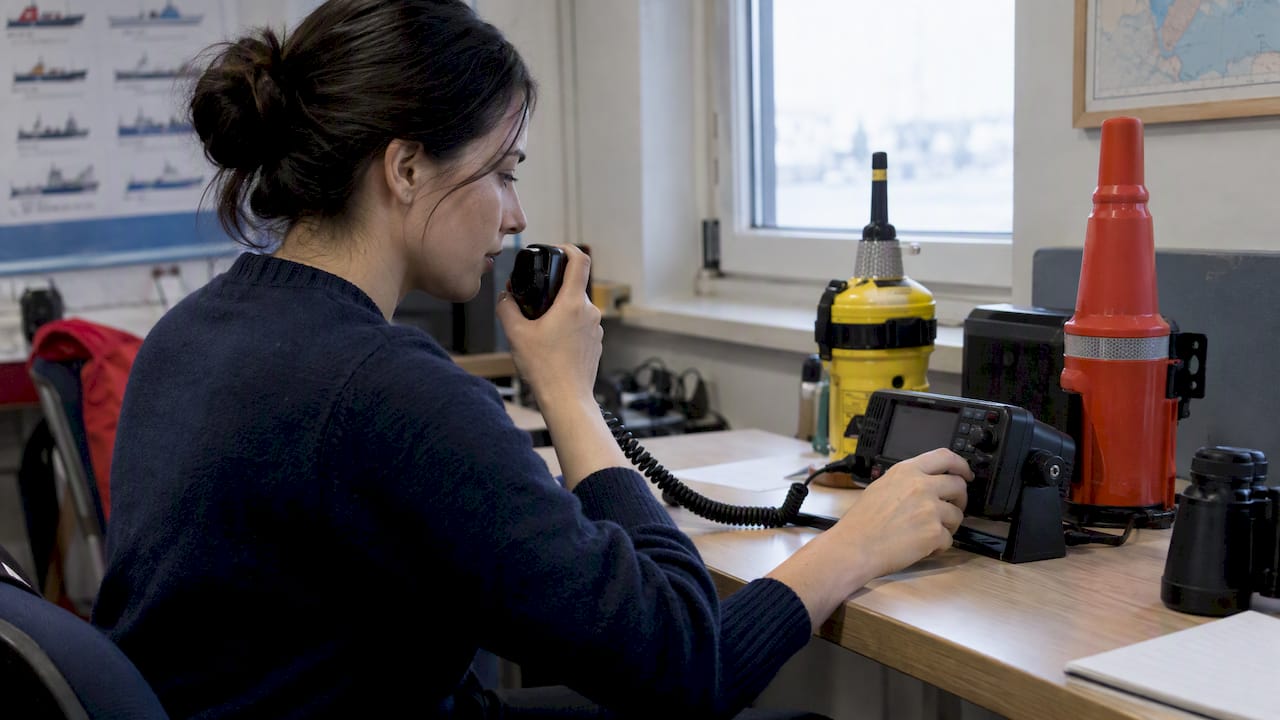
Registration must be made at least 14 days before the exam session you choose, and the fee is 175 PLN as of January 2026, per the exam registration page.
Is it recognized outside Poland?
Training providers say the SRC follows international maritime conventions and is therefore recognized globally. Treat that as a general statement. Before an ocean crossing, check with the flag state or the port authorities of your destination whether they want anything more.
Hand-held VHF and coastal limits
Owners often ask whether a hand-held radio needs its own permit. A Polish yacht broker’s blog explains that hand-held permits cover only Polish territory, meaning Polish sea and inland waters. If you sail abroad with a portable unit, do not assume that permit travels with you. A fixed installation under the ship licence, with MMSI, is the cleaner route for international cruising.
Our perspective
We handle registrations under six major flags every day, and the radio licence is where we see the most avoidable delay. It is rarely the registration itself. It is the sequencing: owners register the vessel, then discover the SRC exam needs two weeks’ notice, the PZŻ certificate has to be attached, and UKE wants paper.
Our advice is to treat the radio licence as part of the registration project from day one. Name the licence holder early, make sure the right entity owns the yacht (a company ownership structure changes who applies), and book the operator exam before the registration certificate lands. We would rather quote you a realistic 6-week radio timeline than promise something the authority controls.
We also suggest you decide on the full equipment list before filing: VHF, AIS, EPIRB and any radar transponder. Fixing the paperwork after a change is slower than listing it correctly the first time. If your EPIRB needs registering, our EPIRB registration service can handle it alongside.
— VesselFlag
Let us handle the Polish MMSI License
If you are registering under the Polish flag, we can run the radio licence in the same project: registration, Polish MMSI License at 149 EUR one-off, and the follow-up on your call sign and numbers. Start on our Poland Flag Registration page. If the yacht will be owned through a company, or you want to compare flags first, our services page lists the other options.
Project owners managing a larger build or refit often need the regulatory paperwork sorted by someone else too. A published fee schedule from an independent yacht consultancy is a good example of how professional project oversight is typically priced, useful if radio and flag compliance is one line in a bigger budget.
SSS
Do I need a radio license for a Polish-flagged yacht?
Yes, if you carry radio equipment. The Polish flag guidance says operating a yacht under the flag requires a license for its radio equipment, and UKE issues it. Vessels on inland waters only may be treated differently, so check with UKE if that is your case.
How long is the Polish ship radio licence valid?
UKE states a maximum of 10 years. The MMSI is assigned within the licence. The operator’s SRC certificate, by contrast, is reported to be valid indefinitely.
Can I apply through a representative?
Yes. UKE requires a power of attorney and an extra 17 PLN fee, bringing the total to 99 PLN. Many owners abroad choose this route because paper originals must still reach UKE.
Can I apply without registering the vessel first?
No. The registration certificate and the PZŻ certificate are needed for the radio application, so the registration comes first. The two are handled by different authorities.
Do I need the SRC if I only use a hand-held VHF?
The hand-held permit is a separate document and covers Polish waters only. For an installed VHF with DSC on a sea-going yacht, expect to need a certified operator aboard. Confirm your exact setup with UKE.
Kaynaklar
- UKE, Maritime service: ship radio licence
- UKE, Maritime service: paper documents notice
- Registration of yachts under the Polish flag (PDF)
- YBW Forum: Polish maritime authorities tightened requirements
- Kyma: how to register for the UKE exam
- Kyma: how the SRC exam works
- OTSS: SRC and LRC course
- Hand-held VHF permit in Poland