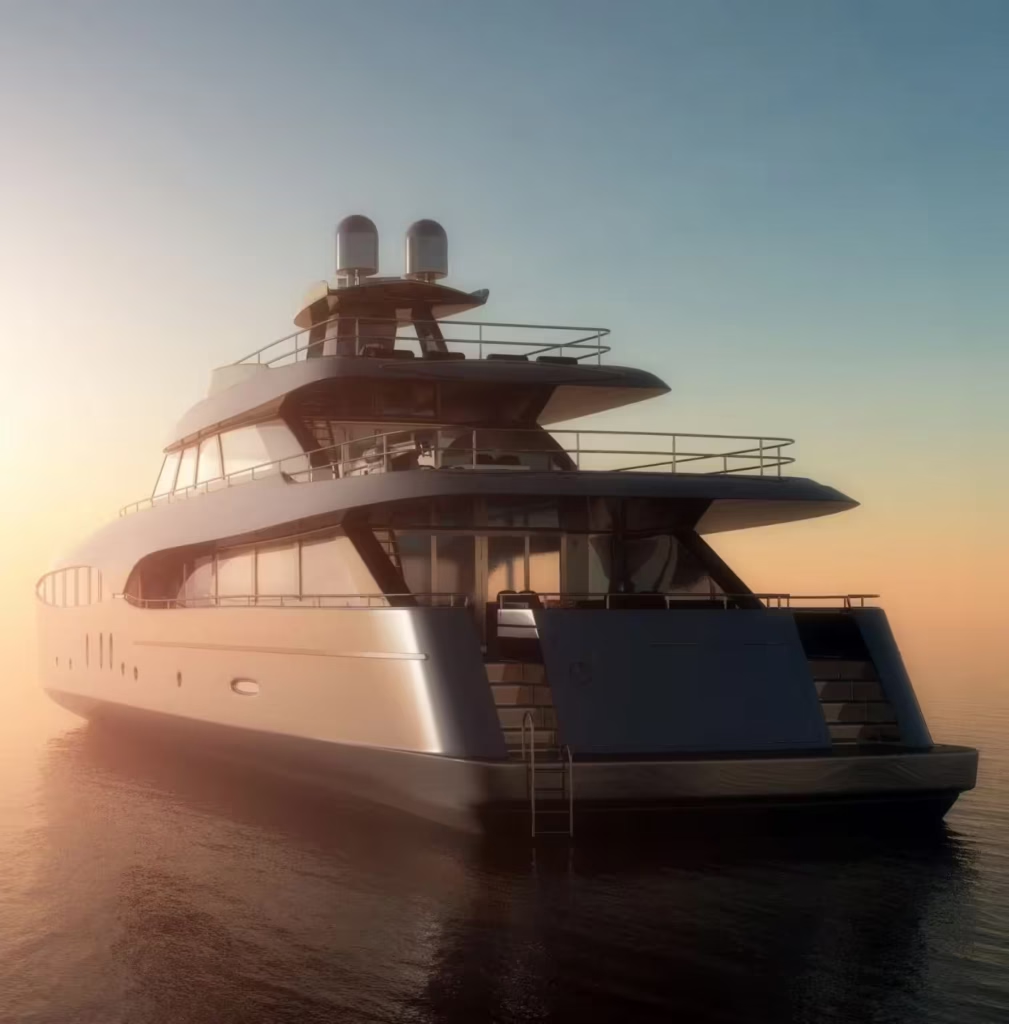

Class societies for yachts are independent technical organizations that write the engineering rules a vessel must meet, then verify compliance through plan approval, construction oversight, and recurring surveys. The practical payoff is a classification certificate, and that certificate is often the difference between an insurer saying yes and an insurer saying no. Bodies like DNV, Lloyd’s Register, and Bureau Veritas each run this process, and their work underpins insurance underwriting, resale value, and flag-state recognition.
TL;DR:
- Most classification societies for yachts require regular surveys, including annual checks, intermediate inspections around the midpoint, and full five-year surveys to maintain class status.
- Choosing a classification society depends on your yacht’s build location, intended operations, and desired notations, with key players including DNV, Lloyd’s Register, Bureau Veritas, RINA, ABS, and ClassNK.
- Out-of-class status can lead to higher insurance premiums, settlement exclusions, and difficulties in resale or chartering, making timely surveys essential.
- Recent rule updates emphasize digital inspections, environmental notations, and alternative fuels, requiring owners to stay informed when planning builds or refits.
- Coordination between class surveys and vessel registration is crucial to avoid delays, with services like Vesselflag assisting in smooth compliance documentation and flag transitions.
Table of Contents
- What Do Classification Societies Do for Yachts?
- Which Classification Societies Work With Yachts?
- How Does the Classification Process Actually Work?
- Why Does Classification Status Matter So Much?
- What’s New in Yacht Classification Rules for 2024–2025?
- How Do You Choose a Society or Transfer Class?
- Vesselflag’s View on Class, Registration, and Ownership Timing
- Registration and Compliance Support That Keeps Pace With Class Surveys
- Sources
- FAQ
What Do Classification Societies Do for Yachts?
A classification society’s core job is writing and updating technical rules covering hull structure, materials, machinery, and onboard systems, then confirming a specific yacht meets them. That confirmation isn’t a one-time stamp. It runs through the entire life of the vessel, from the first drawing to the day it’s scrapped or reflagged.
During construction, a surveyor from the society reviews design plans, checks material certificates, and witnesses key tests, including welding inspections and machinery trials. Once the yacht enters service, the society keeps checking:
- Annual surveys confirm the vessel still matches its certified condition.
- Intermediate surveys, roughly at the midpoint of a class cycle, dig deeper into hull and systems.
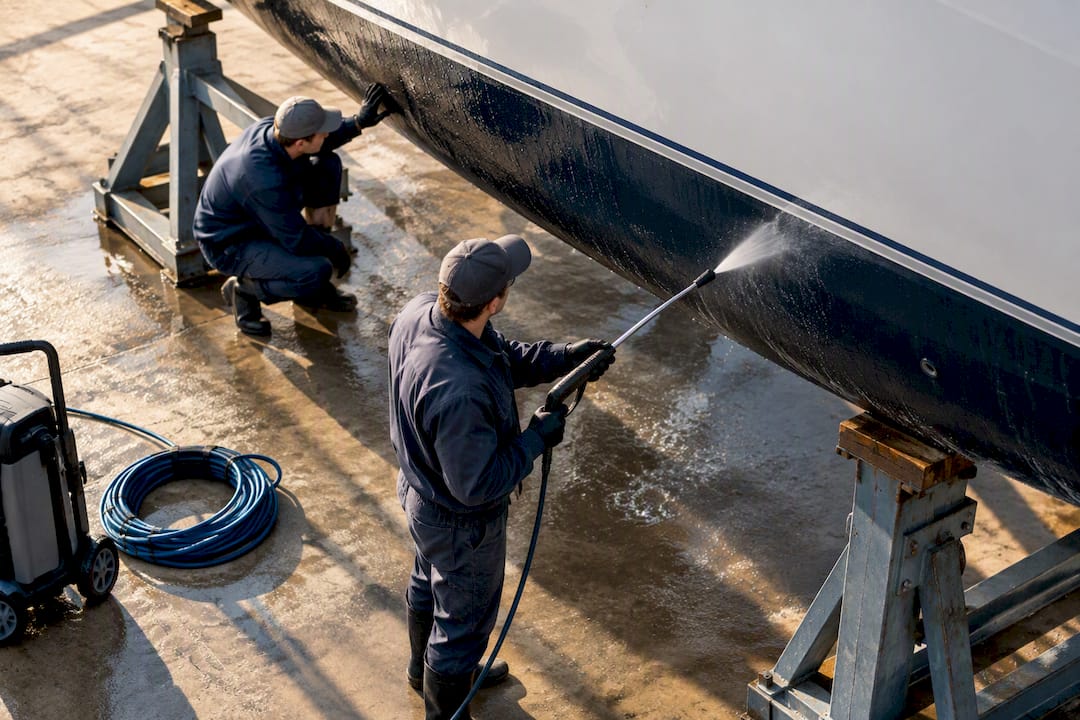
- Five-year special surveys are the big one: full inspection, often requiring the vessel out of the water.
There’s a distinction worth knowing here. Classification certifies technical soundness against a society’s own rules. Statutory certification, by contrast, confirms compliance with a flag state’s legal requirements, often under conventions like SOLAS or MARPOL. Many societies handle both, acting on behalf of flag administrations, which is why the same surveyor visit can produce two different certificates.
Which Classification Societies Work With Yachts?
Six organizations dominate the yacht sector, and each has carved out a slightly different niche. Knowing the differences matters if you’re comparing quotes or trying to understand why your builder recommended one over another.
- DNV runs yacht-specific rules alongside advisory services and digital survey tools, letting owners track a vessel’s class status online rather than waiting on paperwork.
- Lloyd’s Register (LR) built a reputation on lifecycle advisory work, particularly around new propulsion and decarbonization planning for larger yachts.
- Bureau Veritas (BV) carries one of the broadest rules libraries in the industry and handles a large share of statutory liaison work for flag states.
- RINA has built a name around survey technique innovation, including expanded use of remote inspection for routine checks.
- ABS publishes detailed yacht-specific rules covering materials and welding, with its Rules for Building and Classing Yachts reorganized under new Parts effective in 2025.
- ClassNK operates one of the largest global survey networks, which matters if your yacht moves between continents and needs surveys done wherever it happens to be docked.
None of these societies belongs to a single region or yacht size class exclusively. Most compete for the same superyacht and large-motor-yacht work, and the “best” one usually comes down to where you build, where you cruise, and what notations you need.
How Does the Classification Process Actually Work?
Classification starts before a single plate is welded. The process follows a fairly predictable sequence, though the details vary by society and vessel type.
- Plan approval. Naval architects submit structural and systems drawings; the society’s engineers check them against class rules before construction begins.
- Materials review. Steel, aluminum, or composite suppliers must provide certified material data, which the society verifies against approved specifications.
- Witness testing. Surveyors attend welding tests, tank testing, and other critical checkpoints during the build.
- Sea trials and delivery. Before handover, the vessel undergoes trials confirming speed, stability, and system performance, culminating in a delivery certificate.
- In-service surveys. Annual, intermediate, and five-year special surveys keep the class certificate valid.
Skipping or delaying a scheduled survey puts a yacht “out of class,” which can trigger insurance exclusions and complicate any sale mid-lapse.
Notations add another layer. A yacht might carry an ice notation for high-latitude cruising, an environmental notation tied to emissions performance, or an alternative-fuel notation if it runs on methanol or LNG. Each notation comes with its own survey requirements layered on top of the base class cycle.
Pro Tip: Schedule your five-year special survey at least six months out and coordinate haul-out timing with routine hull maintenance. Combining the two saves yard time and keeps the vessel earning charter revenue instead of sitting idle.
Why Does Classification Status Matter So Much?
An out-of-class yacht is a hard sell, full stop. Underwriters build classification into their risk models, and a lapsed certificate can mean higher premiums, coverage exclusions, or outright denial.
- Insurance eligibility depends heavily on valid classification; underwriters worldwide, including major London-based markets, routinely require a current certificate before binding cover.
- Resale value and buyer confidence track closely with class history. A yacht with a clean, unbroken survey record commands a stronger position at the negotiating table.
- Charter eligibility and statutory compliance in many jurisdictions require valid class status as a baseline, particularly for commercially operated vessels.
Classification’s five-year survey cycle isn’t arbitrary bureaucracy. It’s the mechanism that keeps a decades-old hull insurable and sellable, which is why brokers ask about class status almost as quickly as they ask about engine hours.
What’s New in Yacht Classification Rules for 2024–2025?
The biggest structural shift came in 2024, when several leading societies formed the Yacht Safety and Environmental Consortium (YSEC), with DNV, Lloyd’s Register, RINA, Bureau Veritas, and ABS as founding members. The goal is harmonizing environmental indices and tonnage calculations across societies, which had previously drifted apart on methodology.
- ABS reorganized its Rules for Building and Classing Yachts into distinct Parts covering hull construction, materials and welding, and post-construction surveys, with several changes effective in 2025.
- Digital and remote inspection techniques are gaining broader acceptance for routine survey tasks, though acceptance scope still varies by society.
- Alternative-fuel notations are becoming more common as owners specify methanol or hybrid propulsion, which changes both the newbuild approval process and the retrofit survey scope for existing yachts.
If you’re planning a build or major refit, checking the current rule revision date before signing a contract avoids getting caught mid-project by a rule change.
How Do You Choose a Society or Transfer Class?
Picking a society isn’t just about brand recognition. It’s about fit with your yacht’s build location, materials, cruising grounds, and intended use.
- Check survey and port coverage. Confirm the society has surveyors near where you’ll actually operate, not just where you built the boat.
- Match rules to your design. Composite hulls, alternative fuels, or unusual propulsion setups fit better with some societies’ rule libraries than others.
- Confirm available notations. If you need ice class, environmental, or dynamic-positioning notations, verify the society issues them.
- Compare fees and timelines. Ask for a written estimate covering plan approval, survey visits, and certificate issuance timing.
- Ask about advisory services. Some societies now offer decarbonization or retrofit advisory work alongside pure classification, which can matter for a long-term ownership plan.
Transferring class between societies follows a similar logic in reverse: the new society reviews existing survey records, may require a transfer survey to confirm current condition, and issues fresh certificates once satisfied. Keeping survey documentation organized ahead of a transfer speeds the whole process considerably, and surveyors handling registration paperwork can often flag gaps before they become problems.
Vesselflag’s View on Class, Registration, and Ownership Timing
Classification and registration run on parallel clocks, and owners who ignore that lose time and money. A survey renewal that slips past a flag registration deadline, or an insurance quote requested before the class certificate updates, creates avoidable friction. Coordinate the two early, especially during a build or a sale, and loop in a registration adviser alongside your class surveyor rather than after the fact.
— VesselFlag
Registration and Compliance Support That Keeps Pace With Class Surveys
Vesselflag handles the registration side of yacht ownership so class timelines don’t stall on paperwork. That’s the practical gap: a class surveyor confirms the vessel is sound, but someone still has to file the flag paperwork, secure an MMSI number, and keep documentation current between surveys, and that’s where delays usually creep in.
Vesselflag runs San Marino yacht registration, Malta yacht registration, and several other flag options with provisional registration typically issued in one to seven days, plus MMSI licensing and insurance introductions that line up with your survey calendar rather than fighting it. If a five-year special survey or a class transfer is coming up, get your registration and documentation reviewed now so nothing sits in a queue while your certificate lapses. Check current timelines and package pricing directly on the Vesselflag services page or start with the flag registration option that fits your cruising plans.
Sources
Consult each society’s yacht pages and the YSEC announcement directly before finalizing any build or retrofit contract.
FAQ
What Are the Major Classification Societies for Yachts?
The six societies most active in yacht classification are DNV, Lloyd’s Register, Bureau Veritas, RINA, ABS, and ClassNK. Each publishes its own yacht-specific rules, though several now coordinate on environmental standards through the Yacht Safety and Environmental Consortium.
Who Belongs to the International Association of Classification Societies?
The International Association of Classification Societies (IACS) includes twelve full members, among them DNV, Lloyd’s Register, Bureau Veritas, ABS, RINA, and ClassNK, the same societies most active in yacht work. Membership signals adherence to shared technical and quality standards across the marine industry.
What Are the Different Yacht Classifications?
Yachts are typically classified by notation type rather than a single category: base structural class, plus optional notations for ice operation, environmental performance, alternative fuels, or specialized systems like dynamic positioning. A single yacht can carry several notations depending on how and where it operates.
How Often Does a Yacht Need to Be Surveyed?
Yachts in class undergo annual surveys every year, an intermediate survey around the midpoint of the cycle, and a full five-year special survey, a schedule confirmed by DNV’s classification process. Missing a scheduled survey can put the vessel out of class, affecting insurance and resale.
Does Vesselflag Handle Yacht Classification Directly?
Vesselflag doesn’t issue classification certificates. It handles flag registration, MMSI licensing, and compliance documentation that owners typically manage alongside their classification society’s survey schedule, with pricing available on the Vesselflag flag registration pages.