
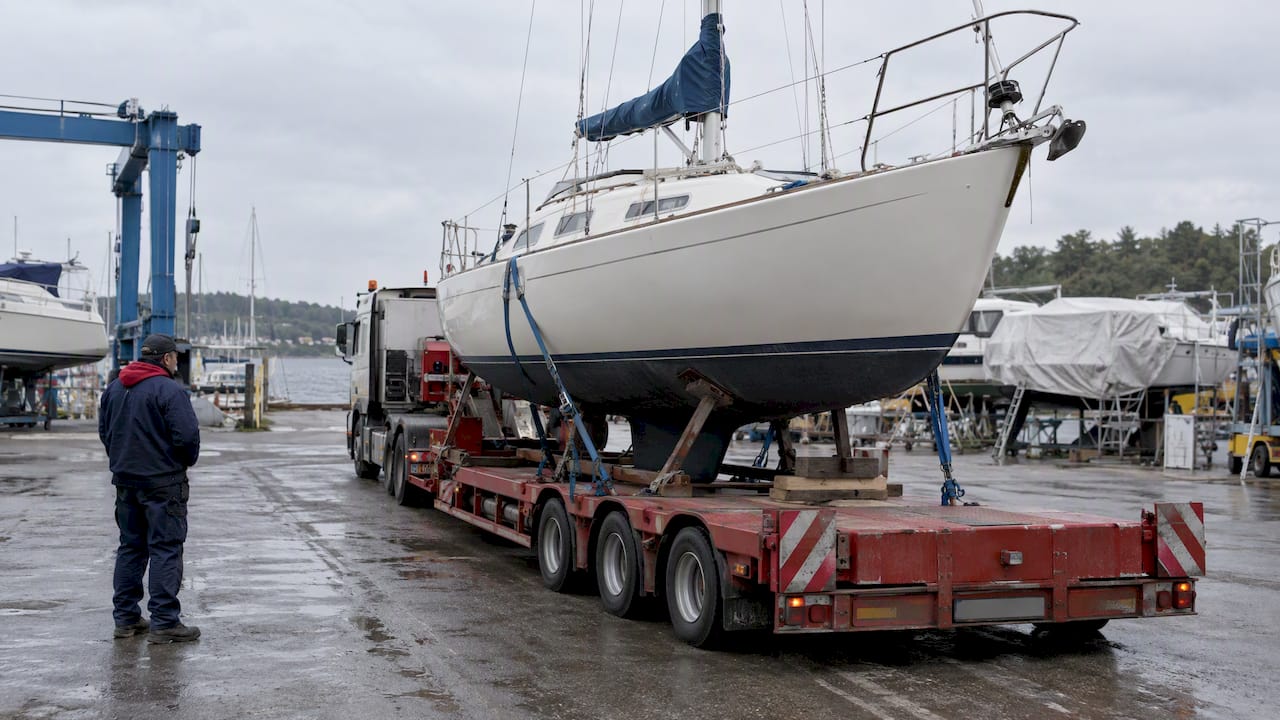
Yes, moving a yacht by road is a practical option for many owners, but it works best with specialist equipment, permits, and route planning in place. Height, width, weight, and the number of borders you cross determines whether a standard haulier can do the job or whether you need an oversize-permit specialist. Cross-border or urban routes almost always call for professional handling.
Özetle:
- Smaller boats under 8.5 feet wide can often be moved without a permit using standard trailers, while larger vessels typically require customized low loaders and permits.
- Permits are jurisdiction-specific; crossing state or national borders may necessitate escorts, route preruns, and detailed route confirmation to ensure clearance and compliance.
- Owners must remove or secure loose equipment, confirm cradle placement, and document hull condition prior to loading to avoid delays and disputes.
- Cross-border moves involve additional paperwork such as export declarations and carnets, with customs clearance potentially extending the timeline by several days.
- Costs beyond haulage, like permits, escorts, disassembly, and customs, can significantly increase the total price, and insurance coverage often excludes damage caused during loading and unloading.
İçindekiler
- How professional yacht road transport works
- Dimension and weight limits that trigger a special permit
- Preparing your yacht for the road
- What route planning and preruns actually involve
- Cost drivers and realistic timelines
- What your insurance actually covers in transit
- Crossing borders: customs, carnets, and paperwork
- How VesselFlag supports owners moving a yacht overland
- When to handle it yourself and when to call in a specialist
- Get your yacht move and paperwork handled together
- Kaynaklar
- SSS
How professional yacht road transport works
Most yacht road moves use a low loader paired with an adjustable cradle built to the hull’s shape, so the keel and hull load bear weight evenly rather than concentrating stress on a few contact points. Larger or heavier vessels often need multi-axle trailer combinations, with booster axles added to spread weight and pusher units at the rear to help steer and brake on tight turns.
Some moves require partial disassembly, removing a mast, flybridge hardware, or outriggers, or switching to a multimodal plan that pairs a short sea leg with local road haulage at each end. This keeps the road portion short where a full overland route would be impractical.
- Trailerable boats under roughly 8.5 feet wide often move on a standard trailer with no special permit.
- Midsize cruisers and sailboats typically need a low loader and a custom cradle once beam or air draft exceeds legal limits.
- Superyachts and large keelboats generally require multi-axle combinations, escorts, and a full prerun of the route.
Dimension and weight limits that trigger a special permit
Permit thresholds vary by road authority, so the same yacht might travel freely in one state and need an escort in the next. Washington state’s rules are a useful illustration of how granular these thresholds get.
Washington requires a special permit once a load exceeds set width tiers. State regulations set specific overwidth limits that vary by road type, including lower limits on two-lane highways and higher limits on multi-lane roads depending on lane division and median presence, with separate rules governing vehicle-combination length and tire loading for nondivisible loads.
- Overwidth, overheight, and overlength thresholds differ by lane configuration and route class.
- Vehicle-combination rules cap total truck-and-trailer length and limit per-tire loading.
- A permit does not guarantee clearance: a prerun is still needed to confirm overhead and roadside obstructions along the specific route.
Because thresholds like these are set at the state or national level, your hauliers should confirm limits for every jurisdiction the route touches before you commit to a date.
Preparing your yacht for the road
Contractors expect the vessel in a specific, documented state before the cradle goes under the hull. Skipping steps here is the most common cause of delay or added charges on move day.
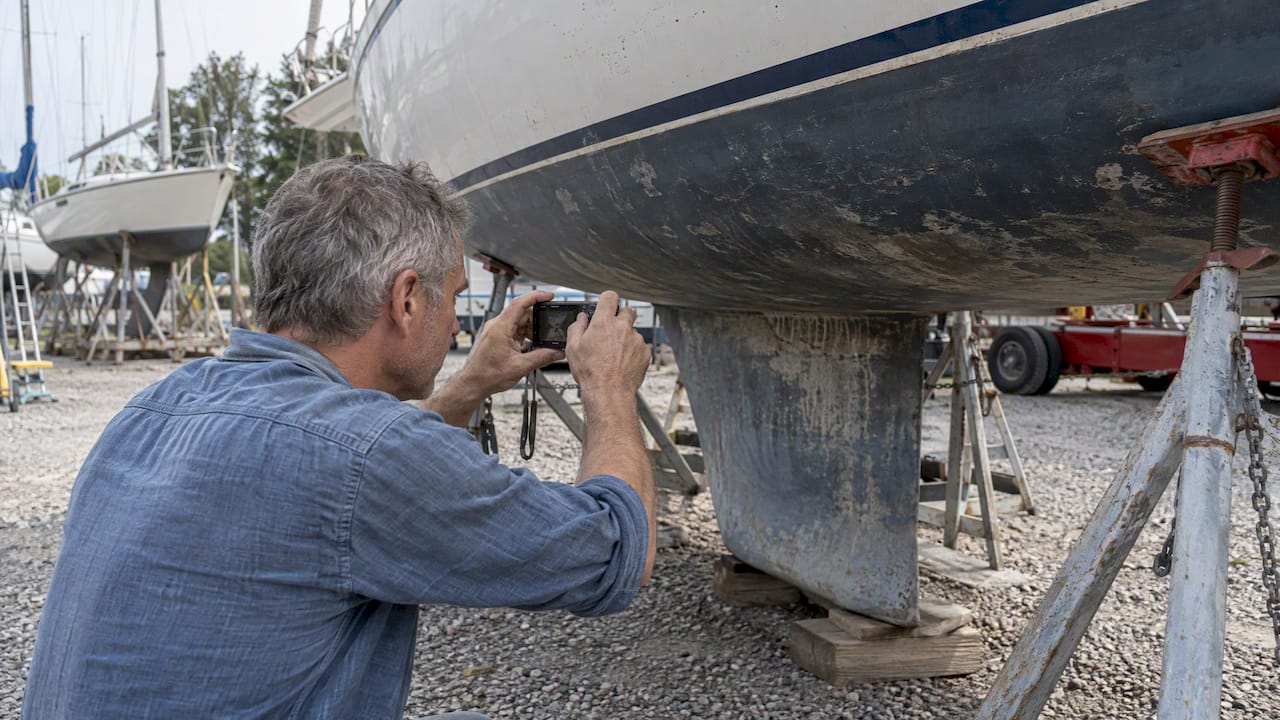
- Remove or secure the mast, antennas, electronics, and any loose deck gear, and photograph everything beforehand.
- Confirm cradle placement matches keel and hull load points so weight distributes evenly across the trailer bed.
- Shrinkwrap or cover exposed surfaces, then block and lash the hull to the cradle using the hauler’s documented lashing standard.
- Collect registration, proof of ownership, and insurance paperwork before the transporter arrives, since permit applications often need these documents attached.
Cleaning the hull before a cross-border move is also worth planning for, since fouling or marine growth can trigger biosecurity holds at some borders. A practical hull-cleaning guide covers timing and steps if you want to handle this yourself before pickup.
Profesyonel İpucu: Photograph the hull, keel, and deck hardware from every angle right before loading, so any damage claim has a clear before-and-after record.
What route planning and preruns actually involve
A prerun is the transporter physically or virtually driving the planned route before the yacht moves, checking bridge clearances, turning radii at intersections, overhead wires and signage, and any seasonal road closures that could force a detour. This step is what turns a permit from a piece of paper into an actual green light.
- A detailed prerun checks overhead clearances, turning radii, and any construction or seasonal closures along the route.
- Oversize loads crossing urban areas or narrow rural roads often require police or specialist traffic escorts under a formal traffic control plan.
- Some routes need temporary removal of signs, traffic lights, or overhead obstructions, coordinated directly with the local road authority.
Bizim guidance on delivery logistics walks through how these pieces fit together for owners planning a U.S. move. For complex or multi-border oversize routes, a freight planning resource built for oversized cargo offers a useful second perspective on escort and permit sequencing.
Cost drivers and realistic timelines
Distance is only one line item in a yacht transport quote. Permit fees, escort charges, disassembly and reassembly labor, and crane or lift hire at each end typically add up to more than the base haulage rate on an oversize move.
- Permit and escort fees vary by jurisdiction and route length and are usually billed separately from the haulage rate.
- Disassembly, reassembly, and crane or lift hire at origin and destination add labor and equipment costs on top of the road leg.
- Cross-border moves add customs clearance time, which can extend the schedule by days depending on the countries involved.
Our breakdown of what yacht transport costs by method and vessel size goes deeper on how these components stack up for different boat sizes. Build in buffer time for permit approval and prerun scheduling before you lock in a delivery date.
What your insurance actually covers in transit
Carrier liability insurance and your own hull or transit insurance are not the same thing, and the gap between them is where owners get caught out. Carrier policies typically cover damage the hauliers cause in transit but often exclude loading, unloading, and damage to third-party infrastructure like a dock or overhead line the load clips.
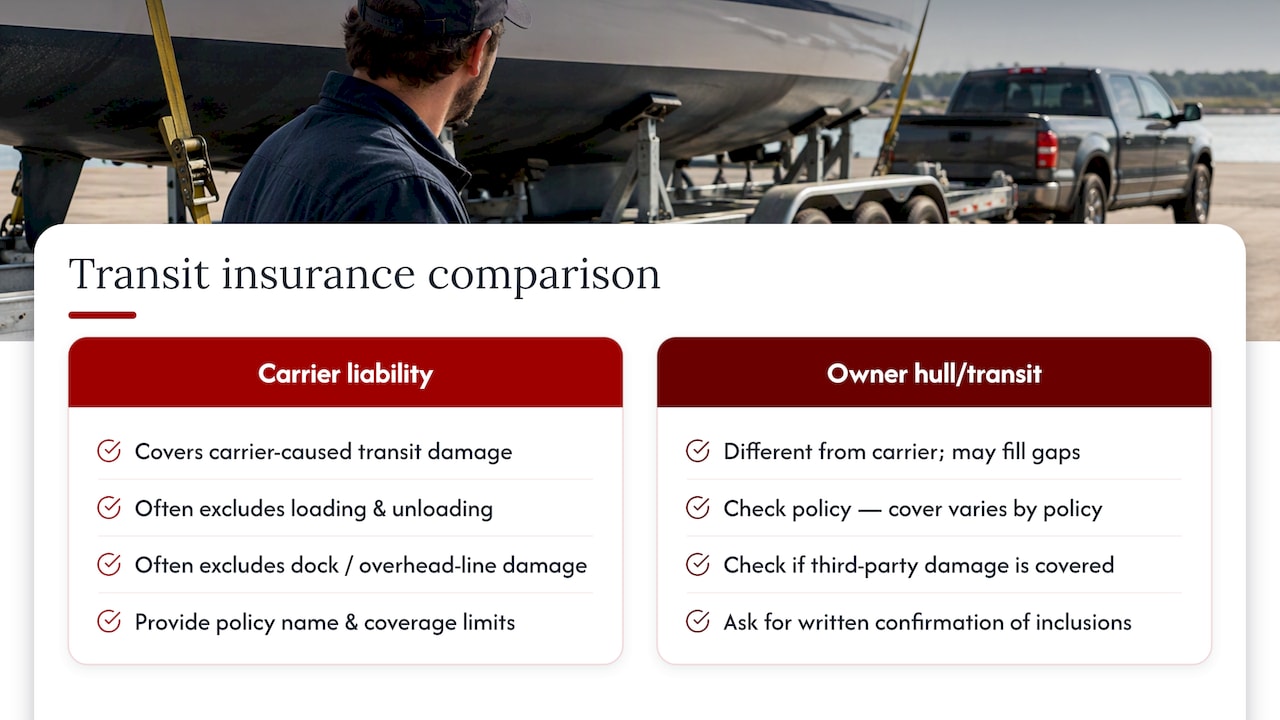
Before the lift, ask the transporter for the exact policy name, coverage limits, and written confirmation of what is and is not included for your specific move.
Profesyonel İpucu: Get the carrier’s certificate of insurance in writing before the yacht leaves the water, not after it is already on the trailer.
Crossing borders: customs, carnets, and paperwork
A road leg that crosses a national border adds a document layer that a domestic move never needs. Missing one piece of paperwork at the border can hold a yacht on a trailer for days.
- Export declarations, a bill of sale, and proof of ownership are commonly required at the originating border.
- A carnet or T1 transit document is often needed to move the vessel through intermediate countries without paying duty at each stop.
- When the move combines a short-sea leg with road haulage, the port handler and the road hauliers need to agree in advance on who clears customs at each handoff.
Appointing a customs broker and keeping duplicate copies of every document with the transporter and in your own files reduces the risk of a single missing form stalling the whole move. A step-by-step yacht importation guide covers the import side of this process in more detail, and our registration document guide covers the ownership paperwork side.
How VesselFlag supports owners moving a yacht overland
A specialized service coordinates yacht transportation alongside registration, MMSI and AIS setup, and insurance consultancy, so the paperwork a road move depends on (ownership documents, registration certificates, insurance confirmation) can come from a single source. Bundling these services means a permit application or customs form is rarely held up waiting on a document from an unrelated provider. For owners re-registering a vessel ahead of an international delivery, this coordination can shorten the gap between paperwork and permit approval.
When to handle it yourself and when to call in a specialist
A small trailerable boat under about 8.5 feet wide is a reasonable DIY tow. Anything needing a cradle, crane, oversize permit, or a border crossing is a job for a specialist transporter, full stop.
— VesselFlag
Get your yacht move and paperwork handled together
Coordinating registration and transport separately means chasing the same documents twice. VesselFlag’s yat taşımacılığı service works alongside flag registration, MMSI setup, and insurance consultancy, so your permit applications and customs forms draw from paperwork we already hold on file.
To get a fast, accurate quote, have these ready: length overall, beam, transport height, estimated weight, origin and destination, and your preferred dates. If you also need the vessel registered under a flag like San Marino, Malta, ya da Birleşik Krallık Bölüm 1 before the move, mention it in the same request. Reach out through our services page to start the conversation.
SSS
How much does it cost to transport a yacht per mile?
Cost per mile varies widely because permits, escorts, disassembly, and crane hire are billed separately from the base haulage rate; jurisdiction-specific permit fees shift the total. Our cost breakdown by method and vessel size explains which factors move the price most.
Yatta 12 kişi kuralı nedir?
This question refers to a passenger or crew capacity rule tied to specific vessel categories and flag or regulatory frameworks, not to road transport. Definitions vary by jurisdiction and vessel type, so check the rule against your vessel’s specific flag registration and classification.
Yatlar için 10% kuralı nedir?
This phrase is used informally in different contexts (budgeting for maintenance, tax thresholds, or charter rules) and does not refer to a single universal yacht regulation. Confirm which specific rule you are asking about and check it against the relevant jurisdiction’s own guidance.
How much do yacht transporters make?
Published, verified earnings data for yacht transport operators is not publicly listed in a consistent, sourced way. Rates depend heavily on equipment, route complexity, and whether the job includes permits and escorts, which makes operator income hard to generalize.
Do I need a special permit to move my yacht by road?
You need a special permit whenever your yacht’s transport width, height, length, or weight exceeds the thresholds set by the road authority for your specific route, which state rules define in detail for Washington. A professional hauler will confirm the exact thresholds for every jurisdiction your route crosses before applying.

[…] transport depends heavily on beam. Owners with a beam around 8.5 feet can often trailer the boat themselves with a standard permit, while wider beams require specialized permits, route surveys, and police […]