
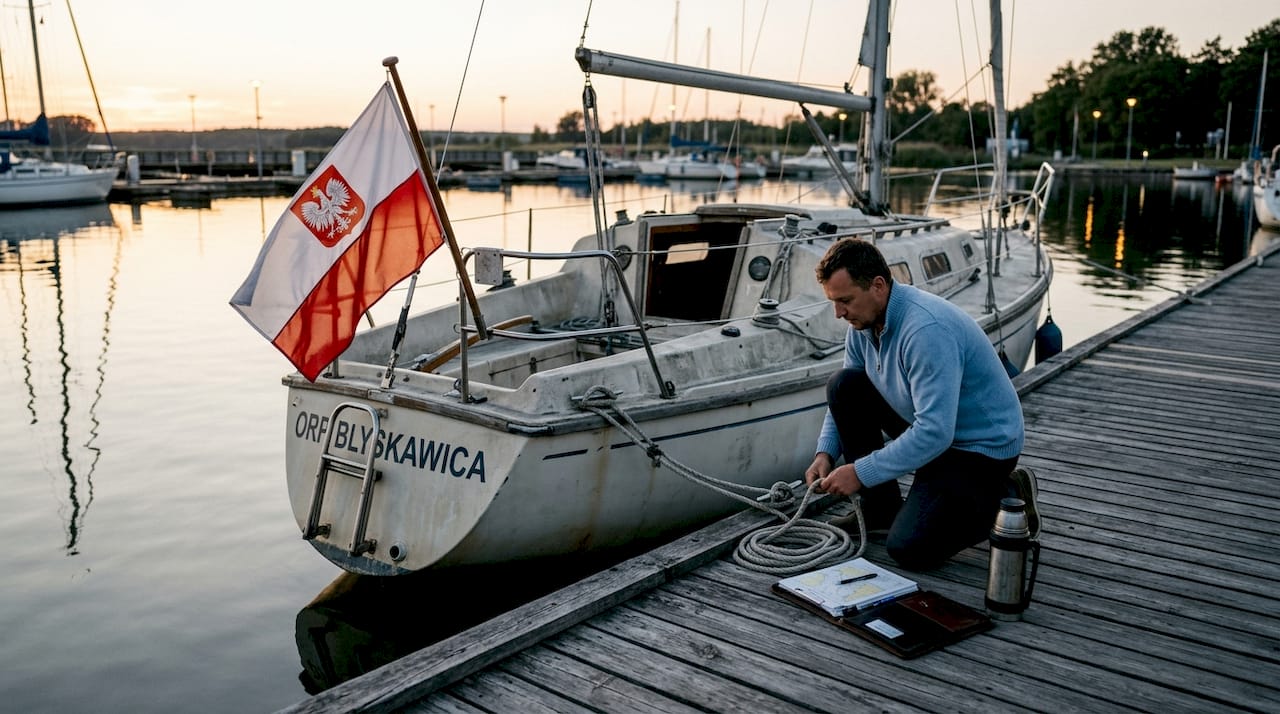
Özetle:
- Using the correct Polish state flag with the White Eagle is legally required for merchant vessels, while the plain bicolor is for civilian use only. The White Eagle flag symbolizes official sovereignty, national identity, and historical resistance, making its proper display crucial for compliance and diplomatic protection. Accurate flag use ensures legal operation, smooth port inspections, and reinforces Poland’s maritime authority on the global stage.
The question of why use Poland flag for a vessel registration is more layered than most people expect. There are actually two distinct versions of the Polish flag, and the wrong one on a merchant ship is not just a cosmetic error. It can create real legal exposure. This guide breaks down the Poland flag significance in maritime law, explains the difference between the plain bicolor and the official state flag with the White Eagle coat of arms, and gives vessel owners and businesses the specific knowledge they need to stay compliant and protect their operations.
İçindekiler
- Önemli noktalar
- Why use Poland flag: history and symbolism behind the design
- Which version of the flag is legally required for vessels
- Benefits of registering vessels under the Polish flag
- Practical steps for proper Polish flag compliance on vessels
- My take on why the flag distinction matters more than people think
- Register your vessel under the Polish flag with confidence
- SSS
Önemli noktalar
| Nokta | Detaylar |
|---|---|
| Two flags, different rules | The plain bicolor is for civilians; the White Eagle version is legally required for merchant vessels. |
| 1919 Coat of Arms Act governs maritime use | Polish law mandates the state flag with the eagle for all merchant ships and diplomatic missions. |
| Wrong flag carries legal risk | Using the plain flag on a vessel can breach flag display laws and maritime conventions. |
| Correct flag signals professionalism | Flying the proper ensign signals compliance with international maritime protocols and Polish maritime law. |
| Proportions matter | The standard flag follows a strict 5:8 ratio with white on top and red on the bottom. |
Why use Poland flag: history and symbolism behind the design
The Poland flag significance runs deeper than two horizontal stripes. The colors trace back to medieval heraldry, specifically to the coat of arms featuring a White Eagle on a crimson red shield. White represents the eagle itself, symbolizing purity and Polish sovereignty. Red represents the shield behind the eagle, carrying connotations of courage and sacrifice across centuries of Polish statehood.
The heraldic origins of the colors link the flag directly to Polish national identity rather than an abstract design choice. That historical weight is part of what gives the flag its meaning of Poland flag symbolism: this is not a flag created for bureaucratic convenience but one that carries the story of a nation that fought hard for its existence.
The standard flag proportion is a 5:8 ratio with white on top and red on the bottom, reflecting those heraldic origins. Inverting the colors, even accidentally, is technically incorrect and can cause confusion with other national flags.
Beyond the colors, the cultural meaning of Poland flag includes its role as a symbol of resistance. The flag became a central emblem of the Solidarity trade union movement during Poland’s struggle against communist rule. That legacy gives the flag an emotional resonance that extends far beyond official usage, and it is part of why Poland takes its flag display laws seriously.
The plain flag versus the state flag
Here is the distinction that matters most for maritime operators:
- The plain bicolor (white over red) is the national flag used by private citizens and organizations for general display.
- The state flag with the White Eagle is a separate, legally distinct flag used in official and maritime contexts.
The two flags look similar at a glance, which is exactly where costly mistakes happen. The state flag places the Polish White Eagle coat of arms on the white stripe, making it visually unmistakable once you know what to look for. Understanding this difference is the foundation of proper flag use.
Which version of the flag is legally required for vessels
This is where the legal requirements become specific and non-negotiable. The plain Poland flag is for civilian use only. The state flag with the White Eagle is legally mandated for merchant vessels and diplomatic missions under the 1919 Coat of Arms Act.
The places where the flag with the eagle is legally required or expected include:
- Polish merchant vessels operating in domestic and international waters
- Polish embassies and consulates abroad
- Civilian airports and heliports under Polish jurisdiction
- Government offices representing Poland internationally
The 1919 Coat of Arms Act formalized this distinction over a century ago, yet it remains an active and enforceable piece of maritime and diplomatic law. The reason the law draws this line is straightforward: the state flag with the eagle is reserved for contexts where Poland’s official sovereign presence needs to be clearly communicated. A merchant vessel flying the Polish flag is not just showing national origin. It is representing Poland’s maritime authority in waters around the world.
Confusing the plain flag with the maritime ensign is the most common procurement mistake businesses make when formalizing their Polish vessel registration. Many suppliers list both versions without clearly flagging which is appropriate for maritime use. That ambiguity has real consequences.
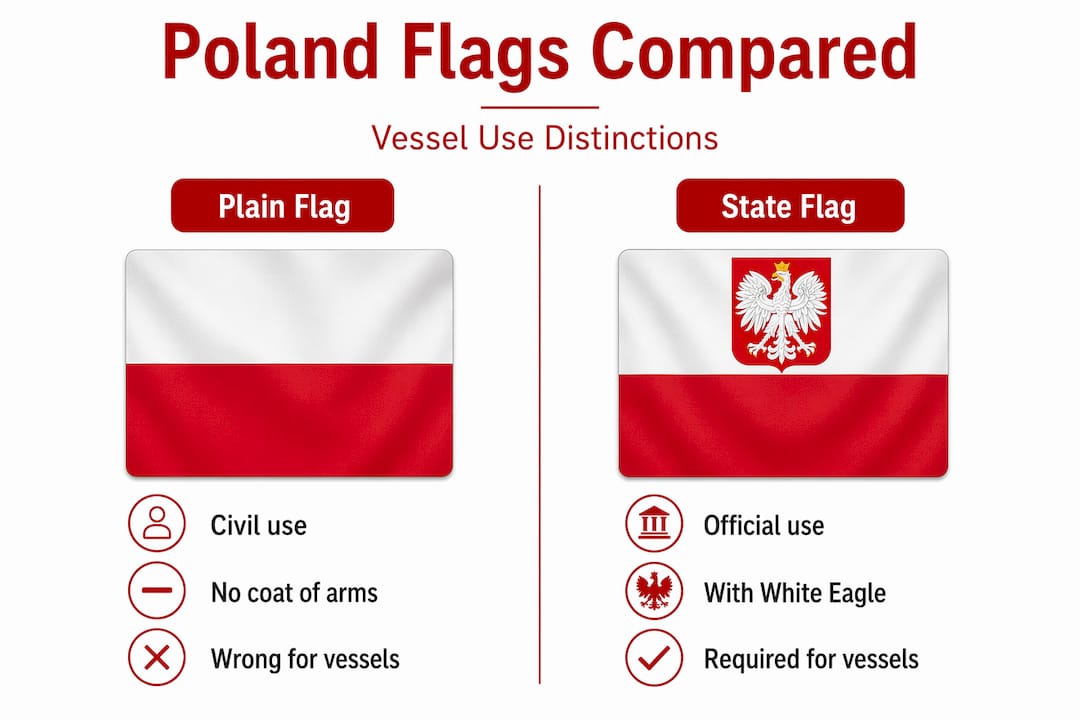
Profesyonel İpucu: When sourcing your maritime ensign, ask your supplier explicitly for the “Polish state flag with the coat of arms” and confirm that the White Eagle is printed on the white stripe. Do not assume that any white-and-red Polish flag qualifies for vessel use.
Benefits of registering vessels under the Polish flag
Understanding the reasons for Poland flag registration goes beyond legal compliance. There are substantive operational and diplomatic advantages that vessel owners and businesses should factor into their registration decisions.

Compliance and international recognition
Commercial vessels flying the correct Polish maritime ensign benefit from smoother port inspections and easier alignment with international maritime protocols. Poland is a signatory to major international maritime conventions, meaning a Polish-flagged vessel arrives in most ports with a recognized compliance framework already in place. That recognition reduces friction at customs, port authority checks, and insurance assessments.
The table below compares key considerations between Polish flag registration and a generic open registry flag:
| Consideration | Polish flag | Open registry flag |
|---|---|---|
| International convention compliance | Strong, EU-backed | Varies by registry |
| Consular support available | Yes, through Polish diplomatic network | Limited or none |
| Flag recognition at major ports | High | Moderate to high |
| Legal framework clarity | Well-established national law | Often less defined |
| Cultural and reputational signal | Professional, sovereignty-backed | Commercially driven |
The importance of Poland flag in this context is not symbolic. It connects your vessel to a legal system with clear rules, enforcement mechanisms, and diplomatic backing. If your vessel encounters a legal dispute in international waters, Polish consular support is a tangible resource available to you.
Access to consular and diplomatic protection
Flying the Polish state flag with the White Eagle ties your vessel to Poland’s diplomatic network. In practical terms, this means Polish consulates can intervene in disputes involving crew welfare, cargo claims, or flag state inspections. That protection has real dollar value in international commercial operations.
Profesyonel İpucu: Many vessel operators underestimate the importance of consular protection until they need it. If you plan to operate in regions with complex port authority relationships, flag-state diplomatic coverage can prevent disputes from becoming expensive standoffs.
Practical steps for proper Polish flag compliance on vessels
Getting the flag right is not complicated once you know what to look for. Here is how to approach compliance without unnecessary risk.
Choosing and displaying the correct flag
- Always order the version with the White Eagle coat of arms for any vessel registered under the Polish flag.
- Confirm the 5:8 width-to-length ratio from your supplier. Non-standard proportions can signal a non-official product.
- The flag must be flown with white on top and red on the bottom. Inverted display is incorrect and could be misread as another country’s flag.
- Never fly a torn, faded, or dirty flag. Polish flag etiquette, reinforced during National Flag Day on May 2nd, treats the flag’s condition as a matter of national respect.
- Store flags properly when not in use to extend their lifespan and maintain visual quality during inspections.
Working with the right registration partner
The vessel registration process for a Polish-flagged vessel involves more than sourcing the correct flag. You need documentation, compliance checks, and confirmation that your vessel meets Polish maritime law requirements. The vessel registration guide for Poland covers these requirements in detail, but the short version is: work with a specialist who understands both the flag display rules and the underlying registration framework.
Trying to self-register without understanding which documentation the Polish maritime authority requires is where many operators run into delays. A registration specialist handles that process systematically and catches errors before they become problems at port.
My take on why the flag distinction matters more than people think
I’ve worked with vessel owners who treated the plain Poland flag and the state flag as interchangeable, and the mindset behind that mistake is always the same. They assumed the distinction was ceremonial, not legal. It is not ceremonial.
In my experience, the operators who understand the Poland flag symbolism at a deeper level, specifically the legal weight the White Eagle carries, approach their registration with a precision that translates directly to fewer compliance problems. The flag is not decoration. It is a legally binding declaration of which country’s maritime law governs your vessel and which government stands behind it.
What I’ve learned from watching both clean registrations and messy ones is that the difference almost always comes down to preparation. Operators who get the correct state flag from a verified supplier, display it at the right proportions, and register through a process that confirms compliance from day one simply don’t face the problems that others do.
My honest advice: treat the flag with the same seriousness as any other piece of your vessel’s legal documentation. Because in the eyes of port authorities and flag-state inspectors, it is exactly that.
— VesselFlag
Register your vessel under the Polish flag with confidence
If you’ve reached this point, you understand why selecting the right Polish flag version for your vessel is not a minor administrative detail. It is the visible signal of your registration’s legal standing.

Vesselflag specializes in Poland flag registration and supports vessel owners through every step of the compliance process, from sourcing the correct maritime ensign to completing documentation that meets Polish maritime authority standards. The platform’s expertise covers the specific requirements of Polish maritime law, so you are not guessing which flag version applies or which forms to file. Explore the full range of flag registration services at Vesselflag, and get your Polish flag registration handled correctly from the start.
SSS
What is the correct Polish flag for merchant vessels?
The correct flag for merchant vessels is the Polish state flag featuring the White Eagle coat of arms on the white stripe, as required by the 1919 Coat of Arms Act. The plain white-and-red bicolor is for civilian use only.
Why does Poland have two versions of its national flag?
Poland distinguishes between a civilian national flag and a state flag with the coat of arms, a practice rooted in heraldic tradition where the White Eagle represents official sovereign authority. The state flag is reserved for diplomatic and maritime contexts.
What happens if a vessel flies the wrong Polish flag?
Using the plain bicolor instead of the state flag with the White Eagle can breach Polish flag display laws and international maritime conventions, potentially leading to legal or diplomatic complications during port inspections.
What does the Poland flag symbolize?
The white stripe represents the White Eagle from Poland’s coat of arms, symbolizing purity and national sovereignty. The red stripe represents the heraldic shield behind the eagle, historically associated with courage and sacrifice.
How should the Polish maritime flag be displayed on a vessel?
The flag must be flown with white on top and red on the bottom in the correct 5:8 proportion ratio. It should be kept clean, undamaged, and should never touch the ground or be flown in severe weather conditions.