

Resumo:
- Proper vessel registration offers tax savings, legal protection, and smoother international operations.
- Choosing the right flag state can significantly reduce taxes and expedite port clearances.
- Strategic registration planning prevents legal issues, port detention, and hidden operational costs.
Most yacht owners and commercial operators treat vessel registration as a box to check, a legal formality that costs money and time without offering much in return. That assumption is expensive. Proper commercial vessel registration is one of the most powerful tools available for reducing tax liability, protecting your asset legally, and ensuring smooth operations across international waters. The right flag state can exempt your shipping income from corporate tax, simplify port clearance on six continents, and protect you from costly compliance failures. This article breaks down exactly why registration matters and how to make it work for your operation.
Índice
- Understanding commercial vessel registration
- The key benefits: Taxation, compliance, and operational efficiency
- How commercial vessel registration supports global operations
- Simplifying the registration process: Steps and best practices
- Our perspective: Why the right registration strategy pays off
- Streamline your vessel registration for peace of mind
- Perguntas frequentes
Principais conclusões
| Ponto | Detalhes |
|---|---|
| Legal and global compliance | Commercial vessel registration is required for international operations and ensures smooth passage through foreign ports. |
| Tax and cost advantages | Choosing the right flag offers significant tax breaks and financial incentives for commercial vessel owners. |
| Operational efficiency | Registered vessels enjoy faster port clearance and reduced bureaucracy, saving valuable time. |
| Choose the right flag | Evaluating flag state rules is essential for maximizing benefits and avoiding hidden operational pitfalls. |
Understanding commercial vessel registration
Commercial vessel registration is the formal process of recording a vessel under the laws of a specific country, known as the flag state. That country’s maritime regulations, tax laws, and safety standards then govern the vessel. Think of it as the vessel’s legal nationality. Without it, your vessel has no recognized legal standing on the high seas.
The distinction between commercial and pleasure registration is significant. Yacht registration basics cover private, non-revenue-generating vessels, while commercial registration applies to vessels used for business purposes, including charters, cargo transport, and passenger services. Commercial registration carries additional compliance requirements but also unlocks a wider range of financial and operational benefits.
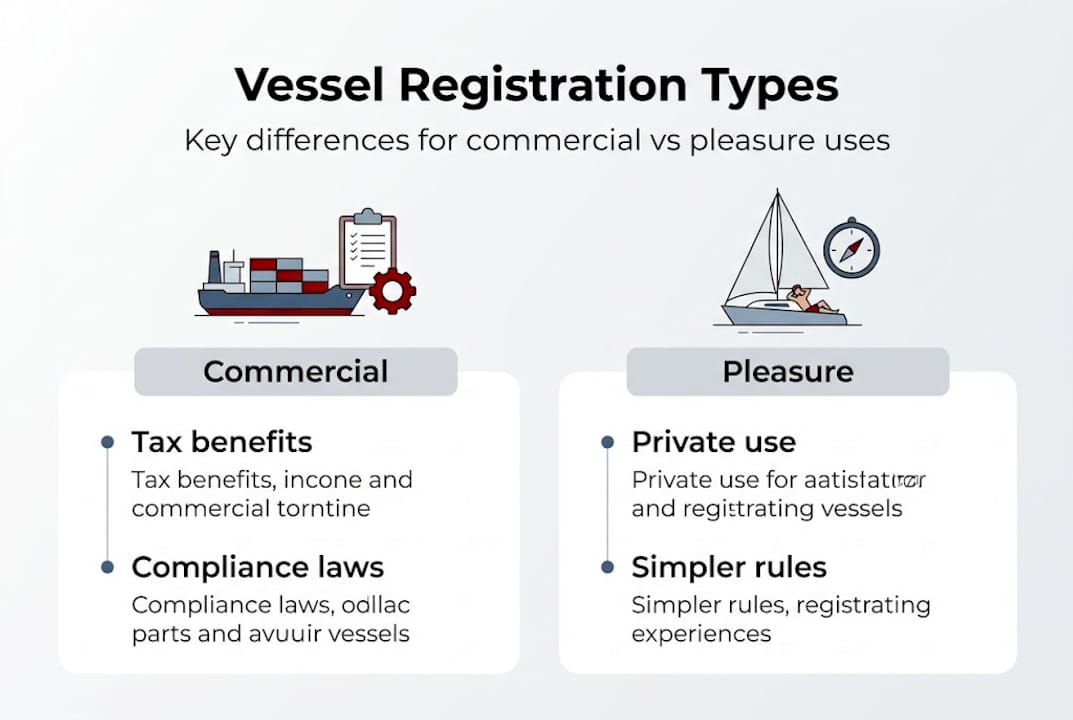
The flag state concept is central to everything. When you register a vessel under a specific flag, that country becomes responsible for certifying the vessel meets international safety and operational standards. The types of maritime registrations available vary widely, from open registries like Panama and Liberia to closed national registries like the UK Part 1. Your choice of flag directly shapes your tax obligations, crew requirements, and global acceptance at ports.
Registration can impact taxes, legal protection, and global operations in ways most owners never anticipate until they are already operating. A vessel registered under a favorable flag can save tens of thousands of dollars annually compared to one registered in a high-tax jurisdiction.
Several common misconceptions keep owners from maximizing these benefits:
- Registration is only about legal compliance. In reality, it also governs your tax structure and financial exposure.
- Any flag is essentially the same. Flag states differ dramatically in cost, tax treatment, and international recognition.
- Commercial registration is only for large shipping companies. Charter yachts and small commercial fleets benefit just as much.
- You cannot change your flag once registered. Reflagging is a standard, well-established practice.
- Registration is a one-time task. Ongoing compliance and renewals are part of the commitment.
Understanding these realities is the first step toward using registration as a strategic tool rather than a bureaucratic obligation.
The key benefits: Taxation, compliance, and operational efficiency
The financial advantages of choosing the right flag state are concrete and measurable. Malta, for example, offers a tonnage tax regime that exempts shipping income from 35% corporate tax, replacing it with a much lower flat rate based on vessel tonnage. Liberia charges no income tax on revenues earned internationally. These are not minor perks. For a commercial charter operation generating $500,000 annually, the difference between a high-tax and low-tax flag can represent six figures in savings.

VAT exemptions and deferrals are another major lever. Charter businesses operating in certain jurisdictions can defer or eliminate VAT on vessel purchases and operational expenses, dramatically improving cash flow. Combined with corporate tax exemptions available through specific flag structures, the total financial benefit compounds quickly.
Here is a comparative overview of key flag state tax advantages:
| Estado de bandeira | Corporate tax treatment | VAT benefit | Tonnage tax regime |
|---|---|---|---|
| Malta | Exempt under tonnage tax | Available for qualifying vessels | Sim |
| Libéria | No income tax on international revenue | Limitada | Não |
| Panamá | Territorial taxation only | Limitada | Não |
| Reino Unido Parte 1 | Standard UK rates apply | Available for commercial charters | Não |
| São Marinho | Competitive flat rates | Available | Limitada |
“Choosing the right flag state is not just a compliance decision. It is a financial strategy that directly affects your bottom line every year your vessel operates.”
Beyond taxes, registration delivers legal compliance with international maritime regulations, including SOLAS (Safety of Life at Sea) and MARPOL (Marine Pollution) standards. Registered vessels carry internationally recognized documentation, which speeds up port entry and reduces the risk of detention during inspections.
Pro Tip: Before selecting a flag, calculate your projected annual revenue and compare the effective tax rate under each registry option. The upfront cost of registration often pays for itself within the first operating season.
For charter operators, the top benefits for owners extend to client confidence as well. Guests and business partners take registered commercial vessels more seriously, which translates directly into bookings and contracts.
How commercial vessel registration supports global operations
A registered vessel is a vessel that can move freely. Without proper commercial registration, your options for international port access shrink considerably. Port authorities in major maritime hubs require valid registration documents before granting entry, and non-compliance can result in detention, fines, or forced return to port of origin.
O registration process worldwide is designed to create a uniform system of accountability. When your vessel carries valid registration, customs officials, coast guards, and port authorities can verify your vessel’s legal status instantly. That verification process is what makes port clearance fast and predictable.
Here is a quick comparison of registered versus non-registered vessels in global trade:
| Factor | Registered vessel | Non-registered vessel |
|---|---|---|
| Port access | Unrestricted in most jurisdictions | Severely limited or denied |
| Inspection time | Streamlined with recognized documents | Extended, often with penalties |
| Legal protection | Full flag state backing | None |
| Elegibilidade para o seguro | Standard commercial coverage available | High-risk or uninsurable |
| International contracts | Fully enforceable | Legally uncertain |
Registration ensures compliance with international requirements and supports the kind of operational freedom that commercial ventures depend on. A charter company that loses three days to a port detention because of documentation issues loses far more than time. It loses client trust and future revenue.
The consequences of failing to register commercially are serious:
- Vessel detention at foreign ports
- Significant fines from maritime authorities
- Inability to secure commercial insurance
- Loss of charter contracts requiring certified documentation
- Personal liability exposure for the vessel owner
Looking at registration in different jurisdictions reveals how much variation exists in processing speed, cost, and operational benefits. Operators who understand these differences can position their vessels strategically for the routes and markets they serve.
Simplifying the registration process: Steps and best practices
The registration process can feel complex, but it follows a predictable structure. Understanding international requirements upfront is what separates a smooth application from a delayed one. Here is a typical step-by-step path:
- Choose your flag state based on tax benefits, operational routes, and compliance requirements.
- Gather vessel documentation including the bill of sale, builder’s certificate, and any prior registration certificates.
- Prepare ownership documents such as corporate registration papers or personal identification.
- Submit the application to the chosen registry, either directly or through an authorized agent.
- Complete safety and tonnage surveys if required by the flag state.
- Receive your Certificate of Registry and ensure it is kept aboard the vessel at all times.
- Set up ancillary services such as MMSI licensing and AIS registration to meet operational requirements.
O step-by-step registration path looks straightforward, but errors in documentation are the most common cause of delays. Incomplete ownership chains, missing survey reports, and expired identification documents can add weeks to the process.
Using a lista de verificação para o registo before submitting your application catches most of these issues before they become problems. It is also worth reviewing the efficient requirements for 2026 for your chosen flag state, since regulatory updates can change documentation standards from year to year.
Pro Tip: Never submit a registration application without verifying that your vessel’s ownership history is clean and fully documented. A single gap in the ownership chain is enough to stall the entire process.
Best practices include working with an experienced maritime agent who knows the specific registry’s requirements, keeping digital copies of all documents in a secure cloud location, and tracking renewal deadlines on a calendar system with advance reminders.
Our perspective: Why the right registration strategy pays off
Here is something most registration guides will not tell you: the cheapest flag is rarely the best flag. We have seen operators choose a registry based on the lowest annual fee, only to face hidden costs in the form of inspection failures, port access restrictions, and insurance surcharges that far exceeded what they saved.
The real cost of a poor registration decision shows up over time. A flag state with weak international recognition can make your vessel a target for extended port inspections. A registry with poor compliance support leaves you navigating regulatory changes alone. These are operational risks that compound every time you enter a new jurisdiction.
O hidden costs of registration are rarely discussed upfront, but they are real. Investing time in understanding the full picture before you register is not overthinking. It is the kind of due diligence that protects your asset and your business for years. The operators who treat registration as a strategic decision, not a checkbox, are the ones who build resilient, profitable maritime businesses.
Streamline your vessel registration for peace of mind
If this article has clarified why commercial vessel registration is a strategic asset rather than a formality, the next step is acting on that knowledge. VesselFlag.com offers expert-guided registration services across multiple flag states, from Malta and San Marino to Palau and the UK Part 1, with transparent timelines and full compliance support.
Whether you are sorting out the difference between yacht vs boat registration for the first time or working through a complete yacht registration guide for a new commercial acquisition, our team handles the documentation, flag selection, and ancillary services from start to finish. You can also ensure registration validity for vessels already in service. Reach out today and register with confidence.
Perguntas frequentes
What are the main tax benefits of commercial vessel registration?
Registering under favorable flags can offer tonnage tax regimes, corporate income tax exemptions, and VAT benefits for commercial operations. Malta, for example, exempts shipping income from the standard 35% corporate tax rate through its tonnage tax system.
Is commercial vessel registration mandatory for international operations?
Yes, most international authorities require commercial vessels to be properly registered to access ports and simplify compliance with maritime regulations. Registration ensures compliance and supports the operational freedom that global commercial activity demands.
What’s the difference between commercial and pleasure vessel registration?
Commercial registration applies to vessels used for business purposes, with added tax and compliance requirements, while pleasure registration covers private, non-commercial use with fewer obligations.
How long does the commercial vessel registration process typically take?
Timelines vary by flag state and documentation quality, but with proper preparation, many registries process applications within one to two weeks.
Can I change my vessel’s registration flag for better benefits?
Yes, reflagging is a standard practice. Registration impacts taxes and legal protections, so switching flags can unlock significant advantages as long as you follow the deregistration and new compliance procedures correctly.