

TL;DR:
- Proper MMSI registration helps prevent false distress alerts and ensures rescue accuracy.
- AIS links vessel identity with real-time location, improving safety and operational efficiency.
- Regularly update vessel info and MMSI details to stay compliant and maximize safety benefits.
Every year, the U.S. Coast Guard responds to over 2,000 false DSC alerts annually between 2020 and 2024, diverting search and rescue resources from real emergencies. Most of those false alerts trace back to unregistered or incorrectly programmed MMSI numbers. If you own a yacht or operate a vessel, MMSI and AIS are not just electronic identifiers sitting in your radio cabinet. They are the foundation of your vessel’s safety profile, legal standing, and operational visibility on the water. This guide cuts through the confusion, giving you a practical, clear picture of what MMSI and AIS mean for your registration, your compliance, and your peace of mind.
Inhaltsübersicht
- What is MMSI and why is it essential?
- AIS explained: How it works and why it matters
- MMSI and AIS in yacht and boat registration: Compliance made clear
- Operational benefits: Real-world advantages of MMSI and AIS
- What most yacht owners miss about MMSI and AIS
- Next steps: Simplifying your vessel registration and compliance
- Frequently asked questions
Wichtigste Erkenntnisse
| Punkt | Einzelheiten |
|---|---|
| MMSI is vital for identification | Your MMSI ensures your yacht or boat is recognized globally for safety and compliance. |
| AIS boosts operational safety | AIS provides real-time tracking, enhances search and rescue, and aids clear communication on busy waters. |
| Update on registration changes | Always update MMSI records when selling your vessel or changing its registration country to maintain compliance. |
| Class B AIS suits most owners | Recreational yacht owners typically benefit from Class B AIS, except in commercial or offshore use cases. |
What is MMSI and why is it essential?
MMSI stands for Maritime Mobile Service Identity. It is a unique nine-digit number assigned to your vessel’s radio and safety equipment, functioning as your boat’s permanent digital identity on the water. Think of it like a phone number that emergency services and other vessels use to identify and contact you instantly.
The structure of an MMSI is not random. The first three digits are the MID, which stands for Maritime Identification Digits, and they represent your vessel’s country of registration. For example, U.S. vessels use MID codes ranging from 366 to 369. The remaining six digits form the unique vessel identifier assigned by the national authority, such as the FCC in the United States.
Here is a quick breakdown of what those nine digits mean:
| Digits | Meaning | Beispiel |
|---|---|---|
| First 3 | MID (country code) | 338 = USA |
| Last 6 | Unique vessel ID | Assigned by FCC or authority |
| Full 9 | Complete MMSI | 338123456 |
Every piece of radio and distress equipment on your vessel, including your DSC VHF radio and AIS transponder, must use the same MMSI. Mixing numbers across devices creates a dangerous mismatch that can cause rescue services to pull conflicting data during an emergency.
Key facts every yacht owner should know about MMSI:
- MMSI is required for any vessel using a DSC-capable VHF radio or AIS transponder
- It is assigned by national authorities such as the FCC in the U.S. or equivalent bodies in other countries
- Unregistered MMSIs are a leading cause of false distress alerts that waste SAR resources
- Your MMSI is tied to your vessel, not to you personally as the owner
You can learn more about the full process in our MMSI number registration guide and review the specifics of what licensing involves in our MMSI license overview.
Pro Tip: If you sell your yacht or reflag it under a different country, you must update or replace the MMSI immediately. An old MMSI linked to a previous owner creates serious identification problems if an emergency occurs.
AIS explained: How it works and why it matters
AIS stands for Automatic Identification System. It is a real-time vessel tracking technology that broadcasts your position, speed, heading, and vessel identity to nearby ships and coastal authorities. Where MMSI is your identity, AIS is your voice on the maritime network.
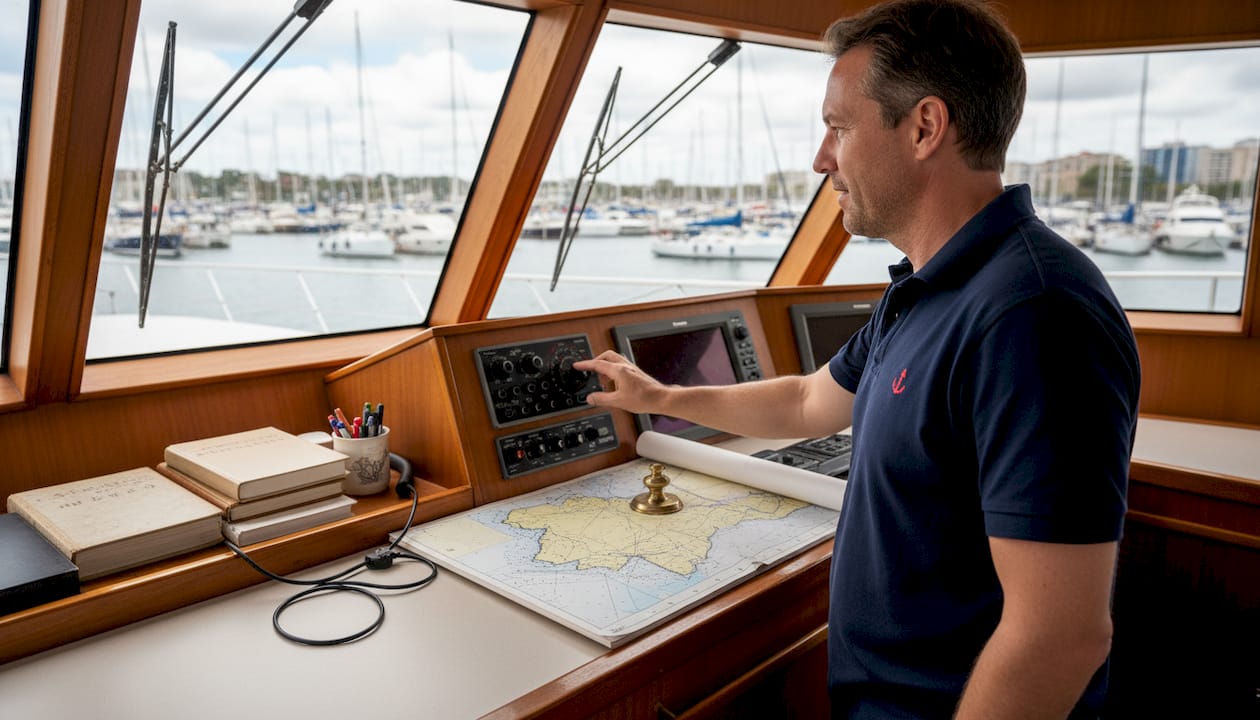
The technology behind AIS is precise. It operates on VHF channels 87B and 88B, at frequencies of 161.975 MHz and 162.025 MHz respectively. It uses GPS input combined with a self-organizing time-division multiple access protocol, known as TDMA, to manage transmissions from hundreds of vessels simultaneously without signal collisions. Your MMSI is embedded in every AIS broadcast, linking your position data directly to your vessel’s registered identity.
There are two main classes of AIS equipment:
| Feature | Class A | Class B |
|---|---|---|
| Required for | Commercial/SOLAS vessels | Recreational and small vessels |
| Update rate | Every 2 to 10 seconds | Every 30 seconds |
| Transmission power | 12.5 watts | 2 watts |
| Priority in traffic | High | Lower than Class A |
| Cost | Higher | More affordable |
For most yacht owners, Class B AIS offers the right balance of visibility and cost. Class A is mandatory for commercial vessels and those operating under SOLAS regulations.
Key benefits of AIS for yacht owners:
- Real-time visibility to commercial ships, reducing collision risk significantly
- Instant identification by coast guard and port authorities without radio calls
- Faster SAR response because rescuers already have your vessel data via MMSI
- Reduced VHF radio chatter since position and identity are broadcast automatically
- Legal compliance in jurisdictions requiring AIS for vessels above a certain size
“AIS does not just track your vessel. It connects your physical presence on the water to your legal registration, making every voyage safer and every compliance check faster.”
Your MMSI radio license is the formal authorization that ties your MMSI to your AIS and DSC radio equipment, ensuring everything is legally recognized by maritime authorities.
MMSI and AIS in yacht and boat registration: Compliance made clear
Understanding the technology is one thing. Knowing exactly what you are required to do for compliance is another. The rules differ depending on where and how you operate.
Here is a step-by-step guide to getting your MMSI and AIS registration right:
- Determine your operational scope. Will you sail domestically only, or cross into international waters? This single question changes your registration requirements entirely.
- Obtain your MMSI. For U.S. domestic use only, you can get a free MMSI through organizations like BoatUS or the United States Power Squadrons.
- Apply for an FCC Ship Station License if needed. If you operate internationally, a FCC Ship Station License is required, costing approximately $200 and valid for 10 years.
- Program your MMSI into all devices. Your DSC VHF radio and AIS transponder must both carry the identical MMSI.
- Register with the national database. In the U.S., this means ensuring your MMSI is in the FCC or USCG database so rescue services can pull your vessel information instantly.
- Keep records current. Any change in ownership, flag state, or vessel name requires an MMSI update.
Legal and operational tips for yacht owners:
- Never use a placeholder or test MMSI on active equipment
- Confirm your AIS class matches your vessel type and operational area
- Review your registration annually, especially if you operate under an international flag
- Cross-check your MMSI registration with your vessel documentation to avoid mismatches
Our yacht registration guide walks through the full process for recreational vessels, and if you operate commercially, the commercial vessel registration guide covers the additional requirements you need to meet in 2026.
Operational benefits: Real-world advantages of MMSI and AIS
Compliance is the floor, not the ceiling. When MMSI and AIS are set up correctly, they deliver real operational advantages that go well beyond satisfying a regulator.
Key operational benefits for yacht owners:
- Collision avoidance: AIS gives commercial vessels advance warning of your presence, especially critical in low visibility or high-traffic shipping lanes
- Faster SAR response: When AIS provides vessel details via MMSI to rescue services, responders arrive knowing your vessel type, size, and last known position before they even launch
- Reduced radio workload: Ports and marinas can identify you on approach without a radio call, streamlining entry procedures
- Insurance and liability protection: Accurate AIS records provide documented evidence of your vessel’s position and behavior in the event of an incident
- Regulatory peace of mind: Operating with a properly registered MMSI removes the risk of fines, detentions, or complications at port state control inspections
Pro Tip: For most recreational yachts, Class B AIS is the smart choice. It is affordable, easy to install, and provides excellent coastal visibility. However, if you regularly sail offshore beyond 20 nautical miles or in high-traffic commercial corridors, consider upgrading to a Class B+ or Class A unit for stronger signal priority.
“A correctly registered MMSI is the single most cost-effective safety investment a yacht owner can make. It costs nothing for domestic use and under $200 for international coverage, yet it can direct a rescue helicopter to your exact location within minutes.”
Our Checkliste für die Registrierung von Yachten helps you confirm that your MMSI, AIS, and all documentation are aligned before you leave the dock.
What most yacht owners miss about MMSI and AIS
Here is the uncomfortable truth: most MMSI and AIS problems are not caused by ignorance. They are caused by owners who set things up once and never revisit them. A vessel gets sold, reflagged, or renamed, and the MMSI data stays frozen in the old configuration. That mismatch does not just create a compliance problem. It can send rescue services to the wrong vessel profile during a real emergency.
We also see owners assume that Class B AIS makes them fully visible in all conditions. It does not. In very high-traffic areas or at higher speeds, Class B transmissions can get deprioritized behind Class A traffic. If you are crossing busy shipping lanes regularly, your Class B signal may not be as reliable as you think.
Regulatory enforcement is also shifting. More port state authorities are using AIS data not just for safety monitoring but for active compliance checks. An unregistered or mismatched MMSI is now easier to flag than ever before. Staying current with efficient vessel registration practices is no longer optional for serious yacht operators. It is the baseline expectation.
Next steps: Simplifying your vessel registration and compliance
Getting your MMSI and AIS right should not require weeks of research and regulatory cross-referencing.
Unter VesselFlag.com, we handle the full spectrum of vessel registration and compliance, including MMSI setup, AIS documentation, and flag state registration across multiple jurisdictions. Whether you need global yacht registration compliance support or are ready to register your yacht for the first time, our team guides you through every step without the confusion. We also offer a full range of flag registration services so you can choose the jurisdiction that fits your operational needs and budget. Avoid costly mistakes and sail with confidence knowing your registration is airtight.
Frequently asked questions
Do I need a new MMSI if I sell my yacht or change registration country?
Yes. When your vessel changes ownership or flag state, you must obtain a new MMSI and update all radio and AIS devices to reflect the new registration details.
What happens if my MMSI is not registered internationally?
Your distress alerts may not be relayed to international rescue services, and your AIS data may not be recognized by foreign authorities. An FCC Ship Station License costing approximately $200 for 10 years is required for proper international coverage.
Should recreational yachts use Class A or Class B AIS?
Class B AIS is adequate for most recreational yachts operating near the coast, but Class A is prioritized in high-traffic areas and is required for commercial or offshore operations where signal reliability is critical.
Can I use the same MMSI across multiple boats?
No. MMSI is vessel-specific, meaning all devices on a vessel share one MMSI, but each separate boat must have its own unique number for legal compliance and effective AIS operation.