
Choosing a flag? See our complete guide How to Choose the Right Flag for Your Yacht with prices for 6 flags, or compare Poland vs San Marino vs UK Part 1.
Kurz gesagt:
- A vessel flag identifies a ship’s nationality, determines legal compliance, and affects market access. Owners must choose the right flag based on operational region, charterer acceptance, and regulatory requirements to optimize performance and legal standing.
A vessel flag is the legal identifier that determines a ship’s nationality, regulatory obligations, and market access. Choosing among the many examples of vessel flag options is one of the most consequential decisions a yacht or boat owner makes. The flag you fly sets your compliance requirements, affects which charterers will hire your vessel, and shapes how port authorities treat you in every country you visit. Platforms like Vesselflag support owners through this process by offering registration under flags including Malta, UK Part 1, San Marino, Palau, Gibraltar, and Poland, each with distinct advantages.

What are the main examples of vessel flag options?
Every vessel carries at least one flag with a specific legal and operational purpose. Flag types fall into four core categories, and understanding each one prevents costly mistakes at sea and in port.
- National ensign. The national ensign is the primary flag of registration. It flies at the stern and identifies the vessel’s legal nationality under international maritime law. This is the flag that determines your regulatory framework.
- Yacht ensign. Some countries issue a separate yacht ensign for privately operated pleasure craft. It differs visually from the national ensign and signals non-commercial status to port authorities.
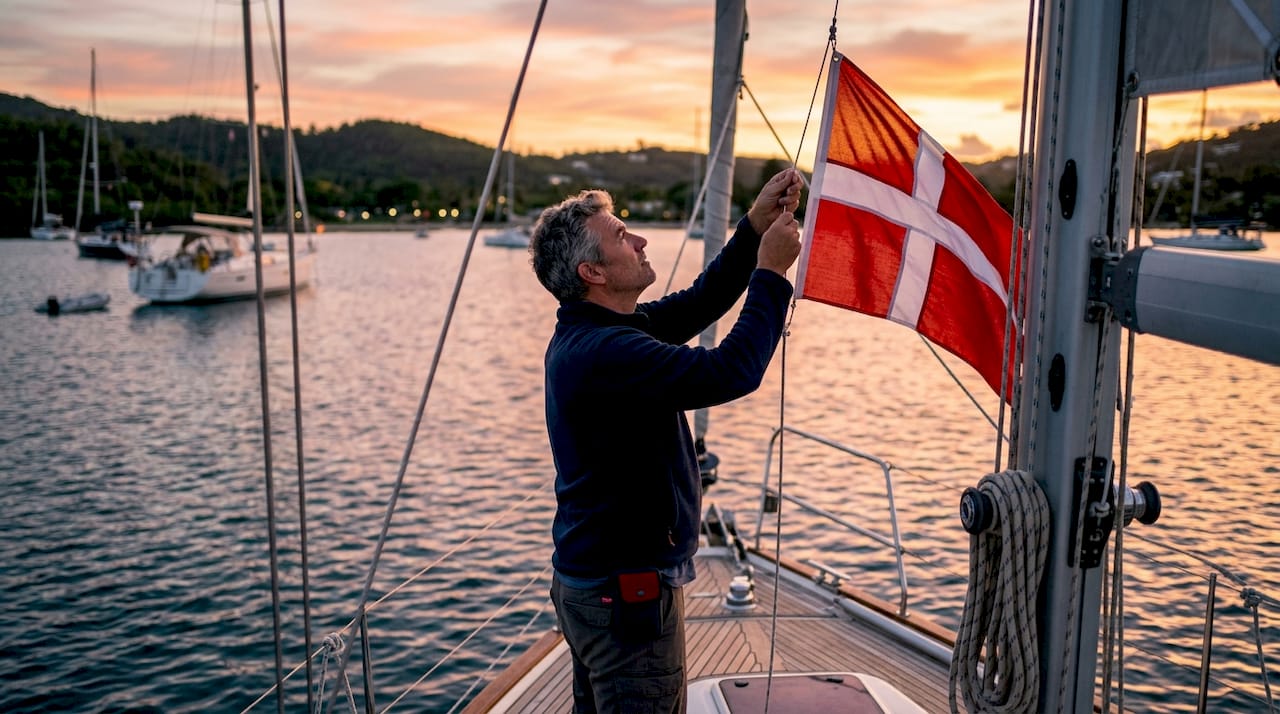
- Courtesy flag. When entering foreign waters, you fly the host nation’s flag under the starboard spreader. Correct courtesy flag placement is both a legal requirement and a sign of respect. Flying the wrong flag or a “fantasy” flag in a foreign port can be considered provocative by local authorities.
- Club burgee. A club burgee flies under the port spreader and identifies membership in a recognized yacht club. It carries no legal weight but matters for social and marina access purposes.
- Signal and safety flags. The Q flag (yellow) signals a vessel entering port and requesting customs clearance. The Alpha flag signals a diver below. These flags communicate operational status and are required by maritime safety regulations.
Flag sizing follows a practical standard: roughly 1 inch per foot of boat length. A 40-foot yacht typically flies a flag measuring approximately 40 inches on its longest dimension. Polyester flags offer durability in harsh marine conditions, while nylon flags dry quickly but require regular inspection for fraying that could compromise signal clarity.
Popular national flag states for vessel registration
The most widely used flag states share a common profile: strong maritime administrations, broad international recognition, and clear regulatory frameworks. Marshall Islands, Cayman Islands, Malta, Isle of Man, Gibraltar, and Bermuda consistently rank among the top choices for yacht owners and commercial operators alike.
| Flag State | Regulatory Reputation | Best Suited For | Key Advantage |
|---|---|---|---|
| Malta | EU member, strong IMO standing | Mediterranean yachts, commercial vessels | EU flag access and charter flexibility |
| Kaimaninseln | High-quality administration | Large superyachts, charter fleets | Charterer acceptance, financing access |
| Marshallinseln | Major open registry | Commercial and large private vessels | Global trade route access |
| Isle of Man | British Crown Dependency | UK-linked owners, superyachts | Stable regulation, VAT advantages |
| Gibraltar | British Overseas Territory | EU and Atlantic operators | Dual market access, fast registration |
Malta carries particular weight for owners operating in European waters. As an EU member state, a Maltese flag gives vessels access to EU charter markets without the restrictions that non-EU flags face. The Cayman Islands registry is the preferred choice for superyacht owners because major charterers and financing banks maintain approved flag lists, and the Cayman flag appears on virtually all of them. A vessel’s flag directly affects its charter eligibility and the rates it can command. Choosing a flag with a poor reputation can cut a vessel off from premium charter contracts entirely.
The Marshall Islands operates one of the largest open registries in the world. It suits commercial operators and owners who trade globally and need a flag that port states worldwide recognize without friction. Isle of Man registration appeals to British-linked owners who want stable Crown Dependency regulation with favorable VAT treatment on yacht purchases.
Specialized vessel flag options: yacht ensigns, commercial registries, and alternative flags
Beyond the mainstream flag states, a category of specialized flag choices serves owners with specific operational or tax goals. These options are not obscure workarounds. They are legitimate registration pathways recognized under international maritime law.
- Yacht-only ensigns. Countries like the United Kingdom issue a Blue Ensign defaced with a club badge for qualifying yacht club members. This flag signals private, non-commercial use and carries specific privileges in British waters.
- Commercial vessel registries. Flags like Panama and Liberia built their reputations on commercial shipping. They offer low fees and minimal regulatory friction for cargo operators, though charterers of luxury yachts may view them less favorably.
- Alternative registries for tax purposes. Flags such as San Marino and Palau offer registration pathways that separate the vessel’s legal domicile from the owner’s home country. Separating flag state from ownership jurisdiction allows owners to optimize tax exposure and regulatory obligations simultaneously.
- Dual-flag arrangements. Some owners register a vessel under one flag for operational purposes and maintain a second registration for financing or insurance. This is legal in specific jurisdictions and requires careful coordination between registries.
- Langkawi and regional flags. For owners operating primarily in Southeast Asia, regional flags like Langkawi offer practical advantages in local port access and reduced bureaucratic friction within the region.
The distinction between a yacht ensign and a commercial flag matters most when entering charter contracts. Many charter brokers specify acceptable flags in their standard agreements. Flying a commercial registry flag on a privately operated yacht can trigger additional inspections and documentation requirements that slow port clearance.
How to select the right vessel flag for your needs
Selecting the right flag is a strategic decision, not an administrative formality. Flag selection now centers on trade route alignment, charterer acceptance, financing access, and regulatory friction, not simply on the lowest registration fee. Owners who treat flag choice as a cost-cutting exercise often pay more in lost charter revenue and compliance penalties than they saved on registration.
- Map your operating region. A vessel cruising the Mediterranean benefits from an EU flag like Malta. A vessel trading globally needs a flag with universal port state recognition like Marshall Islands.
- Check charterer approved lists. Major charter brokers and management companies maintain lists of acceptable flag states. Confirm your preferred flag appears on those lists before registering.
- Assess regulatory burden. Some flags require annual surveys, crew certification under specific conventions, and detailed reporting. Match the flag’s compliance requirements to your operational capacity.
- Separate ownership from flag state. Registering the vessel under a different jurisdiction from the owning company can create significant tax and liability advantages. This is a standard practice among experienced owners.
- Factor in financing and insurance. Banks and insurers have preferred flag states. A flag that your lender does not recognize can block financing or raise insurance premiums.
- Consider flag-changing costs. Switching flags mid-ownership is possible but involves survey fees, new documentation, and potential downtime. Choose carefully from the start.
Pro Tip: Before committing to a flag state, request a sample charter contract from a broker who works in your target market. The contract’s flag acceptance clause will tell you exactly which registries are acceptable to paying charterers.
Comparing vessel flag options: a framework for decision-making
No single flag is best for every vessel. The right choice depends on the intersection of vessel size, operating region, ownership structure, and commercial ambitions.
| Feature | Entry-level registries | Mid-tier flag states | Premium flag states |
|---|---|---|---|
| Regulatory complexity | Low | Mäßig | High but well-supported |
| Typical cost range | Low | Mäßig | Higher |
| Market acceptance | Limited | Breit | Universal |
| Tax optimization | Minimal | Mäßig | Strong |
| Charter restrictions | Possible | Few | Rare |
Small yachts under 24 meters used for private cruising have the widest range of flag choices because they face fewer mandatory survey requirements. Owners in this category often prioritize low cost and simple renewal processes. Commercial vessels and charter yachts above 24 meters face the International Maritime Organization’s Large Yacht Code or equivalent standards, which narrows the practical field to flag states with established maritime administrations.
Global cruisers who spend years crossing multiple ocean basins need a flag that port states in the Pacific, Indian Ocean, and Atlantic all recognize without friction. Marshall Islands and Cayman Islands both perform well in this scenario. Owners focused on the Mediterranean charter market should prioritize EU flags, with Malta being the most practical choice for most vessel sizes. Flag state compliance requirements vary significantly between these tiers, and the gap in administrative support between a budget registry and a premium flag state becomes obvious during a port state control inspection.
Wichtigste Erkenntnisse
The most effective vessel flag choice aligns registration jurisdiction with trade routes, charterer requirements, financing access, and tax structure rather than registration cost alone.
| Punkt | Einzelheiten |
|---|---|
| Flag determines legal identity | Your flag state sets your regulatory framework, compliance obligations, and port state treatment. |
| Charterer acceptance is critical | Many charter brokers maintain approved flag lists; an unlisted flag can block premium contracts. |
| Separate ownership from flag state | Registering under a different jurisdiction from your owning company can reduce tax and liability exposure. |
| Flag type matters beyond registration | Ensigns, courtesy flags, and signal flags each carry distinct legal and operational requirements. |
| Strategic fit beats lowest cost | Owners who choose flags for operational alignment consistently outperform those who choose on price alone. |
What I’ve learned about vessel flags that most guides won’t tell you
The flag conversation almost always starts with cost. Owners ask about registration fees, annual renewal charges, and survey costs. Those numbers matter, but they are rarely the deciding factor in whether a flag choice succeeds or fails.
The real cost of a poor flag choice shows up in charter contracts you cannot sign, ports that subject your vessel to extended inspections, and financing terms that penalize an unrecognized registry. Treating the vessel flag as a strategic asset rather than a paperwork requirement is the single biggest mindset shift that separates experienced owners from first-timers.
Flag etiquette is also underestimated. Arriving in a foreign port without the correct courtesy flag, or flying it in the wrong position, signals to local authorities that the owner does not take compliance seriously. That perception follows a vessel through every inspection. The owners who maintain immaculate flag discipline rarely face the extended port state control inspections that cost days of schedule and thousands in crew costs.
The trend I watch most closely is the growing sophistication of charterer due diligence. Charter management companies now scrutinize flag state quality as part of their standard vessel acceptance process. Flags that were acceptable five years ago are being removed from approved lists as charterers respond to pressure from their own insurers and liability counsel. Owners who registered under marginal flags to save money are now facing re-flagging costs that dwarf the original savings.
My advice: treat your flag choice as a five-year decision, not an annual one. The flag that fits your vessel today should still serve you when your operating region expands, your charter ambitions grow, and your financing needs change.
— Vesselflag
Vesselflag’s registration services for every flag choice
Choosing the right flag is only the first step. Completing the registration correctly, on time, and with full documentation is where most owners encounter delays.
Vesselflag supports yacht and boat owners through the full registration process for flags including Malta, Gibraltar, UK Part 1, San Marino, Palau, Poland, and more. Each registration includes expert guidance on documentation requirements, MMSI and AIS setup, and compliance timelines. Whether you are registering a private yacht or a commercial vessel, Vesselflag’s team handles the regulatory details so you can focus on operations. Start with the yacht vs. boat registration guide to identify which registration pathway fits your vessel, or go directly to Optionen zur Registrierung von Flaggen to compare available jurisdictions and begin your application.
FAQ
What is a vessel flag state?
A vessel’s flag state is the country under whose laws the vessel is registered and whose flag it flies. The flag state sets the vessel’s legal identity, regulatory obligations, and compliance requirements under international maritime law.
Which flag states are most accepted by charter brokers?
Cayman Islands, Malta, Marshall Islands, Isle of Man, and Gibraltar consistently appear on charter broker approved flag lists. These registries combine strong maritime administrations with broad international recognition.
Can I register my vessel under a different flag than my home country?
Yes. Registering under a foreign flag is legal and common practice. Foreign flag registration allows owners to separate their vessel’s legal domicile from their personal or corporate jurisdiction, which can create tax and operational advantages.
What is the difference between a yacht ensign and a national ensign?
A national ensign identifies the vessel’s country of registration and flies at the stern. A yacht ensign is a variation issued specifically for private pleasure craft in some countries, signaling non-commercial status to port authorities.
How does flag choice affect vessel financing?
Banks and marine lenders maintain preferred flag state lists. A vessel registered under an unrecognized or low-quality flag may face higher interest rates, reduced loan-to-value ratios, or outright financing refusal from major maritime lenders.