
TL;DR:
- Choosing the right offshore registration can lower costs, enhance privacy, and ensure smooth international cruising efforts.
- However, selecting an unsuitable flag or neglecting proper documentation may cause delays, compliance issues, or increased expenses.
Choosing how and where to register your yacht is one of the most consequential decisions you’ll make as an owner. Get it right and you can reduce costs, protect your privacy, and cruise globally with far less friction. Get it wrong and you face unexpected tax bills, port detentions, or documents that don’t hold up when it counts. Offshore boat registration has become a serious strategic tool for international yacht owners, but it requires honest evaluation of your vessel type, operational profile, and long-term goals before you commit.
Inhaltsübersicht
- Understanding offshore boat registration: Why consider it?
- Major benefits of offshore boat registration
- Comparison of popular offshore flags
- Key considerations and potential challenges
- Expert perspective: When offshore registration is a game-changer — and when it isn’t
- Streamline your offshore boat registration with expert support
- Frequently asked questions
Wichtigste Erkenntnisse
| Punkt | Einzelheiten |
|---|---|
| Tax and cost efficiency | Offshore registration can deliver major tax savings and VAT benefits for yacht owners. |
| Privacy and flexibility | Using corporate structures and flexible crewing rules enhances owner privacy and operational agility. |
| Flag choice matters | Selecting the right jurisdiction affects reputation, resale potential, and daily operations. |
| Avoid common pitfalls | Proper documentation and careful compliance help prevent delays, added insurance costs, and detentions. |
| Expert help is key | Relying on knowledgeable advisors streamlines the process and reduces costly mistakes. |
Understanding offshore boat registration: Why consider it?
Offshore boat registration means registering your vessel under the flag of a country where you are not a permanent resident, specifically to take advantage of that jurisdiction’s legal, tax, or operational framework. This differs sharply from domestic registration, where your home country’s full regulatory and tax apparatus applies by default.
The core appeal is straightforward. Many owners want relief from high domestic taxation, the ability to hire international crew without bureaucratic restrictions, and the flexibility to operate in multiple regions without constantly re-registering. Beyond that, some jurisdictions carry significant prestige, which matters when chartering or selling a high-value vessel.
Die benefits of yacht registration extend beyond pure tax strategy. Offshore flags open doors to international waters without the limitations some domestic registrations impose. A UK-registered vessel, for example, carries recognition in virtually every port worldwide. A Maltese registration provides EU treaty access.
However, offshore registration is not a universal fix. Here’s what varies by vessel type:
- Superyachts and large charter vessels: These benefit most from tax efficiency and corporate structures.
- Recreational cruisers: Privacy and flexible port access are usually the biggest draws.
- Day boats and local-use vessels: Often better served by domestic registration, which is simpler and cheaper.
- Commercial workboats: Need flags with strong port state control records to avoid delays.
Offshore boat registration provides significant tax savings through exemptions on income, VAT deferrals, and tonnage tax regimes, making it a genuinely compelling option for owners who operate globally. That said, you need to match the flag to your actual operational needs, not just pick the one with the lowest headline cost.
Pro Tip: Before committing to any offshore flag, map out every port you plan to visit over the next three years. Some flags face scrutiny at specific ports, and knowing this in advance saves you costly detentions and delays.
Major benefits of offshore boat registration
With those basics covered, let’s look at the concrete advantages offshore registration delivers for international yacht owners.
Tax savings are the headline benefit. Several jurisdictions offer zero income tax on yachting income, VAT deferral on vessel purchases, and tonnage tax regimes that replace corporate income tax with a flat tax based on vessel size rather than profit. For a superyacht generating significant charter revenue, these structures can produce annual savings well into the six figures.
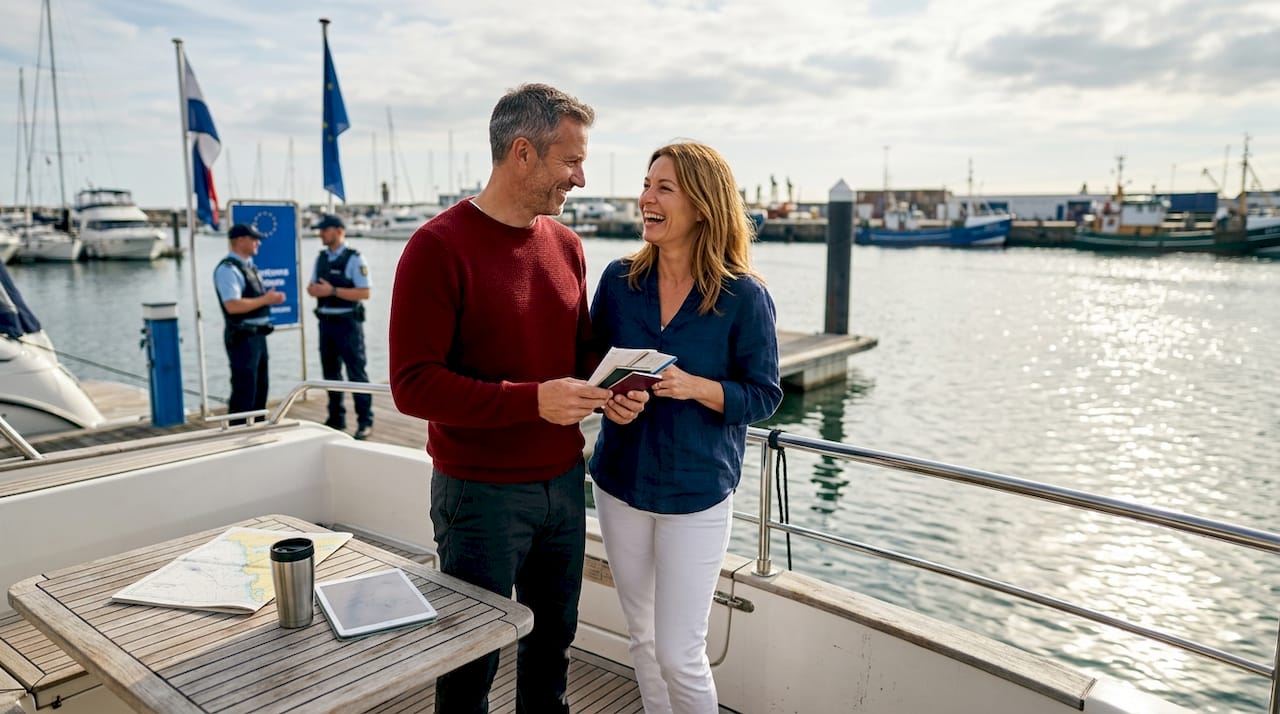
Enhanced privacy is another major driver. Corporate ownership structures shield beneficial owner identities, keeping your name off public registries in jurisdictions with strong confidentiality laws. This matters for high-net-worth owners who prefer not to broadcast asset ownership publicly. When your vessel is owned by a properly structured holding company registered in a suitable jurisdiction, the yacht’s registration documents reflect the company rather than your personal name.
To make the most of this, you should optimize ownership structure before you file any registration paperwork. Getting the corporate layer right from the start avoids expensive restructuring later. Many owners who skip this step end up needing to re-register entirely when they realize their ownership arrangement doesn’t provide the protection they expected.
Flexible crewing is a practical benefit that offshore owners often underestimate until they need it. Flags without nationality restrictions make it far easier to hire qualified crew from anywhere in the world without visa complications or labor quota requirements. For owners who operate year-round across multiple regions, this flexibility directly reduces operating costs and downtime.
Here’s a summary of the top benefits in practice:
- Tax efficiency: Income exemptions, VAT deferral, and favorable tonnage tax regimes
- Privacy protection: Corporate structures keep owner identities out of public records
- Global operational flexibility: Fewer port restrictions and wider recognition
- Crewing freedom: Hire internationally without nationality-based restrictions
- Charter potential: Prestigious flags increase booking appeal and resale value
- Financing options: Some flag states are more favorable with international marine lenders
Exploring corporate registration for privacy alongside your flag selection is a step many experienced owners prioritize from the outset, not as an afterthought.
Pro Tip: If chartering is part of your business model, check whether your chosen flag state has bilateral agreements with your key operating regions. Some flags make EU chartering significantly smoother than others.
Comparison of popular offshore flags
To help you choose, here’s how leading offshore registration flags compare in practice. Three jurisdictions consistently dominate discussions among serious yacht owners: the Cayman Islands, the Marshall Islands, and Malta.
| Flagge | Prestige level | Cost structure | VAT handling | Crewing restrictions | Best suited for |
|---|---|---|---|---|---|
| Kaimaninseln | Very high (Red Ensign) | Higher fees | No VAT | None | Superyachts, charter fleets |
| Marshallinseln | High | Cost-effective | No VAT | None | Commercial and private vessels |
| Malta | High (EU flag) | Mäßig | EU VAT framework | Minimal | EU operators, charter yachts |
Popular flags include Cayman Islands for prestige, Marshall Islands for cost-effectiveness, and Malta for EU and VAT benefits, making each suited to a distinct ownership profile.
The Cayman Islands carry the British Red Ensign group’s reputation, which opens doors in virtually every major port. Port state control officers recognize the flag immediately, and the Cayman Islands Shipping Registry maintains rigorous survey and inspection standards. This means compliance is demanding, but the reputational payoff is substantial.
The Marshall Islands registry is operated by a private company under contract to the Republic of the Marshall Islands, which means registration processes are often faster and more commercially oriented than state-run alternatives. It is widely regarded as one of the most cost-effective options for vessels of all sizes, with strong port state control records and minimal crewing nationality requirements.
Malta offers a uniquely powerful combination: EU membership with a well-developed maritime law framework. For owners operating primarily in European waters, a Maltese registration simplifies VAT compliance, access to EU ports, and charter operations within the EU. Malta’s registry also recognizes both private and commercial vessels, and the flag benefits and compliance framework is particularly well-suited to owners who divide their time between EU and international waters.
Beyond these three, jurisdictions like the Bahamas, Panama, and Vanuatu serve specific niches. Panama is one of the largest registries by vessel count globally, offering competitive rates for commercial operators. The Bahamas is popular among Caribbean charter operators due to its regional relationships. Each flag represents a different trade-off between cost, reputation, and regulatory burden.
Key considerations and potential challenges
While the upsides are considerable, some owners encounter costly mistakes. Here’s what you need to watch for before finalizing your offshore registration.
The two most common mistake categories are jurisdiction mismatch und documentation errors. Jurisdiction mismatch happens when an owner chooses a flag based on tax benefits without considering where the vessel will actually operate. Documentation errors cause 70% of registration delays, and many of those errors stem from misunderstanding what a specific flag state requires versus what a generic checklist suggests.
“Offshore registration adds layers of compliance you need to actively manage. It’s not a set-it-and-forget-it solution. Flag state requirements, port state inspections, and insurance all need annual attention.” — Maritime compliance perspective
Here’s a practical breakdown of common pitfalls and how to address them:
| Challenge | Why it happens | How to address it |
|---|---|---|
| Higher insurance premiums | Some insurers price certain flags higher | Get quotes before choosing a flag, not after |
| Port detentions | Low-reputation flag attracts scrutiny | Choose flags with strong PSC (Port State Control) records |
| Financing difficulties | Lenders unfamiliar with certain flags | Confirm flag acceptance with lender before registration |
| Documentation errors | Missing or incorrectly formatted certificates | Work with a specialist to prepare and review all paperwork |
| Delayed renewals | Annual surveys missed or incomplete | Set calendar reminders and use a management service |
US cruising requires annual permit renewal for foreign-flagged vessels and prohibits chartering entirely, which catches many owners off guard. This is a hard legal boundary, not a gray area. If you plan to charter in US waters, a foreign flag eliminates that option. EU regulations add another layer: VAT applies based on how and where the vessel is used and where the owner is resident, not purely based on the flag. This distinction trips up many owners who assume their offshore flag automatically means no EU VAT exposure.
The difference between private and commercial registration also changes your compliance burden substantially. Commercial registration insights show that commercial operators face survey requirements, manning certificates, and safety management systems that recreational registrations don’t require. The commercial registration process is more demanding, but it also opens chartering and revenue-generating options that private registration does not.
Making sure your required documents for registration are complete and correctly formatted from the start is probably the single most impactful thing you can do to prevent delays.
Expert perspective: When offshore registration is a game-changer — and when it isn’t
We’ve seen owners make offshore registration work brilliantly, and we’ve seen it become an expensive headache. The difference almost always comes down to one question: does your vessel’s actual use case match the flag’s regulatory framework?
Superyacht owners and international cruisers benefit the most. If your vessel operates in multiple jurisdictions, generates charter income, or represents a significant asset that you want to protect through corporate structures, offshore registration is not just an option, it is genuinely the smarter financial and legal choice. The tax efficiency alone often justifies the additional compliance overhead within the first two years.
But here’s what most articles won’t tell you: for a day boat used purely within US waters, or a recreational vessel that rarely leaves its home marina, offshore registration usually creates more problems than it solves. You pay more for insurance, you add compliance layers that require annual attention, and you often face friction at local marinas and with domestic service providers who are unfamiliar with your flag paperwork. The onshore vs offshore processes are genuinely different in complexity and ongoing maintenance cost.
The hard-won lesson from years in this field is that documentation precision matters far more than most owners expect. An incomplete survey certificate, a missing class notation, or a corporate structure document that doesn’t fully align with the flag state’s requirements can delay your cruising season by weeks or trigger a port detention that costs far more than the registration savings. Working with specialists who know the specific documentation standards of your chosen flag is not a luxury. It is a risk management decision.
Streamline your offshore boat registration with expert support
Choosing an offshore flag is just the start. Managing the documentation, corporate structure, compliance calendar, and ancillary registrations like MMSI and AIS setup is where most owners run into real friction.
VesselFlag.com handles every stage of the offshore registration process, from helping you compare yacht and boat registration options side by side, to preparing and submitting documentation for flags including Malta, UK Part 1, Palau, San Marino, and more. Our full yacht registration guide walks you through every step with transparent timelines and costs. For owners who want to stay compliant across seasons and jurisdictions, our team also supports maintaining compliance worldwide through renewal management and ongoing advisory. Get in touch to start your registration with confidence.
Frequently asked questions
What is the primary reason yacht owners register offshore?
The main reason is to take advantage of tax exemptions, increased privacy, and global operational flexibility that offshore jurisdictions provide compared to domestic registration.
Are there downsides to offshore boat registration?
Potential downsides include higher insurance premiums, possible port detentions for vessels flying low-reputation flags, and strict documentation requirements that cause delays when handled incorrectly.
Which are the most popular offshore flags for yacht registration?
Cayman Islands, Marshall Islands, and Malta are leading options due to their respective strengths in prestige, cost-effectiveness, and EU compliance frameworks.
Does offshore registration impact yacht chartering in the US or EU?
Yes; US waters prohibit chartering foreign-flagged yachts and require annual permit renewal, while the EU applies VAT based on usage and owner residency rather than the vessel’s flag alone.
How can I make offshore registration easier and faster?
Working with a specialized maritime registration service reduces documentation errors, accelerates approvals, and ensures your compliance obligations are correctly managed from day one.
Empfohlen
- Schmerzpunkte bei der Yachtregistrierung: Navigieren Sie mit Zuversicht durch die globale Compliance - Vessel Flag
- Avoid costly yacht registration mistakes: owner’s guide
- The Hidden Costs of Yacht Registration—and How to Avoid Them – Vessel Flag
- Top benefits of yacht registration for owners and brokers
- Yacht management in Florida: boost your investment value
- What Is Off-Market Yacht Sales and Why It Matters