
TL;DR:
- Yacht transactions involve complex legal, regulatory, and documentation challenges often overlooked by owners.
- Yacht brokers streamline processes, manage compliance, and provide market expertise to prevent costly errors.
- Using a broker reduces risks, saves time, and ensures smooth registration and ownership transfer.
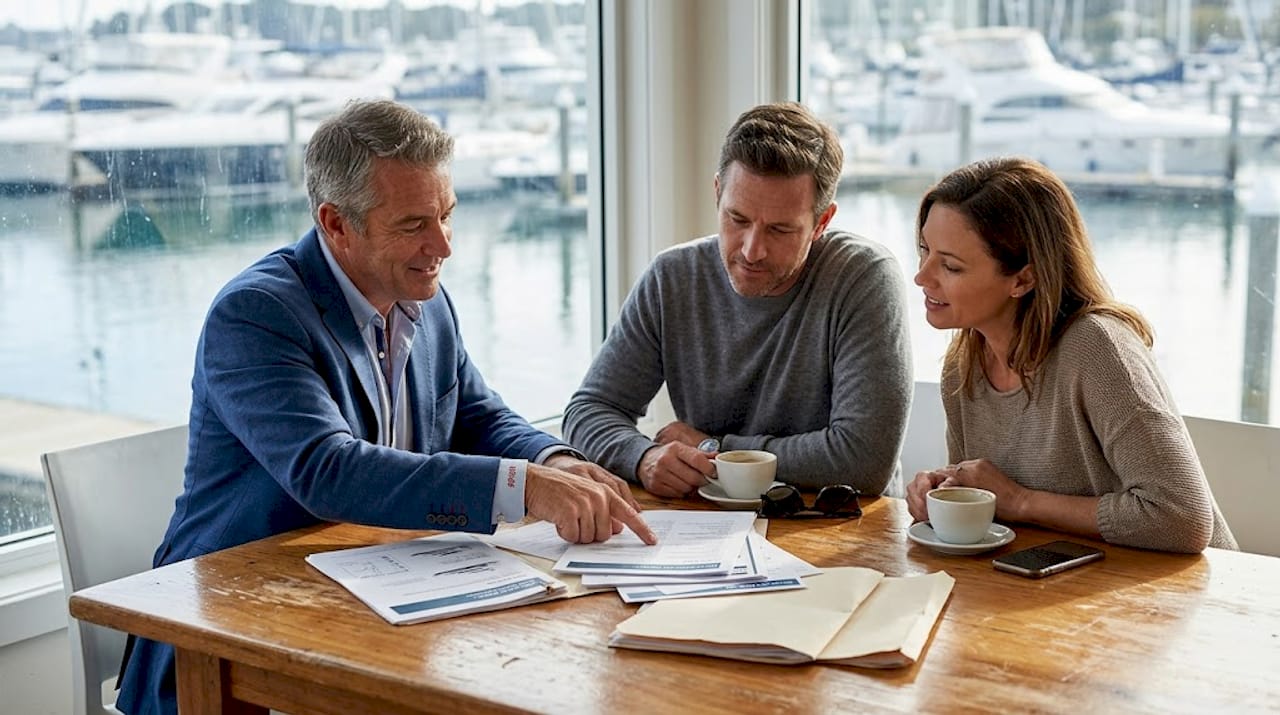
Buying or selling a yacht looks straightforward on the surface. You find a vessel, agree on a price, and sign some papers. Reality is far messier. Between surveys, title searches, flag state compliance, sea trials, escrow, and international regulations, even experienced owners get caught off guard. Yacht brokers are the professionals most buyers and sellers overlook until something goes wrong, and by then, the financial damage is already done. This article breaks down exactly why brokers matter, what they protect you from, and how their expertise in documentation, compliance, market valuation, and negotiation delivers real, measurable value at every stage of a transaction.
Inhaltsübersicht
- The complexities of buying and selling yachts
- How yacht brokers add value: More than just matchmaking
- Expertise in yacht registration and compliance
- Market knowledge and negotiation: Unlocking hidden value
- The uncomfortable truth: When you might not need a yacht broker—and what to watch out for
- Get expert help for every step of your yachting journey
- Frequently asked questions
Wichtigste Erkenntnisse
| Punkt | Einzelheiten |
|---|---|
| Yacht deals are complex | Buying or selling a yacht involves multi-layered steps, documentation, and legalities that require expert handling. |
| Brokers reduce risks | Yacht brokers streamline processes, prevent mistakes, and provide market insight to protect your investment. |
| Compliance is critical | Proper paperwork and global regulation adherence are essential; brokers ensure smooth, compliant transactions. |
| Market expertise adds value | Brokers use deep knowledge and negotiation skills to secure better terms and reveal opportunities you might miss. |
The complexities of buying and selling yachts
A yacht transaction is nothing like buying a car or even a piece of real estate. You’re dealing with an asset that moves across jurisdictions, operates under international maritime law, and requires layers of documentation that most people have never encountered. A typical purchase involves surveyors, flag state administrators, escrow agents, insurance underwriters, finance brokers, and legal counsel. Each party has their own timeline, requirements, and potential for delay.
The complexity of yacht transactions often surprises even financially sophisticated buyers. Miss one certificate, submit an incorrect bill of sale format, or overlook a lien on the vessel’s title, and you can face weeks or months of setbacks. Yacht transactions involve significant paperwork, regulatory compliance, and risk of costly errors that can derail even well-funded deals.
Here are the top four hidden challenges that catch unrepresented owners off guard:
- Due diligence gaps: Vessel history, outstanding mortgages, and lien searches require access to specialized databases most buyers don’t know exist.
- Documentation errors: Incorrect or incomplete required yacht documentation is the single most common cause of registration delays.
- Negotiation blind spots: Without market data, buyers overpay and sellers underprice, sometimes by significant margins.
- Legal compliance failures: International sales introduce flag state rules, VAT obligations, and customs requirements that vary dramatically by jurisdiction.
Documentation delays are responsible for a significant share of failed yacht transactions every year. Incomplete or incorrectly prepared paperwork can add weeks to closing timelines and, in some cases, void purchase agreements entirely.
Understanding the yacht documentation requirements in advance is critical, but knowing what to prepare is only half the battle. Knowing how to prepare it correctly, and on time, is where brokers earn their place at the table.
With the complexity of yacht deals in focus, it becomes clear how brokers become invaluable allies from day one.
How yacht brokers add value: More than just matchmaking
Brokers are not simply deal finders. They manage the entire lifecycle of a transaction, from initial valuation and listing strategy through survey coordination, contract drafting, compliance checks, and final closing. They act as project managers, risk mitigators, and market analysts all at once.
Consider why use a yacht broker from both sides of the deal. Sellers benefit from accurate pricing, wider market exposure, and professionally managed viewings. Buyers benefit from pre-screened listings, independent survey coordination, and contract protections they wouldn’t know to ask for. Brokers streamline documentation processes and help avoid regulatory pitfalls that cost time and money.
Here’s a quick comparison of going it alone versus working with a broker:
| Step | Buyer/Seller alone | Using a broker |
|---|---|---|
| Pricing | Guesswork based on listings | Data-driven market analysis |
| Due diligence | Often incomplete | Systematic, documented process |
| Documentation | High error risk | Professionally prepared and reviewed |
| Negotiation | Emotionally driven | Strategic, experience-backed |
| Compliance | Frequently missed | Fully managed |
| Closing timeline | Unpredictable | Structured and on schedule |
Beyond the table above, brokers typically provide services that most independent buyers and sellers never consider:
- Fraud screening and vessel identity verification
- Escrow management to protect funds during the transaction
- Coordination with surveyors, flag administrators, and lenders
- Post-sale support for registration, insurance, and crew transitions
Die yacht broker benefits extend well beyond convenience. They represent a systematic layer of protection against the most expensive mistakes in yacht ownership.

Pro Tip: Ask your broker specifically about their fraud screening process. Yacht fraud, including title fraud and duplicate listing scams, is more common than most buyers expect. A good broker has protocols to verify vessel identity before any money changes hands.
For a smooth yacht registration after the sale closes, brokers can also prepare you for exactly what your flag state will require, cutting down on surprise requests post-closing.
Expertise in yacht registration and compliance
Registration and compliance are where most self-managed transactions fall apart. The rules differ dramatically depending on whether you’re buying domestically or internationally, what flag you intend to fly, and what the vessel’s intended use will be.
Common compliance hazards include missing certificates of deletion from a previous flag state, VAT status documentation for vessels entering EU waters, MMSI registration gaps, and incorrect measurement or tonnage declarations. The yacht buying compliance landscape is technical and unforgiving. Brokers help owners navigate yacht registration and compliance regulations that most owners simply aren’t trained to interpret.
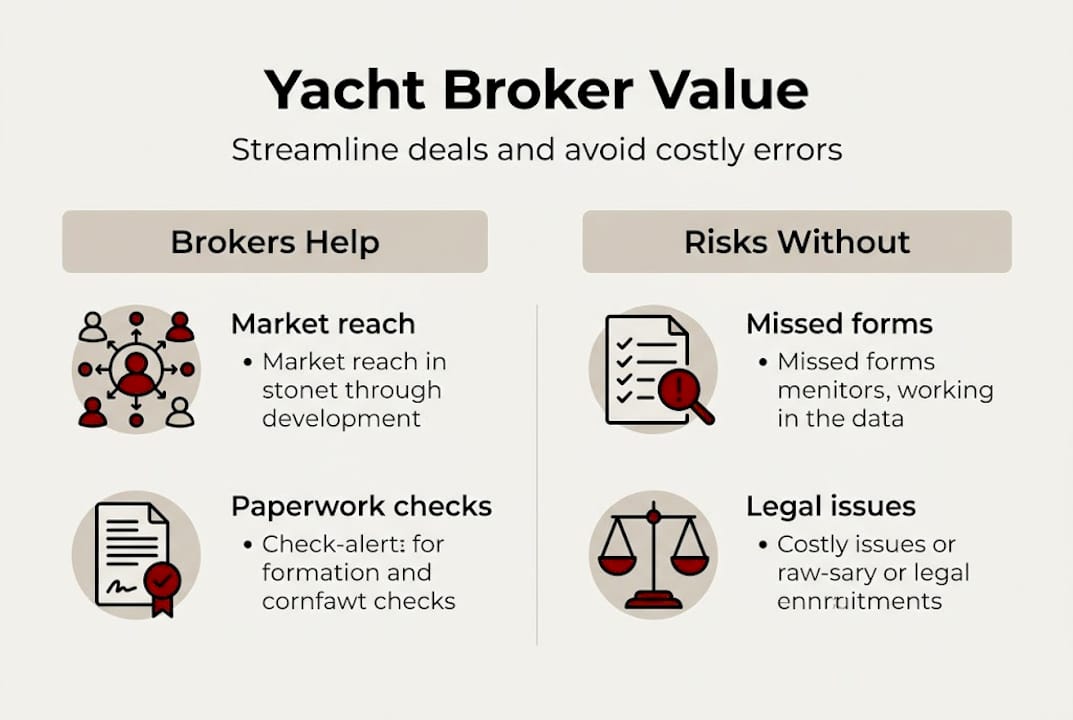
Here’s how common compliance pitfalls play out, and how brokers address them:
| Compliance issue | Consequence without a broker | How a broker resolves it |
|---|---|---|
| Missing deletion certificate | Registration blocked by new flag state | Broker coordinates with previous registry |
| VAT status unclear | Vessel seized or fined in EU ports | Broker obtains and verifies VAT documentation |
| Incorrect tonnage declaration | Survey required; closing delayed | Broker reviews measurement certificate early |
| MMSI not transferred | Safety communications gap | Broker initiates MMSI re-registration |
| Lien not cleared | Title cannot transfer legally | Broker runs lien search and coordinates payoff |
For global purchases, brokers de-risk the entire documentation chain. They know which flag states process faster, which require original versus certified copies, and which have specific formatting rules for bills of sale. Using a registration checklist in parallel with broker guidance is the most reliable combination.
Pro Tip: Never assume documentation from a previous owner is current and accurate. Brokers verify the validity of every certificate as part of standard due diligence. Outdated safety certificates alone can delay closings by 30 days or more. Review 2026 documentation requirements early to avoid last-minute scrambles.
Beyond compliance, brokers bring unique market knowledge and negotiation expertise that adds measurable financial value.
Market knowledge and negotiation: Unlocking hidden value
Yacht pricing is not transparent the way stock markets or real estate markets are. Asking prices vary wildly, and the gap between list price and fair market value can be enormous. Brokers track actual sale prices, not just listings, and that distinction matters enormously when you’re deciding whether to make an offer.
Broker market knowledge helps clients identify fair prices and avoid common transaction traps that cost buyers tens of thousands of dollars on a single deal. Up-to-date comparable sales data, condition-adjusted valuations, and an understanding of seasonal demand cycles give brokers a decisive advantage at the negotiating table.
Here are five concrete benefits skilled broker negotiation delivers:
- Price accuracy: Brokers use real sales data to anchor offers, preventing both overpaying and underpricing.
- Favorable terms: Beyond price, brokers negotiate sea trial conditions, survey contingencies, and deposit terms.
- Added value items: Experienced brokers frequently negotiate for equipment, spares, and crew retention as part of the deal.
- Post-sale support: Many brokers facilitate introductions to marina managers, service yards, and insurers after closing.
- Risk reduction: Brokers identify red flags during negotiations that buyers miss when emotionally invested in a purchase.
Industry data consistently shows that professionally brokered yacht transactions result in fewer failed closings, shorter time on market, and a higher rate of buyer satisfaction than private sales. Experienced brokers reduce negotiation risk on both sides of the deal.
Die challenges in yacht registration and ownership don’t stop at the point of sale either. Brokers who understand the full lifecycle give you a strategic partner long after the ink dries. They understand the importance of yacht brokers in protecting both financial interests and operational continuity.
The uncomfortable truth: When you might not need a yacht broker—and what to watch out for
Here’s something most broker-focused articles won’t tell you: some transactions genuinely don’t require a professional broker. If you’re an experienced owner buying a well-documented vessel from a known seller in the same jurisdiction, with no financing, no flag change, and a clean title history, you may be able to self-manage with the right advisors.
But that scenario is rarer than people think. Most owners overestimate their own familiarity with maritime law and underestimate how quickly a single documentation error compounds. The hidden costs of a self-managed deal often include legal fees to fix contract errors, survey costs for vessels that turn out to be misrepresented, and delays that cause financing offers to expire.
If you do choose to bypass a broker, always hire a qualified maritime attorney to review contracts, and work from a structured registration checklist so nothing falls through the cracks. Know your flag state’s requirements cold before you start.
For most owners, though, the complexity of a yacht transaction genuinely outweighs any commission savings. The math rarely works in favor of going it alone, especially on high-value vessels where a single missed step can cost more than the broker’s entire fee. Experienced brokers pay for themselves.
Get expert help for every step of your yachting journey
Whether you’re buying your first yacht or adding to an established fleet, having the right support structure behind you makes every step faster and cleaner. VesselFlag.com gives yacht owners broker-level guidance for registration, compliance, and documentation, backed by deep expertise in international flag requirements.
Explore resources that walk you through everything from understanding the difference between yacht vs boat registration to working through a complete yacht registration guide step by step. For owners operating across multiple jurisdictions, VesselFlag’s guidance on global registration compliance helps you stay legal no matter where you sail. Get the clarity you need before your next transaction.
Frequently asked questions
What does a yacht broker actually do for owners?
A yacht broker manages the listing, marketing, negotiation, paperwork, and legal compliance for yacht transactions, saving owners time and reducing risk. Brokers assist with all transaction steps from listing to paperwork, acting as a full-service project manager throughout.
Can I buy or sell a yacht without a broker?
Yes, but it’s riskier and more complex. Yacht transactions are prone to legal pitfalls that brokers help navigate, and most owners benefit significantly from expert support on documentation and compliance.
Are there extra fees for using a yacht broker?
Brokers typically earn a commission on the sale, but their involvement often prevents costly mistakes and delays. Broker services add value by avoiding errors that can far exceed the cost of the commission itself.
How do brokers help with yacht registration?
They ensure all documentation is complete and compliant before submission. Brokers manage paperwork and compliance to speed up the registration process and help owners avoid regulatory delays that can stall ownership transfer.
What’s the biggest risk of not using a yacht broker?
Most owners underestimate legal and documentation issues until it’s too late. Missing documentation or compliance steps can lead to serious financial loss, failed closings, and costly delays that a broker would have caught early.