
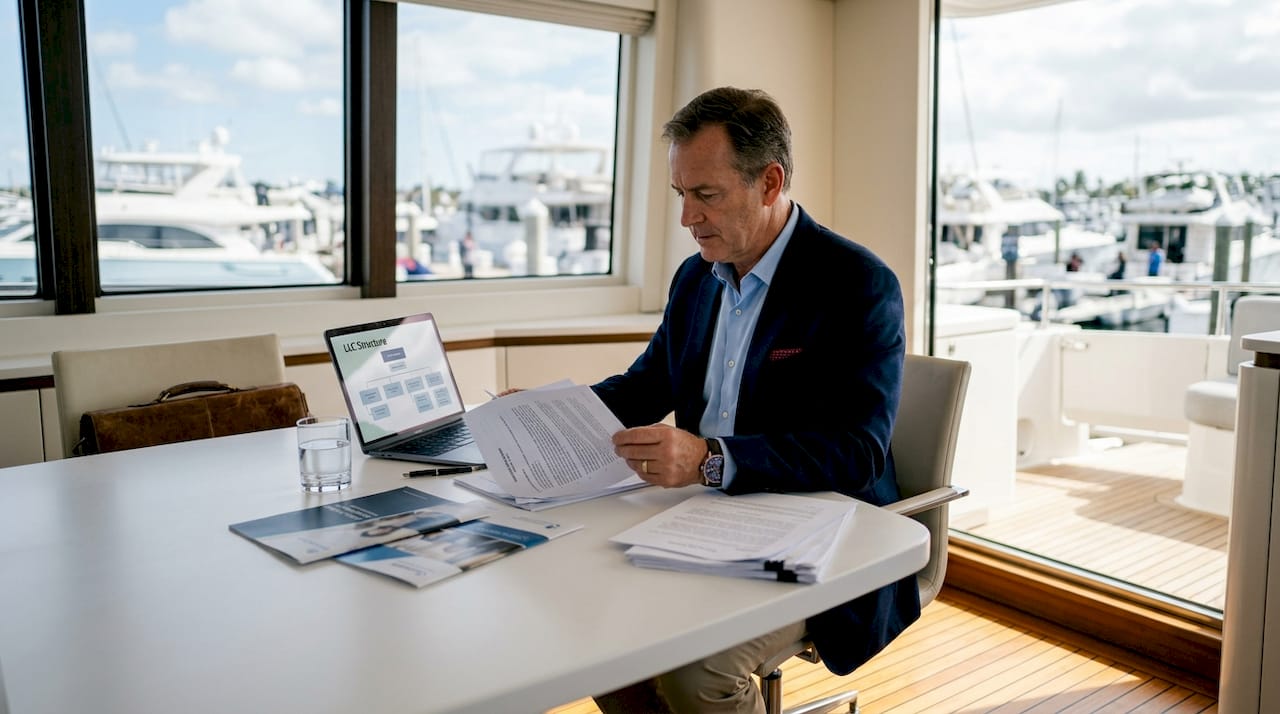
Many executives assume yacht ownership is purely a personal indulgence, a luxury reserved for leisure and entertainment. Corporate yacht ownership challenges that assumption by offering a sophisticated alternative that blends business utility with strategic financial planning. When structured correctly through legal entities like LLCs or offshore corporations, yacht ownership can deliver liability protection, tax optimization, and privacy advantages that personal ownership simply cannot match. This guide explains what corporate yacht ownership entails, the benefits it provides, how to set up the structure properly, and the financial realities you need to understand before making this investment.
İçindekiler
- Key takeaways
- Understanding corporate yacht ownership structures
- Key benefits of owning a yacht through a corporation
- How to set up corporate yacht ownership and comply with regulations
- Financial considerations: costs, tax benefits, and risks
- Explore yacht registration services for your corporate ownership
- Frequently asked questions
Önemli Noktalar
| Nokta | Detaylar |
|---|---|
| Corporate ownership structure | Using an entity such as an LLC or offshore corporation to own the yacht creates a legal separation between personal assets and the vessel, delivering liability protection and privacy. |
| Tax optimization potential | Genuine business use is required to qualify for deductions such as depreciation fuel crew salaries dockage maintenance and insurance, with accelerated write offs available through Section 179 expensing and bonus depreciation. |
| Privacy and succession advantages | Offshore structures offer higher privacy and can simplify succession planning while adding operational complexity. |
| Structure choice criteria | The entity you choose depends on where you operate how you intend to use the yacht and how much privacy you need, and it should align with flag state requirements and registration practices. |
| Active management requirement | Active management and thorough documentation are essential to satisfy IRS expectations and to secure legitimate business deductions. |
Understanding corporate yacht ownership structures
Corporate yacht ownership involves holding title through an entity rather than your personal name. This fundamental distinction creates a legal separation between you as an individual and the asset itself. The most common structures include limited liability companies (LLCs), corporations, trusts, offshore companies, and special purpose vehicles (SPVs). Each serves different strategic purposes depending on your priorities around liability, taxation, privacy, and operational complexity.
LLCs dominate the US market because they combine liability protection with tax pass-through treatment. Your yacht becomes a company asset, and any claims or liabilities stay contained within that entity rather than reaching your personal wealth. Corporations offer similar protection but introduce double taxation unless structured as S-corporations. Trusts provide estate planning advantages and can shield ownership details from public records. Offshore entities, particularly in jurisdictions like the Cayman Islands or Malta, maximize privacy and can offer favorable tax treatment for international operations.
The choice between these structures depends on where you plan to operate, how you intend to use the yacht, and what level of privacy matters to you. US-based LLCs work well for domestic operations and charter programs. Offshore structures make sense when you want maximum confidentiality or operate primarily in international waters. Understanding yacht registration best practices becomes essential because your entity structure must align with your chosen flag state and operational jurisdiction.
Key structural considerations include:
- Legal separation between personal assets and yacht-related liabilities
- Tax treatment varies significantly by entity type and jurisdiction
- Privacy levels differ, with offshore structures offering maximum confidentiality
- Operational complexity increases with international structures
- Succession planning becomes simpler through corporate ownership
- Entity maintenance costs and compliance requirements vary by structure
Key benefits of owning a yacht through a corporation
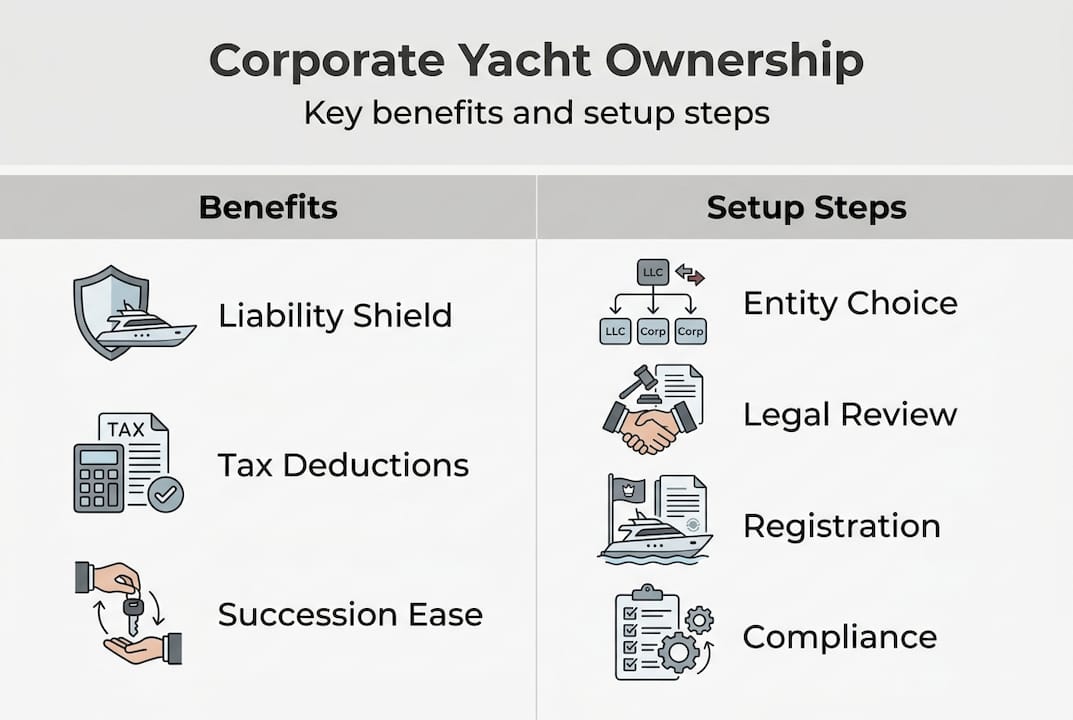
Liability protection stands as the most immediate and tangible benefit of corporate ownership. When accidents happen, lawsuits target the entity holding title, not you personally. This separation creates a legal firewall that protects your other assets, investments, and personal wealth from claims arising from yacht operations. Whether a crew member gets injured, a guest suffers an accident, or environmental damage occurs, the corporate structure contains the financial exposure.
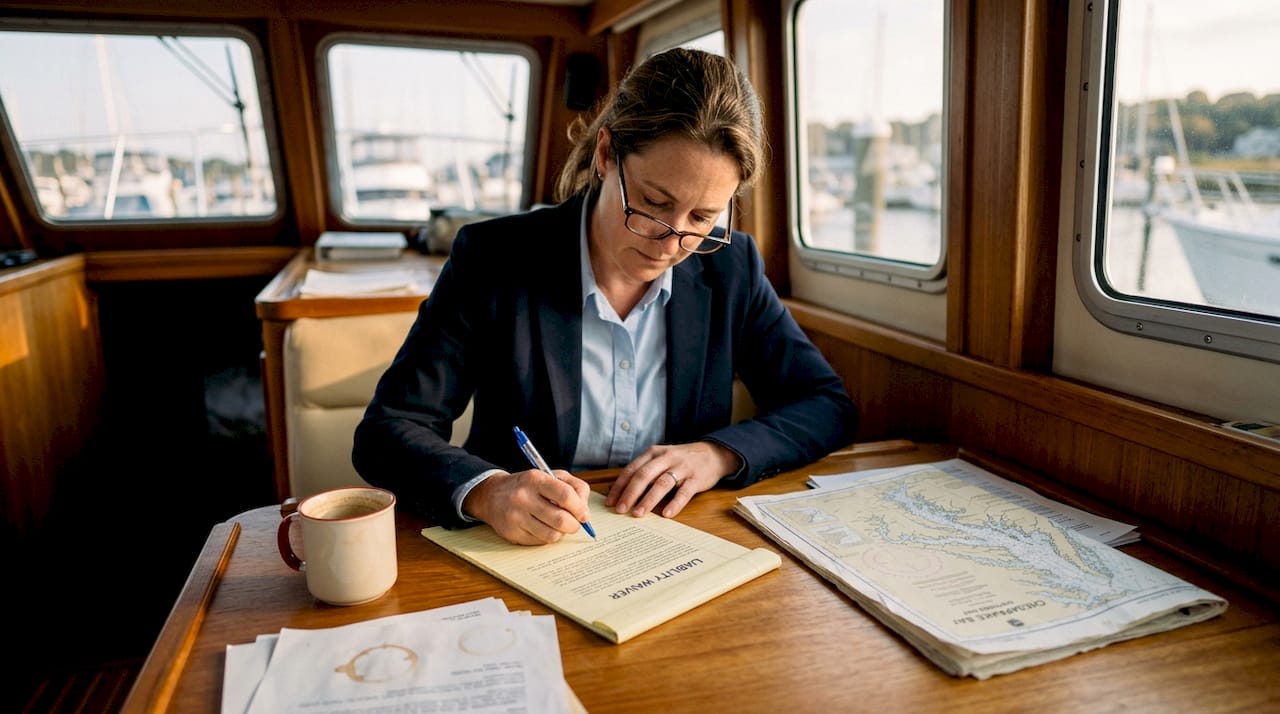
Tax optimization represents the second major advantage, though it requires genuine business use to qualify. The IRS allows deductions for depreciation, fuel, crew salaries, dockage, maintenance, and insurance when you can demonstrate profit motive and active participation. Section 179 expensing and bonus depreciation can accelerate write-offs significantly in the first year. These benefits of liability protection extend beyond just shielding assets to creating legitimate business expense categories that reduce your overall tax burden.
Privacy becomes increasingly valuable as wealth grows and public exposure increases. Corporate ownership masks your direct connection to the yacht in public records and registration databases. Instead of your name appearing on title documents, the entity name shows up. Offshore structures amplify this privacy benefit, with jurisdictions like the Cayman Islands offering minimal public disclosure requirements. For executives concerned about security, competitive intelligence, or simply maintaining discretion about their assets, this confidentiality proves invaluable.
“Primary benefits include liability protection (isolating personal assets from yacht-related claims), tax optimizations (deductions for business use, depreciation), privacy (owner identity shielded), and easier succession planning or asset transfer.”
Succession planning simplifies dramatically when a yacht sits inside a corporate structure. Transferring ownership shares or trust interests proves far easier than retitling a vessel personally. Estate taxes and probate complications decrease. If you want to bring in partners, sell partial interests, or gradually transfer ownership to family members, the corporate framework provides clean mechanisms that personal ownership lacks.
Pro Tip: Consult a maritime tax attorney before establishing your structure. Generic business attorneys often miss yacht-specific regulations and international maritime law nuances that can invalidate your intended benefits or create unexpected compliance burdens.
How to set up corporate yacht ownership and comply with regulations
Establishing corporate yacht ownership requires methodical execution across legal, regulatory, and operational dimensions. Start by forming your chosen entity in your preferred jurisdiction. For US-based operations, most owners establish an LLC in a favorable state like Delaware or Wyoming. Placing the yacht in service for business use requires transferring title from personal ownership to the entity through a bill of sale, then registering with appropriate maritime authorities like the US Coast Guard or your chosen flag state.
Business use qualification determines whether you can claim tax benefits. The IRS typically requires more than 50% business or charter use to treat yacht expenses as legitimate business deductions. This means documenting every trip, categorizing use as business or personal, and maintaining detailed logs that prove your profit motive. Active participation becomes essential. You cannot simply hand the yacht to a management company and claim passive income. The IRS expects meaningful involvement in operations, marketing, and business decisions.
Compliance with flag state regulations adds another layer of complexity. Each maritime jurisdiction maintains specific requirements for corporate ownership, registration documentation, and ongoing reporting. US Coast Guard documentation requires different paperwork than Cayman Islands flag registration or Malta yat kaydı. International operations introduce additional considerations around VAT, import duties, and cruising permits that vary by region.
Step-by-step setup process:
- Form your legal entity (LLC, corporation, or offshore structure) in chosen jurisdiction
- Transfer yacht title from personal ownership to entity via bill of sale
- Register yacht with appropriate maritime authority under corporate ownership
- Establish business operations including charter program or documented business use
- Implement systems for tracking usage, expenses, and active participation hours
- Maintain ongoing compliance with flag state requirements and tax documentation
| Jurisdiction | Tax Benefits | Privacy Level | Registration Cost | Compliance Complexity |
|---|---|---|---|---|
| Cayman Adaları | High | Maximum | $15,000-25,000 | Medium |
| Malta | Medium | High | $8,000-15,000 | High |
| Delaware LLC | Medium | Medium | $2,000-5,000 | Low |
| Marshall Adaları | High | Maximum | $10,000-18,000 | Medium |
| Birleşik Krallık Bölüm 1 | Low | Low | $5,000-8,000 | Medium |
Pro Tip: Maintain a detailed logbook recording every use of the yacht with date, duration, purpose, participants, and business justification. This documentation becomes your primary defense in any IRS audit and proves your active participation and profit motive. Aim for at least 100 hours of documented involvement annually.
Understanding the full yacht registration guide requirements for your chosen jurisdiction prevents costly mistakes and ensures your structure delivers intended benefits from day one.
Financial considerations: costs, tax benefits, and risks
Yacht ownership costs typically run around 10% of the vessel’s value annually. A $10 million yacht generates roughly $1 million in annual expenses covering crew salaries, fuel, insurance, dockage, maintenance, and depreciation. Charter revenue can offset these costs, but the math rarely works out to complete coverage. Annual costs run approximately 10% of value, with charter revenue offsetting 50-80% typically. A $600,000 yacht might generate $36,000 net charter income, covering about 70% of operating costs.
Tax deductions provide the primary financial benefit for corporate owners who qualify. Section 179 expensing allows immediate write-offs up to certain limits. Bonus depreciation can accelerate deductions significantly in the purchase year. Ongoing expenses like fuel, crew, dockage, and maintenance become deductible business expenses when you maintain proper business use ratios. These deductions reduce taxable income, potentially saving hundreds of thousands in taxes for high-income owners.
Risks emerge when owners fail to meet IRS requirements for active business participation. Guaranteed income programs often get deemed passive, eliminating tax benefits. Audit risks spike when documentation shows insufficient business use, minimal owner participation, or lack of genuine profit motive. The IRS looks for at least 100 hours of active involvement annually, detailed usage logs, and evidence of business operations beyond simply owning an asset.
Recapture risk becomes real if your business use drops below required thresholds after claiming deductions. The IRS can recapture previously claimed depreciation and bonus deductions, creating unexpected tax bills. European operations face additional complexity post-BFH ruling, requiring separate governance and commercial entities to maintain favorable treatment.
| Yacht Size | Annual Costs | Typical Charter Revenue | Net Offset % | Required Charter Weeks |
|---|---|---|---|---|
| 60-80 feet | $400,000 | $180,000 | 45% | 12-15 weeks |
| 80-100 feet | $800,000 | $450,000 | 56% | 15-20 weeks |
| 100-120 feet | $1,300,000 | $850,000 | 65% | 20-25 weeks |
| 120+ feet | $2,000,000+ | $1,200,000 | 60% | 25+ weeks |
Common financial pitfalls and best practices:
- Underestimating true annual operating costs beyond basic maintenance
- Overestimating charter revenue potential without market research
- Failing to document business use and active participation sufficiently
- Treating yacht purely as personal asset while claiming business deductions
- Ignoring jurisdiction-specific compliance costs and ongoing fees
- Neglecting to maintain separate business accounts and proper bookkeeping
- Assuming guaranteed income programs qualify for active business treatment
“Guaranteed income programs often deemed passive (no tax benefits); audit risks high if lacking profit motive or participation (e.g., 100+ hours, logs); recapture if business use drops; EU post-BFH: separate governance and commercial entities required.”
Most owners should view yachts primarily as lifestyle assets that provide enjoyment rather than pure financial investments. Tax benefits and charter revenue provide meaningful offsets, but rarely eliminate ownership costs entirely. Understanding yacht registration and compliance challenges helps set realistic expectations about ongoing costs beyond initial setup. Professional yat taşımacılığı services add convenience but represent additional operational expenses to factor into your financial planning.
Explore yacht registration services for your corporate ownership
Establishing corporate yacht ownership involves complex legal, regulatory, and compliance requirements that benefit significantly from professional guidance. Expert yacht registration services simplify the entire process from entity formation through flag state registration and ongoing compliance management. These specialists understand the nuances of different jurisdictions, can coordinate between your legal team and maritime authorities, and ensure your structure delivers intended benefits while maintaining full regulatory compliance.
Professional registration experts handle the technical details that trip up many first-time corporate yacht owners. They know which flag states align with your operational plans, how to structure ownership for maximum benefit, and what documentation satisfies both tax authorities and maritime regulators. Whether you need guidance on the complete how to register a yacht guide process, want to ensure yacht registration validity across multiple jurisdictions, or need a comprehensive yat kayit kontrol li̇stesi̇ to track your progress, specialized services provide the expertise that protects your investment and optimizes your benefits.
Frequently asked questions
What is the best type of corporate entity for yacht ownership?
LLCs dominate US yacht ownership because they provide liability protection while allowing tax pass-through treatment that avoids double taxation. Offshore corporations or trusts work better for international operations where privacy matters most and you want to minimize public disclosure of ownership details.
How much business use is required to qualify for yacht ownership tax benefits?
The IRS typically requires more than 50% business or charter use to treat yacht expenses as legitimate business deductions. You must also document active participation through detailed logs showing at least 100 hours of involvement annually in operations, marketing, and business decisions. Guaranteed income programs where you simply collect checks without active management usually get classified as passive income, disqualifying tax benefits.
Can charter revenue fully cover yacht ownership costs?
Charter revenue rarely covers 100% of yacht ownership costs. Most yachts generate charter income that offsets 50-80% of annual expenses, requiring 15-25 weeks of charter bookings yearly. A $10 million yacht costing $1 million annually to operate might generate $600,000-800,000 in charter revenue under optimal conditions, still leaving substantial net costs for the owner.
What are common risks associated with corporate yacht ownership?
High annual costs create ongoing financial obligations that charter revenue seldom eliminates completely. IRS audit risk increases significantly when documentation fails to prove sufficient business use, active participation, or genuine profit motive. Maintaining compliance across multiple jurisdictions adds complexity and cost. Tax benefit recapture becomes possible if your usage patterns change and business use drops below required thresholds after claiming deductions.
How does offshore yacht registration differ from US registration?
Offshore registration through jurisdictions like the Cayman Islands or Malta provides maximum privacy by shielding owner identity from public records. These jurisdictions often offer favorable tax treatment and simplified operational requirements for international cruising. US Coast Guard documentation provides strong legal protection and worldwide recognition but offers less privacy since ownership records remain more accessible. Offshore registration typically costs more initially but can provide long-term advantages for owners prioritizing confidentiality and international operations.