Many yacht owners mistakenly assume their home or auto insurance protects their vessel, creating dangerous coverage gaps. Marine insurance specifically covers maritime risks that standard personal policies exclude. This guide clarifies what yacht insurance truly covers, explains compliance requirements across international waters, and reveals how to select the right policy for your operational needs.
Índice
- Introduction To Yacht Insurance
- Core Coverage Types In Yacht Insurance
- International Compliance And Legal Requirements
- Pricing, Premium Factors, And Underwriting
- Private Vs. Commercial Yacht Insurance
- Common Exclusions And Misconceptions
- Claims Process And Risk Management Strategies
- Flag State Selection And Insurance Implications
- Secure Your Yacht With Vessel Flag’s Registration And Insurance Services
- Perguntas frequentes
Key takeaways
| Ponto | Detalhes |
|---|---|
| Specialized coverage | Yacht insurance addresses physical damage, liability, and operational maritime risks that standard policies ignore. |
| Mandatory compliance | Flag state regulations and port entry rules require documented insurance proof for lawful global operations. |
| Premium variables | Costs depend on vessel age, size, usage patterns, cruising regions, and claims history. |
| Policy distinctions | Private and commercial yacht insurance differ significantly in coverage scope, liability limits, and pricing structures. |
| Risk mitigation | Proactive maintenance and documentation reduce premiums while strengthening claims validity. |
Introduction to yacht insurance
Yacht insurance is specialized maritime coverage protecting your vessel against risks that general policies never address. Unlike homeowners or auto insurance, marine policies account for the unique hazards of ocean environments, navigation challenges, and international legal frameworks.
This protection extends beyond simple collision damage. Your policy can cover theft while docked in foreign ports, storm damage during offshore passages, machinery failures miles from shore, and legal liability when crew members sustain injuries. Standard personal insurance policies explicitly exclude these maritime scenarios, leaving vessel owners financially exposed without dedicated coverage.
Who needs this protection? Private yacht owners cruising recreationally require different coverage than commercial charter operators hosting paying guests. Both groups face substantial financial risk from a single incident. A grounding on a reef can generate repair bills exceeding hundreds of thousands of dollars, while liability claims from injured passengers can reach millions.
Yacht insurance serves multiple stakeholders:
- Private owners protecting recreational vessels
- Charter businesses managing commercial operations
- Maritime service providers maintaining fleet coverage
- Brokers facilitating vessel sales and transfers
Without proper coverage, you risk losing your entire investment to a single navigational error, weather event, or mechanical failure.
Core coverage types in yacht insurance
Yacht policies contain distinct protection layers addressing different risk categories. Understanding each component helps you build appropriate coverage matching your operational profile.
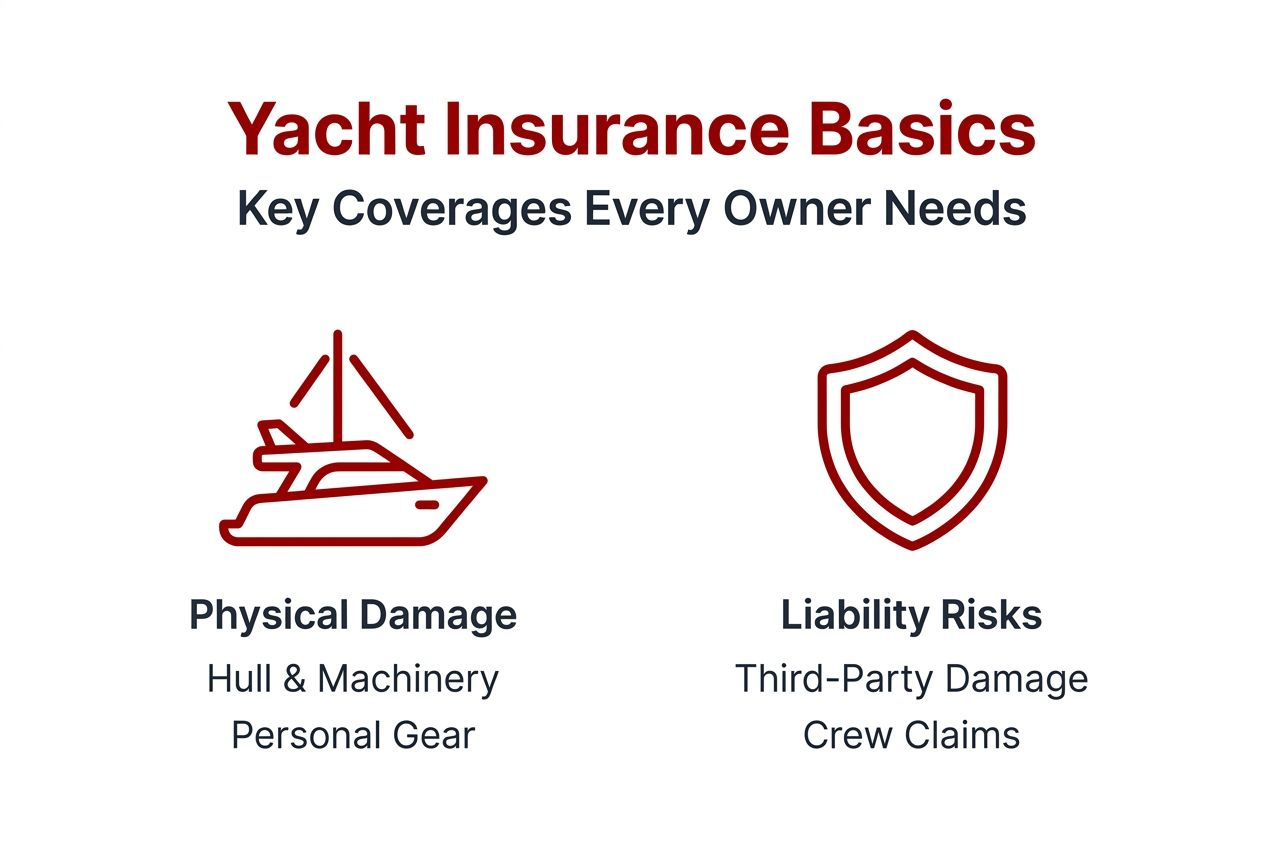
Hull and machinery insurance protects physical structures and mechanical systems. This coverage pays for repairs after collisions, groundings, fire, storms, or sinking. Your policy values the vessel at agreed or market value, determining maximum payout limits. Replacement cost coverage rebuilds damaged components to original specifications, while actual cash value policies deduct depreciation.

Liability and Protection & Indemnity coverage shields you from third-party claims. If your yacht damages another vessel, injures a swimmer, or destroys marina property, liability coverage handles legal defense and settlement costs. P&I extends this protection to crew injuries, passenger medical expenses, pollution cleanup, and wreck removal obligations.
| Coverage Type | What It Protects | Typical Limits |
|---|---|---|
| Hull & Machinery | Physical vessel damage, machinery failures | Agreed vessel value |
| Liability | Third-party property damage and injury claims | $300K to $5M+ |
| Protection & Indemnity | Crew injuries, pollution, wreck removal, passenger risks | $1M to $10M+ |
| Personal Effects | Onboard belongings, electronics, safety equipment | $5K to $50K |
Many owners purchase separate seguro de embarcações riders covering personal property, fishing equipment, tenders, and water toys. These additions protect items that hull coverage excludes.
Pro Tip: Review your policy’s navigation limits and lay-up periods carefully. Coverage may restrict certain cruising areas or suspend protection during winter storage months, leaving you exposed during specific timeframes.
International compliance and legal requirements
Flag state insurance mandates require documented proof for yacht compliance with maritime laws. Your chosen registration jurisdiction dictates minimum coverage levels, required policy types, and certification formats that port authorities worldwide will scrutinize.
Different flag states impose varying insurance standards. Some require only basic liability coverage, while others mandate full hull protection and P&I policies meeting specific monetary thresholds. Popular registry locations like Malta, UK, and Cayman Islands each maintain distinct requirements affecting your policy selection.
To ensure global compliance, follow these steps:
- Verify your flag state’s minimum insurance requirements before purchasing coverage
- Obtain proper certification documents in formats accepted internationally
- Maintain current insurance certificates accessible for port inspections
- Update coverage when changing cruising regions or operational profiles
- Confirm your insurer provides 24/7 claims support across all intended navigation zones
Port entry rules add another compliance layer. Many jurisdictions deny entry to vessels lacking proof of adequate liability coverage. Charter operations face stricter standards, often requiring commercial policies with elevated liability limits and passenger coverage endorsements.
Key international frameworks governing yacht insurance include:
- International Convention on Civil Liability for Oil Pollution Damage
- Athens Convention relating to Carriage of Passengers and Luggage by Sea
- Flag state specific requirements outlined in registration documentation
- Individual port authority regulations varying by country
Compreensão yacht compliance requirements prevents denied port entry and legal complications. Proper yacht documentation requirements streamline customs clearance and demonstrate professional vessel management to authorities worldwide.
Pricing, premium factors, and underwriting
Insurance companies evaluate multiple risk variables when calculating your premium. Understanding these factors helps you anticipate costs and identify opportunities for rate reduction.
Yacht insurance premiums typically range from 1% to 3% of the vessel’s insured value annually. A $500,000 yacht might cost $5,000 to $15,000 yearly for coverage, though actual rates vary significantly based on specific circumstances.
Key factors influencing your premium include:
- Vessel age and construction materials affecting vulnerability
- Size and tonnage impacting potential damage severity
- Engine power and speed capabilities creating operational risks
- Intended use distinguishing recreational from commercial operations
- Cruising area encompassing weather patterns and piracy zones
- Your boating experience and safety training certifications
- Claims history revealing past losses and risk patterns
- Security measures like GPS tracking and marina storage
Underwriters scrutinize your vessel through surveys examining hull condition, mechanical systems, safety equipment, and navigation electronics. Recent surveys demonstrating good maintenance reduce perceived risk and lower premiums. Older vessels or those with deferred maintenance face higher rates or coverage restrictions.
Geographic cruising areas dramatically affect pricing. Caribbean hurricane zones cost more than protected Mediterranean waters. Remote Pacific islands with limited repair facilities increase risk compared to well-serviced European ports. Some insurers exclude specific high-risk regions entirely or charge substantial surcharges.
Your operational profile matters equally. Occasional weekend cruising presents lower risk than full-time liveaboard voyaging. Professional captains with documented sea time receive better rates than inexperienced owners. Adding qualified crew for offshore passages can reduce premiums compared to solo operation.
Premium Insight: Vessels under 10 years old with professional crew, comprehensive safety systems, and limited cruising ranges often qualify for premium discounts reaching 20% to 30% below standard rates.
Private vs. commercial yacht insurance
Your yacht’s intended use fundamentally shapes required coverage, available options, and premium costs. Private and commercial policies address distinctly different risk profiles and legal obligations.
Private yacht insurance covers recreational use by owners and invited guests. These policies assume non-commercial operations without paying passengers or charter fees. Coverage focuses on personal liability, hull protection, and occasional crew. Premium costs remain lower because recreational use generates fewer operational hours and reduced third-party exposure.
Commercial yacht insurance includes additional protections for charter liability and crew risks absent from private policies. Charter operations expose owners to elevated passenger injury claims, professional crew employment obligations, and commercial liability standards. Policies must cover paying guests, hired crew wages and benefits, and commercial operational requirements.
| Feature | Private Insurance | Commercial Insurance |
|---|---|---|
| Covered Users | Owner and guests | Paying passengers and crew |
| Liability Limits | $300K to $2M typical | $2M to $10M+ required |
| Crew Coverage | Limited or excluded | Mandated employment coverage |
| Premium Cost | 1% to 2% vessel value | 2% to 4% vessel value |
| Usage Restrictions | Recreational only | Charter and commercial use |
Commercial policies mandate higher liability limits protecting against passenger injury lawsuits that can exceed millions. Charter guests expect professional service standards, creating enhanced legal exposure when accidents occur. Your insurance must cover medical expenses, lost wages, pain and suffering, and legal defense costs.
Crew coverage represents another critical distinction. Commercial operations require workers’ compensation equivalents covering crew injuries, illness, and repatriation costs. Private policies typically exclude or severely limit crew-related claims.
Navigating yacht registration compliance challenges becomes more involved with commercial operations. Charter vessels face stricter certification requirements, safety inspections, and operational audits.
Pro Tip: Clearly define your yacht’s intended use before purchasing coverage. Attempting commercial charters under a private policy voids coverage and leaves you personally liable for all damages and claims.
Common exclusions and misconceptions
Yacht insurance policies contain specific exclusions that surprise unprepared owners. Understanding what coverage omits prevents costly gaps during claims.
Typical policy exclusions include:
- Normal wear and tear from regular use and aging
- Manufacturer defects covered under warranty
- Intentional damage or fraudulent claims
- War, terrorism, and political violence in certain zones
- Nuclear incidents and radioactive contamination
- Illegal activities or unlicensed operation
- Unseaworthiness from deferred maintenance
- Damage during racing unless specifically endorsed
Many owners mistakenly believe homeowners or auto insurance covers yachts adequately. Personal property policies explicitly exclude watercraft above certain lengths and values. Your homeowner’s policy might cover a small dinghy but never a 40-foot cruising yacht. Auto insurance addresses land vehicles exclusively, providing zero maritime protection.
Another common misconception assumes insurance becomes unnecessary when vessels remain docked. Moored yachts face theft, fire, storm damage, and sinking risks requiring continuous coverage. Marina incidents can generate substantial liability when your vessel damages neighboring boats or dock structures.
Some owners believe registration alone provides protection. Flag state registration establishes legal nationality and documentation but includes no insurance coverage whatsoever. You must purchase separate marine insurance meeting your flag state’s minimum requirements.
Coverage gaps emerge when owners underinsure vessel values. Agreeing to artificially low valuations reduces premiums but triggers co-insurance penalties during claims. If you insure a $400,000 yacht for only $300,000, insurers pay proportionally reduced settlements even for partial losses.
Policy territory restrictions create another pitfall. Your coverage may limit navigation to specific geographic boundaries. Crossing into excluded zones voids protection until you return to approved areas. Hurricane season exclusions suspend coverage during specific months in designated regions.
Claims process and risk management strategies
Filing successful claims requires prompt action, thorough documentation, and clear communication with your insurer. Understanding the process before incidents occur streamlines resolution and maximizes reimbursement.
Follow these steps when filing claims:
- Notify your insurance company immediately after discovering damage or incidents, ideally within 24 hours
- Document everything with photographs, videos, and written descriptions capturing all visible damage from multiple angles
- Preserve damaged components and avoid repairs until surveyors inspect and authorize work
- Obtain repair estimates from qualified marine facilities familiar with insurance procedures
- Maintain detailed records of all communications, expenses, and temporary repairs preventing further damage
- Cooperate fully with insurance adjusters and marine surveyors during inspections
- Submit complete claim packages with all required forms, receipts, and supporting documentation
Proper documentation and maintenance are critical to successful claims and avoiding denials. Insurers routinely deny claims when owners neglect routine maintenance, operate outside policy territories, or fail to report incidents promptly. Keep service records, inspection reports, and maintenance logs demonstrating diligent vessel care.
Common claim denial reasons include:
- Unreported pre-existing damage discovered during surveys
- Operating without required licenses or certifications
- Navigating in excluded geographic areas
- Insufficient documentation supporting claimed losses
- Material misrepresentations on insurance applications
- Deferred maintenance causing preventable failures
Proactive risk management reduces premiums and strengthens coverage. Installing quality safety equipment like automatic fire suppression, bilge alarms, and GPS tracking systems qualifies for premium discounts. Completing recognized captain training courses and safety certifications demonstrates competence, lowering perceived risk.
Regular professional surveys identify maintenance issues before they escalate into coverage-threatening problems. Annual haul-outs, engine services, and electrical inspections prevent failures that insurers might attribute to neglect.
Implementing boat insurance tips for 2026 helps you avoid underinsurance penalties and coverage gaps.
Pro Tip: Photograph your yacht’s condition thoroughly at policy inception and after every voyage. This visual record proves pre-existing condition and documents new damage clearly, accelerating claims processing significantly.
Flag state selection and insurance implications
Your chosen vessel registration directly impacts insurance requirements, available coverage options, and operational compliance worldwide. Flag registration influences mandatory insurance coverage, legal compliance, and ease of port entry across international waters.
Popular flag states maintain different insurance mandates:
- Malta requires minimum third-party liability coverage with specific monetary thresholds and EU compliance
- Cayman Islands mandates hull and machinery coverage for mortgaged vessels plus liability protection
- Marshall Islands focuses on P&I coverage meeting international convention standards
- UK Part 1 registration requires insurance meeting MCA specifications for commercial operations
- Panama offers flexible requirements but expects standard marine coverage for port access
Flag selection affects premium costs through perceived jurisdiction quality and regulatory oversight. Reputable flags with strong maritime governance often secure better insurance rates because they demonstrate professional vessel management. Lower-quality flags may trigger premium increases or coverage restrictions.
Fast registration through flag registration services streamlines the compliance process, ensuring your insurance aligns properly with chosen registration. Professional guidance prevents mismatches between flag requirements and purchased coverage.
Your flag state determines which insurance certificates authorities accept. Some jurisdictions require specific policy formats, endorsement language, or insurer qualifications. Purchasing coverage that doesn’t meet your flag’s standards creates compliance gaps blocking port entry and potentially voiding registration.
Navigating yacht registration compliance challenges becomes simpler when you coordinate registration and insurance simultaneously. Misalignment between these critical components generates costly delays and operational restrictions.
Insurance claims processing speed varies by flag state. Well-regulated jurisdictions with established maritime courts resolve disputes efficiently. Flags lacking robust legal frameworks may complicate claim settlements and liability determinations.
Following yacht registration best practices ensures your insurance coverage supports rather than conflicts with registration requirements. Coordinating these elements from the start prevents expensive corrections later.
Secure your yacht with Vessel Flag’s registration and insurance services
Protecting your maritime investment requires more than just purchasing coverage. You need expert guidance coordinating registration, compliance, and insurance into one seamless solution.
Vessel Flag specializes in fast, compliant yacht registration across multiple international flags. We handle complex documentation requirements, ensure insurance aligns with your chosen flag state, and provide ongoing support maintaining global compliance. Our team understands how registration choices impact insurance options, helping you select combinations optimizing both protection and operational flexibility.
Whether you’re registering your first yacht or managing a commercial fleet, our yacht registration guide walks you through every step. We simplify the process from initial application through final certification, coordinating insurance requirements along the way. Our lista de controlo do registo de iates ensures you never miss critical compliance elements affecting coverage validity.
Frequently asked questions
What is yacht insurance?
Yacht insurance provides specialized maritime coverage protecting vessel owners against physical damage, liability claims, and operational risks that standard personal insurance policies explicitly exclude. This protection addresses unique maritime hazards including collisions, grounding, storms, theft, mechanical failures, and third-party injury claims. Policies combine hull and machinery coverage for physical assets with liability and P&I protection against legal claims and operational risks.
Can I use home or auto insurance to cover my yacht?
No, homeowners and auto insurance policies explicitly exclude watercraft above minimal sizes and values from coverage. These personal policies never address maritime-specific risks like navigation hazards, international operations, crew injuries, or marine salvage obligations. Yachts require dedicated marine insurance designed specifically for vessel protection and maritime liability exposure.
What factors influence yacht insurance premiums?
Premiums depend primarily on vessel specifications including age, size, construction, and mechanical systems affecting vulnerability to damage. Your operational profile matters equally, encompassing cruising areas, usage frequency, crew qualifications, and claims history. Geographic risks like hurricane zones, piracy regions, and remote locations significantly impact costs, as do safety equipment, security measures, and maintenance standards.
How does flag state registration affect insurance requirements?
Your chosen flag state establishes mandatory minimum coverage levels, required policy types, and certification formats that insurers must provide. Different jurisdictions impose varying standards for liability limits, hull coverage, and P&I protection. Reputable flags with strong maritime oversight often secure better insurance rates, while compliance with flag-specific requirements ensures valid port entry and operational legality worldwide.
What should I do if I need to file a yacht insurance claim?
Notify your insurer immediately after discovering damage, ideally within 24 hours of the incident. Document everything thoroughly with photographs, videos, and written descriptions before making any repairs beyond those preventing further damage. Cooperate fully with insurance adjusters and surveyors, preserve damaged components for inspection, and submit complete claim packages with all required documentation to expedite processing and maximize reimbursement.
Recomendado
- Como segurar o seu barco em 2026: evite o subseguro 40%
- Boat Insurance – Vessel Flag
- Principais desafios no registo e conformidade de iates: Navegar nos regulamentos globais com confiança - Vessel Flag
- Principais desafios no registo e conformidade de iates - e como navegar neles com confiança - Vessel Flag