

Resumo:
- Yacht warranty obligations require timely defect notifications, authorized repairs, and proper documentation to maintain coverage.
- Understanding component-specific warranties and registration deadlines helps owners protect their investment and avoid claim denials.
A yacht warranty obligation is the legal and contractual duty of a manufacturer, builder, or seller to repair or replace defects in a vessel or its components during a defined coverage period. Understanding this obligation protects your investment from the moment you sign a purchase contract. Yacht owners who misread their warranty terms often discover gaps in coverage only after a costly repair. This guide explains what yacht warranty obligations cover, how to fulfill your responsibilities as an owner, and where the most common mistakes happen.
What is yacht warranty obligation, and what does it cover?
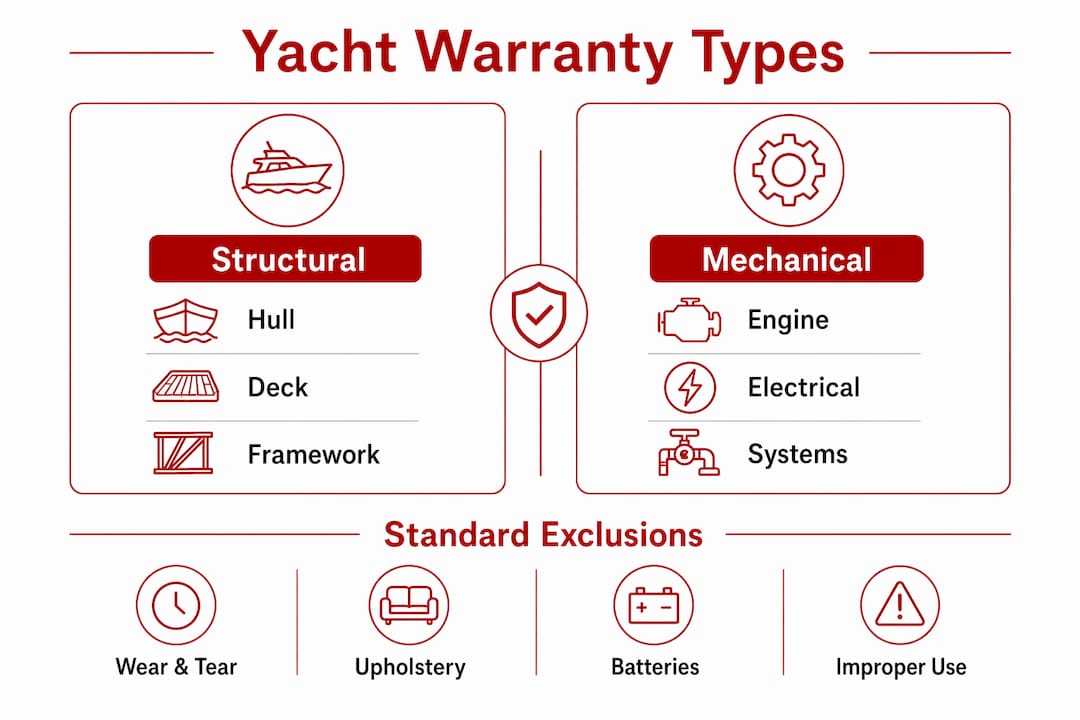
Yacht warranty coverage divides into two distinct categories: structural and mechanical. Structural coverage typically spans 5–6 years and applies to hulls, decks, flybridges, and bulkheads. Mechanical systems, including engines, generators, and onboard electronics, carry shorter coverage periods of 1–3 years. That gap matters because engine failures are far more common than hull defects in the first years of ownership.
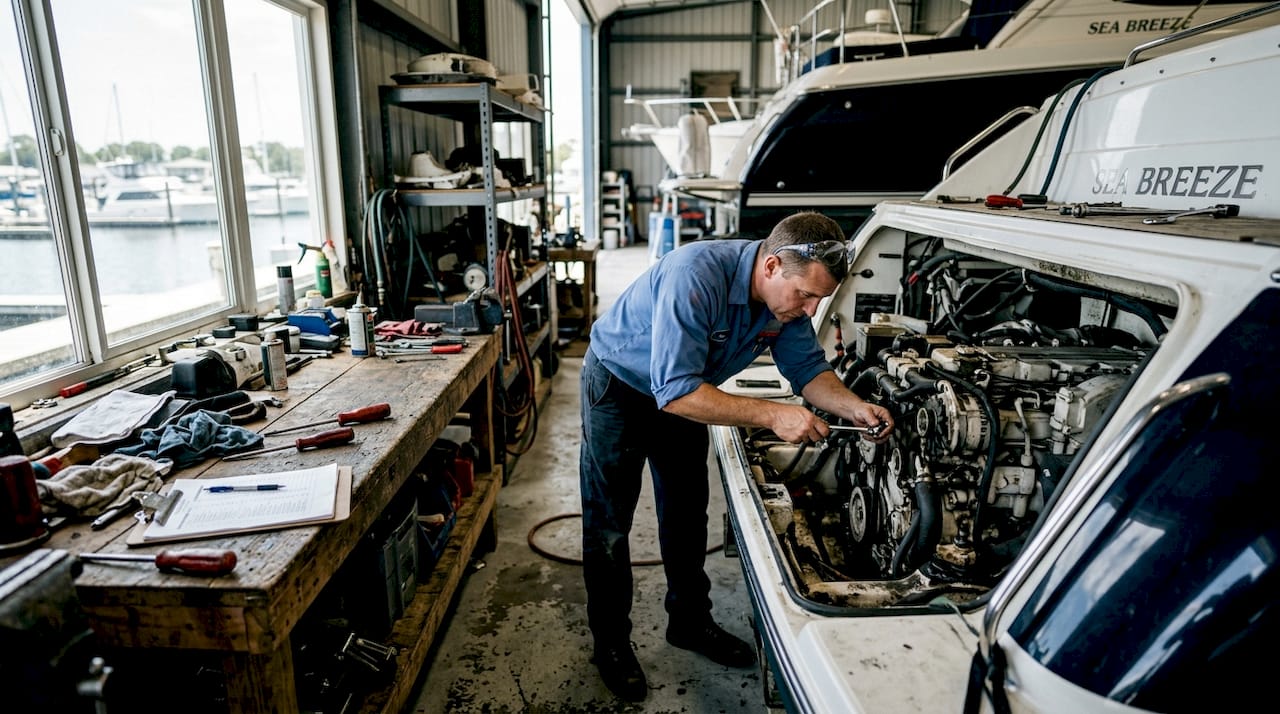
The standard industry term for this framework is “manufacturer’s limited warranty,” and it works alongside separate OEM component warranties. A yacht is composed of multiple independently warranted components, meaning your engine manufacturer, navigation system supplier, and hull builder each issue their own warranty documents. Filing a claim for a faulty chartplotter requires contacting the electronics OEM directly, not the yacht builder.
Typical yacht warranty coverage includes the following:
- Structural elements: Hull, deck, and superstructure defects caused by manufacturing faults
- Mechanical systems: Engines, transmissions, and generators within OEM warranty periods
- Onboard systems: Electrical wiring, plumbing, and HVAC installations by the builder
Standard exclusions are equally important to know. Wear and tear, upholstery, batteries, and damage from improper maintenance fall outside coverage in virtually every manufacturer’s limited warranty. Cosmetic issues like gelcoat fading are also typically excluded after the first year.
Transferable warranties add another layer of complexity. Some warranties transfer to a new owner if formal transfer procedures are followed at the time of resale, preserving the remaining coverage period. This makes warranty status a real factor in a yacht’s resale value, not just a paperwork formality.
Dica de profissional: Before signing any purchase contract, request the full warranty documentation for every major component, including OEM warranties for the engine, electronics, and navigation systems. A yacht broker experienced in contract review can help you spot gaps before they become disputes.
How do yacht owners fulfill their warranty obligations?
Fulfilling your warranty obligations requires active participation, not passive ownership. The process starts the moment you take delivery and continues through every service interval.
The first obligation is registration. OEM components must be registered within 12 months of purchase to activate full extended warranty coverage. Missing that window can permanently reduce your coverage, even if the vessel itself is still within the builder’s structural warranty period. Keeping a calendar reminder for each component’s registration deadline is one of the simplest ways to protect your coverage.
When a defect appears, the claim process follows a strict sequence:
- Document the defect immediately. Photograph the issue from multiple angles and note the date of discovery.
- Notify the warrantor in writing. A written description of the defect, supported by photos, is required for most claims.
- Submit within the notice period. Claim deadlines typically run 14–30 days from the date you discover the defect. Missing this window can result in outright claim denial.
- Use authorized service centers. Repairs performed by non-authorized technicians can void coverage entirely.
- Retain all service records. Validated records from authorized centers are required documentation for any warranty claim.
Unauthorized repairs void warranty coverage in most agreements. This is the single most common reason claims are denied. Owners who call a local mechanic for a quick fix, rather than an authorized service center, often discover the repair cost them their entire remaining warranty.
Dica de profissional: Keep a physical and digital service log for every maintenance event, including oil changes, filter replacements, and system checks. Store warranty documents, registration confirmations, and service records in a waterproof folder onboard and a cloud backup ashore.
What common challenges and misconceptions affect yacht warranty claims?
The biggest misconception in yacht warranty management is that one warranty covers the entire vessel. It does not. Each component category carries its own terms, its own notice requirements, and its own authorized repair network. Owners who treat their yacht as a single warranted product routinely file claims with the wrong party and miss critical deadlines.
Contractual ambiguity is the second major risk. Industry experts identify vague warranty clauses in purchase contracts as a leading cause of disputes and litigation between buyers and builders. Terms like “manufacturing defect” are often undefined, leaving room for disagreement about whether a specific failure qualifies for coverage.
Legal frameworks add another layer of complexity, particularly for international buyers. The Italian Civil Code, which governs many yacht construction contracts, requires defect notification within 8 days of discovery. Italian consumer warranty law also bars claims entirely after one year, with remedies ranging from repair and price reduction to full contract termination depending on defect severity. Dutch law, which applies to many Northern European yacht transactions, sets its own notice periods and documentation standards.
“Risk management around yacht warranties is crucial at the purchase contract stage. Unclear terms expose buyers to disputes and costly litigation that could have been avoided with precise contractual language from the outset.”
The practical takeaway is this: negotiate warranty scope before you sign, not after a defect appears. Buyers who accept standard boilerplate warranty language without review carry the most legal exposure. A maritime attorney reviewing the purchase contract is a cost that pays for itself the first time a major defect surfaces.
Understanding how hull protection choices interact with structural warranty terms is also worth examining. Some hull modifications can affect the validity of structural coverage if they are not pre-approved by the builder.
How do warranty obligations fit into long-term yacht ownership?
Warranty management is not a one-time task at purchase. It integrates directly into your ongoing maintenance strategy and affects both operational reliability and resale value.
Predictive maintenance programs are now central to this integration. Digital maintenance records are becoming the industry standard for demonstrating warranty compliance and qualifying for extended coverage. Manufacturers increasingly require certified digital logs, not handwritten service books, to validate extended warranty claims. Owners who adopt digital record-keeping from day one are better positioned for both warranty claims and resale negotiations.
Practical steps for integrating warranty management into ownership include:
- Verify registration and coverage status annually. Confirm that all OEM component registrations remain active and that no coverage has lapsed due to missed renewal deadlines.
- Schedule service at authorized centers. Build authorized service intervals into your annual maintenance budget, not just manufacturer-recommended intervals.
- Review warranty transferability before listing for sale. A transferable warranty with several years remaining is a concrete selling point that justifies a higher asking price.
- Consider extended service contracts. After manufacturer coverage expires, extended service contracts from reputable marine service providers fill the gap for critical systems like engines and generators.
- Consult a maritime attorney at contract signing. Legal review of purchase warranty terms costs far less than litigation over a disputed claim.
Ensuring your yacht registration remains valid is also directly tied to warranty activation for many flag-state jurisdictions. Some manufacturers require proof of valid registration before processing any warranty claim, treating unregistered vessels as outside the scope of coverage.
Dica de profissional: Set a recurring annual review date to audit all active warranties, registration documents, and service logs. Treat it like a financial audit for your vessel. Gaps discovered proactively cost far less to fix than gaps discovered during a claim.
Principais conclusões
A yacht warranty obligation is a defined legal duty requiring timely defect notification, authorized repairs, and proper documentation to maintain valid coverage across structural, mechanical, and OEM component warranties.
| Ponto | Detalhes |
|---|---|
| Structural vs. mechanical coverage | Structural warranties run 5–6 years; mechanical systems typically cover 1–3 years. |
| OEM registration deadline | Register individual components within 12 months of purchase to activate full coverage. |
| Claim notice window | Report defects in writing within 14–30 days of discovery to avoid claim denial. |
| Unauthorized repairs void coverage | Always use authorized service centers; non-approved repairs can eliminate remaining warranty rights. |
| Negotiate terms at contract signing | Vague warranty clauses cause disputes; review and clarify scope before purchase, not after a defect appears. |
The part of yacht warranties most owners learn too late
At Vesselflag, we work with yacht owners across dozens of flag-state jurisdictions, and the pattern is consistent: most warranty disputes trace back to the purchase contract, not the defect itself. Owners focus on the vessel’s condition at delivery and assume the warranty document is standard. It rarely is.
The component-by-component warranty structure is the detail that catches owners off guard most often. A single engine failure can require simultaneous claims with the yacht builder, the engine OEM, and the electronics supplier, each with different notice deadlines and authorized repair networks. Owners who discover this structure mid-crisis are at a serious disadvantage.
Digital record-keeping is the shift I’d encourage every owner to make immediately, regardless of vessel age. Certified digital maintenance logs are no longer just a convenience. They are becoming a prerequisite for extended warranty qualification and a competitive advantage at resale. The owners who treat documentation as seriously as maintenance are the ones who collect on their warranties when it counts.
The uncomfortable truth about long-term yacht warranty management is that it rewards preparation and punishes assumption. Clear contract terms, timely registrations, and meticulous service records are not bureaucratic overhead. They are the foundation of ownership that actually protects your asset.
— Vessel Flag
Vesselflag and yacht documentation compliance
Proper vessel registration is the foundation of warranty activation and legal compliance for yacht owners worldwide.
Vesselflag supports yacht owners through the full registration process, covering flag-state requirements across jurisdictions including San Marino, Malta, UK Part 1, Palau, and others. Valid registration is not just a legal requirement. Many manufacturers require proof of registration before processing any warranty claim. Vesselflag’s registration specialists help owners meet deadlines, organize documentation, and maintain compliance year after year. Whether you are registering a new purchase or verifying coverage for an existing vessel, the complete yacht registration guide at Vesselflag walks you through every step. For owners comparing registration categories, the Registo de iates vs. registo de barcos overview clarifies which classification applies to your vessel and what obligations follow.
Perguntas frequentes
What is a yacht warranty obligation?
A yacht warranty obligation is the contractual duty of a manufacturer or seller to repair or replace defects in a vessel or its components within a defined coverage period. It binds both parties: the warrantor must perform repairs, and the owner must follow claim procedures to maintain coverage.
What does a standard yacht warranty cover?
Standard yacht warranty coverage includes structural elements like hulls and decks for 5–6 years, and mechanical systems for 1–3 years, with separate OEM warranties covering engines, electronics, and navigation systems. Wear and tear, cosmetic damage, and battery replacement are typically excluded.
How long do I have to file a yacht warranty claim?
Most warranty agreements require written notice of a defect within 14–30 days of discovery. Under Italian Civil Code provisions governing many yacht construction contracts, owners must notify within 8 days, with claims barred entirely after one year.
Can I lose my yacht warranty by using an unauthorized repair shop?
Unauthorized repairs void warranty coverage in most manufacturer agreements. Always use an authorized service center for any repair that falls within the warranty period, and retain all service records as proof of compliance.
Are yacht warranties transferable to a new owner?
Some yacht warranties transfer to a new owner if formal transfer procedures are completed at the time of sale, preserving the remaining coverage period. Buyers should request written confirmation of transferability and any outstanding registration requirements before closing a purchase.