
Resumo:
- Many people believe boat brokerage is simple, but professionals manage complex negotiations, legalities, and oversight.
- Using a skilled broker protects buyers and sellers from costly mistakes, misunderstandings, and legal risks throughout the transaction process.
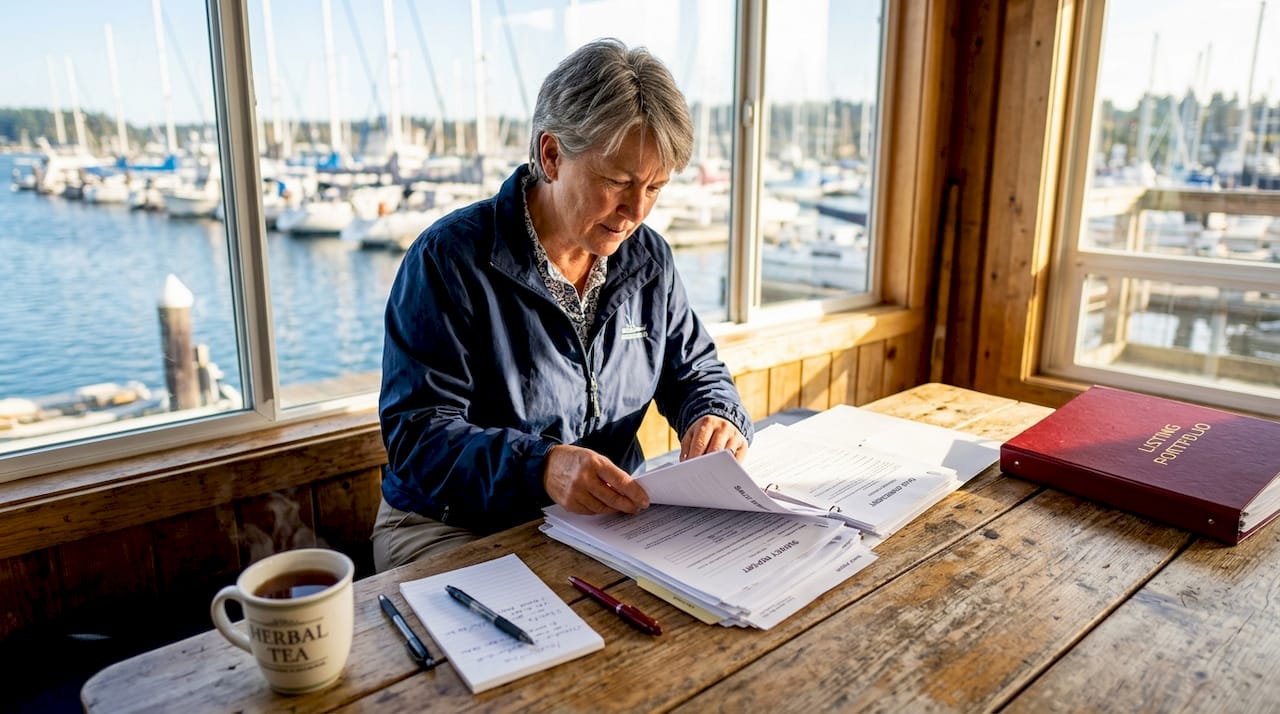
Most people assume the role of boat brokers is simple: list the boat, find a buyer, collect a commission. That assumption is wrong, and acting on it costs buyers and sellers real money. A professional boat broker manages pricing strategy, marketing, buyer screening, inspections, escrow funds, and closing documentation. They carry legal and ethical obligations that far exceed anything you’d expect from a typical sales agent. If you’re thinking about buying or selling a vessel, understanding exactly what brokers do changes how you approach the entire transaction.
Índice
- Pontos-chave
- The role of boat brokers from listing to closing
- Fiduciary duties and ethical obligations
- Boat brokers vs. boat dealers: fees and key differences
- Risks of skipping a broker in private sales
- How to choose and work with a boat broker
- My take on what brokers actually deliver
- Complete your boat purchase with Vesselflag’s registration services
- Perguntas frequentes
Pontos-chave
| Ponto | Detalhes |
|---|---|
| Brokers do far more than sell | 90% of broker work involves managing negotiations, paperwork, and legal mechanics, not just marketing. |
| Fiduciary duty protects you | Brokers are legally required to act in your best interest, keeping funds separate and disclosing all material facts. |
| Sellers typically pay the commission | O standard commission is around 10%, paid by the seller, so buyers often get representation at no direct cost. |
| Private sales carry real risk | Skipping a broker exposes both parties to escrow mishandling, hidden liens, and costly post-sale surprises. |
| Choose your broker intentionally | Ask about their representation role, license, and experience with your specific type of vessel before signing anything. |
The role of boat brokers from listing to closing
The best way to understand what boat brokers actually do is to follow a transaction from start to finish. At every stage, a broker is adding work that most clients never see.
Pricing and market analysis
Before a boat is ever listed, a qualified broker researches comparable sales, current market demand, and the vessel’s condition to recommend a realistic asking price. Overpricing kills deals and wastes months. Underpricing leaves money on the table. Getting this right requires real market knowledge, not a quick internet search.
Marketing, listings, and buyer outreach
Once priced, the broker creates professional listings with quality photos, detailed specs, and targeted distribution across multiple listing services and networks. They handle every inquiry, qualify serious buyers, and manage showings. This screening function alone saves sellers significant time and protects confidentiality during the process.
Dica de profissional: Ask your listing broker which multiple listing services they use and whether they have an active buyer network. A broker with a strong buyer network often sells faster than one relying solely on passive listings.
Inspections, surveys, and sea trials
Professional brokers manage the entire transaction lifecycle, including coordinating independent surveys and sea trials. An experienced broker helps you interpret what the surveyor finds, separating cosmetic issues from structural ones. This guidance prevents buyers from walking away from good boats over minor findings or accepting bad ones based on wishful thinking.
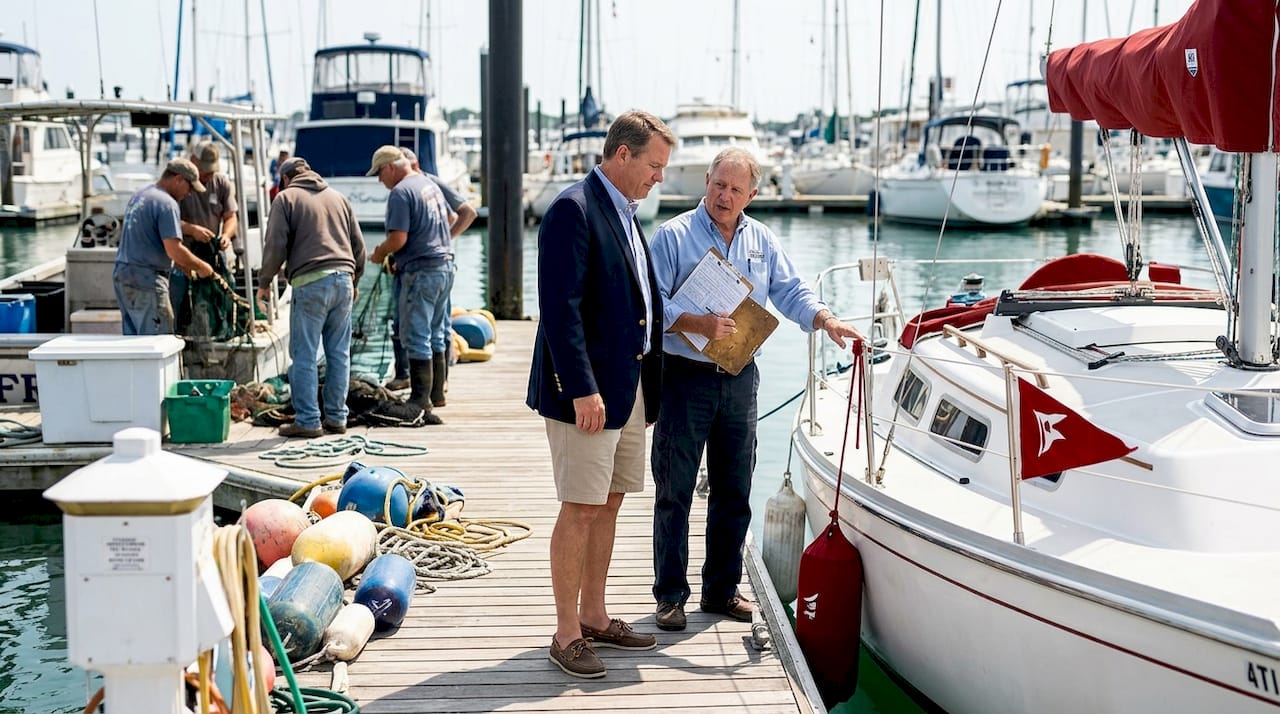
Brokers also help interpret survey findings to inform buyer decisions objectively, which protects both parties from costly disputes after closing.
Escrow and closing documentation
This is where the broker’s role becomes most critical and least visible. A standard earnest money deposit of 10% is held in a secure escrow account managed by the broker’s trust account. These funds are legally protected and separated from the broker’s operating money.
At closing, brokers assist with title checks, lien payoffs, taxes, registrations, and contracts. That means confirming no existing loans or liens are attached to the vessel, coordinating payoff letters, managing the transfer of documentation, and making sure both parties sign the correct paperwork. This is not paperwork assistance. It is legal mechanics management, and getting it wrong creates serious financial exposure.
Brokers who work across borders also assist with cross-border documentation and compliance requirements, areas where mistakes can delay or void a sale entirely.
Fiduciary duties and ethical obligations
The word fiduciary sounds formal, but its meaning is practical. A broker with a fiduciary duty to you is legally required to:
- Act with complete loyalty to your interests, not their own
- Keep your information and negotiating position confidential
- Disclose any material facts about the vessel or transaction
- Demonstrate competence in the services they perform
- Account for all funds handled on your behalf
This framework is what separates a boat broker from a random private seller. It creates real accountability. Licensed professional brokers never commingle client escrow funds with their own operating accounts and maintain auditable records per established ethical codes.
Understanding who the broker actually represents is critical. A listing broker represents the seller. A selling broker is the broker who brings the buyer. A buyer’s broker represents only the buyer’s interests. These roles can overlap or conflict.
Watch out for dual agency. When one broker represents both the buyer and the seller in the same transaction, conflicts of interest are real. Dual agency requires careful disclosure and can be mitigated by using separate brokers for each side to preserve true fiduciary representation.
If you are a buyer, ask directly at the first meeting: “Who do you represent in this transaction?” The answer tells you everything about how that broker will handle a negotiation where your interests and the seller’s interests diverge.
Boat brokers vs. boat dealers: fees and key differences
Buyers often confuse boat dealers and boat brokers, and that confusion affects their expectations. The distinction matters.
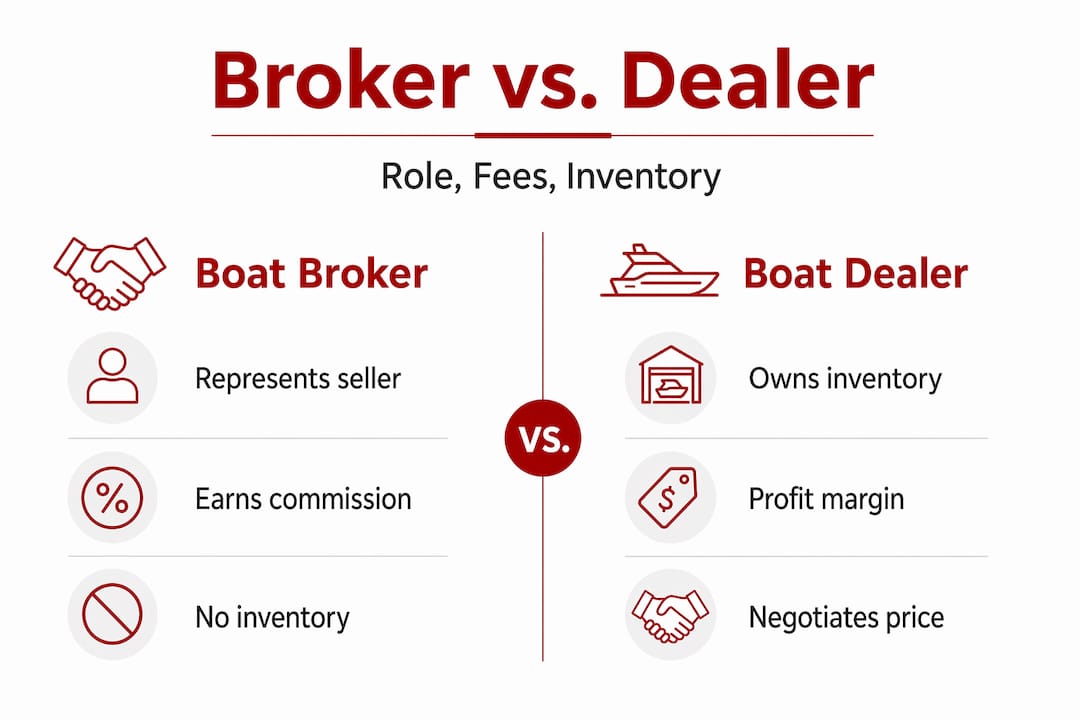
| Característica | Boat Broker | Boat Dealer |
|---|---|---|
| Inventory ownership | Sells on behalf of owners | Owns inventory directly |
| Types of boats sold | Primarily used vessels | Primarily new boats |
| Who pays commission | Seller pays (typically ~10%) | Buyer pays markup built into price |
| Fiduciary obligation | Yes, to their client | No, dealer represents themselves |
| Buyer representation | Yes, through buyer’s broker | No direct representation |
| Negotiation support | Yes, full negotiation management | Limited, price often fixed |
The typical broker commission is around 10%, paid entirely by the seller. This means a buyer can have a dedicated buyer’s broker managing their entire search, coordinating surveys, and handling negotiation without paying anything out of pocket. The commission is split between listing and selling brokers from the seller’s proceeds.
Dealers operate differently. The profit margin is built into the sale price, and the dealer negotiates from their own financial position, not yours.
Dica de profissional: If you are buying a used boat, using a buyer’s broker costs you nothing and gives you professional representation throughout. If you are buying new from a dealer, you are negotiating alone.
For sellers, a broker’s access to a qualified buyer network and their ability to manage the full transaction usually produces better net outcomes than attempting a private sale, even after accounting for the commission.
Risks of skipping a broker in private sales
Private sales are appealing because they seem to eliminate the broker’s cut. In practice, they frequently create problems that cost far more than the commission would have.
Mispricing the vessel. Without market data and comparable sales, private sellers consistently misprice boats. Overpricing extends time on market and ultimately drives a lower final sale price.
Escrow mishandling. Private sales have no structured escrow process. Deposits are handled informally, and disputes about refunds after failed surveys are common. Buying without a broker exposes buyers to escrow mismanagement risks that brokers are trained to prevent.
Hidden liens and title issues. Sellers are not always aware that financing from a previous owner is still attached to the vessel’s title. A buyer who purchases without a title check can inherit that debt. This is not hypothetical. It happens in private sales regularly.
Survey and negotiation problems. Most private buyers don’t know how to use a survey report to negotiate price adjustments. They either accept findings without adjustment or walk away from salvageable deals. Misconceptions that brokers are only salespeople deter buyers from getting help that would directly protect their investment.
Paperwork gaps. Bill of sale requirements, tax implications, and registration transfers vary by state and vessel type. Missing a step delays your ability to legally operate the vessel and can create liability.
The broker’s fee is not a luxury charge for convenience. It is payment for risk management across every one of these failure points.
How to choose and work with a boat broker
Knowing what brokers do is only useful if you know how to find a good one and work with them effectively. Here is what that looks like in practice:
- Verify licensing and credentials. Not all states require boat broker licensing, but membership in professional associations like YBAA (Yacht Brokers Association of America) signals commitment to ethical standards.
- Ask about their specialty. A broker who handles 30-foot sailboats is not automatically qualified to handle a 70-foot motor yacht. Match the broker’s experience to your vessel type and size.
- Clarify representation immediately. Before sharing any negotiating details, confirm whether the broker represents you, the other party, or both.
- Understand the listing agreement. Know the commission rate, the contract duration, and what happens if the boat sells privately during the listing period.
- Communicate consistently. A good broker keeps you informed at every stage. If you’re not hearing updates, ask for them in writing.
Dica de profissional: Request references from recent buyers or sellers who used the broker for a similar vessel. A broker who hesitates to provide references is a broker you should hesitate to hire.
Working well with a broker means treating the relationship as a partnership. Share your real budget, timeline, and priorities. The more your broker understands your situation, the better they can advocate for you in negotiation and protect your interests through closing.
My take on what brokers actually deliver
I’ve spent years working alongside buyers, sellers, and brokers across international transactions, and the pattern I keep seeing is the same. People underestimate the broker until something goes wrong, and then they wish they had one.
The value of a professional boat broker is not in the listing. Any seller can post a boat online. The value is in what happens between the offer and the closing. That is where deals fall apart. Survey disputes, lien surprises, escrow disagreements, paperwork errors at the registry level. Effective brokers anticipate and solve deal-breaking issues before closing, including coordinating with surveyors, lien holders, insurers, and regulatory bodies. That is where their expertise pays for itself.
The thing that frustrates me is the “commission confusion” trap. Buyers sometimes avoid using a broker because they think it adds cost. In most transactions it doesn’t, because the seller pays. Sellers avoid brokers because they think 10% is too much. Then they spend six months managing a failed private sale and eventually list with a broker anyway, having wasted half a year.
My honest assessment: the role of boat brokers is largely protective, not promotional. They protect your money, your time, and your legal standing. Treat them as you would an attorney or a financial advisor. The relationship is only as good as the communication you put into it.
— VesselFlag
Complete your boat purchase with Vesselflag’s registration services
Once your broker hands over the keys, the next step is getting your vessel properly registered. That part of the process matters more than most new owners realize.
Vesselflag specializes in fast, legally compliant vessel registration across multiple international jurisdictions, including San Marino, Malta, UK Part 1, Palau, and more. Whether you’re registering a newly purchased yacht or transferring an existing registration, Vesselflag’s team handles the documentation, flag selection, and compliance requirements so you don’t have to piece it together yourself.
Start with Vesselflag’s guide on yacht registration for new owners to understand your options by flag and jurisdiction. If you’re unsure whether your vessel qualifies as a yacht or a boat for registration purposes, the yacht vs. boat registration guide explains the legal distinctions clearly. For brokers handling international transactions, Vesselflag’s vessel registration for brokers resource is worth bookmarking.
Perguntas frequentes
What does a boat broker actually do?
A boat broker manages the full transaction lifecycle for buyers and sellers, including pricing, marketing, buyer screening, inspections, escrow, and closing paperwork. Listing and marketing is a small part of the total work.
Who pays the boat broker’s commission?
The seller typically pays the broker commission, which is usually around 10% of the sale price. This means buyers can often use their own broker without any additional out-of-pocket cost.
What is a fiduciary duty in boat brokerage?
Fiduciary duty means the broker is legally required to act in their client’s best interest, including keeping funds in separate trust accounts, maintaining confidentiality, and disclosing all material facts about the transaction.
Is it risky to buy a boat without a broker?
Yes. Private sales carry real risks including escrow mishandling, hidden liens, title issues, and paperwork errors. These problems can cost far more than a broker’s commission would have.
How do I choose a good boat broker?
Look for membership in professional associations like YBAA, verify their experience with your specific vessel type, and always clarify who they represent before sharing any negotiating details.