

TL;DR:
- The yacht flag determines legal jurisdiction, port access, taxes, and safety standards.
- Selecting the right flag involves considering operational needs, compliance, and support services.
- Proper documentation and ongoing compliance are essential to avoid penalties and vessel detention.
Choosing the wrong yacht flag can trigger fines, port denials, and unexpected tax burdens that no owner wants to deal with mid-voyage. The flag flying from your stern is not just a symbol. It defines your vessel’s legal identity, determines which laws apply on board, and controls where you can sail without friction. Many owners make this decision too quickly, often based on cost alone, and pay for it later. This guide walks you through everything you need to know to pick the right flag state, complete your registration correctly, and stay compliant no matter where your voyages take you.
Índice
- Understand the purpose and importance of yacht flags
- Key factors to consider before choosing a flag
- Step-by-step process to select and register your yacht flag
- Common mistakes and how to avoid them
- Why most yacht owners overcomplicate flag selection (and what actually matters)
- Get expert help choosing and registering your yacht flag
- Frequently asked questions
Principais conclusões
| Ponto | Detalhes |
|---|---|
| Flag choice impacts compliance | The flag you select determines your yacht’s legal status and ability to enter ports worldwide. |
| Key factors vary by registry | Consider taxes, privacy, inspection, and operational areas when evaluating flag options. |
| Step-by-step process saves time | Following a clear registration workflow helps ensure quick compliance and avoid costly errors. |
| Avoid common pitfalls | Understand and meet ongoing requirements to maintain global navigation rights and avoid penalties. |
Understand the purpose and importance of yacht flags
A yacht flag is not decorative. It is a legal declaration that your vessel belongs to a specific country’s registry, and that country’s laws govern your boat. This country is called the flag state, and it holds authority over safety standards, crew regulations, inspections, and liability. Every yacht must fly the flag of the country where it is registered. No exceptions exist under international maritime law.
The flag state you choose shapes your entire operational experience. It determines which ports welcome you without extra scrutiny, what taxes or fees apply, and whether your vessel qualifies for certain trade routes or charter licenses. Some flags open doors. Others quietly close them.
Here is what your flag state directly controls:
- Port entry rights: Some flags trigger mandatory inspections at certain ports, while others enjoy streamlined access.
- Tax exposure: Flag states differ dramatically on VAT obligations, import duties, and income reporting for charter income.
- Crew certification requirements: Certain registries require crew to hold specific certifications that others do not.
- Inspection frequency: Flag states with strong safety reputations often face fewer third-party audits in foreign ports.
- Insurance eligibility: Some insurers price policies based on flag state risk profiles.
“The flag state is not just an administrative formality. It is the legal backbone of your vessel’s identity in international waters.”
A common misconception is that “open registries” are always the easiest or cheapest option. Open registries, sometimes called flags of convenience, allow foreign nationals to register vessels without residency requirements. They can be legitimate and efficient, but they vary widely in quality. The IMO guidance on flag states outlines performance standards that separate well-managed registries from problematic ones.
Another misconception is that national flags always offer better protection. In practice, some smaller national registries lack the infrastructure to support owners efficiently. Reviewing compliance tips for global registration and exploring your flag options for yachts before committing is time well spent.
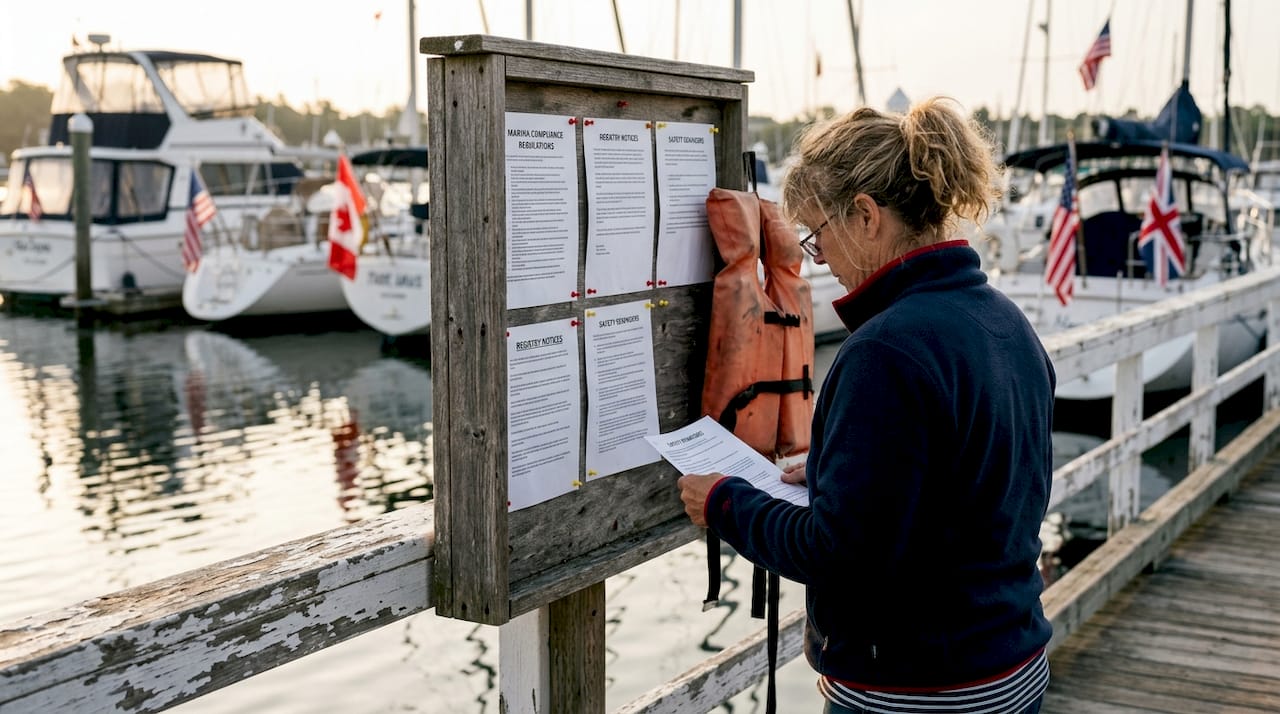
Key factors to consider before choosing a flag
Once you understand why the flag matters, the next step is matching your specific situation to the right registry. Factors like taxes, privacy, and ease of transfer vary depending on the flag registry, so a one-size-fits-all approach rarely works.
Here are the core decision points every owner should evaluate:
- Taxation: Does the flag state impose VAT on the vessel or charter income? Some registries offer significant tax advantages for commercially operated yachts.
- Privacy: Certain registries allow corporate ownership structures that shield the beneficial owner’s identity from public records.
- Inspection standards: Flags on the Paris MOU white list face fewer port state control inspections, saving you time and money.
- Port restrictions: A flag on a blacklist or gray list can result in automatic detention or denial of entry in major ports.
- Owner citizenship: Some flags require the registered owner to be a national or resident of that country. Others impose no such restriction.
| Flag state | Vantagens fiscais | Privacy options | Port access | Owner restrictions |
|---|---|---|---|---|
| Malta | Strong EU benefits | Corporate allowed | Excellent | None |
| Ilhas Marshall | Moderado | Corporate allowed | Very good | None |
| Ilhas Caimão | Strong | Corporate allowed | Very good | None |
| Reino Unido Parte 1 | Limitada | Moderado | Excellent | UK nationals preferred |
| Panamá | Moderado | Corporate allowed | Good | None |
Pro Tip: Cross-reference your chosen flag state against the Paris MOU port state control lists before committing. A flag on the white list means fewer surprise inspections in European and Atlantic ports.
Always review yacht registration best practices alongside the maritime compliance regulations relevant to your cruising area. The combination of where you sail and how you use your vessel should drive the decision, not just the upfront registration fee.
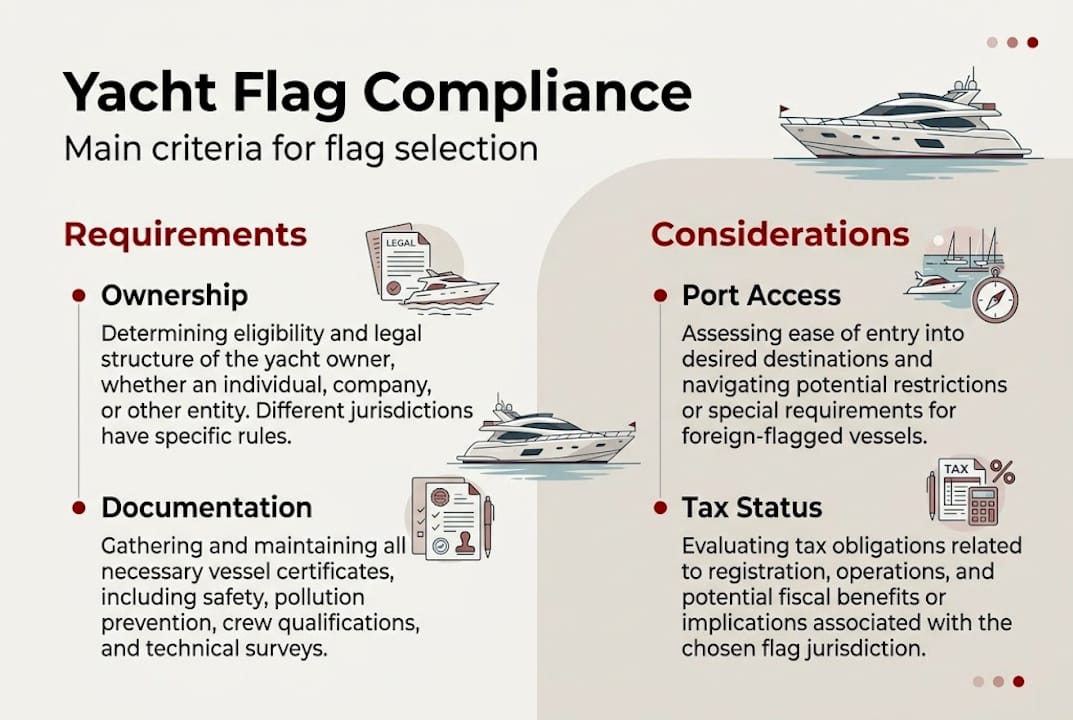
Step-by-step process to select and register your yacht flag
With your requirements clear, follow this process to select and secure your flag without unnecessary delays. Proper preparation streamlines the flag registration process and prevents costly errors that can set your timeline back by weeks.
Here is the sequence to follow:
- Assess your operational profile. Define where you will sail, whether the vessel is private or commercial, and your ownership structure. These answers narrow your flag state options immediately.
- Gather your core documents. You will need proof of ownership, a tonnage measurement certificate, a bill of sale, and any existing compliance certificates. Some registries also require a builder’s certificate for newer vessels.
- Select your flag state. Use the comparison table above and consult the flag state registration basics resource to finalize your choice.
- Submit your application. Most registries now accept digital submissions. Ensure every document is notarized or apostilled as required by the specific flag state.
- Await your provisional certificate. Many registries issue a provisional certificate within days, allowing you to sail legally while the full registration processes.
- Receive your official certificate of registry. This is your vessel’s primary legal identity document. Store it securely on board at all times.
| Registration stage | Key documents needed | Typical timeline |
|---|---|---|
| Application submission | Ownership proof, bill of sale | Day 1 |
| Document review | Tonnage cert, compliance docs | 1 to 5 days |
| Provisional certificate | All above approved | 2 to 7 days |
| Full certificate issued | Final inspection report | 2 to 6 weeks |
Pro Tip: Use the international registration guide to prepare a document checklist before you start. Missing a single notarized page can delay your entire application by weeks.
Always confirm the efficient registration requirements for your chosen flag state in 2026, as some registries have updated their document standards this year.
Common mistakes and how to avoid them
Following the procedure correctly is only half the battle. Many owners complete their initial registration without issues, then run into problems later due to avoidable oversights. Avoiding registration pitfalls helps maintain compliance and reduces legal risk throughout the vessel’s life.
Here are the most frequent mistakes and how to sidestep each one:
- Ignoring port restriction compatibility. Registering under a flag without checking its standing with the port state control authorities in your cruising region is a serious oversight. Always verify the flag’s MOU status before signing anything.
- Underestimating ongoing compliance obligations. Registration is not a one-time event. Most flag states require annual renewals, safety surveys, and updated crew documentation. Missing these deadlines can invalidate your registration.
- Choosing solely on initial cost. A low registration fee can mask expensive annual fees, mandatory survey costs, or hidden compliance requirements. Calculate the total cost of ownership over three years before deciding.
- Letting certificates expire. An expired certificate of registry or safety certificate can result in vessel detention. This is one of the most preventable problems in yacht ownership.
- Not updating ownership records after a sale or corporate restructure. Flag state records must reflect the current legal owner. Discrepancies create serious legal exposure.
“The most expensive mistake in yacht registration is not the wrong flag. It is the right flag managed poorly.”
Pro Tip: Build a compliance calendar with renewal dates for your certificate of registry, safety surveys, radio licenses, and crew certifications. Set reminders 60 days in advance for each. Review the essential compliance tips and the NauticExpo compliance guide for a full picture of what needs tracking.
Also revisit your flag selection choices if your cruising area or ownership structure changes. What worked three years ago may not be optimal today.
Why most yacht owners overcomplicate flag selection (and what actually matters)
After guiding hundreds of owners through this process, we have noticed a consistent pattern. Owners spend weeks comparing minor tax differences between registries while ignoring the factors that actually determine day-to-day experience: port access, inspection frequency, and the quality of support from their registry.
The truth is, the best flag state is rarely the one with the lowest fee or the most exotic jurisdiction. It is the one that matches your operational reality and is backed by a registry that answers the phone when something goes wrong.
Owners who focus obsessively on marginal tax savings often end up with a flag that creates friction at every port. Meanwhile, owners who prioritize compliance standing and operational fit sail with far fewer headaches.
Our honest recommendation: narrow your choices to flag states on the Paris MOU white list, confirm they support your ownership structure, and then choose based on service quality and support. The registration best practices framework we follow consistently delivers better outcomes than chasing the cheapest option. Simplify the decision and you will make a better one.
Get expert help choosing and registering your yacht flag
Navigating flag state options, document requirements, and compliance obligations is manageable when you have the right support from the start.
Em VesselFlag.com, we work directly with yacht owners to match their operational needs with the right flag state, handle documentation, and keep registrations current. Whether you are registering for the first time or switching flags, our team removes the guesswork. Explore your options and register your yacht flag with confidence, or start with our complete yacht registration guide to understand every step before you commit. Expert guidance makes the process faster, cleaner, and far less stressful.
Frequently asked questions
Why does my yacht need a flag of registration?
Your yacht’s flag determines its legal jurisdiction and is required for international travel and port access. Every vessel must fly a registered flag under international maritime law.
Which countries are most popular for yacht flag registration?
Marshall Islands, Malta, and the Cayman Islands are widely chosen for their flexible rules and favorable compliance environments. Taxes, privacy, and transfer ease vary significantly between these registries.
What documents do I need to register my yacht flag?
Typically, you need proof of ownership, tonnage certification, and compliance documentation from the chosen flag state. Proper preparation prevents delays and costly errors during the application process.
Can I change my yacht’s flag after registration?
Yes, you can re-register under a different flag, but you must comply with all legal, documentation, and inspection requirements of the new flag state. Ease of transfer varies depending on the registry you are moving to.