
TL;DR:
- Flying the San Marino flag on a yacht signifies a recognized, stable registry with digital efficiency, security, and charter flexibility. However, its absence from the Paris MoU list requires owners to consider port inspection implications, especially in European ports. As a modern alternative, San Marino is reshaping yacht registration by blending legitimacy with innovative, paperless processes.
Not all flags are equal on the water. While many yacht owners treat flag selection as a formality, the choice of registry can define your legal standing in every port you visit, determine your charter flexibility, and affect the speed of your paperwork. The San Marino flag is one of the most misunderstood options in the maritime world, partly because San Marino is a landlocked microstate in central Italy with no coastline whatsoever. Yet its yacht registry is growing in reputation, built on digital efficiency, genuine IMO alignment, and a surprisingly clean compliance framework that deserves serious attention from owners and brokers alike.
Índice
- San Marino flag: Symbolism, history, and design
- Practical dimensions and usage for yachts
- San Marino yacht registry: Digital process and benefits
- San Marino vs. established registries: What’s different?
- Why the San Marino flag is changing the yacht registry landscape
- Considering San Marino? Your next step in yacht registration
- Frequently asked questions
Principais conclusões
| Ponto | Detalhes |
|---|---|
| Flag symbolism matters | The San Marino flag represents liberty and peace, combining national pride with maritime recognition. |
| Digital registry advantages | San Marino’s registry stands out for its online process and efficient compliance, especially for modern yachts. |
| Know your compliance | Understanding international flag dimensions and requirements prevents costly mistakes at port or inspection. |
| Choose the right flag | Comparing new and established registries helps owners navigate fees, recognition, and regulatory ease for their needs. |
San Marino flag: Symbolism, history, and design
With that context, let’s break down what makes the San Marino flag unique for yacht owners.
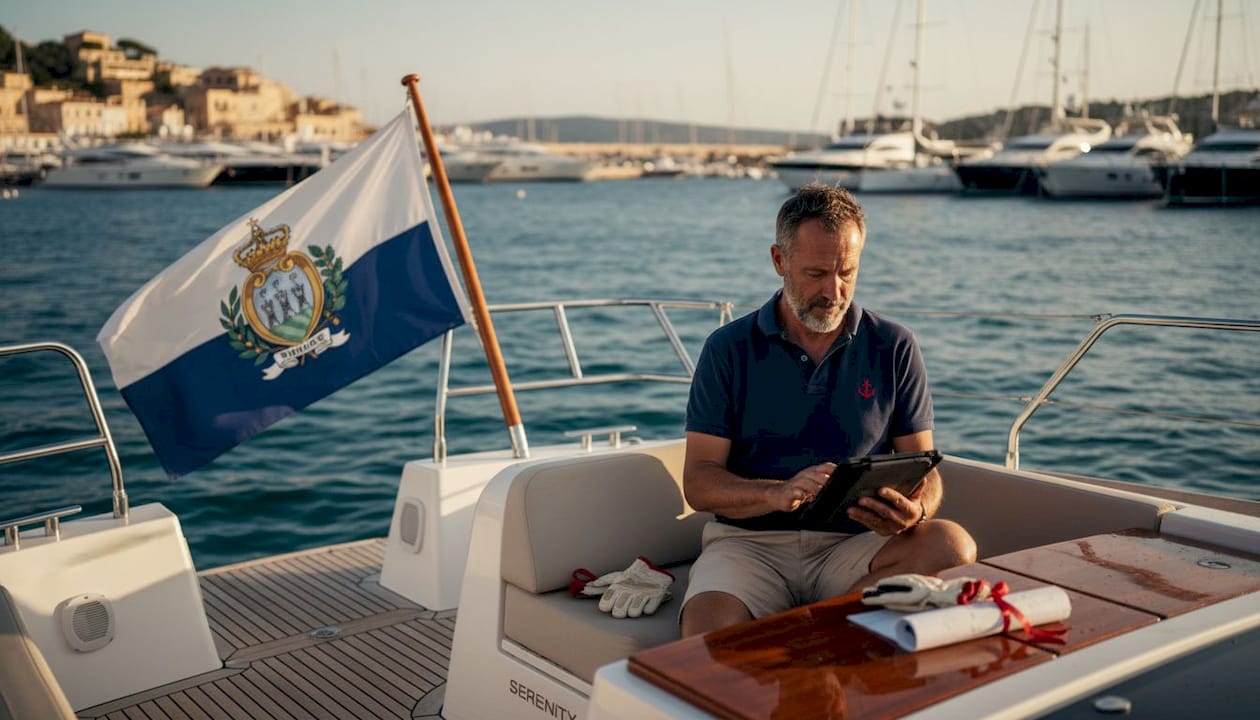
The San Marino flag is immediately recognizable. It carries a calm, authoritative visual weight that reads well on open water. The flag consists of two equal horizontal bands: white on top and light blue on the bottom, with the national coat of arms centered. This two-color design keeps the flag clean and identifiable from a distance, which matters when you’re navigating crowded marinas or being inspected by port authorities.
The coat of arms is where the real storytelling happens. The shield features three green mountains each topped by a silver tower, representing the three fortresses of Guaita, Cesta, and Montale that sit atop Mount Titano. Flanking the shield are laurel and oak branches, and beneath it sits the motto “LIBERTAS,” meaning liberty. This is not decorative branding. These symbols represent San Marino’s claim as one of the world’s oldest surviving republics, founded in 301 AD, and reflect a genuine tradition of independence.
O white symbolizes liberty and peace, positioned above the blue, which represents the sky over Mount Titano. Together, these colors communicate sovereignty and calm, both fitting for a vessel flying the flag in international waters. The current design was formally adopted in 1862 and received a refined update to the coat of arms in more recent decades.
For yacht owners, the symbolism is more than aesthetic. Flying a flag with a strong national identity and centuries of governance history carries a different message than flying a generic offshore registry flag. It signals a registry with governmental backing and a stable legal framework.
Key visual elements at a glance:
- Two horizontal bands: white (top) and light blue (bottom)
- Coat of arms: centered, featuring three towers on green mountains
- Motto: “LIBERTAS” (Liberty)
- Branches: laurel on the left, oak on the right
- Crown: positioned above the shield
“The San Marino flag communicates sovereignty through simplicity. Its design has remained stable for over 160 years, which in vexillology terms is a mark of institutional confidence.”
Practical dimensions and usage for yachts
Understanding its symbolism, let’s get practical about what the flag looks like and how it must be used at sea.
When you’re flying the San Marino flag on your vessel, getting the dimensions right is not optional. It is a compliance issue that port authorities and customs officials can and do check. The standard proportions are 3:4, but a 2:3 ratio is permitted for international use. Most yacht owners opt for 2:3 since it conforms to the proportions used by the majority of maritime flags and fits standard marine flag hardware more easily.
Here’s a quick reference for how these dimensions play out in practice:
| Use Case | Recommended Ratio | Notes |
|---|---|---|
| National/official use | 3:4 | Required for governmental vessels |
| International maritime use | 2:3 | Standard for private and commercial yachts |
| Courtesy flag (smaller) | 2:3 | Typically flown at starboard spreader |
| Racing events | 2:3 | Check individual race authority rules |
Placement matters just as much as proportion. On a yacht, the San Marino flag should be flown at the stern as the ensign when in San Marino registered waters, and as a courtesy flag at the starboard spreader when entering foreign jurisdictions. Mixing these up is a genuine compliance risk, particularly in ports where customs officials apply strict flag protocol.
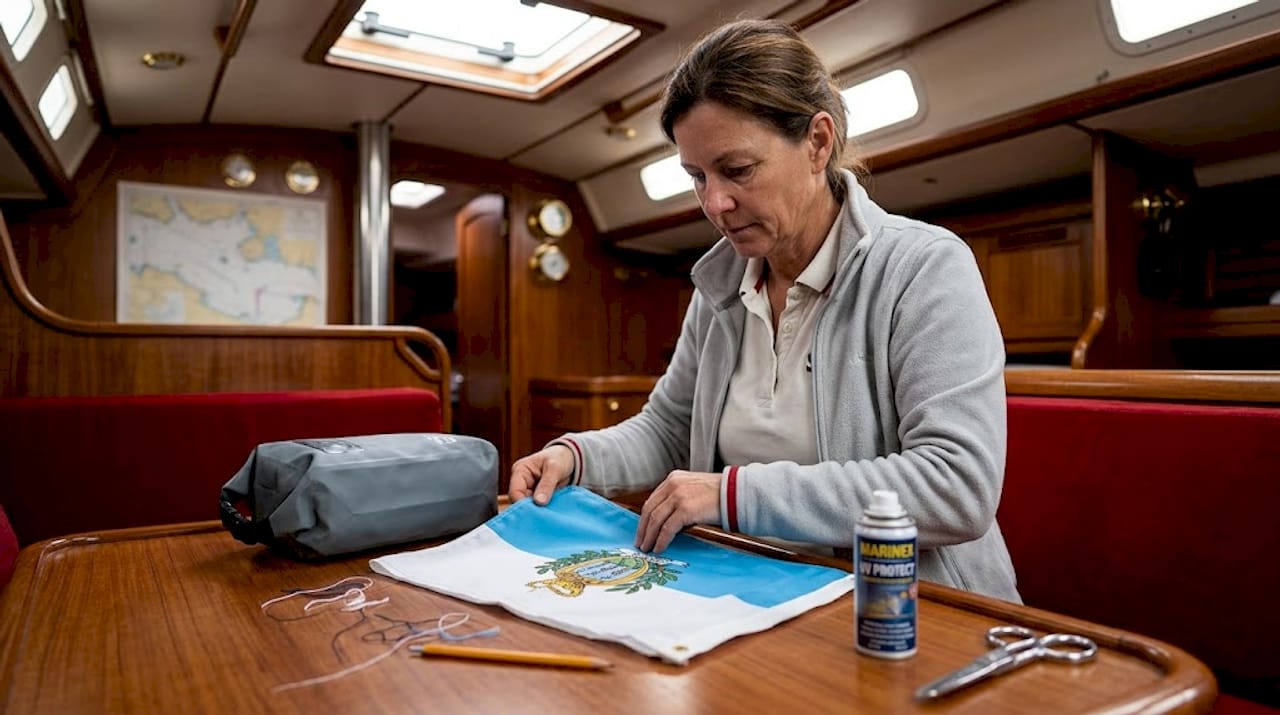
Pro Tip: Always carry a spare San Marino ensign in a waterproof bag. Flags degrade quickly in saltwater environments, and presenting a faded or torn ensign during a port inspection can trigger unnecessary scrutiny from officials.
The quality of the flag fabric also matters. A UV-resistant, marine-grade nylon flag will hold its color contrast between the white and light blue bands far longer than a standard fabric. This is not vanity. The coat of arms, with its intricate towers and branches, needs to remain legible for inspectors to quickly identify the registry jurisdiction.
San Marino yacht registry: Digital process and benefits
Once you’ve chosen to fly this flag, it’s important to understand the logistics of registering under it.
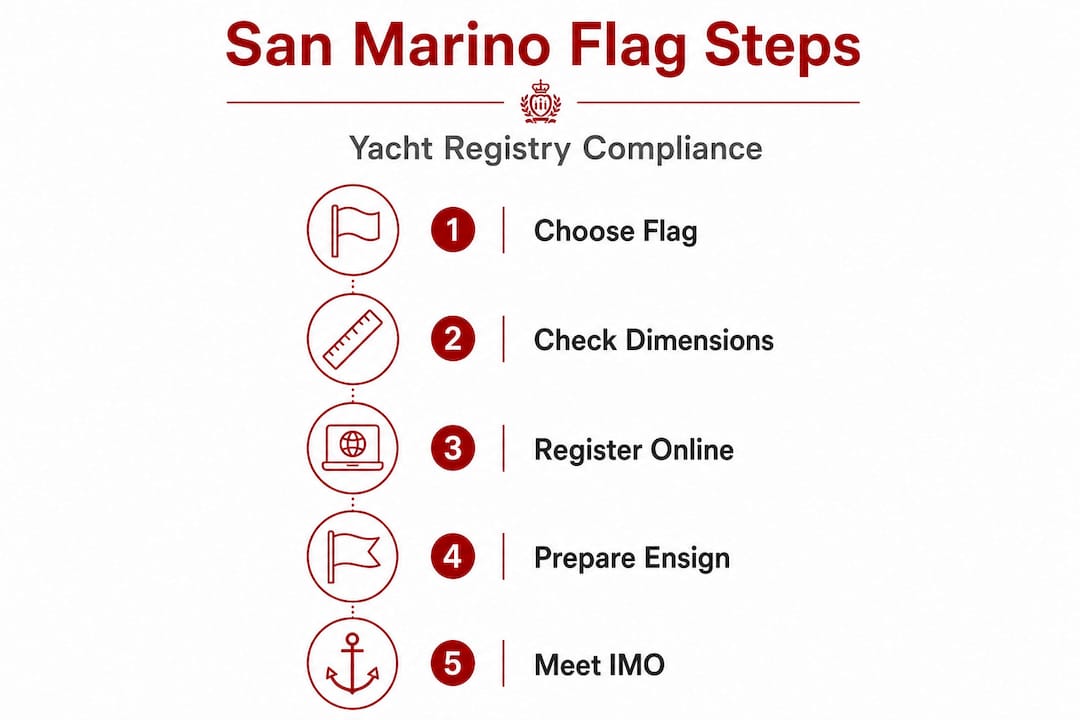
The San Marino yacht registry operates on a distinctly modern model. If you’ve dealt with traditional registries that require couriered originals, in-person appointments, and weeks of waiting, the San Marino process will feel refreshingly different. The entire workflow is digital, paperless, and accessible to foreign owners, who are required to appoint a local resident agent at a cost of approximately €100 to €150 per year. This agent acts as the official point of contact for the registry and handles any formal communications on your behalf.
Here’s what the registration process typically involves:
- Digital document submission: No paper originals required; scanned or electronically signed documents are accepted
- Local resident agent: Mandatory for foreign owners; low annual cost relative to other jurisdictions
- Charter flexibility: Private yachts can be used for bareboat charter for up to 84 days per year without reclassifying as a commercial vessel
- Mortgage registration: Available through the registry, useful for owners using vessel financing
- IMO compliance: Standard for new vessels; older vessels may require additional surveys
The 84-day charter rule is particularly attractive. Many owners want to offset running costs by chartering their vessel occasionally, but switching to full commercial registration involves significantly more regulatory burden. San Marino’s 84-day private charter window offers a practical middle ground.
For older vessels, the registry requires surveys by authorized inspectors to confirm IMO compliance before registration is finalized. This adds a step for legacy yacht owners but actually protects them by ensuring their vessel meets current international safety standards before it carries a flag and sails internationally.
If you want to explore San Marino yacht registration in detail, or need clarity on registry compliance requirements, those resources will walk you through what to prepare before you apply.
Pro Tip: Gather your vessel’s construction certificate, purchase agreement, and any existing survey reports before starting the registration process. Having these ready reduces delays significantly, especially for vessels built more than 10 years ago.
San Marino vs. established registries: What’s different?
To fully evaluate San Marino’s appeal, let’s compare it directly to older, better-known registers.
San Marino is a relatively new player in the yacht registry space, and that comes with both advantages and limitations. Understanding where it fits compared to established flags is essential before you commit.
| Feature | São Marinho | Established flags (e.g., Malta, Marshall Islands) |
|---|---|---|
| Process type | Fully digital, paperless | Mixed: paper documents often required |
| Local agent requirement | Yes, ~€100-150/year | Varies; often more expensive |
| Charter flexibility | Up to 84 days/year (private) | Jurisdiction-dependent |
| Paris MoU listing | Not currently listed | Many are listed |
| IMO alignment | Sim | Sim |
| Velocidade de processamento | Fast (days to weeks) | Often weeks to months |
| Mortgage registration | Available | Standard in most established registries |
The Paris MoU (Memorandum of Understanding on Port State Control) listing is the most significant current limitation. San Marino is not yet Paris MoU listed, which means vessels flying its flag may face additional inspection scrutiny in certain European ports. This is worth factoring into your cruising plans, particularly if you regularly call at ports where Paris MoU inspections are routine.
That said, IMO alignment means San Marino is far from an unrecognized flag. It is accepted in the vast majority of international waters and ports. For owners who cruise the Caribbean, the Mediterranean outside strict Paris MoU enforcement zones, or the Pacific, this is rarely a practical obstacle.
How do you decide if San Marino fits your situation? Work through these considerations in order:
- Identify your primary cruising region and check whether Paris MoU compliance is a regular requirement there
- Assess your vessel’s age and whether you will need an additional survey for IMO compliance
- Evaluate your charter plans and whether the 84-day private charter window meets your needs
- Compare total annual costs including agent fees, registration fees, and any required surveys
- Review your financing structure and confirm that the San Marino mortgage registration process works with your lender
For a direct comparison across flags, the San Marino vs Malta vs Poland guide covers the key differentiators in depth. If you’re also considering Marshall Islands flag registration, that route offers stronger Paris MoU coverage but involves different cost and process dynamics. You might also want to review a Florida yacht registration comparison if you’re operating primarily in US waters.
Why the San Marino flag is changing the yacht registry landscape
With the options compared, what does the rise of the San Marino flag signal for yacht registry practices worldwide?
Here’s a view that doesn’t get enough attention: San Marino’s registry matters not just for what it offers today, but for what it represents as a direction for the industry. For decades, the yacht registry world was dominated by two models. You had the traditional flags of maritime nations with decades of bureaucratic process, paper documentation, and slow timelines. And you had “flags of convenience,” which offered cheap, fast registration with minimal oversight and a reputation that made port inspectors reach for their clipboards.
San Marino doesn’t fit cleanly into either category. It is a legitimate sovereign state with real governmental backing and a genuine commitment to IMO compliance. But it has built its registry on digital infrastructure rather than legacy systems, which means it can offer the speed and accessibility of a flag of convenience without the associated compliance stigma. That’s a meaningful disruption.
We’ve seen this pattern before in other industries. When digital-first challengers enter a legacy market, the incumbents often dismiss them as too new, too small, or too untested. Then the challengers earn credibility through track record, and the incumbents scramble to modernize. San Marino’s registry is still building that track record, which is precisely why the Paris MoU gap needs watching. It’s the clearest signal of how the registry’s credibility is perceived by the port state control community.
The owners who benefit most from San Marino right now are those with newer vessels, straightforward cruising plans, and a willingness to be early adopters of a registry that is genuinely improving. The compliance and protection trends in 2026 suggest the registry is moving in the right direction, but owners with complex commercial operations or heavy European port schedules should factor the Paris MoU gap into their decision.
The honest advice: watch the registry’s MoU status over the next two to three years. If San Marino achieves Paris MoU listing, which is a realistic trajectory given its IMO alignment and governance structure, its position in the market will strengthen considerably. Getting registered now means you’re already familiar with the system when that recognition arrives.
Considering San Marino? Your next step in yacht registration
Ready to move from research to registration? Here’s how to get started.
Em VesselFlag.com, we work directly with yacht owners and brokers navigating exactly this kind of decision. The San Marino registry is one of the most requested options we handle, and for good reason: its digital process, competitive agent fees, and charter flexibility make it a genuinely strong fit for a broad range of vessels and ownership structures.
Whether you’re ready to register under the San Marino flag today or still comparing options, we can help you move forward with confidence. If you’re still working through the fundamentals, our yacht vs boat registration differences guide clarifies exactly how vessel classification affects your registration path. For a broader comparison, the vessel registration guide for San Marino, Malta, and Poland puts all three options side by side so you can choose with full information.
Frequently asked questions
What are the required dimensions for a San Marino flag on a yacht?
The standard proportions are 3:4, but a 2:3 ratio is permitted for international use, which is the size most yacht owners fly as their ensign or courtesy flag.
Why do yacht owners choose the San Marino registry?
Owners are drawn to San Marino for its fully digital process, low annual agent fees of approximately €100 to €150, and the ability to charter privately for up to 84 days per year without reclassifying the vessel.
Is the San Marino registry recognized globally for compliance?
San Marino aligns with IMO requirements and is accepted in most international waters, but it is not yet Paris MoU listed, which can result in additional inspections in certain European ports.
Are there special requirements for older yachts registering under San Marino’s flag?
Yes. Older vessels require surveys conducted by authorized inspectors to confirm IMO compliance before registration is completed, which adds a preparation step for legacy yacht owners.