

Reflagging a vessel means formally deregistering it from its current flag state and registering it under a new one, transferring legal jurisdiction, tax treatment, and compliance obligations along with it. The immediate first move is appointing a resident agent or contacting the new flag administration directly to confirm eligibility. The single biggest risk to your timeline is a slow deletion certificate or unresolved mortgage consent from the outgoing registry.
En resumen:
- Reflagging can take six to twelve weeks if there are no mortgage issues or missing certificates, with provisional registration possible in days.
- The deletion certificate from the outgoing registry and mortgagee consent are the primary delays that slow down the process.
- Conducting the flag-in survey early and having all documentation staged can prevent inspections from extending beyond one or two days.
- Using a specialist for coordination reduces rejected applications and shortens gaps between deletion and permanent registration.
- For vessels with mortgages or complex requirements, outsourcing the process minimizes delays and operational disruptions.
Índice
- Change of Flag Procedure: The Step-by-Step Checklist
- Which documents and certificates do you need?
- How do change-of-flag surveys work?
- What’s a realistic reflagging timeline?
- Special cases: bareboat, at-sea reflags, and commercial vessels
- What to do in the first 90 days after reflagging
- How VesselFlag Reduces Reflagging Friction
- When Should You Outsource Your Reflag?
- Ready to Change Your Vessel’s Flag?
- Sources
- Preguntas frecuentes
Change of Flag Procedure: The Step-by-Step Checklist
A clean reflag runs through a predictable sequence. Skip a step or work them out of order, and you’ll likely end up waiting on a document you could have requested weeks earlier.
- Choose your route. Decide between permanent registration and bareboat (temporary) charter registration. Permanent registration transfers full ownership records; bareboat suits vessels under charter arrangements where the underlying registry stays intact.
- Appoint a resident agent. Most flag states require a local representative to receive legal correspondence and file paperwork on the owner’s behalf.
- Confirm ownership and mortgage status. Pull your certificate of ownership and check whether a mortgage is registered against the vessel. If it is, you’ll need the mortgagee’s written consent before anything else moves forward.
- Apply to the new flag administration. Submit the application along with class society confirmation showing the vessel’s certificates are current and free of outstanding recommendations, a requirement most administrations expect from recognized organizations handling the transfer file.
- Schedule and complete the flag-in survey. The new flag state or its appointed classification society inspects the vessel to confirm it meets that jurisdiction’s standards.
- Request deletion from the prior registry. This produces the deletion certificate, the single document most likely to hold up your whole timeline.
- Obtain provisional registration, if the new flag state offers it, so the vessel can operate legally while permanent paperwork finalizes.
- Move to permanent registration once deletion, survey, and documentation all clear.
En IMO’s recommended transfer procedure exists specifically to keep losing and gaining administrations coordinated through these steps, which is why skipping direct contact between the two rarely ends well.
Which documents and certificates do you need?
Gather these before you file, not after the administration asks for them:
- Certificate of registry and ownership/title evidence — the foundation document proving who legally owns the vessel.
- IOPP Certificate (International Oil Pollution Prevention), confirming compliance with pollution-prevention requirements.
- ISM/SMC and DOC (Safety Management Certificate and Document of Compliance), required for commercial vessels operating under the ISM Code.
- MLC compliance records, if the vessel carries crew under the Maritime Labour Convention.
- Radio and MMSI documentation, showing your current call sign and Maritime Mobile Service Identity assignment.
- Class certificates, current and free of outstanding recommendations from your classification society.
- Mortgagee consent or discharge letter, mandatory if any mortgage is registered against the vessel.
- Certificado de baja from the prior registry, the document that formally closes out your old flag registration.
Translated and notarized copies trip up more applications than any missing certificate. If your documents aren’t in the new flag state’s working language, get certified translations lined up early. Some administrations, including Malta under Technical Notice IRO.1, accept digital certificate submissions from the recognized organization handling your file, which can shave days off a paper-only process.
How do change-of-flag surveys work?

Survey scope isn’t arbitrary. It’s set largely by where your existing certificates sit relative to their anniversary dates. A vessel three months from its next scheduled survey gets a lighter inspection than one that’s overdue.
Classification societies and recognized organizations authorized by the new flag state conduct these surveys, following procedural baselines like IACS PR 28 Rev.2, which most administrations and ROs treat as the working standard for what a change-of-flag survey should cover.
Typical checks include:
- Hull and structural condition against class records
- Machinery and safety equipment functionality
- Verification against existing certificates rather than a full re-survey from scratch
Many registries, Portugal’s DGRM among them, recognize prior satisfactory surveys, so a recently surveyed vessel often gets a shorter inspection window than one nearing the end of its certificate cycle.
Consejo de experto: Request your flag-in survey date as early as possible and have all class documentation staged before the surveyor arrives. A disorganized document set is the most common reason a one-day survey turns into three.
Budget a single working day for a straightforward pleasure vessel in good standing. Commercial vessels with more extensive certification typically need two to three days.
What’s a realistic reflagging timeline?
Clean cases, meaning no mortgage complications and a vessel with current certificates, commonly finish in six to twelve weeks from application to permanent registration. Provisional registration, when offered, can have you operating under the new flag in a matter of days while the permanent paperwork catches up.
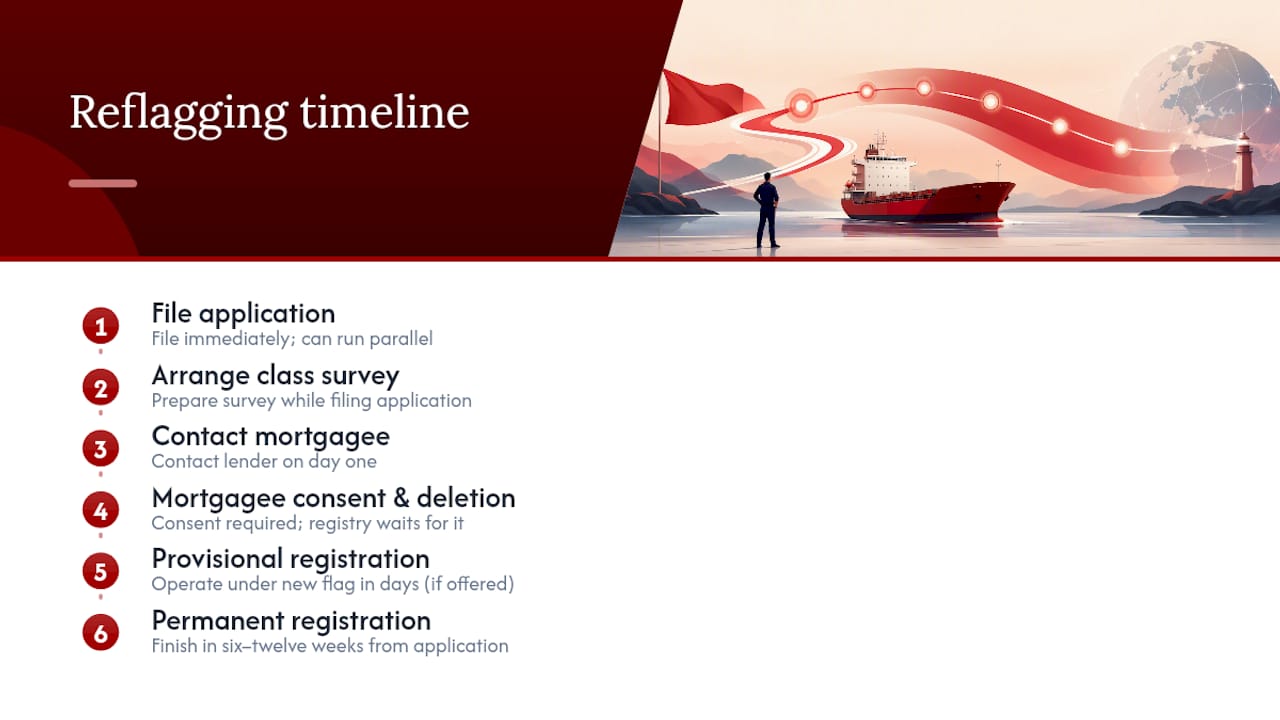
The bottlenecks are almost always the same two things: the deletion certificate from the outgoing registry, and mortgagee consent when a loan is registered against the vessel. Mortgagees aren’t always fast movers, and a registry won’t issue a deletion certificate until that consent is in hand.
You can compress a lot of this by running steps in parallel instead of in sequence. File your new-flag application while you’re still arranging the class survey. Contact the mortgagee on day one, not after the survey clears. That single habit, contacting the lender immediately rather than waiting for other pieces to fall into place, is the most consistent difference between a six-week reflag and a four-month one.
Owners who want a fuller breakdown of where delays typically surface can review a detailed flag change timeline covering each stage in sequence.
Special cases: bareboat, at-sea reflags, and commercial vessels
Not every reflag follows the standard permanent-registration path.
- Bareboat (parallel) registration suits vessels under charter where you want a temporary flag change without severing the underlying registry. It’s faster to arrange but doesn’t replace the permanent registration if that’s your end goal.
- Changing flag while the vessel is at sea is possible but adds coordination risk. Registry guidance on at-sea changes flags increased exposure to port-state control scrutiny during the transition window, since inspectors may question which flag state actually has jurisdiction mid-voyage.
- Commercial vessels carry more moving parts: DOC audits, company-level compliance reviews, and often more complex mortgage structures involving multiple lenders. A step-by-step commercial registration guide covers the additional certification commercial operators need beyond the pleasure-craft baseline.
What to do in the first 90 days after reflagging
Getting the new flag isn’t the finish line. A handful of follow-up tasks keep you compliant once the certificates are issued.
- Place your final statutory certificates on board and archive the prior flag’s documents for your records, following the boat registration decal regulations applicable in your state.
- Update your MMSI, AIS transponder, and call sign to reflect the new flag registration.
- Notify insurers and any charter partners of the flag change, since policies and charter agreements often reference flag state explicitly.
- Confirm the mortgage has been re-registered against the vessel under the new flag, if applicable.
- Schedule any surveys that were deferred or issued only provisionally during the transfer.
How VesselFlag Reduces Reflagging Friction
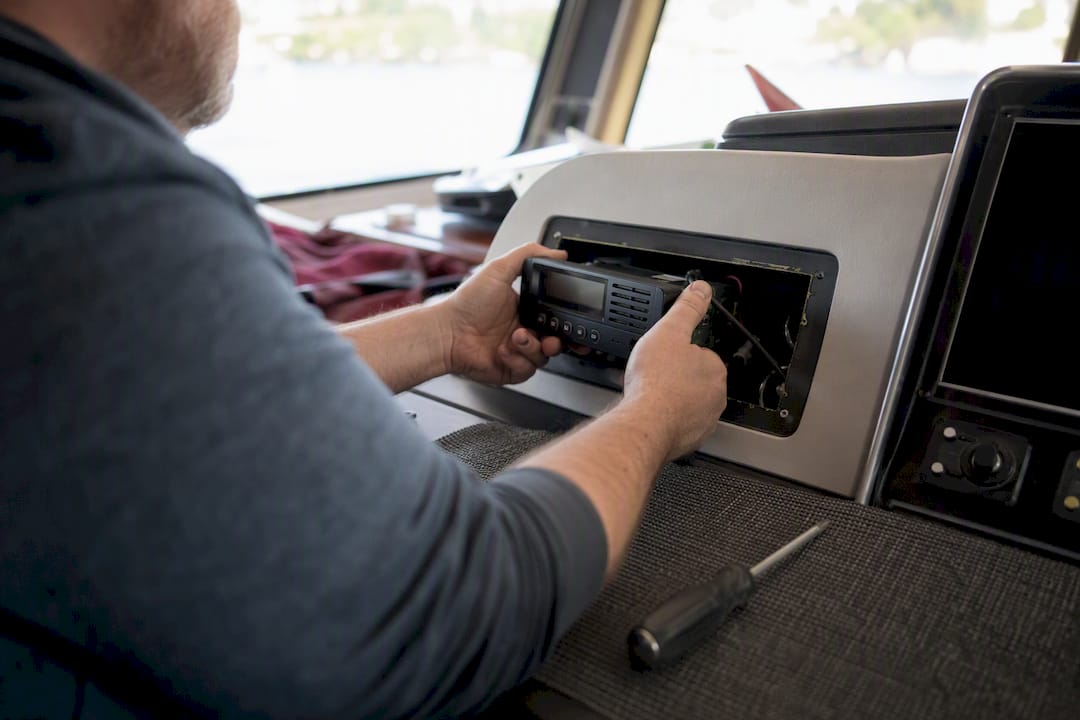
VesselFlag handles the pieces that most commonly stall a reflag: resident agent appointment, document assembly, mortgagee liaison, and MMSI/AIS setup under the new flag. Owners working with a specialist tend to see fewer rejected applications and shorter gaps between deletion and permanent registration, because someone is chasing the mortgagee and the class society in parallel instead of waiting on both.
When Should You Outsource Your Reflag?
Mortgaged vessels, commercial fleets, and owners working against a tight operational window benefit from bringing in a specialist. The coordination between class, mortgagee, and two flag administrations is where DIY timelines usually fall apart. If you own a small pleasure craft with clean title and no mortgage, you can reasonably handle the paperwork yourself. Either way, start with an eligibility review before you file anything.
— VesselFlag
Ready to Change Your Vessel’s Flag?
Handling a reflag yourself means juggling two flag administrations, a classification society, and possibly a mortgagee, all while trying to keep your vessel operational. VesselFlag runs that coordination for you: one point of contact managing resident agent appointment, document assembly, mortgage liaison, and MMSI/AIS setup under your chosen flag.
Owners typically see fewer document rejections and shorter gaps between deletion and permanent registration when a specialist is chasing every party at once instead of one owner chasing all of them alone. If you’re ready to move forward, start with VesselFlag’s flag registration services to confirm eligibility for your chosen jurisdiction and get a timeline specific to your vessel.
Sources
- PR 28 Rev2 CLN – Safer and Cleaner Shipping
- Annex – Recommended Procedure for the Transfer of Ships Between Flag States
- Technical Notice IRO.1 – change of flag procedures (Transport Malta)
- Circular No. 32 Rev5 – Transfer of flag (DGRM Portugal)
Preguntas frecuentes
What Are the Main Steps in a Change of Flag Procedure?
The core steps are choosing your registration route, appointing a resident agent, confirming ownership and mortgage status, applying to the new flag administration, completing a flag-in survey, obtaining deletion from the prior registry, and moving from provisional to permanent registration.
What Documents Does Flag Registration Require?
You’ll need your certificate of registry, ownership evidence, IOPP and ISM/SMC certificates where applicable, MLC compliance records, MMSI documentation, current class certificates, and a deletion certificate from the prior flag state.
Can a Vessel’s Flag Be Changed at Sea?
Yes, but it adds coordination complexity and can draw closer scrutiny from port-state control during the transition, so most owners and administrations prefer completing the process in port.
How Long Does a Full Reflag Take?
Clean cases with no mortgage complications typically complete in six to twelve weeks; provisional registration, where offered, can have a vessel operating under the new flag within days.
What Usually Causes Reflagging Delays?
A slow deletion certificate from the outgoing registry and delayed mortgagee consent are the two most common bottlenecks, which is why contacting the mortgagee on day one matters so much.