
Kurz gesagt:
- Proper boat survey coordination involves careful planning of all phases, stakeholders, and logistics to ensure a thorough and efficient inspection. Starting with confirming scope and securing the haul-out slot early helps avoid costly delays and schedule conflicts during the tight 21-28 day process. Managing vessel preparation and documentation, along with detailed written schedules, minimizes issues and ensures stakeholders adhere to the timeline, leading to a comprehensive, actionable survey report.
Boat survey coordination is the process of organizing all phases, parties, and logistics involved in a vessel inspection to produce an accurate, timely, and legally sound evaluation. Done well, it prevents costly delays, keeps all stakeholders aligned, and gives you a report you can actually act on. The yacht survey process typically spans 21–28 days from initial contact to final report delivery. That window is tight enough that poor planning at any stage cascades into real financial consequences.
What are the main phases of boat survey coordination?
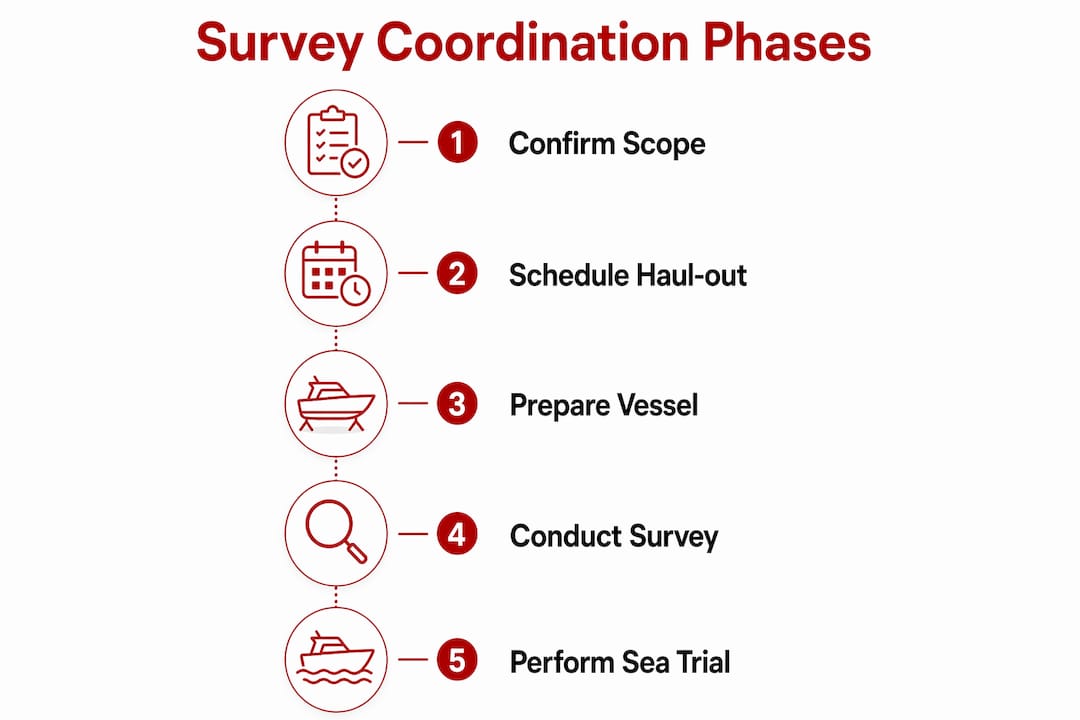
A well-run vessel assessment follows four distinct phases: confirming scope, scheduling the haul-out, preparing the vessel, and arranging the sea trial. Each phase depends on the one before it. Skip or rush any of them and the whole process breaks down.
The parties involved are the owner or operator, the marine surveyor, the seller or broker, the boatyard, and the captain or crew for the sea trial. Each has a defined role. The surveyor sets the technical agenda. The boatyard controls haul-out timing. The owner controls vessel readiness. When these roles blur or go unconfirmed in writing, scheduling conflicts follow.
Surveyors book 1–2 weeks in advance, and boatyard haul-out slots fill just as fast. That means you need to confirm scope and lock in dates before you think you need to. Waiting until the week before a planned closing date is one of the most common and expensive mistakes in marine survey planning.
- Confirm scope in writing. Define exactly what the surveyor will inspect: hull, engine, electrical, rigging, safety gear, and any specialist systems. Get this agreed upon before any money changes hands.
- Book the haul-out slot. Contact the boatyard first, then align the surveyor’s schedule to match. Never do it in reverse.
- Prepare the vessel. This is the owner’s or seller’s responsibility. A poorly prepared boat wastes surveyor time and inflates costs.
- Arrange the sea trial. If the seller is unavailable to operate the vessel, a qualified captain must be arranged separately. Confirm this at least one week out.
Pro Tip: Get every scheduling agreement in writing, including haul-out time, surveyor arrival, and sea trial start. A shared calendar or simple email chain with confirmed times protects all parties if disputes arise.
How to prepare your vessel and documentation for a marine survey
Vessel preparation is the single factor most within your control, and it has the greatest impact on survey quality. Incomplete vessel prep causes delays, incomplete reports, and possible supplementary visits that add cost and time.
Physical preparation covers the basics that surveyors expect as a baseline:
- Clean the bilge, engine compartment, and all accessible spaces
- Fully charge all batteries and confirm shore power is available
- Open all hatches, lockers, and access panels before the surveyor arrives
- Remove personal gear, stored items, and anything blocking structural access
- Confirm all systems are operational: engine, electronics, pumps, and navigation lights
Documentation preparation is equally critical. Surveyors expect to see current registration, maintenance logs, previous survey reports, owner’s manuals for major systems, and any warranty records. Missing documents do not stop the survey, but they do weaken the final report and can complicate insurance or financing decisions afterward.
Die vessel inspection checklist covers hull, engine, electrical, plumbing, rigging, safety gear, and interior structural integrity. Every one of those systems needs to be accessible and operational on survey day. If a through-hull is buried under gear or a battery is dead, the surveyor notes it as inaccessible, and you pay for a return visit.
Pro Tip: Do not assume the seller has prepared the vessel fully. If you are the buyer coordinating the survey, verify vessel readiness directly with the seller at least 48 hours before the surveyor arrives.
A vessel compliance checklist is a practical tool for organizing documentation before any inspection. Having registration, insurance certificates, and prior survey reports in a single folder saves time and signals professionalism to the surveyor.
How to manage scheduling and logistics for haul-out and sea trial
The haul-out is the most logistically complex part of the entire process. It requires the boatyard, the surveyor, and the owner to be in the same place at the same time, with the vessel ready to lift. A single scheduling conflict here can push the entire survey back by a week or more.
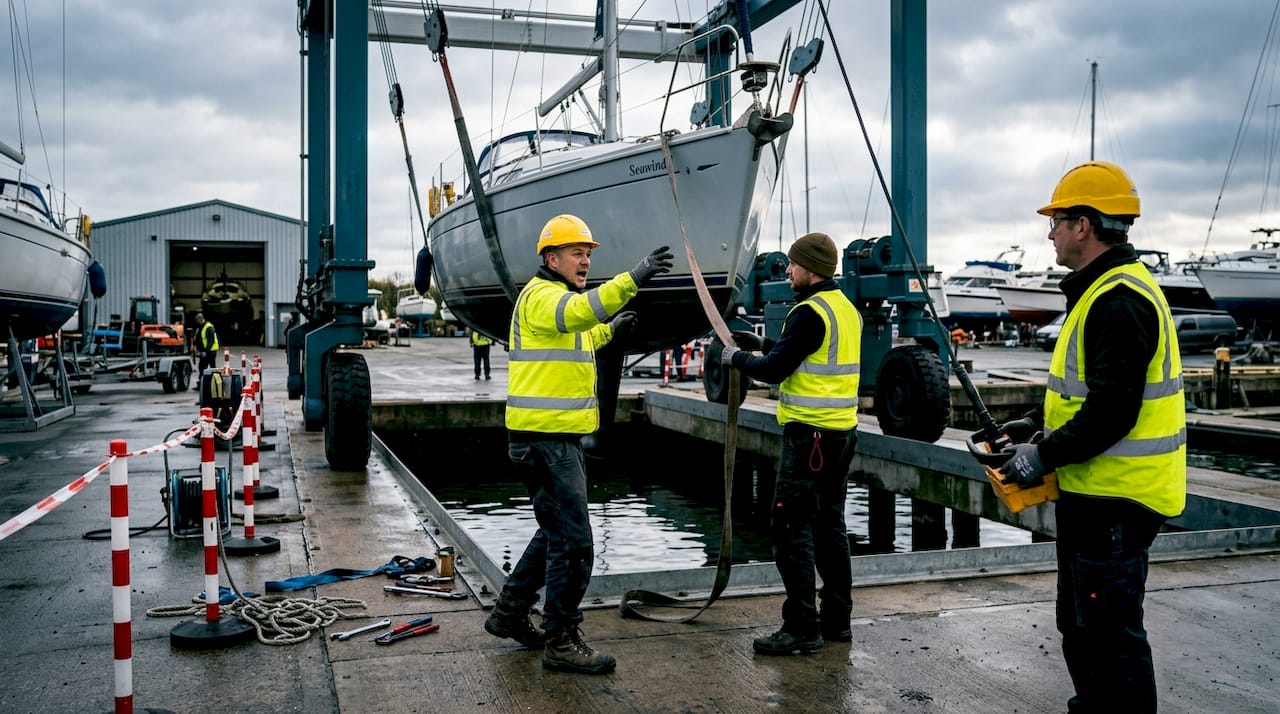
Gold standard yacht surveys proceed in a strict sequence: haul-out first, then systems inspection, then sea trial. This order exists for a reason. The hull inspection below the waterline reveals defects that affect how you interpret everything else. Reversing or skipping this sequence risks missing critical structural issues.
| Logistical element | Recommended approach | Common risk |
|---|---|---|
| Haul-out scheduling | Book boatyard slot first, then align surveyor | Surveyor arrives before yard is ready |
| Sea trial crew | Confirm qualified captain at least 7 days out | No operator available on survey day |
| Specialist inspections | Schedule diesel mechanic or rigger in parallel | Delays waiting for separate appointments |
| Written timeline | Share confirmed schedule with all parties | Miscommunication on arrival times |
Delays at the haul-out phase cascade into idle fees, rescheduling costs, and coordination breakdowns across every subsequent phase. Treat the haul-out slot as the fixed anchor point for the entire survey timeline, and build everything else around it.
A few practical steps reduce logistical risk significantly:
- Confirm the boatyard’s crane or travel lift availability at least two weeks out
- Ask the boatyard for their specific preparation requirements before the lift
- Arrange the sea trial for the afternoon of the same day as the haul-out when possible
- Budget for a specialist inspection if the vessel has complex diesel systems, carbon rigging, or advanced electronics
Pro Tip: If you are traveling to the vessel for survey day, review cruise travel logistics in advance. Arriving late because of transport issues on survey day is a preventable and costly mistake.
Surveys may require additional specialists beyond the general marine surveyor, such as a diesel mechanic or rigging expert. These specialists need separate coordination and may have their own lead times. Factor them into your timeline from the start, not as an afterthought.
What are the most common mistakes in coordinating boat surveys?
Poor coordination is not just an inconvenience. A cheap base fee survey can become expensive fast when poor coordination creates access issues, idle time, and rescheduling fees. The base survey fee is never the total cost. Coordination efficiency determines the final bill.
The most damaging mistakes follow a predictable pattern:
- Booking the surveyor before the haul-out slot is confirmed. This forces the surveyor to wait or reschedule, often at your expense.
- Assuming the seller has prepared the vessel. Buyers who verify readiness independently avoid the most common source of survey-day delays.
- Failing to define scope before survey day. Scope creep mid-inspection adds time, cost, and confusion about who pays for what.
- No written schedule shared with all parties. Verbal agreements break down. A written timeline with confirmed times for all parties is non-negotiable.
- Ignoring specialist requirements. If the vessel has systems beyond a general surveyor’s scope, those specialists need to be booked in parallel, not after the main survey.
Contingency planning matters as much as the primary schedule. Weather can cancel a sea trial. A boatyard lift can break down. Build at least three to five days of buffer into your overall timeline, particularly around the haul-out and sea trial phases. Post-survey, follow up with the surveyor within 48 hours if the report has not arrived. Survey report delivery typically falls between days 14 and 21 of the process. Chasing it at day 25 costs you negotiating time.
Pro Tip: Treat the entire survey coordination process as a project with a Gantt chart or simple task list. Assign each task an owner and a deadline. This one habit eliminates most coordination failures.
Wichtigste Erkenntnisse
Effective boat survey coordination requires treating the process as a managed project with defined phases, written agreements, and proactive vessel preparation from the start.
| Punkt | Einzelheiten |
|---|---|
| Lock in the haul-out first | Book the boatyard slot before scheduling the surveyor to avoid cascade delays. |
| Prepare the vessel proactively | Charge batteries, clear access points, and verify all systems are operational before survey day. |
| Confirm scope in writing | Define exactly what the surveyor will inspect before any scheduling or payments begin. |
| Budget for specialists | Factor in diesel mechanics or rigging experts early; they have their own lead times. |
| Build timeline buffer | Allow 3–5 days of contingency around haul-out and sea trial phases to absorb disruptions. |
What I’ve learned about survey coordination after years in vessel compliance
Most boat owners treat survey coordination as a scheduling task. It is not. It is project management with real financial stakes, and the owners who get the best outcomes are the ones who treat it that way from day one.
The phased inspection sequence exists for a reason. No experienced surveyor shortcuts the required stages. Haul-out before systems check before sea trial. That order protects the integrity of the findings. When owners push to compress the timeline by skipping the haul-out or running the sea trial first, they undermine the very report they are paying for.
Early scheduling is the single highest-leverage action in the entire process. Surveyors and boatyard slots fill weeks in advance. Owners who call two weeks out and expect next-day availability consistently pay more and get less. The role of surveyors in vessel registration extends beyond the inspection itself. A thorough, well-coordinated survey report supports insurance applications, financing decisions, and flag registration requirements. Treating the survey as a box to check misses its full value.
Written scope confirmation before survey day is the habit that separates smooth processes from expensive ones. Every ambiguity about what is included becomes a dispute about who pays. Eliminate the ambiguity before the surveyor boards the vessel.
— Vesselflag
How Vesselflag supports your vessel compliance after the survey
Completing a survey is only part of the compliance picture. Registration, documentation, and flag requirements all connect directly to what your survey report reveals.
Vesselflag helps boat owners manage the full compliance workflow, from yacht registration guidance to documentation organization across multiple international flags including San Marino, Malta, Poland, and Palau. If your survey report triggers registration updates or flag changes, Vesselflag’s team handles the process with clear timelines and no hidden steps. Owners who need to understand the difference between vessel categories can start with Vesselflag’s breakdown of yacht vs. boat registration requirements before making any compliance decisions post-survey.
FAQ
How long does a boat survey take from start to finish?
The full boat survey process spans approximately 21–28 days, with the physical inspection occurring between days 7 and 14 and the final report delivered by day 21.
Who is responsible for preparing the vessel for survey?
The seller or owner is responsible for vessel preparation, including clearing access points, charging batteries, and making all systems operational. Buyers should verify readiness directly rather than assuming the seller has completed all prep.
What documents should I have ready for a marine survey?
Bring current registration, maintenance logs, previous survey reports, owner’s manuals for major systems, and insurance certificates. Missing documents do not halt the survey but weaken the final report.
Can I skip the haul-out to save money?
Skipping the haul-out means the surveyor cannot inspect the hull below the waterline, which is where the most critical structural defects appear. No credible surveyor will certify a complete inspection without it.
When should I book the surveyor and boatyard?
Book the boatyard haul-out slot first, then align the surveyor’s schedule to match. Both typically require 1–2 weeks of advance notice, so start the booking process at least two weeks before your target survey date.

[…] which forces rework after the yard has already closed up the vessel. Coordinating this with your boat survey planning checklist ahead of time saves a second yard […]