

Securing official registration for a luxury yacht is often more complex than many expect. Navigating international waterways demands a clear understanding of legal requirements and proper documentation tied to your chosen flag state. For yacht owners and brokers, mastering the essentials of registration, compliance, and flag state selection proves vital for uninterrupted global operations. This guide highlights the core procedures, regulatory variations, and expert strategies to help you achieve rapid, smooth registration while avoiding costly mistakes.
Inhaltsübersicht
- Boat Registration Basics And Key Concepts
- Understanding Flag State Selection And Variations
- Legal Compliance And Documentation Requirements
- Costs, Timelines, And Auxiliary Services Involved
- Risks, Common Mistakes, And Regulatory Pitfalls
Wichtigste Erkenntnisse
| Punkt | Einzelheiten |
|---|---|
| Boat Registration Essentials | Vessel owners must obtain a Hull Identification Number and comply with jurisdictional rules to ensure legal navigation. |
| Flag State Selection | Choosing the right flag state is crucial as it determines regulatory compliance and operational responsibilities for your vessel. |
| Documentation Compliance | Maintaining accurate and up-to-date documentation is vital to avoid legal pitfalls and ensure maritime safety. |
| Financial Considerations | Anticipate additional costs beyond registration fees for auxiliary services that support compliance and safety efforts. |
Boat registration basics and key concepts
Boat registration represents a critical legal requirement for vessel owners worldwide, establishing official documentation and identification for watercraft. Proper boat registration involves obtaining official documentation that permits legal navigation across various jurisdictions and waterways.
The registration process typically encompasses several fundamental components that yacht and boat owners must understand:
- Obtaining a unique Hull Identification Number (HIN)
- Displaying official registration numbers on vessel sides
- Carrying a valid registration certificate onboard
- Complying with specific jurisdictional requirements
- Maintaining up-to-date documentation
Understanding registration requirements varies significantly depending on vessel type, size, and intended navigation areas. Mechanically powered vessels and those traveling on navigable waters or high seas must typically complete comprehensive registration processes. This ensures legal operation, supports maritime safety protocols, and enables proper vessel tracking.
Federal boating regulations mandate specific documentation standards that boat owners must carefully follow. These guidelines help maintain accountability, support emergency response capabilities, and standardize maritime identification procedures across different regions.
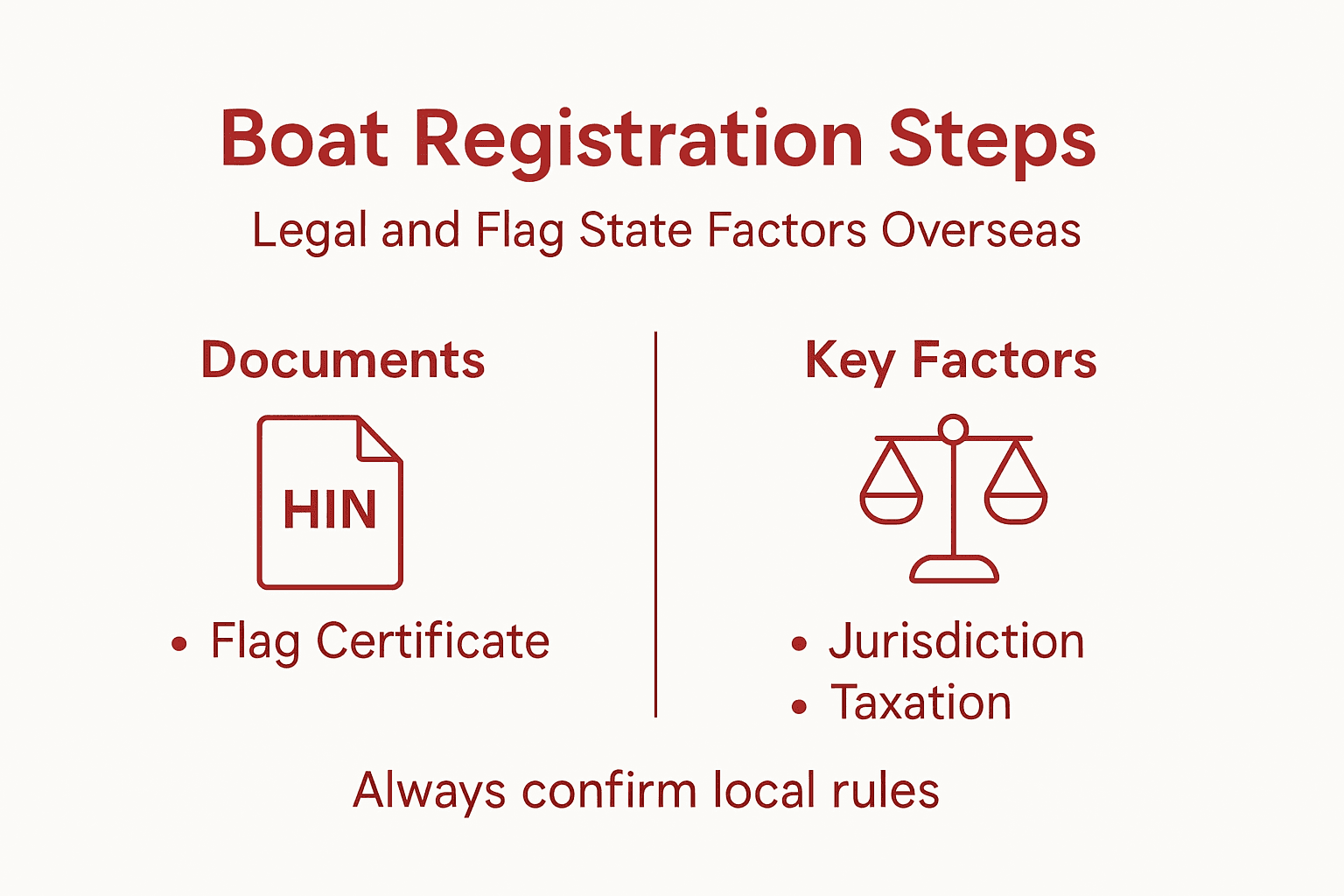
Profi-Tipp: Always verify specific registration requirements with local maritime authorities before purchasing or operating a vessel to ensure full legal compliance.
Understanding flag state selection and variations
Vessel registration involves selecting an appropriate flag state, which determines the legal jurisdiction and regulatory framework governing a boat or yacht. Flag state selection represents a critical decision that impacts vessel operation, compliance, and international maritime responsibilities.
Flag states can be categorized into two primary types:
- Closed registries: Limited to vessels with direct national connections
- Open registries: Accepting foreign-owned vessels with more flexible requirements
- Hybrid registries: Offering mixed registration approaches
The choice of flag state significantly influences a vessel’s legal standing, with different jurisdictions providing unique advantages and regulatory environments. International maritime regulations emphasize the importance of establishing a “genuine link” between a vessel and its selected flag state, ensuring effective jurisdiction and control.

The following table compares the main types of vessel flag registries and their typical features:
| Registry Typ | Vessel Eligibility Scope | Regulatory Flexibility | Common Advantages |
|---|---|---|---|
| Closed Registry | Limited to national vessels | Strict jurisdictional rules | Enhanced state oversight |
| Register öffnen | Accepts foreign-owned vessels | Flexible entry requirements | Tax benefits, global access |
| Hybrid Registry | Mixed eligibility criteria | Selective regulatory controls | Balances flexibility and control |
Key considerations for flag state selection include taxation policies, regulatory compliance requirements, maintenance costs, and the specific maritime reputation of the chosen jurisdiction. Some flag states offer more advantageous financial structures, while others provide robust safety and environmental standards that can enhance a vessel’s operational credibility.
Profi-Tipp: Consult maritime legal experts to comprehensively evaluate flag state options that align with your specific vessel type, operational requirements, and long-term strategic objectives.
Legal compliance and documentation requirements
Vessel owners must navigate a complex landscape of legal compliance that encompasses multiple documentation requirements for maritime operations. Boat registration laws mandate specific documentation to ensure legal operation and facilitate law enforcement verification across different jurisdictions.
Key documentation requirements typically include:
- Obtaining a valid Hull Identification Number (HIN)
- Displaying official vessel registration numbers
- Carrying onboard a current certificate of registration
- Maintaining ownership documentation (titles, bills of sale)
- Ensuring compliance with state and federal maritime regulations
International maritime regulations add another layer of complexity to vessel documentation. International maritime law requires comprehensive documentation that establishes a vessel’s nationality, ownership, and operational compliance with global maritime standards. These requirements protect vessel owners and support international maritime safety protocols.
Understanding the nuanced documentation requirements involves considering factors such as vessel type, intended navigation areas, and specific jurisdictional regulations. Different flag states and local authorities may impose varying documentation standards, making it crucial for vessel owners to maintain meticulous and up-to-date paperwork to ensure uninterrupted maritime operations.
Profi-Tipp: Create a comprehensive digital and physical documentation portfolio, including all registration certificates, ownership documents, and compliance records, to streamline maritime operations and quickly respond to regulatory inquiries.
Costs, timelines, and auxiliary services involved
Boat registration involves a complex ecosystem of financial considerations and associated services that vessel owners must carefully navigate. Boat registration services encompass multiple cost elements and administrative processes that vary significantly across different jurisdictions.
Typical cost components for vessel registration include:
- Registration fees specific to vessel type and size
- State and local taxation charges
- Title transfer expenses
- Processing and documentation fees
- Potential additional compliance assessment costs
Timelines for boat registration can range from a few days to several weeks, depending on the complexity of the vessel’s documentation and the specific requirements of the chosen flag state. Auxiliary services often complement the registration process, providing comprehensive support that extends beyond basic documentation.
These supplementary services might include specialized maritime consultancy, insurance verification, vessel inspection coordination, and ongoing compliance monitoring. Yacht owners should anticipate potential additional expenses beyond the base registration fee, as comprehensive maritime documentation often requires multiple professional interventions to ensure full legal compliance.
Here is a summary of typical auxiliary services connected to boat registration, along with their primary benefits:
| Auxiliary Service | Typical Purpose | Value to Vessel Owners |
|---|---|---|
| Maritime Consultancy | Legal and procedural guidance | Reduces compliance risk |
| Insurance Verification | Confirms valid vessel coverage | Protects against liability |
| Vessel Inspections | Ensures safety and legal standards | Prevents regulatory delays |
| Compliance Monitoring | Ongoing documentation and law checks | Maintains uninterrupted operations |
Profi-Tipp: Budget approximately 15-25% above the initial registration quote to cover unexpected auxiliary service fees and potential documentation processing expenses.
Risks, common mistakes, and regulatory pitfalls
Vessel registration involves navigating a complex landscape of potential regulatory risks that can significantly impact maritime operations. International maritime regulations highlight the critical importance of understanding and avoiding common registration pitfalls that could compromise vessel legality.
Common mistakes in boat registration include:
- Incorrect display of registration numbers
- Failing to update registration when changing jurisdictions
- Neglecting to carry required documentation onboard
- Misunderstanding reciprocity laws between different regions
- Incomplete or outdated ownership documentation
Boat registration compliance requires meticulous attention to detail, as seemingly minor oversights can result in significant legal complications. Fraudulent registration attempts or weak jurisdictional oversight can lead to severe consequences, including potential denial of port entry, substantial financial penalties, and compromised maritime safety standards.
The most critical risk involves maintaining a genuine link between the vessel and its flag state. This requires demonstrating effective jurisdiction, proper documentation, and ongoing compliance with international maritime regulations. Yacht owners must proactively manage their registration status, anticipate potential regulatory changes, and maintain comprehensive documentation to mitigate potential legal vulnerabilities.
Profi-Tipp: Conduct a comprehensive annual review of your vessel’s registration documentation, verifying compliance with current international maritime regulations and addressing any potential discrepancies immediately.
Navigate the Complexities of Boat Registration with Confidence
Boat registration involves many challenges from understanding flag state selection to complying with intricate legal documentation requirements overseas. The article highlights how missing even a small detail such as correct display of registration numbers or failing to maintain a genuine link to your flag state can risk costly fines or operational interruptions. If you feel overwhelmed by these legal impacts and want to avoid common pitfalls, you are not alone.
Unter Vessel Flag – Flag Registration, we specialize in simplifying this complicated process. Our platform offers fast and transparent vessel registration services across international flags including San Marino, Malta, and the UK. Beyond registration, we provide expert maritime consultancy, MMSI & AIS setup, and insurance services—all designed to ensure your vessel meets regulatory demands with ease.
Stop risking delays and compliance headaches now. Visit VesselFlag.com today to explore how our tailored solutions streamline your boat registration process worldwide. Don’t wait for regulatory challenges to disrupt your maritime plans. Take control with our expert guidance and secure your vessel’s legal status promptly.
Häufig gestellte Fragen
What is boat registration and why is it important?
Boat registration is the legal documentation that establishes official identification for watercraft. It is important as it allows for legal navigation, compliance with maritime regulations, and supports safety protocols.
How does flag state selection impact my boat registration?
Flag state selection determines the legal jurisdiction and regulatory framework for your vessel. Different flag states have varying requirements that can affect operation, taxation, and compliance responsibilities.
What are the common documentation requirements for boat registration?
Common documentation requirements for boat registration include obtaining a Hull Identification Number (HIN), displaying registration numbers on the vessel, carrying a current registration certificate, and maintaining ownership documents.
What potential risks should boat owners be aware of regarding registration?
Boat owners should watch for risks like incorrect display of registration numbers, failing to update registration when changing jurisdictions, neglecting to carry required documentation onboard, and ensuring compliance with international maritime regulations.
Empfohlen
- Was ist die Yachtregistrierungssteuer - Kosten und globale Regeln - Schiffsflagge
- 2025 Bootsregistrierungsprozess - Vollständiger strategischer Leitfaden für Yachtbesitzer - Vessel Flag
- Schmerzpunkte bei der Yachtregistrierung: Navigieren Sie mit Zuversicht durch die globale Compliance - Vessel Flag
- Die größten Herausforderungen bei der Registrierung von Yachten und der Einhaltung von Vorschriften: Mit Zuversicht durch die globalen Vorschriften navigieren - Vessel Flag