
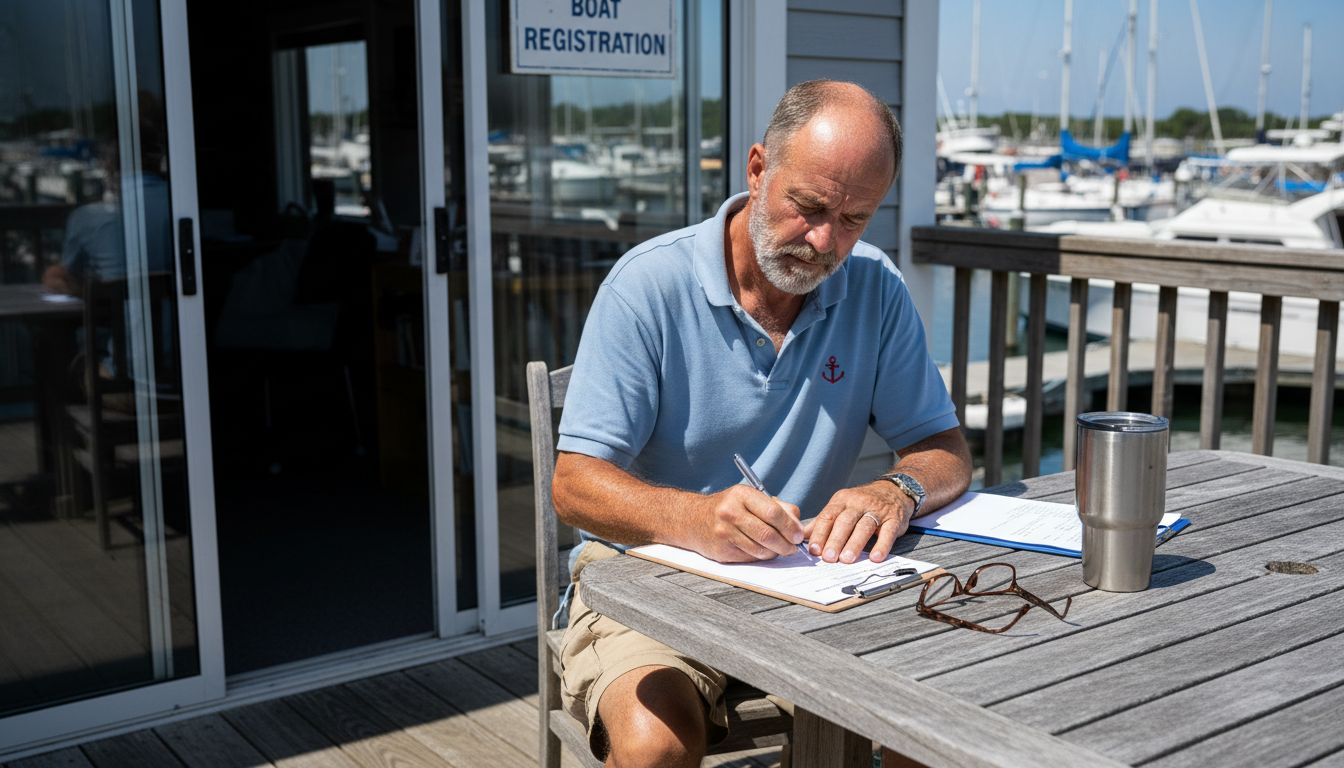
You’re about to register your vessel, but without proper insurance documentation, you could face weeks of delays and thousands in legal exposure. Over 40% of boat owners inadvertently sail uninsured or underinsured, creating massive financial risk. This guide walks you through securing compliant coverage that protects your vessel and satisfies flag state requirements, so you can register confidently and operate legally.
Inhaltsübersicht
- Insurance Prerequisites And Registration Requirements
- Types Of Coverage And What They Protect
- Step-By-Step Process To Obtain Boat Insurance
- Flag State Considerations In Insurance
- Common Mistakes And Pitfalls
- Expected Costs And Timelines
- Secure Compliant Coverage And Register With Confidence
- Häufig gestellte Fragen
Wichtigste Erkenntnisse
| Punkt | Einzelheiten |
|---|---|
| Liability insurance is mandatory in most jurisdictions | Required by over 90% of flag states before vessel registration can proceed |
| Proof of insurance prevents registration delays | Missing documentation causes typical delays of 2 to 4 weeks |
| Compare multiple insurers for optimal coverage | Premiums and coverage terms vary significantly between maritime insurers |
| Avoid underinsurance and flag-specific compliance gaps | Common mistakes lead to voided claims and legal penalties |
| Budget realistic costs and timelines | Annual premiums range from $300 to $1,200 for recreational boats |
Insurance Prerequisites and Registration Requirements
Before you can register your vessel under any flag, you need to understand the insurance foundation. Liability insurance is required by over 90% of flag states, and missing this documentation triggers immediate red flags. Registration authorities won’t process applications without verified proof of coverage, leading to costly holdups.
Different flag states set specific coverage minimums and documentation standards. Some require third-party liability protection starting at $300,000, while others demand hull insurance for vessels over certain values. You must submit complete insurance certificates during registration, and failure to do so typically causes two to four week delays.
Gathering your vessel documentation upfront streamlines the process. You’ll need:
- Current vessel inspection reports and surveys
- Bill of sale or ownership transfer documents
- Previous registration papers if applicable
- Technical specifications including length, tonnage, and build year
- Insurance certificates meeting flag state minimums
Working with experienced yacht registration services helps you navigate complex flag state insurance regulations efficiently. Professional guidance ensures you meet every requirement without guesswork, preventing expensive registration delays from missing insurance documentation.
Types of Coverage and What They Protect
Boat insurance isn’t one-size-fits-all. Understanding each coverage type helps you build protection that matches your vessel’s value and operational risk.
Liability coverage is your legal shield. It protects you when your vessel causes injury to others or damages property. Most navigation areas mandate minimum liability limits, often starting at $300,000 for recreational boats. Without it, you’re personally liable for accident costs that can easily exceed six figures.
Hull insurance protects your vessel’s physical structure. Think of it as collision and comprehensive coverage for your boat. If you own a vessel valued over $10,000, hull insurance is highly recommended. It covers repairs or replacement after collisions, storms, fires, or sinking.
Optional coverages fill critical gaps. These include:
- Theft and vandalism protection for equipment and the vessel itself
- Wreck removal coverage if your boat sinks in navigable waters
- Personal injury insurance for crew members or passengers hurt onboard
- Towing and assistance coverage for breakdowns
- Uninsured boater protection if another vessel damages yours
Tailoring coverage to your specific situation prevents expensive surprises. A charter yacht needs different protection than a private cruiser. Operational risk factors like navigation area, usage frequency, and crew experience all influence what coverage makes sense. Explore comprehensive boat insurance coverage options that align with your vessel’s profile and flag requirements.
Step-by-Step Process to Obtain Boat Insurance
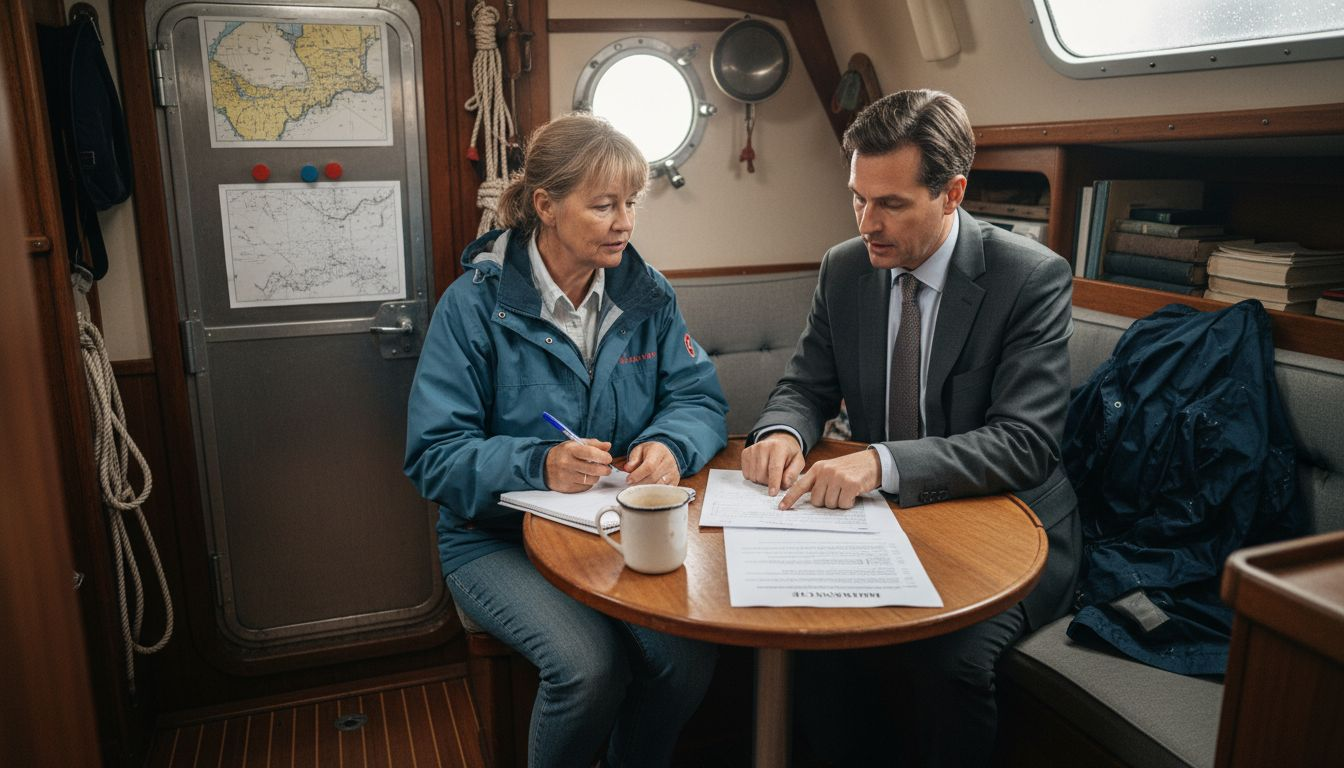
Securing proper insurance requires systematic preparation. Follow these steps to obtain compliant coverage without delays.
-
Confirm your flag state requirements first. Each flag has specific insurance mandates, minimum coverage limits, and documentation standards. Research these before requesting quotes to ensure accurate coverage specifications.
-
Gather complete vessel details. Insurers need comprehensive information including vessel length, age, construction material, engine specifications, current market value, and recent survey reports. Missing details slow quote generation.
-
Obtain quotes from multiple maritime insurers. Request at least three detailed quotes comparing coverage limits, exclusions, deductibles, and premium costs. Don’t assume the cheapest option provides adequate protection.
-
Review policy terms carefully before purchasing. Read exclusions, navigation limits, lay-up periods, and claims procedures. Understand exactly what scenarios are covered and what voids your policy.
-
Purchase insurance and secure official documentation. Once you select a policy, complete the purchase and request formal insurance certificates showing coverage effective dates, limits, and insurer contact information.
-
Submit insurance proof with your registration application. Include original or certified insurance certificates in your registration package to avoid processing delays. Verify documents meet flag state format requirements.
-
Maintain ongoing insurer communications. Notify your insurer immediately about vessel modifications, ownership changes, or operational updates. Keep policies current and renew before expiration to maintain continuous coverage.
Pro Tip: Start the insurance process at least two weeks before planned registration submission. This buffer accommodates quote comparisons, document gathering, and unexpected questions without derailing your registration timeline.
Understanding the complete boat registration and insurance process helps you coordinate timing effectively. Use a comprehensive smooth yacht registration checklist to track insurance alongside other registration prerequisites.
Flag State Considerations in Insurance
Your vessel’s flag directly impacts insurance requirements, costs, and available options. Understanding these differences helps you make informed registration decisions.
Flags of convenience often have minimal insurance mandates, but insurers compensate by charging higher risk-based premiums. A Marshall Islands flag might require only basic liability, yet insurers may price policies 20 to 30% higher due to perceived regulatory gaps. Premium rates can vary by up to 30% depending on your vessel’s flag state.
Traditional maritime flags typically enforce stricter insurance standards but offer more competitive premium rates. US, UK, and major European flags require comprehensive coverage documentation, yet insurers view these vessels as lower risk due to robust regulatory oversight.
Some flag states bundle insurance facilitation with registration services, streamlining the entire process. These programs connect vessel owners with pre-approved insurers familiar with flag-specific requirements, reducing processing time from weeks to days.
| Flag State | Minimum Liability | Hull Insurance | Typical Premium Range | Processing Speed |
|---|---|---|---|---|
| US/Delaware | $300,000 | Recommended over $50K value | $450 to $900 annually | 3 to 5 days |
| Marshallinseln | $500,000 | Optional | $600 to $1,200 annually | 1 to 2 days |
| UK Teil 1 | $250,000 | Required over $25K value | $400 to $850 annually | 4 to 7 days |
| Panama | $300,000 | Optional | $550 to $1,100 annually | 2 to 3 days |
Evaluate insurance requirements alongside flag costs, processing speed, and operational benefits. The cheapest flag registration may become expensive once you factor in higher insurance premiums or coverage gaps. Total ownership cost analysis provides the complete financial picture.
Common Mistakes and Pitfalls
Boat owners repeatedly make preventable insurance errors that create legal exposure and financial loss. Recognizing these pitfalls helps you avoid them.
Underinsuring liability or hull coverage ranks as the most dangerous mistake. Underinsuring by omitting liability or hull coverage occurs in over 40% of cases and exposes owners to devastating financial consequences. A single serious accident can generate claims exceeding $500,000, and inadequate coverage leaves you personally liable for the difference.
Delaying insurance purchase until the last minute causes registration bottlenecks. Insurance applications require vessel surveys, documentation review, and underwriting approval. Rushing this process often results in incomplete applications, forcing you to restart and pushing registration back weeks.
Selecting the lowest-cost policy without verifying coverage adequacy creates dangerous gaps. Cheap policies often exclude critical scenarios like commercial use, international waters navigation, or high-value equipment. Read policy exclusions carefully before purchasing.
Ignoring flag-specific insurance mandates triggers compliance violations. Each flag state publishes insurance requirements including:
- Minimum liability coverage amounts
- Required policy endorsements
- Acceptable insurer qualifications
- Certificate format specifications
- Renewal notification procedures
Failing to update insurance after vessel modifications can void coverage entirely. Installing new electronics, upgrading engines, or changing vessel use from private to charter requires immediate insurer notification. Undisclosed modifications give insurers grounds to deny claims.
Pro Tip: Schedule an annual insurance review with your broker every year before renewal. This ensures coverage limits match current vessel value, usage patterns align with policy terms, and you’re not paying for unnecessary coverage.
Avoid common insurance mistakes by prioritizing coverage quality and compliance over cost savings. The few hundred dollars saved on premiums become meaningless when facing uncovered claims or registration rejection.
Expected Costs and Timelines
Budgeting realistic insurance costs and processing timelines prevents operational disruptions. Here’s what you should expect.
Average boat insurance premiums range from $300 to $1,200 annually for recreational boats under 26 feet. Larger vessels, commercial operations, or high-risk navigation areas push premiums significantly higher. Your specific cost depends on vessel type, value, usage patterns, navigation area, operator experience, and claims history.
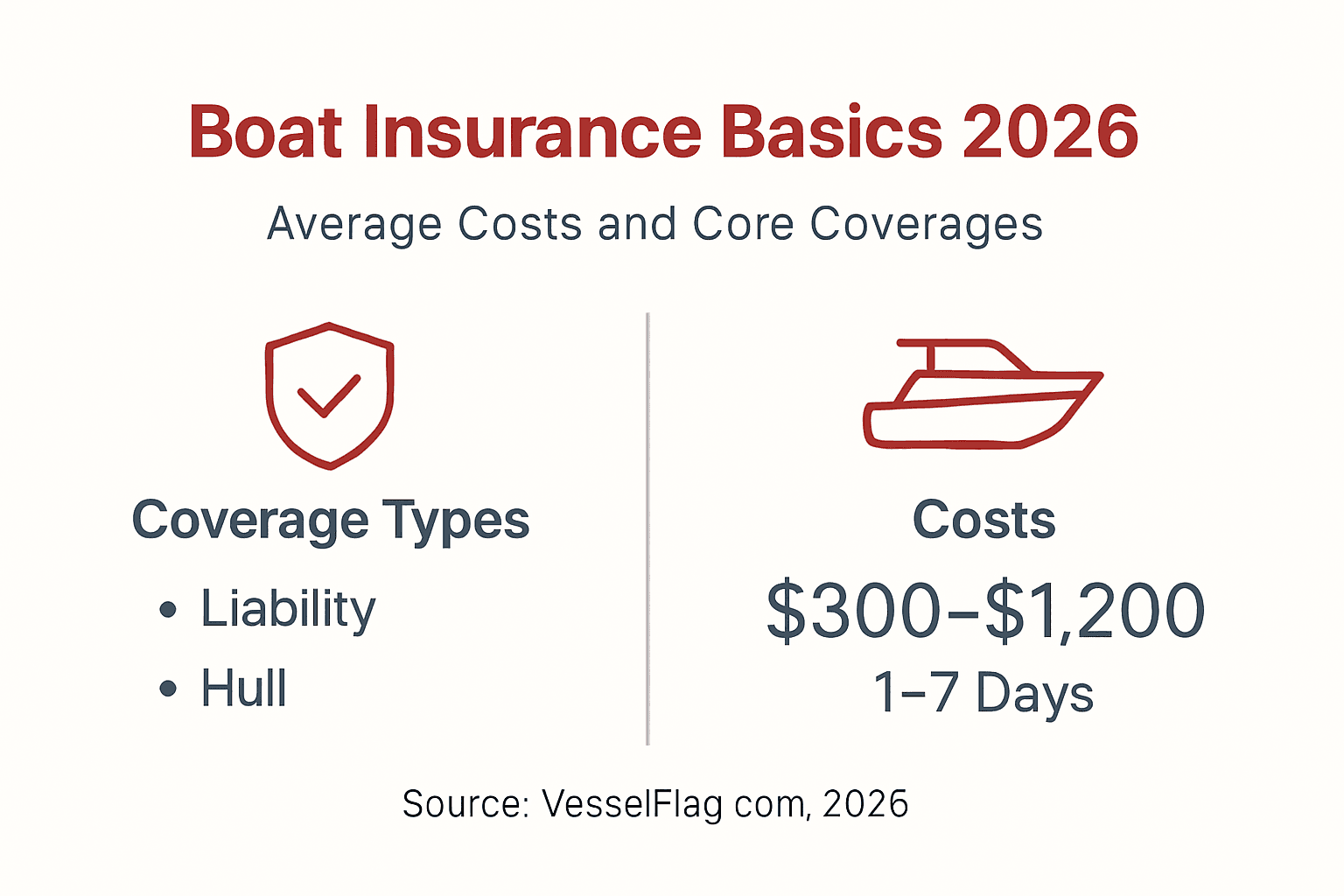
Insurance purchase and processing typically require one to seven business days once you submit complete applications. Simple recreational boat policies with standard coverage often approve within 24 to 48 hours. Complex commercial vessels or high-value yachts may need detailed surveys and extended underwriting review.
Lack of insurance can delay boat registration by 2 to 4 weeks. Registration authorities won’t process incomplete applications, and obtaining insurance retroactively after submission restarts the entire registration timeline.
| Timeline Stage | Typical Duration | Key Factors Affecting Speed |
|---|---|---|
| Quote generation | 1 to 3 days | Completeness of vessel information provided |
| Underwriting review | 2 to 5 days | Vessel value, prior claims history, survey currency |
| Policy issuance | 1 to 2 days | Payment processing, documentation finalization |
| Certificate delivery | Same day to 2 days | Insurer processing speed, delivery method |
| Total process | 4 to 12 days | Application completeness, vessel complexity |
Plan insurance procurement to align with your registration schedule. Start the process at least two weeks before your intended registration submission date. This buffer accommodates unexpected delays, additional documentation requests, or survey requirements without impacting your operational timeline.
Understanding costs and timelines helps you budget appropriately and avoid rushing decisions that compromise coverage quality. Investing time upfront in proper insurance selection pays dividends through comprehensive protection and smooth registration processing.
Secure Compliant Coverage and Register with Confidence
Navigating boat insurance requirements doesn’t have to be overwhelming. You now understand the mandatory coverage types, flag state considerations, and step-by-step process to obtain proper protection. But securing insurance is just one piece of successful vessel registration.
VesselFlag.com specializes in coordinating complete yacht and boat registration services worldwide, including insurance facilitation that meets flag-specific requirements. We work with pre-approved maritime insurers who understand international flag regulations, ensuring your coverage documentation satisfies registration authorities without delays. Our platform streamlines the entire registration process across multiple flags including San Marino, Poland, UK Part 1, Palau, Marshall Islands, and Malta, offering fast processing times and transparent pricing.
Whether you need comprehensive insurance guidance, MMSI setup, or corporate registration support, our maritime compliance experts handle the details so you can focus on operating your vessel. We’ve helped thousands of boat owners secure proper coverage and complete registration efficiently, avoiding the common pitfalls that cause weeks of delays and compliance headaches.
Häufig gestellte Fragen
What happens if I register my boat without insurance?
Most flag states reject registration applications lacking proper insurance documentation, and operating uninsured violates maritime law in nearly all jurisdictions. You risk substantial fines, vessel detention, and personal liability for accidents.
How much boat insurance do I actually need?
You need at minimum the liability coverage your flag state mandates, typically $300,000 to $500,000. Add hull insurance if your vessel value exceeds $10,000, and consider additional coverages based on your operational risk profile.
Can I use my homeowner’s insurance to cover my boat?
Homeowner’s policies provide extremely limited boat coverage, usually capping at $1,000 to $5,000 for small vessels. This falls far short of flag state requirements and leaves you massively underinsured for liability claims.
How long does boat insurance approval take?
Simple recreational boat policies often approve within 24 to 48 hours of complete application submission. More complex vessels requiring surveys or specialized coverage may need 5 to 10 business days for full underwriting review.
Do different flags require different insurance coverage?
Yes, flag states set varying minimum liability limits, hull insurance mandates, and documentation standards. Some flags require $250,000 liability while others demand $500,000 or more, making flag selection a critical insurance cost factor.
Empfohlen
- Boat Insurance – Vessel Flag
- Checkliste für die Bootsregistrierung: Verzögerungen bei der Einhaltung von 60% abbauen
- 2025 Bootsregistrierungsprozess - Vollständiger strategischer Leitfaden für Yachtbesitzer - Vessel Flag
- Die größten Herausforderungen bei der Registrierung von Yachten und der Einhaltung von Vorschriften - und wie man sie mit Zuversicht meistert - Vessel Flag