
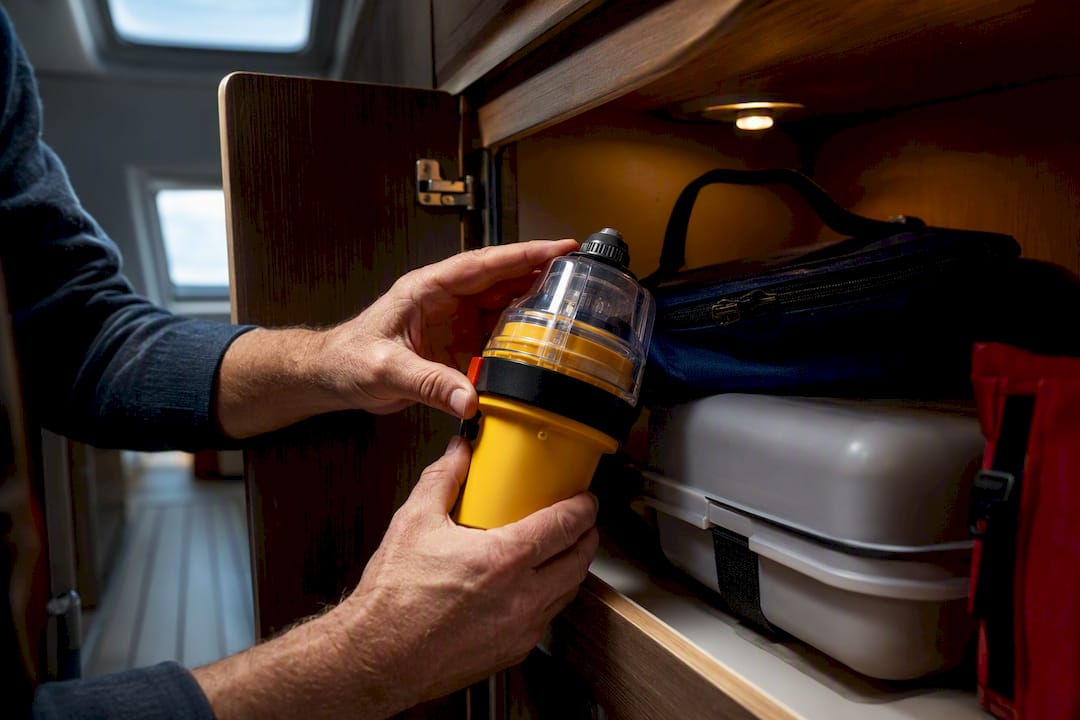
Registration is the starting line, not the finish. The moment your certificate arrives, several important tasks need your attention: keeping the certificate and proof of ownership onboard, binding liability insurance, displaying your numbers correctly, securing an MMSI and radio license, calendaring your renewal date, and scheduling any survey your flag or state requires. For state-level rules, Mass is a solid starting point; for international flag compliance, Vesselflag tracks the requirements so you don’t have to.
En resumen:
- Confirm all details on your certificate, store backups, and display registration numbers correctly to avoid delays and compliance issues.
- Keep essential documents onboard, including proof of ownership, insurance, MMSI, and radio licenses, in a fireproof and organized manner with high-resolution digital copies.
- Track renewal dates carefully, set reminders at least 60 days in advance, and be aware that registration, titling, and fee requirements vary significantly by state and flag.
- Schedule required surveys, safety inspections, and environmental compliance updates promptly, especially for larger or commercial vessels, to prevent costly port or insurance delays.
- Maintain ongoing safety equipment maintenance, monitor international regulations, and stay current on evolving flag state rules to avoid enforcement actions and coverage denials.
Índice
- Post-Registration Checklist: Priority Actions for the First 30 to 90 Days
- What Documents Should You Keep on Board, and How Should You File Them?
- How Do Renewals, Fees, and Titling Differ by State?
- When Are Surveys and Statutory Certificates Required?
- What Crew Certification and Manning Rules Apply to Owners?
- How Do MMSI, Radio Licensing, and AIS Requirements Work?
- How Do You Handle Ownership Transfers, Address Changes, or Deregistration?
- What Long-Term International Rules Should Owners Monitor?
- What Should You Know About Insurance Renewal and Claims Reporting?
- What Annual Reporting Do Registered Yachts Need to File?
- What Safety Equipment and Maintenance Does Registration Require?
- What Environmental Rules Apply to Registered Yachts?
- What Happens if You Don’t Meet Post-Registration Obligations?
- Vesselflag’s Perspective: Supporting Owners Through the Post-Registration Stage
- How Vesselflag Helps You Stay Compliant After Registration
- Sources
- Preguntas frecuentes
Post-Registration Checklist: Priority Actions for the First 30 to 90 Days
Most owners treat registration as the finish line, then get blindsided three months later by an expired decal or a lapsed insurance binder. The first few months set the tone for everything that follows, and skipping steps here tends to cost more later, both in fines and in wasted time chasing paperwork you should have organized early on.
Here’s the order that actually matters, based on operational risk rather than alphabetical convenience:
- Confirm every detail on your certificate of registry. Check the hull identification number, owner name, and vessel dimensions against your bill of sale. A single transposed digit can hold up an insurance claim or a sale years down the road.
- Store the certificate somewhere retrievable, and keep a backup. Boarding officers and marina staff will ask to see it. A soaked or missing original creates delays you don’t need.
- Display registration numbers and decals per your jurisdiction’s rules. Placement, spacing, and color contrast requirements vary by state, and BoatUS’s registration guide explains how federally documented vessels still have to follow state display rules in many cases.
- Bind third-party liability insurance before you leave the dock. Most marinas won’t grant a slip without proof of coverage, and several states require it outright for vessels above certain horsepower or length thresholds.
- Apply for your MMSI number and ship radio license. These are separate from registration and separate from each other. Skip this step and your AIS transponder and DSC radio are essentially decorative.
- Schedule any survey or safety inspection your flag state or insurer requires. Larger yachts often trigger mandatory inspection thresholds that smaller boats never encounter.
- Log every renewal date and fee in a calendar you actually check. Registration lapses are one of the most common and most avoidable compliance failures owners run into.
Beyond the sequence itself, a few sub-steps make the difference between a smooth process and a scramble. Call your state boating office directly if anything on your certificate looks off. Photograph your decals once installed, both for your own records and in case a dispute arises later. If you registered under an international flag rather than a state or federal program, Vesselflag’s compliance requirements guide walks through the specific documents each flag jurisdiction expects after issuance.
A few items get overlooked more than they should:
- Setting up a dedicated email folder or physical binder exclusively for vessel paperwork.
- Confirming your insurer’s definition of “navigational limits,” since many policies restrict coverage by geography or season.
- Verifying that your MMSI number is correctly programmed into your VHF radio and AIS unit, not just issued on paper.
- Checking whether your state requires a boater education card in addition to registration, since these are often separate requirements entirely.
Consejo de experto: Take five minutes and put your registration renewal date into a recurring calendar reminder set 60 days out, not 60 days before. That gap gives you enough runway to correct any documentation issue without racing an expiration deadline.
The pattern that trips up new owners most often isn’t ignorance. It’s assuming registration is a single event rather than the opening move in a maintenance cycle that runs for as long as you own the boat.
What Documents Should You Keep on Board, and How Should You File Them?
Enforcement officers, marina staff, and insurance adjusters all expect to see the same core set of documents, and producing them fast avoids delays that can strand you at a fuel dock or hold up a claim payout.
Keep these physically accessible on the vessel:
- Certificate of registry or registration (the current one, not a renewal notice or receipt).
- Proof of ownership — a title, if your state issues one, or the original bill of sale and any prior registration history.
- Certificado de seguro showing current coverage dates and liability limits.
- Radio license and MMSI documentation, since a boarding officer conducting a radio inspection will ask for both.
- Safety equipment certificates, where applicable, such as liferaft service records or fire suppression inspection tags.
- Crew identification and certification, if you operate with paid crew or under any commercial designation.
Originals matter more than most owners assume. A notarized copy is usually acceptable for registration and insurance purposes, but keep the true original in a fireproof, waterproof case onboard, and a second notarized copy at home or with your registered agent if you used a corporate ownership structure. Mass.gov’s guidance on what to do when a registration expires makes clear that a lapsed or missing document isn’t treated the same as a temporary paperwork delay. It’s treated as noncompliance.
Digital backups close the gap when paper fails. Scan every document at high resolution, store copies in at least two locations (a cloud drive and a local device), and restrict access to yourself and whoever manages the vessel day to day. A simple naming convention saves real time later: something like VesselName_DocumentType_Year (for example, Meridian_InsuranceCert_2026) lets you find what you need in seconds rather than scrolling through a folder of scanned PDFs with generic filenames.
Consejo de experto: Photograph your entire document binder page by page once a year, right after renewal. It takes ten minutes and gives you a dated, timestamped backup that’s useful if a document ever gets challenged or lost.
Vesselflag’s documentation guide for compliance covers flag-specific document lists in more depth, since requirements shift depending on whether you’re registered under a state program, federal documentation, or an international flag.
How Do Renewals, Fees, and Titling Differ by State?
Renewal cycles are not standardized nationally, which surprises a lot of first-time owners who assume there’s one federal clock running for every vessel. Most states run registration on a multi-year cycle, but exact intervals, grace periods, and late fees vary enough that you need to check your specific state’s boating agency rather than assume your neighbor’s timeline applies to you.
Letting a registration lapse carries real consequences beyond an awkward renewal fee. Many states impose late penalties that scale with how long the registration has been expired, and operating an unregistered vessel can result in citations, impoundment in extreme cases, or a denied insurance claim if an incident occurs while your paperwork was lapsed.
Titling and registration are two different systems, and conflating them causes problems. Registration is the ongoing authorization to operate the vessel; a title establishes legal ownership, similar to a car title. Not every state issues titles for boats, and North Carolina’s Wildlife Resources Commission is a good example of a state that separates the two processes clearly, with distinct forms and distinct renewal logic for each.
Federal documentation adds a third layer entirely. A federally documented vessel, typically required for boats over five net tons used in certain trades, still has to follow many state display and numbering rules. BoatUS’s registration study guide makes the point directly: documentation doesn’t exempt you from state-level obligations, it layers on top of them.
Common budget items owners underestimate:
- State registration renewal fees, which often range based on vessel length.
- Decal replacement fees if numbers become illegible or damaged.
- Late renewal penalties, sometimes calculated as a percentage per month overdue.
- Sales or use tax, which can apply not just at purchase but again if you relocate the vessel’s primary state of use.
Fees vary widely by state and vessel length, and the only reliable figure is the one published by your specific state boating agency at the time you renew. Treat any general number you see online as a placeholder, not a budget line.
Sales and use tax deserves particular caution. Some states apply use tax when a vessel is brought in from out of state and used there for a set number of days per year, even if you never intended to change your primary registration. If you split time between states or plan to sell internationally, talk to a maritime tax advisor before you assume your home state’s rules are the only ones that apply. Calendar your renewal date the moment your certificate arrives, and confirm your specific state’s requirements directly rather than relying on general guidance, since the details genuinely shift year to year.
When Are Surveys and Statutory Certificates Required?
Most private recreational boats never need a formal survey after the initial purchase inspection. That changes fast once you cross into commercial use or larger vessel categories. Length is the biggest trigger: larger vessels commonly fall under stricter survey and certification regimes, regardless of flag, as size thresholds appear repeatedly across international conventions and flag-state rules.
Commercial use is the other major trigger. A yacht chartered for hire, even occasionally, typically needs safety certification that a purely private vessel of the same size does not. San Marino’s registry lists inspection requirements and supporting documents for registration applications, including self-assessment options for smaller private yachts under specified size thresholds, which illustrates how registries scale requirements to vessel category rather than applying one blanket rule.
Surveys need to come from a qualified, typically accredited marine surveyor, and the certificates that follow (safety equipment certification, load line documentation, radio certification) are issued by classification societies or flag administrations, not by the surveyor personally. NMMA’s certification standards provide a useful reference point for the safety and construction benchmarks that apply even when a formal registry inspection isn’t strictly required.
After registration, plan to schedule checks on:
- Liferaft service and certification, typically annual or per manufacturer schedule.
- EPIRB battery and registration status.
- Fire suppression system inspection tags.
- Fixed firefighting and bilge pump system function tests.
- Life jacket and immersion suit condition and count against crew and guest capacity.
When a survey turns up deficiencies, the fix is almost always faster than owners expect, but ignoring the finding is what turns a minor note into a real problem during port state control. A short remediation approach:
- Get a written list of deficiencies with deadlines from the surveyor.
- Prioritize anything tied to life safety equipment first.
- Keep receipts and completion certificates for every repair.
- Request a re-inspection or written confirmation of closure for each item.
Consejo de experto: File every survey report and its closure documentation together, even the reports with zero findings. A clean survey history is one of the strongest things you can show a buyer, insurer, or port state inspector.
What Crew Certification and Manning Rules Apply to Owners?
Crew requirements scale with vessel size and use, and owners who operate with any paid crew, even informally, need to think about this earlier than most expect. STCW certification (the international Standards of Training, Certification and Watchkeeping framework) typically applies once you move into commercial operation or cross certain tonnage thresholds; purely private, owner-operated vessels usually fall outside its scope, but the line isn’t always obvious, and getting it wrong creates liability exposure you don’t want.
Minimum safe manning documentation, when it applies, specifies the smallest crew complement a vessel can legally operate with given its size, equipment, and area of operation. This isn’t a suggestion. Flag administrations issue it as a formal document, and operating below the specified complement is a compliance failure in its own right.
Every crew file, at minimum, should contain:
- Government-issued identification and any required seafarer certification.
- Employment contracts or letters of engagement, especially for commercial operations.
- Training records, including safety drills and STCW refreshers where applicable.
- Medical fitness certificates, where the flag or insurer requires them.
Owners carry the ultimate responsibility for making sure crew training stays current, even when a captain or manager handles day-to-day operations. If crew changes temporarily, whether for a single charter or a season, document the arrangement in writing, including who’s covering safety responsibilities during the gap. Verifying credential formats against your flag administration’s published standards, rather than assuming a certificate from one jurisdiction transfers automatically, saves real headaches at the next port inspection.
How Do MMSI, Radio Licensing, and AIS Requirements Work?
An MMSI number and a ship radio license are two different things issued for two different purposes, and confusing them is one of the more common post-registration mistakes. The MMSI (Maritime Mobile Service Identity) is a unique nine-digit number that identifies your vessel to other ships and rescue coordination centers through your DSC radio, AIS transponder, and EPIRB. The radio license is the legal authorization to operate that radio equipment in the first place.
Depending on your flag and vessel classification, MMSI numbers get issued either by a national telecommunications authority or, for certain international flag registrations, coordinated through your registration provider. Getting the two systems linked correctly matters: an EPIRB registered under the wrong MMSI can delay a rescue response, since the number is what search and rescue services use to pull your vessel’s details.
To apply, here’s the general sequence:
- Gather your vessel’s registration or documentation number, dimensions, and owner contact details.
- Submit an application to your flag’s designated radio licensing authority, or have your registration provider coordinate it on your behalf.
- Once issued, program the MMSI into every device that broadcasts it: VHF/DSC radio, AIS transponder, and EPIRB.
- Keep the radio license certificate onboard alongside your other core documents.
AIS carriage requirements typically apply to vessels above a certain tonnage or to any vessel engaged in international voyages under SOLAS, while smaller private yachts often carry it voluntarily for collision avoidance. Either way, store your radio paperwork with your certificate of registry, since a boarding officer checking communications equipment will ask for both at once.
How Do You Handle Ownership Transfers, Address Changes, or Deregistration?
Change events happen to almost every owner eventually, whether that’s selling the boat, relocating, or moving the vessel to a different flag. Each scenario has its own paperwork trail, and missing a step tends to create delays measured in weeks, not days.
- Ownership transfers require a bill of sale, the current certificate of registry, and, if the vessel carries a mortgage, written lienholder consent before the transfer can process. Notify the registry of the sale promptly; most jurisdictions set a specific window, often 15 to 30 days, for reporting a change of ownership.
- Address or contact updates are usually the simplest change but still need formal notification. An outdated address on file can delay renewal notices and, in some states, invalidate registration if mail is returned undeliverable.
- Flag changes require a deletion certificate from the current flag before the new registry will issue permanent papers. Palau’s registry FAQ outlines this kind of sequencing clearly: provisional registration under the new flag, deletion from the old one, then permanent issuance, in that order.
- Deregistration, whether for sale, scrapping, or a permanent move out of commercial service, requires surrendering the certificate of registry and confirming any outstanding liens or mortgages are cleared or formally transferred.
The most common pitfall is starting the new flag’s registration before deleting from the old one, which some registries won’t allow and others will flag as a compliance issue. Confirm the required sequence with both registries before initiating anything, and budget more time than you think you need. Two to four weeks is a reasonable expectation for most transfers, longer if a mortgage or lien is involved.
What Long-Term International Rules Should Owners Monitor?
Registration under any flag isn’t a static decision. It attaches your vessel to that flag state’s ongoing regulatory framework, and those frameworks change. The International Maritime Organization maintains the conventions, SOLAS for safety, MARPOL for pollution prevention, STCW for crew training, that apply differently depending on your vessel’s size, use, and flag. A private yacht under 24 meters faces a lighter regulatory footprint than a 40-meter vessel used commercially, but both sit inside the same evolving system.
Flag choice specifically shapes your environmental and reporting obligations. AGPLAW’s guidance on post-purchase obligations notes that flag selection creates long-term consequences around taxation, liability, and environmental compliance that extend well beyond the registration transaction itself, which is exactly why owners should treat registration as the start of a compliance program rather than a completed task.
A short list of items worth watching:
- MARPOL amendments affecting waste discharge and emissions zones, which periodically tighten in coastal and Mediterranean waters.
- STCW updates to crew certification requirements, particularly for vessels that shift between private and commercial use.
- Flag-specific environmental reporting, which some registries have started requiring annually rather than at renewal only.
Consejo de experto: Set a recurring annual review, ideally tied to your registration renewal date, to check whether your flag state has issued any circulars or updated requirements. A ten-minute check once a year beats finding out about a new rule during a port inspection.
This is where ongoing legal counsel or a dedicated compliance service earns its cost. Vesselflag’s maritime compliance guide tracks these shifts across the flag jurisdictions it works with, so owners aren’t left monitoring IMO circulars on their own.
What Should You Know About Insurance Renewal and Claims Reporting?
Insurance isn’t a one-time purchase you file away after binding coverage. Most hull and liability policies run on annual terms, and renewal typically requires an updated valuation, confirmation of any modifications made to the vessel, and sometimes a fresh survey if the previous one has aged past the insurer’s threshold, often five years for older vessels.
Claims reporting has its own clock, and missing it can void coverage entirely regardless of the claim’s merit. Most policies require notification “as soon as practicable” or within a specific window, commonly 30 days, after an incident, even a minor one. Report groundings, collisions, onboard injuries, and equipment losses promptly, in writing, with photos where possible, even if you don’t intend to file a formal claim immediately. Insurers view delayed reporting with suspicion, and a gap between incident and notification is one of the more common reasons claims get denied or reduced.
Keep a simple incident log onboard, separate from your main document file, so you’re not reconstructing events from memory weeks later. Note the date, time, location, weather conditions, and any other vessels or parties involved. Renewal time is also the right moment to revisit your coverage limits against your vessel’s current value and intended use. A yacht that’s shifted from purely private use to occasional charter needs a different policy structure entirely, and most standard recreational policies exclude commercial use unless specifically endorsed.
What Annual Reporting Do Registered Yachts Need to File?
Annual obligations vary by flag and by state, but the pattern is consistent: registries and flag administrations increasingly expect proof that your vessel is still compliant, not just proof that it was compliant at the point of registration.
State-registered vessels typically only need to act at renewal, but international flag registrations often carry additional annual requirements: confirmation of current insurance, updated ownership details if a corporate structure changed, and, for larger or commercially used yachts, submission of survey or inspection reports tied to statutory certificates. Missing one of these submissions doesn’t always trigger an immediate penalty, but it can create a compliance gap that surfaces at the worst possible time, typically during a port state inspection or a subsequent registration renewal.
Build a simple annual routine: confirm your registry’s specific submission requirements each year rather than assuming last year’s list still applies, since flag administrations do update these periodically. Keep dated copies of everything you submit, and request written confirmation of receipt when a registry allows it. If you’re managing an international flag registration and unsure what’s due, Vesselflag’s registration validity service tracks these deadlines on behalf of owners, which removes one more thing you’d otherwise have to monitor manually across a full calendar year.
What Safety Equipment and Maintenance Does Registration Require?
Registration itself typically doesn’t mandate ongoing maintenance, but the safety equipment you’re required to carry does come with its own service schedule, and letting that lapse creates real exposure during an inspection or, worse, an actual emergency.
Fire extinguishers need periodic inspection tags, typically annual, and replacement once they age past manufacturer specifications. Life jackets and immersion suits need condition checks each season, since UV exposure and saltwater degrade materials faster than most owners expect. EPIRBs run on battery cycles that need tracking, usually five years for standard units, and registration renewal for the EPIRB itself is separate from your vessel’s registration entirely.
For larger or commercially used yachts, liferaft servicing follows manufacturer-set intervals, commonly annual for commercial use and slightly longer for private vessels, and fixed firefighting systems need functional testing on a set schedule. NMMA’s certification standards offer a useful baseline for what equipment condition and testing frequency should look like, even for owners whose registry doesn’t formally require inspection.
The practical habit that keeps owners out of trouble: treat safety equipment maintenance as a subscription, not a purchase. Set calendar reminders tied to each item’s specific service interval rather than lumping everything into one annual “boat check,” since batteries, extinguishers, and liferafts all run on different clocks.
What Environmental Rules Apply to Registered Yachts?
Environmental compliance attaches to your flag choice the moment registration completes, and it tends to get stricter over time rather than looser. MARPOL, the primary international convention governing marine pollution, sets rules around waste discharge, oily bilge water, and, increasingly, emissions in designated control areas.
Coastal and Mediterranean waters have tightened emissions and waste discharge rules in recent years, and owners cruising internationally need to know which zones impose stricter limits before they arrive, not after. Bilge water discharge, sewage treatment, and garbage disposal all carry documentation requirements aboard larger vessels, typically an oil record book or garbage management plan, and enforcement during port inspections has become noticeably more consistent across jurisdictions.
Flag choice matters here specifically because some registries impose additional environmental reporting beyond the MARPOL baseline, particularly for larger yachts or those operating commercially. AGPLAW’s analysis of post-purchase obligations points out that these environmental commitments are part of what a flag state selection locks in long term, not a one-time checkbox at registration.
Practical steps that keep owners ahead of this: confirm whether your vessel needs an oil record book or garbage management plan based on size and flag, keep waste disposal receipts from marinas and pump-out stations, and check emissions zone maps before planning a route through European or Mediterranean waters.
What Happens if You Don’t Meet Post-Registration Obligations?
Noncompliance rarely announces itself immediately. It tends to surface at the worst possible moment: during a sale, an insurance claim, or a port inspection, when you suddenly need a document or certificate you never kept current.
Expired registration typically carries escalating late fees, and continuing to operate the vessel while unregistered can result in citations or, in more serious cases, impoundment. An insurance claim filed while your registration or safety certification had lapsed can be denied outright, since most policies condition coverage on the vessel being legally registered and compliant at the time of the incident.
For internationally flagged vessels, letting statutory certificates expire can trigger detention during a port state control inspection, which means the vessel isn’t cleared to leave until the deficiency is resolved, sometimes at significant cost and delay depending on location. Crew certification lapses carry similar risk: operating below minimum safe manning requirements, even briefly, exposes the owner to liability that most insurance policies won’t cover.
The financial cost of noncompliance is almost always higher than the cost of staying current would have been. A missed renewal fee measured in dollars turns into a detained vessel, a denied claim, or a stalled sale measured in weeks and thousands of dollars. Treat every deadline, registration, insurance, survey, or reporting, as non-optional, and the entire system stays manageable rather than becoming a crisis.
Vesselflag’s Perspective: Supporting Owners Through the Post-Registration Stage
Registration paperwork is the easy part. What separates owners who stay compliant from those who end up scrambling is what happens in the months and years after that certificate arrives, and that’s where Vesselflag focuses its work. We handle document filing across the flag jurisdictions we support, coordinate MMSI and AIS setup so owners aren’t chasing two separate authorities, and connect owners with insurance and survey providers who understand flag-specific requirements rather than treating every vessel the same.
Our view is straightforward: registration is the opening move, not the finish line, and the owners who treat it that way are the ones who avoid detention notices, denied claims, and last-minute scrambles at renewal time. If you’re unsure what your specific flag requires next, reach out to our team and we’ll walk through exactly what’s outstanding.
— VesselFlag
How Vesselflag Helps You Stay Compliant After Registration
Staying current on renewals, surveys, MMSI paperwork, and flag-specific environmental reporting is a lot to track solo, especially if you’re managing an international flag rather than a single state’s registry. Vesselflag’s flag registration service includes post-registration compliance support built in, so the same team that handled your initial paperwork keeps tracking renewal dates, coordinating required surveys, and flagging new requirements as your flag state updates them.
The outcome owners should expect: fewer surprises at renewal, a document file that’s actually organized instead of scattered across email threads, and a direct point of contact when a port inspector or insurer asks for something specific. Whether you registered under Malta, Palau, San Marino, or another jurisdiction, the compliance calendar looks different for each flag, and getting it wrong costs more than getting help upfront. Start with Vesselflag’s flag registration services to see what post-registration support applies to your specific vessel and jurisdiction.
This article is general information, not a substitute for advice from a qualified lawyer. Consult a qualified legal professional about your own circumstances before acting on anything here.
Sources
Preguntas frecuentes
What Is the 10% Rule for Yachts?
It’s a planning heuristic, not a regulatory requirement.
Can You Get a Title for a Boat With Just a Registration?
No. A registration and a title are separate documents in states that issue both; registration authorizes operation, while a title establishes legal ownership. Check your specific state’s boating agency, since not every state issues titles for vessels at all, as North Carolina’s titling guidance explains.
What Is the 12-Person Rule on a Yacht?
This typically refers to passenger limits under certain commercial vessel classifications, where carrying more than 12 passengers for hire can trigger stricter safety certification and crewing requirements. The exact threshold and its consequences depend on your flag state and vessel classification, so confirm the specific rule with your registry rather than assuming a blanket number applies.
Can I Register a Boat in North Carolina With a Bill of Sale?
Generally yes. A bill of sale is one of the standard documents North Carolina and most states accept as proof of ownership for registration, though some also require the previous registration or title if one exists. Confirm current document requirements directly with NC Wildlife Resources before applying, since specific paperwork requirements can shift.
Where Can I Get Help With Post-Registration Compliance?
Vesselflag coordinates post-registration compliance, including MMSI setup, insurance connections, and survey scheduling, for owners registered under the international flags it supports. Reach out through Vesselflag’s registration validity service for a review of what’s outstanding on your specific vessel.
Recomendado
- Vessel registration checklist: fast-track compliance for yacht owners
- Principales retos en el registro y cumplimiento de la normativa sobre yates, y cómo afrontarlos con confianza
- 6 requisitos clave para facilitar el registro de yates
- Lista de comprobación de 6 pasos para matricular un yate sin problemas

[…] 30–90 Day Checklist: U.S. Yacht Owners’ Post Registration Compliance […]