

Malta provisional registration lets a yacht or boat enter the Maltese register for six months while the rest of the paperwork is finished. It carries the same legal effect as permanent registration, so the vessel can fly the Maltese flag and operate once it meets manning, safety and pollution standards. This guide covers who qualifies, what you file, how the six-month clock runs, and what has to be done to reach permanent status.
A note on scope: “provisional registration” in Malta also has a medical-licensing meaning, which is why many search results concern doctors. Everything below is about ships and yachts under the Merchant Shipping Act.
TL;DR
- Provisional registration registers a vessel as a Maltese ship for six months if the registrar is satisfied that it is seaworthy or, if under construction, being properly built or equipped.
- It has the same effect as permanent registration, but the right to operate depends on compliance with manning, safety and pollution-prevention standards.
- Ownership documents are due within one month, and convention, survey, tonnage and marking documents within six months. Both periods can be extended for good reason.
- Older vessels face inspection: 15 years and over before registration, 10 to under 15 years before or within one month.
- Our Malta registration package is priced at €780 to €2,420, depending on the vessel and scope.
Índice
- What provisional registration means under the Malta flag
- Which vessels can be registered provisionally
- Who can own a vessel under the Malta flag
- Documents you need
- The application process, step by step
- The six-month clock and what must be done inside it
- Operating while provisionally registered
- Perspective: where Malta provisional registrations go wrong
- Register under the Malta flag with us
- Malta provisional registration compared with other routes
- Preguntas frecuentes
- Fuentes
What provisional registration means under the Malta flag
Malta’s Merchant Shipping Act (Chapter 234) lets the registrar register a vessel as a Maltese ship for six months on a provisional basis. The registrar must be satisfied that the vessel is seaworthy or, when it is still being built, that it is being properly built or equipped.
The point is speed with a deadline. Owners who buy a boat abroad, take delivery of a new build, or need a flag quickly for a delivery voyage or charter season do not have to wait until every survey and certificate is in hand. They get a flag first and complete the file inside the statutory windows.
Two things are easy to get wrong:
- It is not a lesser registration. Transport Malta states that provisional registration has the same effect as permanent registration. That is why the conditions attached to it matter.
- It is not permission to operate regardless of condition. Authority to operate depends on conformity with international manning, safety and pollution-prevention standards. A flag certificate does not replace a seaworthy, properly equipped, properly crewed vessel.
Which vessels can be registered provisionally
Malta is open about vessel types. According to Transport Malta, all types of vessel can be registered, including pleasure yachts, oil rigs and vessels under construction, as long as they are wholly owned by legally constituted entities of any nationality or by EU citizens.
That gives three practical groups:
- Private pleasure yachts and boats owned by an EU citizen personally, or by a company.
- Commercial and charter vessels owned by a legally constituted company, in Malta or elsewhere.
- Vessels under construction, which can be provisionally registered while the builder finishes them, provided they are being properly built or equipped.
Age limits
Age changes the process. As a rule, trading ships aged 20 years and over are not registered under the Malta flag. Between 10 and 20 years, inspection comes into play:
| Vessel age | Inspection requirement |
|---|---|
| Under 10 years | No age-based inspection requirement stated |
| 10 to under 15 years | Inspection by an authorised Flag State inspector before, or within one month of, provisional registration |
| 15 years and over | Successful inspection by an authorised Flag State inspector before provisional registration |
These thresholds come from Transport Malta’s registration process page. If you are buying a used yacht, book the inspection into the purchase timeline. For a boat over 15 years old, the inspection decides whether the provisional certificate can be issued at all.
Who can own a vessel under the Malta flag
The ownership rule is the first thing to settle. Per Transport Malta, a vessel must be wholly owned by an EU citizen or by a legally constituted entity of any nationality. For a US-based or other non-EU owner, that normally means holding the yacht through a company. The registrar must accept that the company has legal personality under the law where it was formed.
Company choice is a real decision, with tax, liability and financing consequences. We routinely set up ownership vehicles alongside registration: a UK Ltd. at €349 or a US LLC at €499 are both available as add-on services. Ask a tax adviser about the right structure for your situation, especially if the yacht will earn charter income or you want to reclaim or defer VAT. Those questions sit outside the registry.
If you are choosing between private and commercial status, read our piece on why use, not payment, decides private or commercial registration. It matters because the way you use the yacht determines which rules apply, not the way you pay for it.
Documents you need
The core file, per Transport Malta and the Merchant Shipping Act, includes:
- the registration application
- proof of qualification to own a Maltese ship
- a declaration of ownership
- a builder’s certificate (new vessels) or a bill of sale (used vessels)
- evidence that the vessel was cancelled from any previous registry
Depending on the ship type, you will also need a certificate of survey, a tonnage certificate and evidence of seaworthiness.
The deletion certificate problem
For a second-hand yacht, the previous registry’s cancellation is where files stall. Many registries only delete a vessel when the owner of record applies, and a yacht still carrying a mortgage or unpaid dues can be held up. Start this on the day you sign the purchase agreement. We issue deletion certificates as a standalone service at €220, and it is often the first thing we handle on a purchase from abroad.
Translations
Bills of sale, previous registry documents and company papers are often not in English. Check what needs translating before filing; our guide on yacht document translation for registration lists what registries commonly ask for.
The application process, step by step
The sequence below follows the statutory structure and our own working practice. Exact fees and processing times are set by Transport Malta, so confirm the current schedule with the registry or with us before you commit to a delivery date.
- Confirm eligibility. Establish who owns the yacht (an EU citizen or a legally constituted entity) and check the vessel’s age against the inspection rules above.
- Choose the ownership structure. Decide whether to hold the yacht personally (if EU) or through a company, and have the company’s documents ready.
- Assemble the file. Application, proof of qualification, declaration of ownership, bill of sale or builder’s certificate, deletion evidence, and the survey and tonnage documents you already have.
- Arrange inspection if required. For vessels 10 years and over, schedule the Flag State inspector.
- File and receive the provisional certificate. The six-month period starts at provisional registration.
- Complete the permanent file inside the statutory windows. More on that below.
We publish a Malta registration package at €780 to €2,420, depending on the vessel and what is included, and we manage the paperwork from the first checklist to the final submission. Across the flags we handle, our provisional registrations are typically completed within one to seven days from a complete file. The exact timing depends on the registry and the file, so we give a timeline per vessel before work starts.
The six-month clock and what must be done inside it
This is the part owners most often underestimate. The Act sets separate deadlines for different parts of the file, all counted from provisional registration:
| Deadline | What you submit | Extension |
|---|---|---|
| One month | Ownership documents | Two further months for good reason |
| Six months | Valid applicable convention certificates, certificate of survey, copy of the tonnage certificate, carving and marking note or evidence of marking | Up to six more months for good reason |
| 12 months | All other requirements of the Act, except where expressly exempted | None stated |
The source for every row is Chapter 234 of the Maltese laws. Transport Malta’s page describes provisional registration as lasting six months, extendable for further periods not exceeding six months in aggregate, so the practical outer limit for a single provisional period is twelve months.
Extensions are not automatic
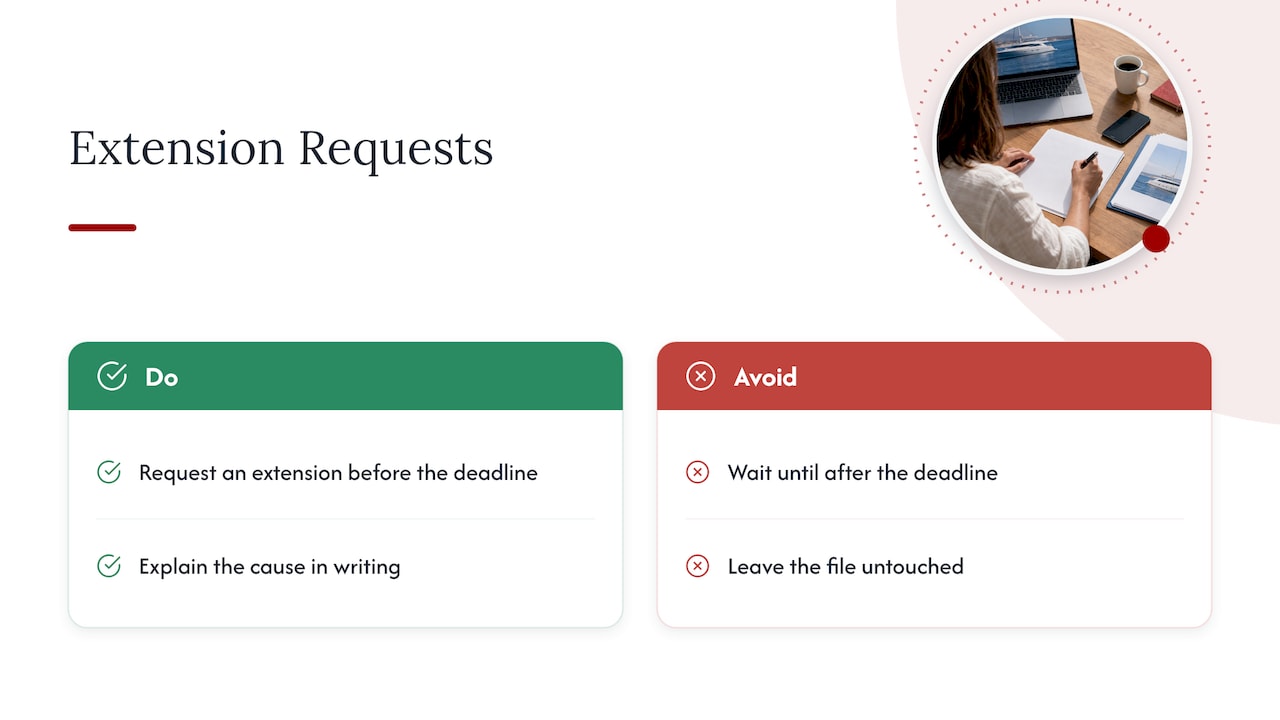
The words “for good reason” matter. A yacht waiting on a delayed survey or a shipyard that has not yet carved the marks is a reasonable case. A file that sat untouched is not. Ask for an extension before the deadline, not after, and explain the cause in writing.
The Act also limits how many times provisional registration can be used. The registrar may refuse to provisionally register a ship more than three times in succession, and may not consecutively register a ship more than twice in the name of the same owner. Provisional status is a bridge, not a place to stay.
What happens if you miss the deadlines
Provisionally registered ships must meet the Act’s requirements within 12 months, unless exempted, and non-compliance may incur penalties. The Act sets the consequences, so for a specific situation ask the registry or a maritime lawyer rather than guess.
Operating while provisionally registered
The provisional certificate does not suspend ordinary obligations. While you hold it, the vessel still needs to:
- meet manning, safety and pollution-prevention standards before operating
- carry evidence of legal marking (the carving and marking note or equivalent)
- be inspected on schedule if it is 10 years or older
- have its own radio identity in order
The last point catches owners out. A Maltese-flagged yacht with VHF or DSC equipment needs a radio licence and an MMSI number. We handle the MMSI application at €649 for Malta, and our guide to the Malta radio license for yachts explains how to avoid the form delays that hold up listing.
Insurance is not a line item in the Act’s registration process as we read it, but charter clients, marinas and lenders will ask for it, and a vessel flying a new flag should have cover that names the right flag, owner and usage. We arrange boat insurance consultancy through our services page.
Keeping track after registration
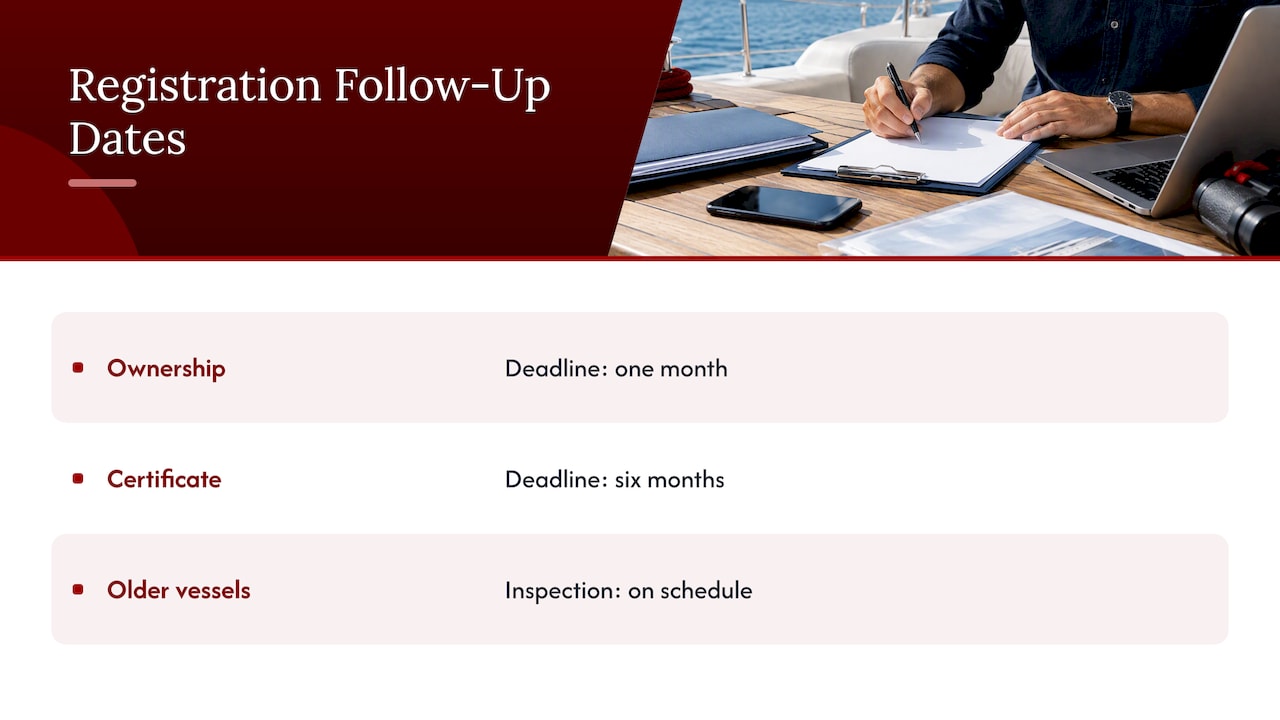
Once the flag is granted, the work moves to dates: a one-month ownership deadline, a six-month certificate deadline, an inspection window for older boats. Tools built for tracking vessel registration details, such as marina vessel registration tracking practices, show how marinas keep documents and expiry dates organised, and the same discipline helps an owner stay ahead of Merchant Shipping Act obligations. Even a simple shared calendar with each deadline works.
Perspective: where Malta provisional registrations go wrong
We work daily across six major registries, and Malta is one where the speed is real but the follow-through is what separates a clean registration from a messy one. In our experience the same four patterns repeat:
- Owners treat the provisional certificate as the finish line. It is the start of a clock. We give every client a dated list of what is due and when, the moment the certificate is issued.
- Deletion from the previous registry is left late. On second-hand purchases it is the most common cause of delay, so we start it first.
- Ownership structure is decided too late. Changing the owning entity midway forces new declarations. Settling it before filing saves weeks.
- Age is overlooked. A 14-year-old yacht and a 16-year-old yacht are treated very differently on inspection. We check the build year before quoting.
Malta is not always the right flag. For some owners, a different registry fits the cruising area, the vessel’s age or the intended use better, and we say so when that is the case. Our job is to put the yacht under the flag that suits how it will actually be used, then keep the file compliant.
— VesselFlag
Register under the Malta flag with us
If you want to move quickly, we run the Malta file end to end: eligibility check, document list, ownership company if needed, filing, and the post-registration deadlines. Our published price for Malta yacht registration ranges from €780 to €2,420, with the MMSI application at €649. Vessels coming off another flag can add a deletion certificate at €220.
See scope and pricing on our Malta yacht registration page, or tell us the vessel’s age, current flag and intended use and we will map out the timeline.
Malta provisional registration compared with other routes
Provisional registration is one way to get a flag quickly. Alternatives differ in speed, ownership rules and cost, so match the route to the vessel:
| Consideration | Malta provisional | Another flag |
|---|---|---|
| Ownership | EU citizen or legally constituted entity of any nationality | Varies by flag; some require a local or national owner |
| Time to flag | Fast; the file can be completed afterwards | Varies by registry |
| Deadlines after registration | One month, six months, 12 months | Differs by registry |
| Age rules | Inspection from 10 years, trading ships generally not accepted at 20 | Differs by registry |
For example, owners who bought a boat in another country sometimes find a different EU flag simpler. Our guide to the Polish flag for a yacht bought abroad explains that route. We also register under San Marino, UK Part 1, Palau, Langkawi, Gibraltar, Panama and the Dutch Zeebrief, so the comparison can be made on the facts of your vessel.
Preguntas frecuentes
How long does Malta provisional registration last?
Six months. It can be extended for further periods not exceeding six months in aggregate, so the practical maximum is twelve months. Extensions require good reason and should be requested before the period ends.
Can a US citizen register a yacht in Malta?
Not personally, as the rule is stated by Transport Malta: vessels must be wholly owned by EU citizens or by legally constituted entities of any nationality. A US owner would normally hold the yacht through a company, such as a US LLC or UK Ltd. Ask a tax adviser which structure suits your situation.
Does provisional registration give the same rights as permanent registration?
Yes, it has the same effect. The right to operate still depends on the vessel meeting manning, safety and pollution-prevention standards, and on completing the permanent file inside the statutory deadlines.
Does my yacht need an inspection?
It depends on age. A vessel of 15 years or more needs a successful Flag State inspection before provisional registration, and one aged 10 to under 15 needs it before or within one month. Younger vessels have no age-based inspection requirement under the rules we cite.
What if I cannot finish the documents in six months?
Apply for an extension for good reason before the deadline. The Act allows up to six more months for the convention, survey, tonnage and marking documents. All other requirements must be met within 12 months unless exempted, and non-compliance may bring penalties.