
TL;DR:
- Commercial yacht status depends on usage, registration, and operational standards, not just payment reception.
- Yachts over 24 meters generally require full compliance codes, impacting certification and survey requirements.
- Proper registration and compliance are essential to avoid fines, insurance issues, and operational risks.
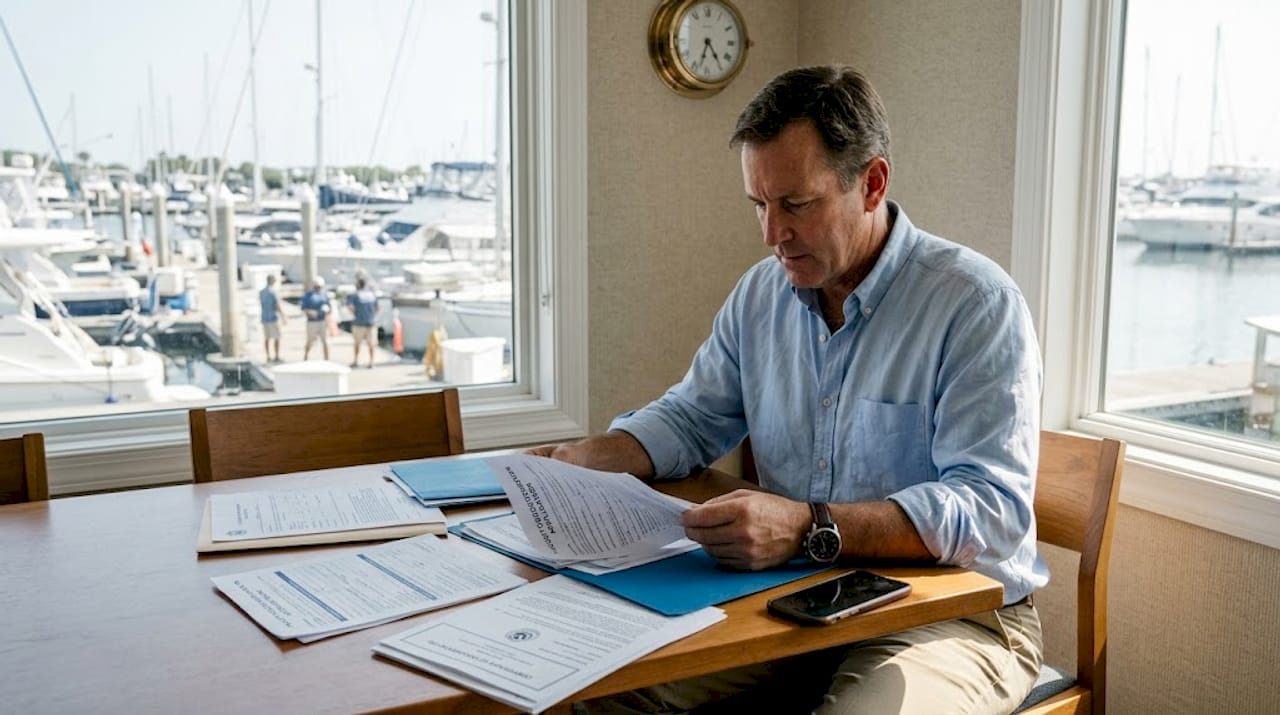
Many yacht owners assume that the moment they accept payment for a charter trip, their vessel automatically becomes a commercial yacht. That assumption is dangerously incomplete. Commercial yacht status is determined by a layered set of legal, regulatory, and operational criteria that vary by flag state, vessel size, and intended use. Getting it wrong exposes you to fines, forced re-registration, insurance voids, and tax penalties that can cripple a charter operation before it earns its first season. This guide breaks down every criterion that matters so you can make informed, compliant decisions about your vessel’s status.
Índice
- What defines commercial yacht status?
- Understanding size thresholds and code applicability
- Registration mechanics and flag state criteria
- Compliance requirements and risks of misclassification
- Key financial and tax implications
- Why most owners underestimate flag state nuances
- Get expert guidance for your yacht registration
- Frequently asked questions
Principales conclusiones
| Punto | Detalles |
|---|---|
| Legal definition | A commercial yacht is defined by profit-generating use, not just activity or intent. |
| Size matters | Most codes apply at 24 meters and above, with different rules for smaller yachts. |
| Registration impacts | Flag state code selection determines requirements, documentation, and compliance process. |
| Strict compliance | Commercial yachts face annual inspections, technical standards, and high liability for misuse. |
| Financial stakes | Correct status can mean the difference between major tax relief and costly penalties. |
What defines commercial yacht status?
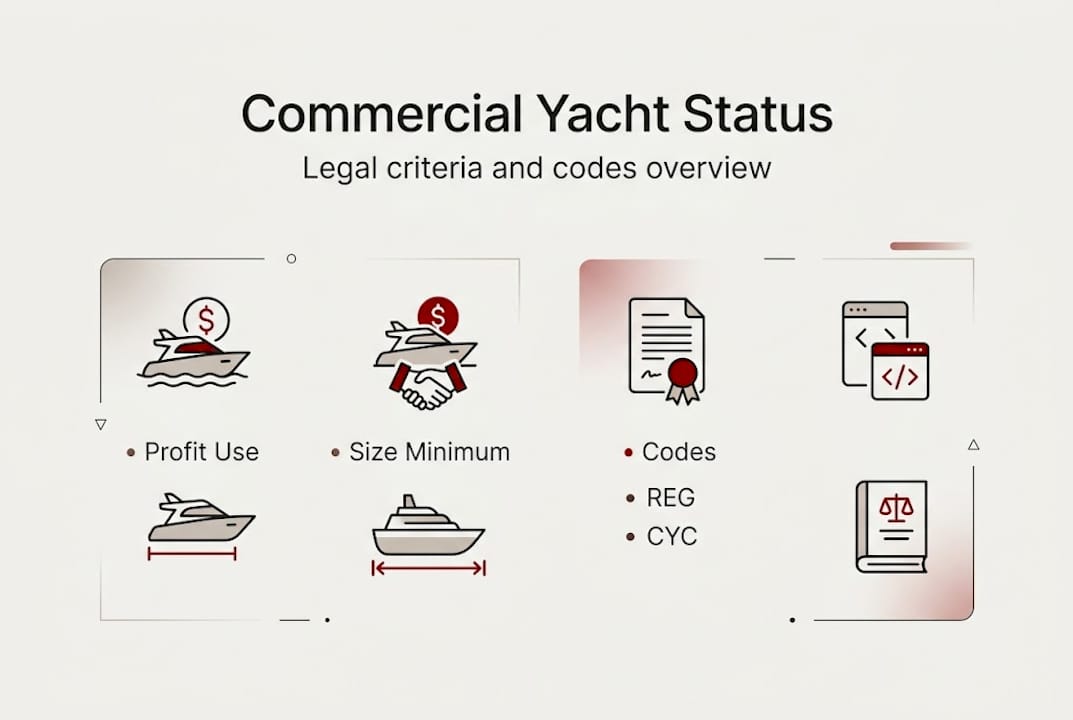
The core distinction sounds simple: a commercial yacht operates for profit, while a private yacht is used solely for the owner’s pleasure. But that one-line definition hides real complexity. Commercial yacht status is tied to profit-generating activities, while private registration covers the owner’s pleasure only, with no compensation exchanged.
The dividing line is not just about intent. It is about how the vessel is used, how it is registered, and what operational standards it meets. A yacht used primarily for private cruising but rented out once for a friend’s birthday party still sits in a legal gray zone that most flag states address explicitly. You cannot simply declare a purpose and expect regulators to agree.
Here is what typically characterizes commercial status across most major flag states:
- Passenger carriage for hire: The yacht carries guests who pay for the experience, whether as a day charter, term charter, or scheduled route.
- Corporate or hospitality use: The vessel is used for business entertainment where clients receive a financial benefit, even indirectly.
- Crewed yacht programs: Paid crew operating the vessel for paying guests almost always triggers commercial classification.
- Profit motive in operation: Any activity where the owner generates revenue from the vessel’s use points toward commercial status.
The challenge is that no universal definition exists across all maritime jurisdictions. Each flag state writes its own rules. The UK’s Red Ensign Group Yacht Code (REGYC) is notably precise about distinguishing commercial sport and pleasure use. Malta applies its own Commercial Yacht Code (CYC). Cayman Islands has its own framework. When you pursue yacht flag registration, you are not just picking a flag for convenience. You are choosing a legal framework that defines what your vessel can and cannot do.
“No universal definition exists; flag-specific rules govern commercial yacht status. Prioritize white-listed flags for port access and insurance coverage.”
Pro Tip: Before starting any charter activity, download and read your chosen flag state’s official commercial yacht definition. A single paragraph of that document can save you from a year of compliance headaches.
Understanding size thresholds and code applicability
Size is not just a physical attribute when it comes to commercial yacht regulation. It is a regulatory trigger. Most major commercial yacht codes hinge on the 24-meter load line length as their primary threshold. Cross that line and your vessel enters a completely different compliance world. The REG Yacht Code sets 24 meters as the benchmark at which full commercial standards apply, including passenger limits, survey requirements, and crew certification.
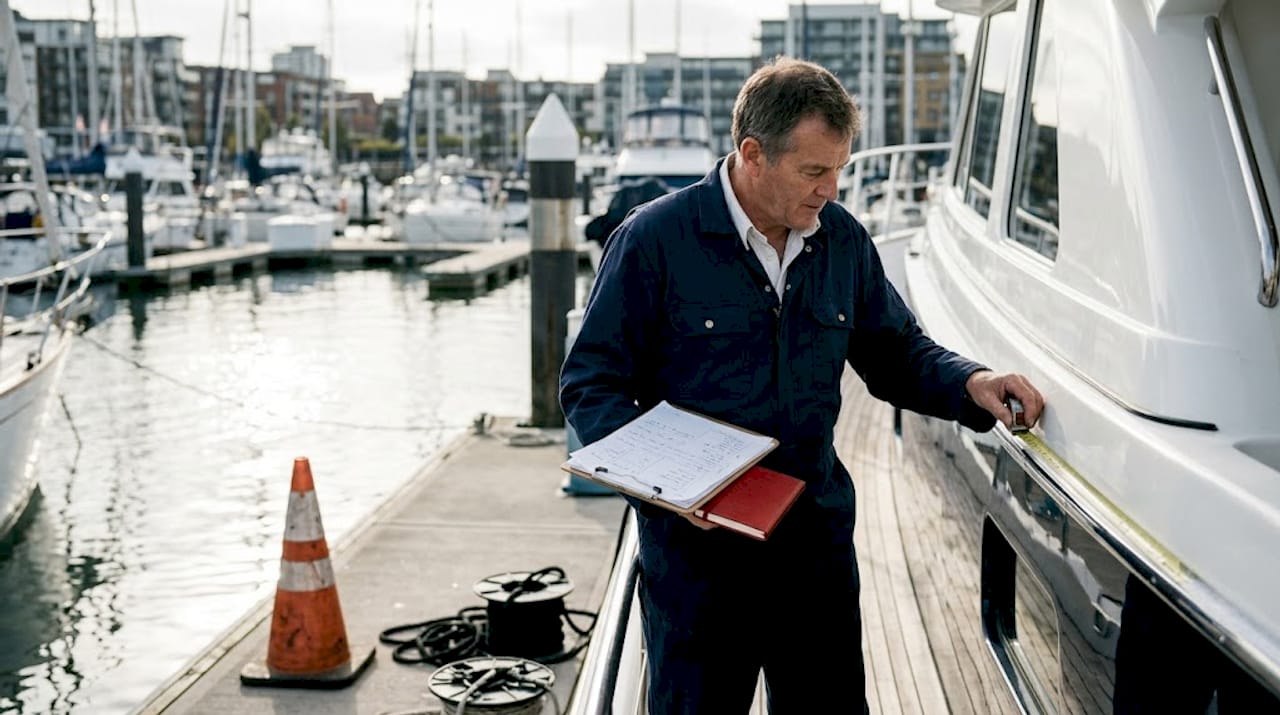
For yachts between 12 and 24 meters, options like Malta’s simplified Commercial Yacht Code (sCYC) apply. These codes are less demanding but still impose real obligations. Yachts under 12 meters operating commercially face a patchwork of national rules that vary widely.
Passenger count matters as much as length. Most commercial yacht codes cap carrying capacity at 12 passengers. Exceed that number and the vessel crosses into passenger ship territory, triggering SOLAS-level requirements that are far more demanding.
| Code | Size Range | Max Passengers | Key Flag States |
|---|---|---|---|
| REG Yacht Code | 24m and above | 12 | UK, Cayman, BVI |
| CYC (Malta) | 24m and above | 12 | Malta |
| sCYC (Malta) | 12m to 24m | 12 | Malta |
| National codes | Under 12m | Varía | Flag-specific |
Core documents typically required for commercial status at each threshold include:
- Stability booklet approved by a recognized organization
- Load line certificate (mandatory for vessels over 24m)
- Safety equipment certificates covering life rafts, fire suppression, and navigation
- Crew certification matching the manning scale required by the code
- Survey report from a classification society or flag-approved surveyor
For a practical walkthrough of what each size bracket demands, step-by-step commercial vessel registration outlines the exact sequence of actions from initial survey to provisional certificate. Understanding REG Yacht Code details before you begin saves significant time and rework during the application process.
Registration mechanics and flag state criteria
Registering a commercial yacht is a fundamentally different process from registering a private one. Private registration is typically straightforward: proof of ownership, vessel particulars, and an application fee. Commercial registration involves surveys, coding compliance, provisional certificates, and eventually a permanent commercial endorsement. Commercial registration requires detailed surveys and certificates determined by your flag state choice, each with its own timeline and documentation stack.
| Step | Registro privado | Registro comercial |
|---|---|---|
| Survey | Not mandatory | Mandatory, class-approved |
| Coding | Not required | Required (REG, CYC, etc.) |
| Cronología | 5 to 15 days | 4 to 12 weeks |
| Annual audit | Not required | Required for vessels over 24m |
| Cost range | $500 to $2,000 | $5,000 to $18,000 annually |
The main documents and certificates required for commercial status include:
- Certificate of registry from the chosen flag state
- Commercial yacht code compliance certificate (REG, CYC, or equivalent)
- Safety management certificate (ISM Code, for larger vessels)
- Crew list and STCW certificates for all serving officers
- Load line and tonnage certificates
- Third-party liability insurance certificate with commercial cover
- Passenger safety briefing records and emergency procedures
Pro Tip: Choose a white-listed flag state. Paris MOU and Tokyo MOU white lists signal that your flag state meets international standards, which directly affects port access, insurance premiums, and charterer confidence. A gray or black-listed flag can make your commercial operation non-viable in major cruising destinations.
Getting boat registration compliance right from day one matters more than most owners realize. Errors at registration stage tend to compound during annual surveys and port inspections. Following registration best practices for your flag state of choice protects you from costly corrective action later.
Compliance requirements and risks of misclassification
Operating under the correct status is not a one-time checkbox. Commercial yachts carry ongoing compliance obligations that are inspected, audited, and enforced. For commercial yachts over 24 meters, annual third-party surveys are mandatory, covering structural integrity, safety equipment, and crew competency. There is no grace period and no workaround.
Core regulations that govern commercial yacht operations include:
- SOLAS equivalent standards: Fire safety, life-saving equipment, and structural requirements mirror those applied to commercial ships.
- ISM Code: Safety management systems must be documented and audited for vessels over a certain size.
- MLC 2006: Maritime Labor Convention standards govern crew wages, hours of rest, accommodation, and welfare.
- STCW: All officers and crew must hold appropriate certification for the vessel’s size and trading area.
- Yacht compliance requirements: Flag-state-specific checklists that must be cleared for annual endorsement.
The penalties for misclassification are severe and not theoretical. Ports conduct inspections. Charter guests file complaints. Insurance companies investigate claims.
“Misuse, such as chartering a private yacht without commercial registration, leads to fines, forced reclassification, and potential vessel detention.”
If you are chartering a privately registered vessel, your insurer can deny any claim arising from that voyage. That means you carry full personal liability for passenger injury, property damage, or environmental harm. For a vessel worth several million dollars operating in foreign waters, that is an existential financial risk. The flag state rules are not suggestions.
Key financial and tax implications
Commercial status is not just a compliance burden. It is also a financial tool when used correctly. Tonnage tax regimes and VAT relief are available to commercial operators but completely inaccessible to private yacht owners. Certain flags offer VAT exemptions on vessels that spend more than 50% of their time outside EU waters. That one provision can save tens of thousands of dollars annually on a large yacht.
Here is how the financial picture compares:
- Commercial status: Eligible for charter income, tonnage tax schemes, VAT relief on qualifying voyages, and crew cost deductions.
- Private status: Treated as a luxury asset, subject to wealth or asset-based taxation in many jurisdictions, with zero charter income permitted.
- Commercial operating costs: Annual costs for popular flags like Cayman, Malta, and Marshall Islands range from $5,000 to $18,000 per year, covering surveys, code compliance, and registry fees.
- Tax exposure: Without commercial status, charter income received is often treated as undeclared income, triggering back-tax liability plus penalties.
The upfront and recurring costs of commercial registration are real, but so is the earning potential. A 30-meter yacht generating $200,000 per season in charter income easily justifies the compliance overhead when the tax structure is properly arranged. Understanding the hidden costs of registration before you commit to a flag state prevents unpleasant financial surprises. Reviewing compliance requirements by jurisdiction helps you model the true cost of commercial operation against projected charter revenue.
Why most owners underestimate flag state nuances
After working with yacht owners across dozens of registrations, one pattern stands out consistently: owners focus on whether they are chartering or not, and completely overlook how their chosen flag state interprets that activity. Cayman and Malta both support commercial yacht operations, but their definitions of what qualifies, what surveys they accept, and how they treat corporate ownership structures differ in ways that carry real consequences.
Insurance underwriters know these nuances. When a claim is filed, they investigate the ownership entity, the flag state’s commercial definition, and whether the vessel’s operations actually matched its registration category. A mismatch voids coverage, regardless of how much premium was paid.
The most practical advice we can offer is this: engage a qualified maritime advisor who specializes in your target flag state, not a generalist who knows the broad strokes. The fine print in each flag’s commercial yacht framework is where owners either protect themselves or inadvertently create liability. Navigating registration pain points with expert guidance is not a luxury. It is the difference between a compliant, profitable operation and a costly regulatory correction.
Get expert guidance for your yacht registration
Getting commercial yacht status right from the start protects your investment, unlocks charter income, and ensures you can operate in the world’s most sought-after cruising destinations without legal exposure.
En VesselFlag.com, we support yacht owners and operators through every stage of the process, from initial status determination to ongoing compliance management. Our complete yacht registration guide walks you through flag selection, documentation, and submission timelines. You can also verify your yacht registration validity or explore the key differences between yacht vs boat registration requirements. The right registration decision today protects every charter season that follows.
Frequently asked questions
What is the main difference between a commercial and private yacht?
A commercial yacht is operated for profit, such as chartering for hire, while a private yacht is used only for the owner’s pleasure with no trade or payment involved. The legal distinction is operational, not just a matter of intent.
What size must a yacht be to qualify as commercial under main codes?
Most major yacht codes, like REG and CYC, apply their commercial thresholds at 24 meters load line length and above, with special rules applying to vessels between 12 and 24 meters.
What are the consequences of misclassifying yacht status?
Owners risk fines, forced reclassification, loss of insurance, and possible vessel seizure. The penalties for misuse are enforced by both flag states and port authorities during routine inspections.
Which flags are popular for commercial yacht registration?
Cayman Islands, Malta, and Marshall Islands are preferred for their regulatory reputation, tax advantages, and flexible codes. Annual costs by flag range from $5,000 to $18,000 depending on vessel size and compliance requirements.
Does commercial status affect ongoing taxes and costs?
Yes. Commercial status brings higher compliance costs but opens access to significant tax relief options including tonnage tax and VAT exemptions, along with legal charter income opportunities.
Recomendado
- Yacht compliance explained: safe, legal, efficient ops
- Yacht vs boat registration: what you need to know
- Documentos clave para el registro de yates: Garantizar el cumplimiento de la legislación
- Registro de yates frente a documentación - Principales repercusiones jurídicas
- What is yacht brokerage? Expert guide for Florida owners