
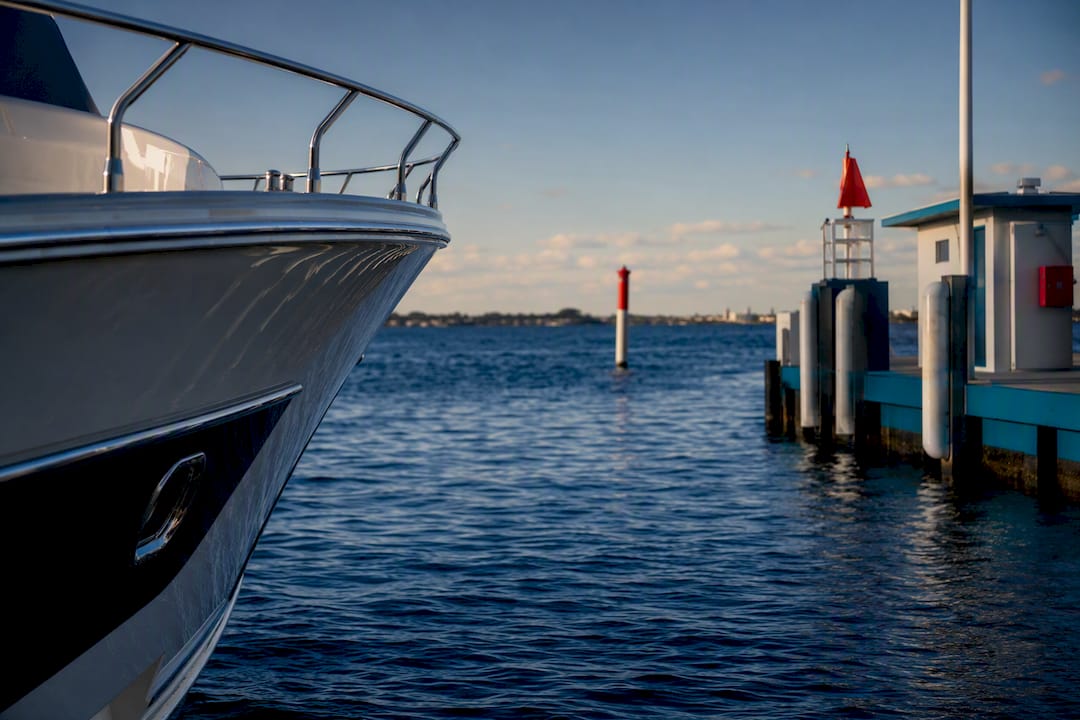
Yes, a foreign-flagged yacht can cruise in U.S. waters, but only under conditions. A cruising license under 19 CFR § 4.94 can exempt an eligible yacht from formal entry at every port, but it strictly forbids any commercial activity, including chartering. The moment you arrive, call U.S. Customs and Border Protection at your first port and find out whether you need formal entry or qualify for that license.
En resumen:
- A cruising license under 19 CFR § 4.94 allows foreign yachts to avoid formal entry for up to a year, but it strictly prohibits commercial activities like chartering.
- Owners must submit their application at the first U.S. port of arrival, bringing documents such as vessel registration, passports, proof of ownership, and prior CBP decals or licenses.
- Reporting arrival requires calling CBP immediately and completing formal entry within 48 hours unless a cruising license is in place; vessels over 30 feet may need to pay a $25 annual CBP fee.
- Bareboat charters are considered lawful for foreign yachts, but crewed or time chartering with paying passengers often needs a coastwise endorsement or MARAD waiver to avoid violations.
- Proper documentation, timely filings, clear ownership records, and avoiding online charter advertising prevent penalties, license denial, or vessel seizure.
Índice
- Owner Checklist: Documents and Steps Before You Cruise in U.S. Waters
- What Is the CBP Cruising License and Who Qualifies?
- How Do You Report Arrival and Clear Customs?
- Can You Legally Charter a Foreign Yacht in U.S. Waters?
- What Visas Do Foreign Crew Need, and Who Has to Clear Immigration?
- What Happens if You Break the Rules?
- The Paperwork Shortcuts That Actually Backfire
- How Vesselflag Helps You Stay Compliant Before You Arrive
- Where to Verify the Rules Yourself
- Sources
- Preguntas frecuentes
Owner Checklist: Documents and Steps Before You Cruise in U.S. Waters
Before you point the bow toward Florida, the Bahamas run, or any U.S. port, gather your paperwork and confirm your legal path. Missing one document at the dock can cost you a day, or worse, trigger a formal entry you weren’t expecting.
- Pull together vessel registration papers, passports for everyone aboard, a written crew list, current insurance certificates, and your MMSI/AIS registration details.
- Have proof of ownership on hand, along with any prior CBP decal or cruising license number from a previous season.
- Determine ahead of time whether your flag state and cruising pattern likely qualify for a cruising license; if you’re unsure, assume you’ll need formal entry within 48 hours and prepare accordingly.
- Phone CBP the moment you arrive, know the reporting number for that specific port, and keep every permit, application, and email confirmation on board for the rest of the season.
Consejo de experto: Photograph or scan every document before you leave your home port. A CBP officer asking for a passport copy while you’re anchored offshore with spotty signal is not the time to discover your phone’s storage is full.
What Is the CBP Cruising License and Who Qualifies?
The cruising license comes from 19 CFR § 4.94, and it’s the single most useful tool a foreign yacht owner has for avoiding repeated customs paperwork. The license typically runs for up to one year, it’s non-transferable to a new owner or vessel, and it does not permit any trade or commercial use, meaning no chartering, no paid passengers, nothing that generates revenue from the boat.
The statutory authority behind this comes from 46 U.S.C. § 60504, which allows reciprocal cruising privileges but leaves the Department of Homeland Security discretion to set conditions. That discretion matters. CBP can deny a license outright if it has reason to believe the vessel will be chartered, and it increasingly cross-references online listings to make that call.
Eligibility generally depends on your flag state having a reciprocal arrangement recognized by CBP, and on your yacht being used purely for private pleasure. Owners with straightforward recreational cruising plans, no charter brokers, no advertised availability, tend to have the smoothest path.
- File your application at the CBP port director’s office at your first port of arrival, not after the fact.
- Bring vessel registration, ownership documents, and passports for everyone aboard.
- If your situation involves prior charter activity, multiple owners, or a corporate holding structure, a customs broker can save you weeks of back and forth.
How Do You Report Arrival and Clear Customs?
The clock starts the second you cross into U.S. waters from a foreign port, and the sequence matters more than most owners expect. Skipping a step, even accidentally, can turn a routine arrival into a formal entry headache.
- Call CBP immediately upon arrival, before you even tie up if possible, and have passports, vessel documentation, and your prior CBP decal number (if you have one) ready to read off.
- If your voyage to the U.S. takes 96 hours or longer, certain advance notices need filing at least 96 hours before arrival; shorter passages carry shorter notice windows, so check your specific route.
- Without a valid cruising license, complete formal entry within 48 hours of your first port of arrival. This is a hard deadline, not a suggestion.
- If your vessel is documented or registered and measures 30 feet or more, pay the annual CBP user fee, which is approximately $25, at your first arrival each calendar year. Smaller vessels are generally exempt from this fee.
A cruising license removes the formal entry requirement while it’s valid, but it never removes your obligation to clear immigration. Every person aboard still has to be reported and processed accordingly.
Can You Legally Charter a Foreign Yacht in U.S. Waters?
This is where most owners get into trouble, usually without meaning to, making it vital to understand yacht charter insights for compliance. U.S. law draws a sharp line between bareboat charters and crewed charters, and which side of that line you’re on determines whether you need a coastwise endorsement at all.
A bareboat, or demise, charter hands full operational control to the charterer. The charterer hires the crew, directs the vessel, and runs the trip. This is generally the lawful path for foreign-flagged yachts operating commercially in U.S. waters, since it doesn’t trigger the coastwise trade restrictions built into the Jones Act and the Passenger Vessel Service Act.
A crewed or time charter, where the owner’s crew runs the boat while paying passengers ride along, is a different animal entirely. Carrying passengers for hire between U.S. ports on a foreign-built or foreign-flagged vessel generally requires a coastwise endorsement or a MARAD Small Vessel Waiver, which comes with its own eligibility rules and passenger caps.
- Bareboat charters shift legal and operational control to the charterer, which is the whole point.
- Crewed charters without a coastwise endorsement or MARAD waiver expose the owner to real enforcement risk.
- State sales and use tax can apply to charter income even when the federal maritime rules are satisfied, so loop in local counsel or an accountant before you sign a charter contract.
Consejo de experto: Insurance policies often specifically exclude bareboat or demise charter activity unless you’ve added that endorsement. Call your insurer before your first charter, not after a claim. Vesselflag’s charter yacht liability insurance guide walks through what a compliant policy needs to include.
What Visas Do Foreign Crew Need, and Who Has to Clear Immigration?
Crew visa status trips up more charter arrangements than almost anything else on this list, largely because owners assume a bareboat contract solves the problem by itself.
- Foreign crew working aboard commonly hold a B1 visa for business purposes or a C1-D visa for crew members transiting through U.S. ports; consular guidance varies by nationality, so check with the relevant U.S. consulate before the trip.
- Every passenger and crew member aboard must clear immigration on arrival, even when the vessel itself holds a valid cruising license that exempts it from formal customs entry.
- If the owner is still directing crew hiring, scheduling, or day-to-day operations during a “bareboat” charter, courts and CBP look past the paperwork to actual conduct, and that behavior alone can unravel the entire arrangement.
What Happens if You Break the Rules?
CBP has real discretion here, and it uses it. An owner suspected of using a cruising license for disguised commercial activity can face denial of that license, mandatory formal entry going forward, financial penalties, or in serious cases, civil seizure of the vessel under statutes like 46 U.S.C. § 60504.
Online listings are a bigger liability than most owners realize. CBP increasingly checks broker sites and charter marketplaces to see whether a “private” yacht is actually being advertised for hire, and a live listing can sink a cruising license application before you ever explain your side.
- Pull down or clarify any online listing that implies charter availability before applying for a cruising license.
- Put bareboat arrangements in writing, with clear language transferring operational control to the charterer.
- Talk to a customs broker or maritime attorney before your first season if your situation involves any charter history, corporate ownership, or a mixed private/commercial use pattern.
The Paperwork Shortcuts That Actually Backfire
The mistakes we see most often aren’t exotic. They’re an owner who left a charter listing live on a broker site out of habit, one who kept directing the crew during a “bareboat” trip because old habits die hard, and one who simply missed the 48-hour formal entry window because nobody told them the cruising license didn’t apply to their situation.
None of these are legal gray areas. They’re paperwork and timing failures, and they’re avoidable. Getting your registration, MMSI setup, and document set right before you ever approach U.S. waters removes most of the friction at the first port of call. A clean file, correctly flagged vessel, consistent ownership records, and no dangling charter listings, gives a CBP officer nothing to question.
— VesselFlag
How Vesselflag Helps You Stay Compliant Before You Arrive
Getting flagged, registered, and documented correctly before you ever reach a U.S. port is the single biggest lever you have over how smooth that first CBP conversation goes.
Vesselflag handles vessel registration under flag jurisdictions suited to your cruising and ownership plans, sets up MMSI and AIS licensing, and helps you assemble the document set CBP and immigration officers actually ask for, registration, ownership proof, and crew documentation, before you’re standing at the dock trying to explain yourself. Owners come to Vesselflag because getting the flag, registration, and paperwork right the first time is faster and cheaper than untangling a denied cruising license or a missed formal entry deadline after the fact. If you’re planning a season in U.S. waters, start with the step-by-step yacht registration guide or reach out for a consultation on which flag and document setup fits your specific route.
Where to Verify the Rules Yourself
For anything borderline, read the primary sources or call a professional directly.
- 19 CFR § 4.94, the cruising license regulation itself
- CBP’s pleasure boat reporting pages for port contacts and fees
- IYBA’s entry and exit requirements summary for practical steps
- A maritime attorney or customs broker for chartering or ownership structures that don’t fit a simple case
This article is general information, not a substitute for advice from a qualified lawyer. Consult a qualified legal professional about your own circumstances before acting on anything here.
Sources
- 19 CFR § 4.94 — Yacht privileges and obligations (cruising licenses)
- CBP — Pleasure boat reporting information
- Understanding U.S. entry and exit requirements for yachts — IYBA
- Plan chartering your yacht in U.S. waters? – Miller Watson PLLC
Preguntas frecuentes
Do Foreign Yachts Need a Permit to Enter U.S. Waters?
Not always a formal permit, but they do need either a cruising license under 19 CFR § 4.94 or completed formal entry within 48 hours of first arrival if no license applies.
Can You Legally Charter a Foreign-Flagged Yacht in the U.S.?
Bareboat charters, where the charterer takes full operational control, are generally lawful; crewed charters carrying paying passengers typically require a coastwise endorsement or MARAD waiver.
Who Owns the Largest Yacht in the United States?
Ownership of the largest yachts associated with the U.S. changes hands periodically and is often held through corporate or trust structures rather than a named individual, which is one reason many owners register through a flag jurisdiction with strong ownership privacy protections, something Vesselflag helps structure through its flag registration services.
Can You Legally Live in International Waters?
There’s no established legal framework granting permanent residency in international waters; vessels there remain subject to their flag state’s laws, and entering any country’s territorial waters, including the United States, brings you under that country’s entry and customs rules.
Which Yachts Can Cross the Atlantic Ocean?
Ocean-capable yachts generally need sufficient fuel range, a hull and rigging rated for open-ocean conditions, and a crew experienced in offshore passages; smaller coastal cruisers built for calm-water use are not built for that crossing.
Who Bought Donald Trump’s Yacht?
En Trump Princess, Donald Trump’s former megayacht, was sold decades ago and has changed hands multiple times since; it is not connected to current U.S. cruising license or charter rules discussed here.
Recomendado
- Avoid costly yacht registration mistakes: owner’s guide
- Puntos débiles del registro de yates: Navegue por la conformidad mundial con confianza
- Navigate maritime regulations for yachts: global compliance guide
- Lista de comprobación para el registro de embarcaciones: Reduzca los retrasos en el cumplimiento del 60%

[…] step one, and everything downstream gets harder. Yachts that arrive without reporting properly tend to face longer inspections and more paperwork demands […]