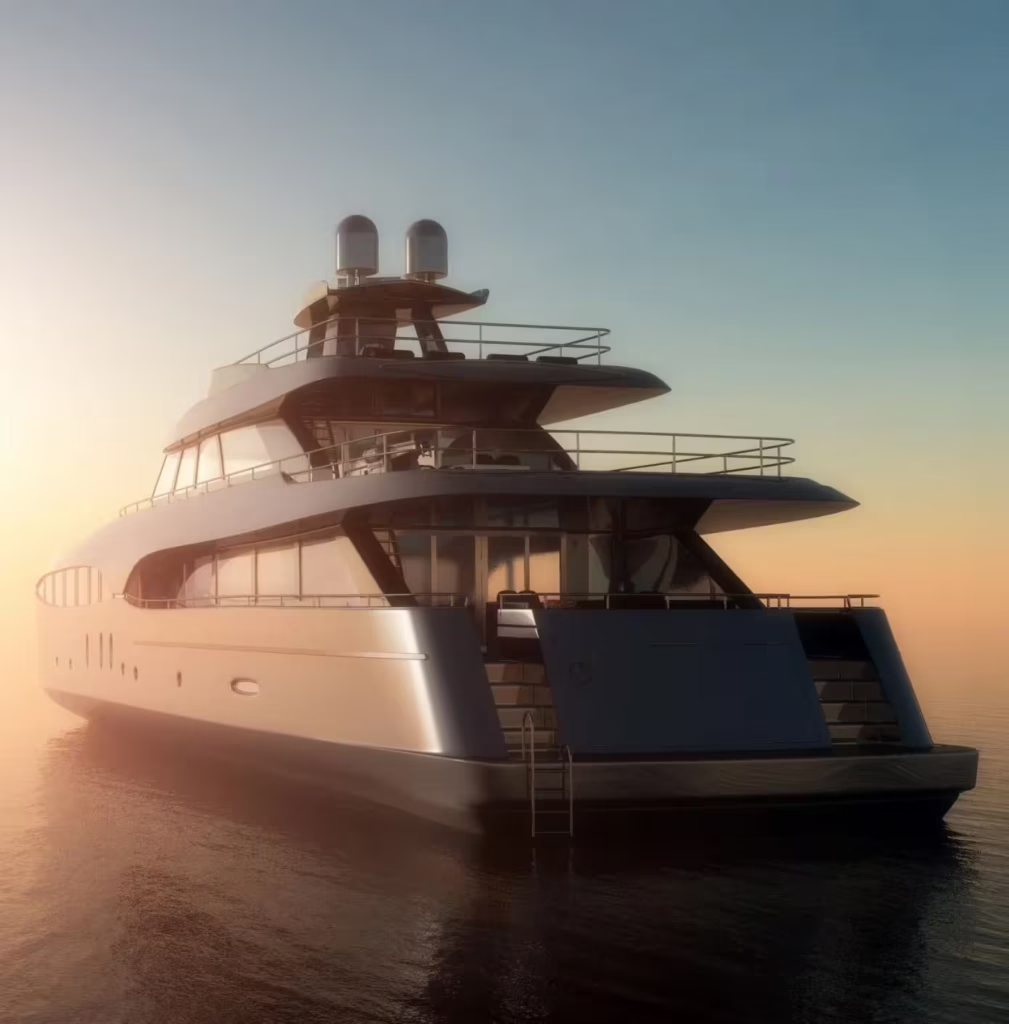
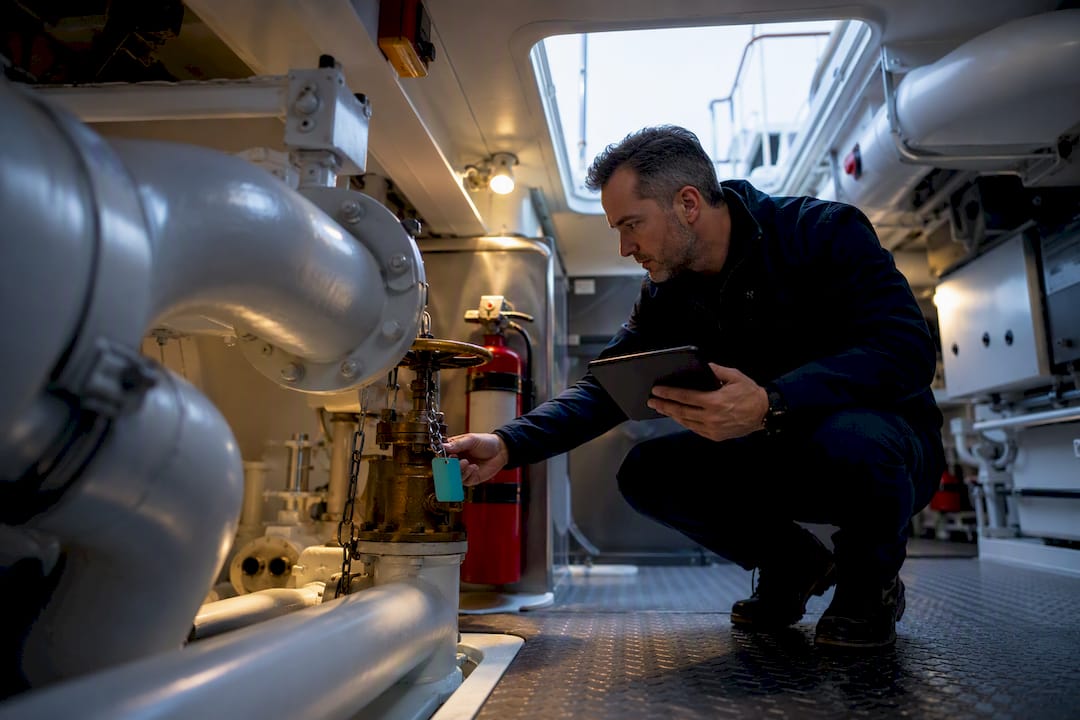
SOLAS applies in full only to larger yachts engaged in international voyages, but smaller and private vessels still fall under specific SOLAS chapters, most commonly Chapter V on navigation safety. If your yacht is near commercial thresholds, carries passengers for hire, or crosses borders, confirm status with your flag administration or classification society, check that your liferaft and EPIRB servicing is current, and gather your existing certificates before any survey.
TL;DR:
- Yachts under 24 meters generally avoid full SOLAS requirements but still need to comply with navigation safety rules and keep certificates current.
- For vessels approaching 24 meters or carrying passengers for hire, fire safety, construction, and life-saving equipment standards become more demanding and can require equivalence approval.
- All yachts must verify that lifesaving gear, EPIRB batteries, and service records are valid within the survey cycle to avoid delays or detentions.
- Recognized organizations carry out surveys, and missing deadlines or outdated certificates often cause survey failures and insurance issues.
- Proper documentation, flag registration, and equipment setup should be arranged early to streamline certification and avoid costly delays.
Índice
- What Is SOLAS and Which Chapters Matter for Yachts?
- How Does SOLAS Apply to Yachts in Practice?
- What SOLAS Equipment Do Yachts Actually Need?
- How Do Surveys and Flag State Certification Work?
- What Should Be on Your SOLAS Compliance Checklist?
- Where Can Owners Confirm SOLAS Requirements?
- Publisher Perspective: Common SOLAS Compliance Issues
- Get Your Registration and Documentation Sorted With Vesselflag
- Sources
- PREGUNTAS FRECUENTES
What Is SOLAS and Which Chapters Matter for Yachts?
The International Convention for the Safety of Life at Sea (SOLAS), 1974 is the treaty the International Maritime Organization (IMO) uses to set minimum standards for ship construction, equipment, and operation worldwide. It is organized into chapters, each covering a distinct safety domain, and it is amended on a rolling basis rather than rewritten from scratch. The Life-Saving Appliances (LSA) Code sits alongside it, spelling out technical standards for liferafts, lifejackets, and rescue equipment referenced throughout the convention.
For yacht owners, four parts of SOLAS do most of the work:
- Chapter V (Safety of Navigation): covers passage planning, radar reflectors, and life-saving signals, and it applies to nearly all vessels, including many pleasure craft.
- Chapter II-1 and II-2 (Construction and Fire Protection): governs subdivision, stability, and firefighting systems, mostly relevant to larger yachts approaching commercial size.
- Chapter III (Life-Saving Appliances): sets the equipment standards behind the LSA Code, including liferaft and rescue boat specifications.
- LSA Code: the technical annex that manufacturers use to certify SOLAS-grade safety gear.
Not every yacht meets these chapters in their literal merchant-ship form. Many meet them through equivalence, which the next section covers.
How Does SOLAS Apply to Yachts in Practice?
SOLAS was written for cargo ships and passenger liners, so applying it word for word to a 30 meter motor yacht rarely makes sense. Flag states and classification societies handle this with thresholds, exemptions, and yacht-specific codes that translate SOLAS intent into rules a private vessel can actually meet.
Length and tonnage decide most of it. A yacht under 24 meters load line length generally stays outside full SOLAS scope, though Chapter V navigation rules still reach it in most jurisdictions. Cross the 24 meter mark, or approach key gross tonnage thresholds, and you start triggering fuller construction, fire safety, and life-saving requirements, particularly once you carry paying passengers or operate commercially.
- Equivalent arrangements: a flag administration or recognized organization can approve an alternative that achieves the same safety outcome as the literal SOLAS text, common where a yacht’s layout doesn’t fit merchant-ship assumptions.
- Waivers: formal exemptions from a specific requirement, issued by the flag state, usually tied to vessel size, route, or passenger count.
- REG Yacht Code: the Red Ensign Group code applies to yachts 24 meters and above under Part A, offering a purpose-built alternative to raw SOLAS chapters for commercially registered yachts.
Lloyd’s Register notes that building a superyacht to strict merchant-ship SOLAS rules can work against good design, which is exactly why these equivalence pathways exist rather than being treated as loopholes.
What SOLAS Equipment Do Yachts Actually Need?
Owners run into SOLAS at the equipment level more than anywhere else, because gear certification is checked at every survey. A SOLAS label isn’t a marketing term. It’s a regulated classification meaning the item passed IMO construction, stability, and performance testing under the LSA Code, and it usually costs more and services on a stricter interval than the ISO-rated equivalent sold for private small craft.
- Liferafts. SOLAS/MED-approved liferafts differ from ISO small craft liferafts in capacity, canopy strength, and equipment packs. Which one you need depends on your certificate class, not personal preference.
- Rescue boats and tenders. A SOLAS rescue boat is purpose-built for recovery operations, with hull, engine, and davit specifications distinct from a standard tender, and it’s required once your safety certificate calls for one.
- Radar reflectors and life-saving signals. RYA guidance confirms Chapter V’s practical reach into pleasure craft, including passive radar reflector fitting and carrying life-saving signal references onboard.
- AIS, MMSI, and EPIRB. Ship radio obligations follow FCC maritime guidance, and EPIRBs need registered MMSI numbers tied to your vessel’s actual flag and identity.
Pro Tip: Liferafts and EPIRBs both carry hard service dates. A raft serviced 13 months ago will fail survey even if every other document is perfect, so check service stickers before you check anything else.
How Do Surveys and Flag State Certification Work?
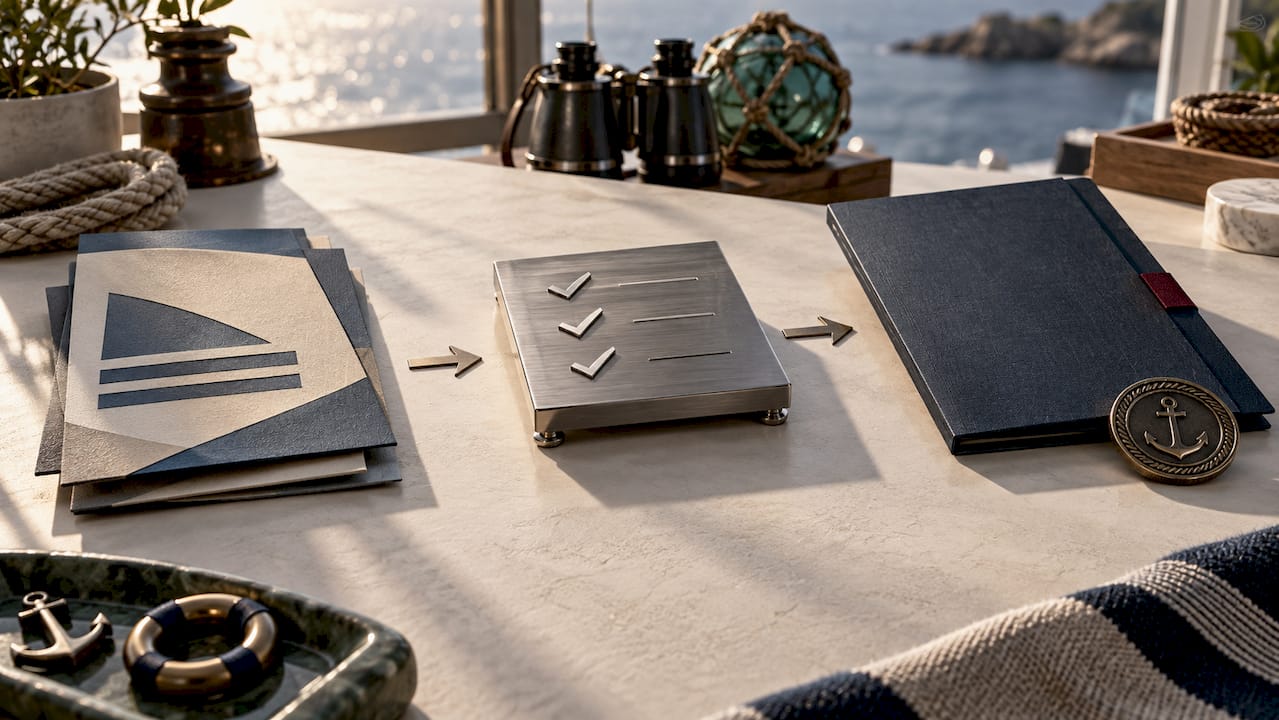
Recognized Organizations (ROs), typically classification societies acting on a flag state’s behalf, carry out the surveys and endorsements that turn SOLAS requirements into a valid certificate. They inspect construction, verify equipment against the LSA Code, and sign off on the paperwork port authorities check.
Survey cycles follow a predictable rhythm: an initial survey before the first certificate issues, annual surveys to confirm ongoing compliance, an intermediate survey partway through the certificate’s life, and a full renewal survey before it expires. The Republic of the Marshall Islands publishes a clear example of how this schedule interacts with MARPOL surveys for yachts, with thresholds at 100, 400, and higher gross tonnages triggering different survey types.
- Missing a survey window doesn’t just delay your certificate. It can trigger Port State Control detentions in foreign ports.
- Insurers increasingly ask for proof of current SOLAS-equivalent certification before underwriting yachts near commercial size.
- Flag registration itself often depends on producing valid class records alongside the vessel’s registry paperwork, a step covered in detail in Vesselflag’s guide to registering a commercial vessel.
What Should Be on Your SOLAS Compliance Checklist?
Preparing for a survey goes faster when the paperwork is assembled before the surveyor arrives rather than chased down during the visit.
- Assemble your document pack: registry certificate, class records, existing safety and radio certificates, and maintenance logs for life-saving equipment.
- Check onboard equipment: confirm liferaft service dates, EPIRB battery status, and that your MMSI and AIS configuration matches your current registration exactly.
- Verify radar reflector placement: a surveyor will check mounting height and position, not just presence.
- Coordinate scheduling: book your RO and flag administration contacts early. Survey slots fill up, especially ahead of charter season.
Pro Tip: Keep a single digital folder with every certificate’s expiry date listed at the top. Vesselflag’s compliance requirements guide outlines the documents most owners forget until the surveyor asks for them.
Where Can Owners Confirm SOLAS Requirements?
The IMO’s own SOLAS pages remain the primary reference for the convention’s text and amendment history, but they rarely answer a specific yacht’s situation on their own. Flag administration notices, classification society guidance, and FCC maritime radio pages fill in the practical detail IMO’s treaty language leaves general.
- Start with your flag administration’s own notices. Requirements for a Marshall Islands flagged yacht differ in detail from a UK or Maltese one, even when both trace back to the same SOLAS chapters.
- Cross-check equipment obligations against your classification society’s technical circulars, since they interpret LSA Code standards for specific vessel types.
- Consult Vesselflag’s guide to registration best practices when comparing how different flags handle SOLAS-equivalence for yachts near the 24 meter or 500 GT lines.
Call in a classification society or registration specialist once you’re within a few meters or a few hundred gross tons of a threshold. That’s where equivalence questions get genuinely complicated, and where a wrong assumption costs the most in survey delays and insurance friction.
Publisher Perspective: Common SOLAS Compliance Issues
Most delays we see at survey and registration stage trace back to three things: expired EPIRB batteries, liferaft service records that lapsed months earlier, and equivalence paperwork nobody can locate. Owners who line up registration, MMSI/AIS setup, and survey prep together, rather than treating each as a separate errand, avoid nearly all of it. A document checklist done early beats a scramble later.
— VesselFlag
Get Your Registration and Documentation Sorted With Vesselflag
Vesselflag handles the flag registration, MMSI setup, and document assembly that SOLAS-equivalence surveys actually check, so you show up prepared instead of explaining gaps to a surveyor.
A classification society can tell you what a survey requires. Vesselflag helps you get the paperwork and registration in place before that survey happens, coordinating flag documentation with MMSI and AIS setup so the two don’t end up mismatched, which is one of the most common reasons surveys stall. Provisional registration under flags like San Marino, Malta, or the UK typically moves in days rather than weeks, and the Registro de yates en San Marino service bundles corporate setup options for owners who need an LLC or LTD structure behind the registration. If your yacht is approaching a SOLAS threshold, check your flag options and start the paperwork now rather than during charter season.
Sources
- International Convention for the Safety of Life at Sea (SOLAS), 1974
- SOLAS V regulations for pleasure vessels — RYA
- Can superyacht designs be innovative and still comply with international safety standards? — Lloyd’s Register
- Maritime mobile and ship radio station guidance — FCC
- RMI Requirements for MARPOL Surveys for All Yachts (Notice)
PREGUNTAS FRECUENTES
What Are the Basic SOLAS Requirements for Yachts?
SOLAS sets minimum standards for construction, fire safety, navigation, and life-saving equipment, with Chapter V reaching most yachts and fuller chapters applying as size and passenger count increase.
What Is Chapter V, Regulation 34 of SOLAS?
Chapter V requires ships to plan their voyage in advance, accounting for navigational hazards, weather, and available charts, a rule commonly applied to yachts through national guidance like the RYA’s.
What Is Chapter 13 of SOLAS?
SOLAS doesn’t have a numbered “Chapter 13” in its current structure. Its chapters run from I through XIV covering distinct topics, so this is likely confusion with a specific regulation number within one of the existing chapters.
Are There New SOLAS Amendments Taking Effect Soon?
SOLAS amendments go through the IMO on a rolling schedule tied to committee sessions rather than a single annual update, so owners should check the IMO’s own convention page for the current amendment status rather than relying on a fixed date.
Does Vesselflag Help With SOLAS-Related Registration Documents?
Yes. Vesselflag assists with flag registration, MMSI licensing, and document assembly that surveyors check during SOLAS-equivalence surveys, with current pricing listed on each flag registration page.