
Navigating yacht registration across international jurisdictions presents complex challenges that can cost owners thousands in delays and compliance penalties. The choice of flag state directly impacts your vessel’s legal status, operational costs, tax obligations, and crew requirements. This comprehensive guide walks you through the 2026 registration process, from selecting the optimal flag to maintaining ongoing compliance. You’ll discover how to prepare documentation efficiently, avoid common pitfalls, and ensure your yacht operates legally worldwide while minimizing administrative burden and maximizing operational flexibility.
Índice
- Understanding Boat Registration And Flag State Significance
- Preparing For Yacht Registration: Requirements And Flag State Selection
- Step-By-Step Yacht Registration Process For 2026
- Common Challenges And Compliance Verification Post-Registration
- Explore Expert Yacht Registration Services
- Preguntas frecuentes
Key takeaways
| Punto | Detalles |
|---|---|
| Flag selection impacts costs | Your chosen registry determines tax obligations, crew requirements, and operating expenses |
| Genuine link required | International law mandates authentic connection between vessel and flag state for legal operation |
| EU flags simplify movement | Malta and other EU registries eliminate temporary import procedures and VAT complications |
| Legal entity often necessary | Offshore registration typically requires establishing a corporation or partnership in the registry country |
| Timeline varies significantly | Registration ranges from days in Marshall Islands to weeks in Cayman Islands depending on documentation |
Understanding boat registration and flag state significance
Yacht registration determines the nationality and legal framework governing your vessel. The flag state establishes which country’s maritime laws apply to your yacht, affecting everything from safety standards to taxation. This isn’t merely administrative paperwork. Your registration choice shapes operational legitimacy and determines which authorities have jurisdiction over your vessel.
The flag state concept extends beyond simple documentation. It creates a legal bond between your yacht and a sovereign nation. This relationship grants your vessel the right to fly that country’s flag and subjects it to that nation’s maritime regulations, inspection requirements, and enforcement mechanisms. Understanding this relationship helps you make strategic decisions about where to register.
International maritime law requires a genuine link between ship and flag state. This principle prevents fraudulent registrations and ensures accountability. The genuine link can be established through ownership structure, management location, or operational base. Without this authentic connection, your registration may be challenged by port authorities or insurance providers.
Many owners mistakenly believe their yacht must be registered in their country of citizenship. This misconception limits strategic options. Your vessel’s flag and your personal nationality are separate legal concepts. You can register in jurisdictions offering tax advantages, operational flexibility, or simplified compliance while maintaining your citizenship elsewhere.
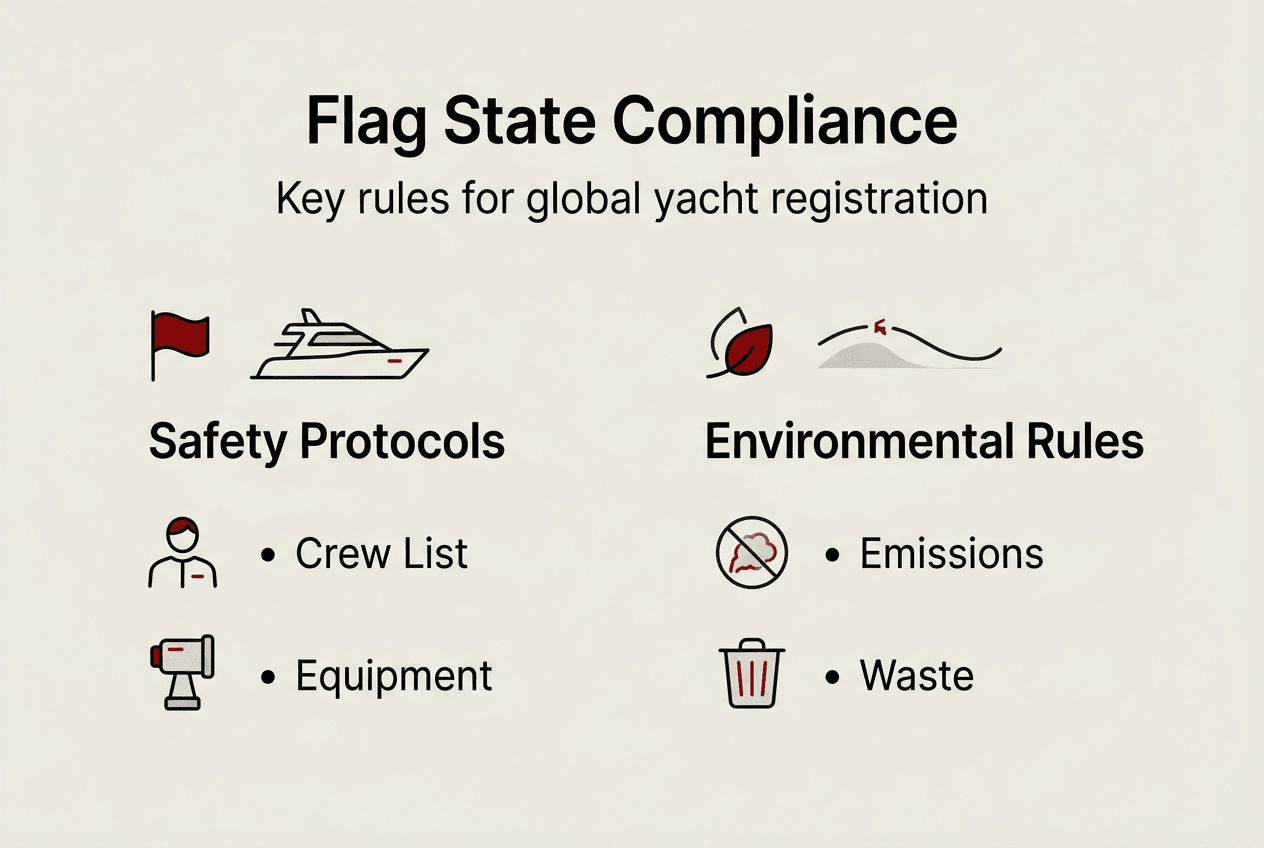
The flag state determines which maritime conventions apply to your yacht. These include safety protocols, environmental standards, and crew certification requirements. A poorly chosen flag can create operational headaches when entering certain ports or hiring international crew. Conversely, a strategic flag choice streamlines operations and reduces administrative friction across multiple jurisdictions.
Pro Tip: Research each flag state’s reputation with port authorities before committing. Some registries face increased scrutiny due to lax enforcement, potentially causing delays during port clearance procedures.
For comprehensive guidance on navigating these complexities, explore our detailed yacht registration 2026 guide covering jurisdiction-specific requirements.
Preparing for yacht registration: requirements and flag state selection
Successful registration begins with thorough preparation. You’ll need specific documentation regardless of your chosen flag. Standard requirements include proof of ownership, vessel specifications, builder’s certificate, and tonnage measurement. Additional documents vary by jurisdiction but often include insurance certificates, safety equipment inventories, and crew lists for commercial operations.
Foreign registry usually requires setting up a legal entity such as a corporation or partnership. This structure satisfies the genuine link requirement while providing liability protection and potential tax advantages. The entity type depends on your flag choice. Some jurisdictions accept simple corporations, while others require specific maritime entities with local directors or shareholders.
The offshore versus onshore decision shapes your registration experience. Onshore flags like the United States or United Kingdom offer prestige and strong legal frameworks but impose stricter regulations and higher costs. Offshore registrations offer tax benefits, confidentiality, and flexible crewing. Popular offshore options include Marshall Islands, Cayman Islands, and Panama, each with distinct advantages.

Key selection factors include tax implications, crew nationality requirements, confidentiality provisions, and operational flexibility. Tax considerations extend beyond initial registration fees to ongoing obligations like tonnage taxes or corporate levies. Crew requirements vary dramatically. Some flags mandate specific percentages of national crew members, while others impose no restrictions.
| Flag Type | Tax Benefits | Crew Flexibility | Confidentiality | Setup Complexity |
|---|---|---|---|---|
| Offshore (Marshall Islands) | High | Unrestricted | Strong | Low |
| Offshore (Cayman Islands) | High | Flexible | Strong | Medium |
| Onshore EU (Malta) | Moderado | EU nationals preferred | Moderado | Medium |
| Onshore (UK Part 1) | Low | No restrictions | Low | High |
Confidentiality matters for owners seeking privacy. Offshore registries typically shield beneficial ownership details from public records. Onshore registries increasingly require transparency, publishing owner information in accessible databases. This difference impacts estate planning, asset protection strategies, and personal security considerations.
Operational flexibility encompasses charter permissions, commercial use restrictions, and geographic operating limits. Some flags prohibit commercial operations entirely. Others require additional licenses or impose geographic restrictions. Understanding these limitations prevents costly surprises after registration.
Pro Tip: Calculate total five-year ownership costs including registration fees, annual renewals, mandatory inspections, and legal entity maintenance before selecting your flag. The cheapest initial registration often proves expensive long term.
Our comprehensive register a yacht guide provides jurisdiction-specific preparation checklists. Understanding the broader flag registration process helps you anticipate requirements and avoid delays.
Step-by-step yacht registration process for 2026
The registration workflow follows a predictable sequence regardless of jurisdiction. Understanding each phase helps you maintain momentum and avoid common delays. Here’s the systematic approach successful owners follow:
-
Submit initial application with preliminary documentation. Include vessel details, proposed name, ownership structure, and intended use. Most registries conduct preliminary vetting within 48-72 hours, flagging any obvious issues before you invest in full documentation.
-
Compile complete documentation package. Gather all required certificates, measurements, and legal entity paperwork. This phase typically takes 2-4 weeks depending on document availability and translation requirements for non-English documents.
-
Arrange surveyor inspection if required. Many jurisdictions mandate physical inspection before registration. Schedule this early as surveyor availability often creates bottlenecks. The inspection verifies vessel condition, safety equipment, and compliance with flag state standards.
-
Submit payment according to registry fee schedule. Registration costs vary dramatically by jurisdiction and vessel size. Budget for initial registration, certificate issuance, legal entity formation, and first-year renewal fees.
-
Receive provisional documentation. Most registries issue temporary certificates allowing operation while final documents are prepared. This provisional period typically lasts 30-90 days.
-
Obtain permanent certificate of registry. Final documentation arrives via secure courier. This certificate must be displayed aboard your vessel and presented during port clearances.
Marshall Islands registration is fast and cost-effective with minimal restrictions. The process often completes within 5-7 business days for straightforward applications. This speed makes Marshall Islands attractive for time-sensitive transactions or urgent re-flagging needs.
Cayman Islands registration involves multiple fees and inspections. The more rigorous process takes 3-6 weeks but delivers a highly respected flag with strong legal protections. The additional scrutiny can benefit owners seeking maximum legitimacy and port acceptance.
| Registry | Initial Fee (40m yacht) | Annual Renewal | Inspection Required | Typical Timeline |
|---|---|---|---|---|
| Islas Marshall | $3,500-$5,000 | $2,000-$3,000 | Optional | 5-7 días |
| Islas Caimán | $8,000-$12,000 | $4,000-$6,000 | Mandatory | 3-6 weeks |
Payment structures differ significantly. Some registries require full payment upfront. Others accept staged payments tied to process milestones. Understanding payment terms prevents cash flow surprises and helps you negotiate better terms with service providers.
Pro Tip: Request digital copies of all certificates immediately upon issuance. Store these securely in cloud storage accessible from your vessel. Physical documents can be lost or damaged, and having digital backups expedites replacement if needed.
Our detailed yacht registration checklist breaks down each step with jurisdiction-specific timelines and document templates.
Common challenges and compliance verification post-registration
Even well-planned registrations encounter obstacles. Paperwork errors represent the most frequent issue. Missing signatures, incorrect vessel measurements, or outdated ownership documents trigger rejection and restart the entire process. Triple-check every document before submission, paying special attention to dates, legal entity names, and measurement units.
Delays often stem from incomplete legal entity formation. If your corporation isn’t fully established when you submit registration documents, the registry cannot proceed. Coordinate entity formation and vessel registration timelines carefully. Some jurisdictions allow simultaneous processing, while others require sequential completion.
Legal complexity increases with ownership structures involving multiple parties or corporate hierarchies. Registries scrutinize complex ownership to verify genuine link requirements and prevent money laundering. Expect additional documentation requests and longer processing times for multi-layered ownership structures.
“The genuine link principle ensures accountability in maritime operations. Registries increasingly verify authentic connections between vessels and flag states to maintain international credibility and avoid sanctions.”
Post-registration compliance demands ongoing attention. Annual renewals require updated documentation, current insurance certificates, and fee payments. Missing renewal deadlines can result in registration cancellation, leaving your vessel operating illegally until re-registered. Set calendar reminders 90 days before renewal dates.
Periodic inspections maintain registry standing. Inspection frequency varies by flag and vessel type. Commercial vessels face annual inspections, while private yachts may undergo surveys every 2-5 years. These inspections verify safety equipment, structural integrity, and compliance with environmental regulations.
Notification requirements catch many owners unprepared. Most registries require advance notice of ownership changes, vessel modifications, or operational status changes. Failing to notify the registry can void your registration or create legal complications during sale transactions.
Verifying registration validity protects against fraud and administrative errors. Request certified copies of your registration documents and verify them against registry databases. Some jurisdictions provide online verification tools allowing port authorities to confirm registration status instantly.
Consulting with legal professionals is advisable when choosing foreign registry. Experienced maritime attorneys understand jurisdiction-specific nuances and can structure ownership optimally for tax efficiency and liability protection. The upfront investment in professional guidance prevents costly mistakes and restructuring expenses.
Pro Tip: Establish a compliance calendar tracking all renewal dates, inspection schedules, and notification deadlines. Many owners use specialized maritime management software integrating these requirements with maintenance schedules and operational planning.
Understanding common registration compliance challenges helps you anticipate issues and implement preventive measures before problems arise.
Explore expert yacht registration services
Navigating international yacht registration demands specialized expertise and deep understanding of maritime regulations across multiple jurisdictions. Vessel Flag delivers comprehensive registration services covering documentation preparation, legal entity formation, and ongoing compliance management. Our team has successfully registered hundreds of vessels under flags including San Marino, Poland, Malta, Marshall Islands, and Palau.
We guide you through every registration phase, from initial flag selection to certificate issuance and beyond. Our expertise eliminates guesswork and prevents costly delays caused by documentation errors or procedural missteps. You gain confidence knowing your registration meets all legal requirements and positions your vessel for efficient global operations.
Whether you need fast processing for an urgent transaction or strategic guidance selecting the optimal flag for long-term operations, Vessel Flag provides tailored solutions matching your specific situation. Our transparent pricing and clear timelines remove uncertainty from the registration process. Explore our comprehensive register a yacht guide or review our detailed yacht registration checklist to understand our systematic approach. Contact our yacht registration services team to discuss your specific requirements and receive a customized registration plan.
Frequently asked questions
What is the typical timeline for yacht registration?
Registration timelines vary significantly by jurisdiction and documentation completeness. Marshall Islands registration often completes within 5-7 business days for straightforward applications with complete documentation. Cayman Islands and other registries requiring mandatory inspections typically take 3-6 weeks from initial application to certificate issuance. Complex ownership structures or incomplete documentation can extend timelines by several weeks regardless of jurisdiction.
Can I register my yacht under a flag of a country different from my citizenship?
A yacht’s flag doesn’t need to match the owner’s citizenship. Owners routinely register in jurisdictions offering tax advantages, operational flexibility, or simplified compliance regardless of personal nationality. However, international maritime law requires establishing a genuine link to the flag state through ownership structure, management location, or operational base to ensure legitimate registration.
What are the main advantages of registering in an EU flag state like Malta?
EU-flagged yachts avoid temporary import procedures and VAT complications within EU waters. Malta registration provides free movement throughout European waters without customs formalities at each port. The registry offers digital-friendly processes with English documentation, reducing administrative burden. EU flags also facilitate VAT paid status maintenance, eliminating repetitive tax documentation when cruising between member states.
Do I need a legal entity to register my yacht offshore?
Foreign registry often requires forming a corporation or partnership in the registry country. This legal entity satisfies genuine link requirements while providing liability protection and potential tax advantages. The specific entity type depends on your chosen jurisdiction. Some registries accept simple corporations, while others mandate specialized maritime entities with local directors or registered agents to maintain compliance with flag state regulations.