
Quick answer: how to look up a boat registration. Which database you search depends on how the boat is registered. In the United States, documented vessels are recorded by the U.S. Coast Guard National Vessel Documentation Center and can be searched by vessel name or official number through the Coast Guard’s online vessel documentation and PSIX lookups. State-registered boats (with a registration number on the bow) are held by the state agency that issued the number, usually the DMV or the fish and wildlife department, and owner details are often only released on request. For yachts under an international flag such as Malta, Poland or the Marshall Islands, the flag state’s ship registry holds the record. A HIN (hull identification number) check helps confirm the boat’s identity and history.
باختصار:
- Boat registry searches confirm vessel ownership and compliance through identifiers like the HIN, which is the most reliable, and federal and state records. Physical verification of the HIN is essential to detect tampering, and comprehensive history reports uncover liens, theft flags, and salvage titles that official databases may miss. Combining these steps ensures a thorough due diligence process before purchasing or registering a boat.
Boat registry search methods enable boat owners and operators to confirm registration details, ownership, and compliance by using unique vessel identifiers such as the Hull Identification Number (HIN), state registration numbers, and federal documentation numbers. These searches draw on official databases like the USCG National Vessel Documentation Center, state DMV and wildlife agency records, and third-party platforms like Boat Alert to deliver a complete picture of any vessel’s legal standing. Whether you are buying a used boat, verifying a lien, or confirming offshore compliance, knowing which identifier to use and which database to query determines whether your search succeeds or fails.
What identifiers work best for boat registry searches?
The HIN is the single most reliable identifier for any boat registry search. Stamped directly onto the hull, the 12-character HIN functions like a vehicle identification number and travels with the boat regardless of ownership changes, name changes, or re-registration. Every boat manufactured after November 1, 1972 is required to carry one, and it appears in every major registry database.
State registration numbers and federal documentation numbers are the next most useful identifiers. A state registration number is assigned when a boat is registered with a state agency such as a DMV, Department of Natural Resources, or fish and wildlife commission. A federal documentation number is issued by the USCG and applies to vessels over five net tons used in commerce or offshore navigation. Both numbers tie directly to ownership records and lien filings.
Boat names are unreliable for registry searches because owners change them frequently and duplicates are common across registries. Searching by name alone can return dozens of unrelated results or miss the vessel entirely. Boat Alert experts confirm this is one of the most common errors buyers make during pre-purchase verification.
- HIN: Primary identifier. 12 characters. Stamped on the transom and in a secondary hidden location on most boats built after 1984.
- State registration number: Assigned by state agencies. Format varies by state (e.g., FL1234AB for Florida).
- Federal documentation number: Issued by USCG. Required for vessels over five net tons used in coastwise trade or foreign voyages.
- Boat name: Unreliable. Never use as a primary search key.
نصيحة من الخبراء: Always physically locate and photograph the HIN before running any registry search. The number on the hull must match the number on the title, registration certificate, and any history report. A mismatch is a red flag that warrants immediate investigation.
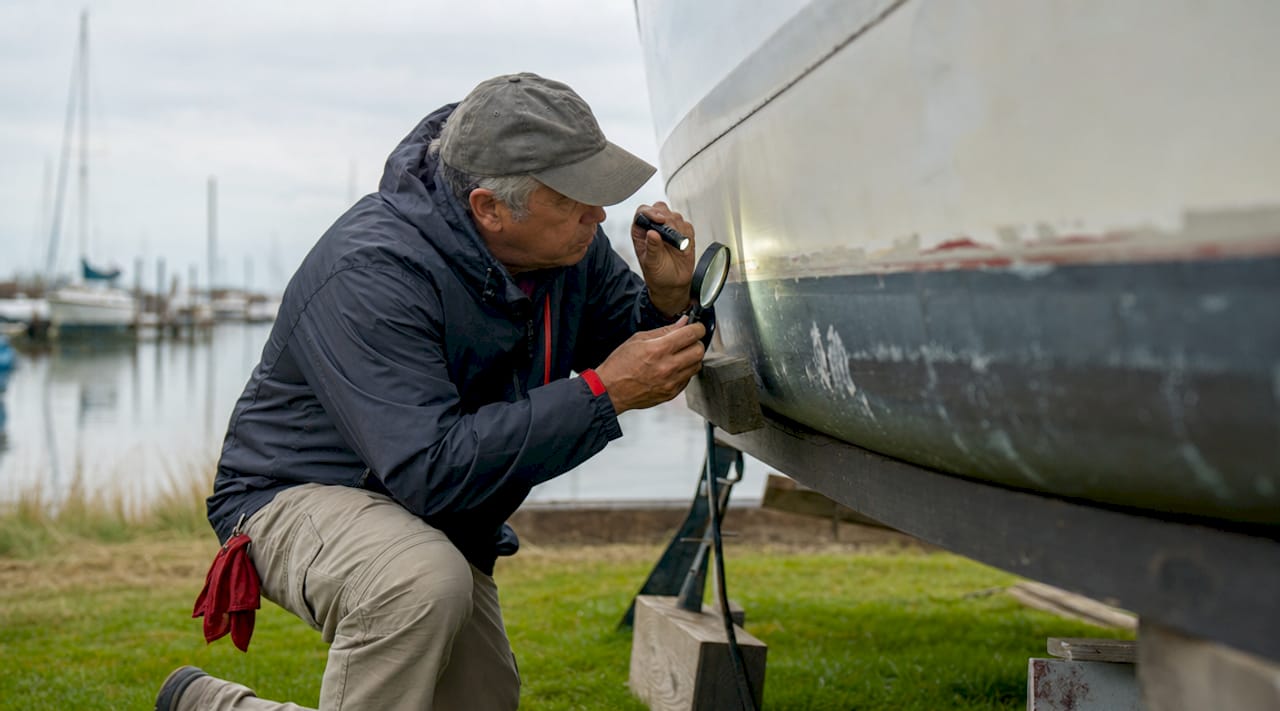
Physical inspection of the HIN is not optional. Fresh scratches around the stamp, uneven rivets, or mismatched paint near the HIN location are high-probability indicators of tampering, title washing, or theft. Check the secondary hidden HIN location as well. If the two HINs on the same boat do not match, stop the transaction.
How to search federal and state boat registries effectively
The USCG National Vessel Documentation Center (NVDC) is the authoritative source for federally documented vessels. You can search the NVDC’s public database, known as CGMIX PSIX, by vessel name or documentation number to confirm whether a boat holds active federal documentation. USCG removed personal identifying information from public online access in 2018, so ownership history requires a formal Abstract of Title request submitted directly to the NVDC.
State-registered vessels require a different approach. Each state manages its own registry through a DMV, DNR, or fish and wildlife agency, and access rules vary significantly. Some states allow public lookups by registration number or HIN. Others restrict owner information entirely, meaning some states limit public access to ownership details and require the recorded owner or a legal representative to request the record.
Vessels can hold both state registration and federal documentation simultaneously, particularly those used offshore or internationally. Some jurisdictions require maintaining both for tax and compliance purposes. This means a thorough boat registration lookup may require checking two separate databases for the same vessel.
| Feature | Federal (USCG NVDC) | State Registry |
|---|---|---|
| ينطبق على | Vessels over 5 net tons | Most motorized vessels |
| Search tool | CGMIX PSIX | State DMV, DNR, or wildlife agency |
| Owner info available publicly | No (since 2018) | Varies by state |
| Lien records | Yes, via Abstract of Title | Varies by state |
| Offshore/international use | Required | Not sufficient alone |
| Cost to search | Free (basic) | Free to low cost |
Key steps for official registry lookups:
- Confirm whether the vessel is federally documented or state-registered before choosing a database.
- Use the CGMIX PSIX portal for documented vessels; enter the documentation number or vessel name.
- Contact the relevant state agency directly if the online portal does not return owner details.
- Request a formal Abstract of Title from the USCG for complete ownership and lien history on documented vessels.
For boats used in international waters, reviewing global registration compliance requirements adds another layer of verification that state and federal searches alone cannot cover.
Are vessel history report services worth using?
Professional vessel history services go well beyond what official registries provide. History report services aggregate data from over 90 databases to deliver theft records, accident history, salvage titles, lien filings, and ownership chains in a single report. A typical report from Boat Alert delivers an instant nine-page PDF covering all of these data points. No manual search across individual state and federal databases can replicate that scope.
The practical value is clearest in pre-purchase due diligence. A boat with a clean state registration can still carry an undisclosed lien, a salvage history from a prior jurisdiction, or a theft flag from a different state. Official registries rarely cross-reference across state lines. Paid history services do.
- Theft records: Cross-referenced against the National Insurance Crime Bureau (NICB) and law enforcement databases.
- Accident and salvage history: Pulled from insurance claims and salvage auction records.
- Lien filings: Aggregated from state UCC filings and USCG mortgage records.
- Ownership chain: Tracks title transfers across multiple states and jurisdictions.
- Title brand flags: Identifies salvage, rebuilt, or water-damaged title designations.
نصيحة من الخبراء: Order a vessel history report before you order a survey. A surveyor assesses physical condition. A history report tells you whether the boat’s legal identity is clean. Discovering a lien or theft flag after paying for a survey wastes both time and money.
Combining official registry lookups with paid history reports produces the most complete and reliable view of a boat’s background. Cross-referencing both sources catches discrepancies that neither source would surface alone. This is the standard approach for any serious marine title search.
Step-by-step process to execute a boat registry search
A thorough boat registration lookup follows a clear sequence. Skipping steps or changing the order increases the chance of missing a critical flag.
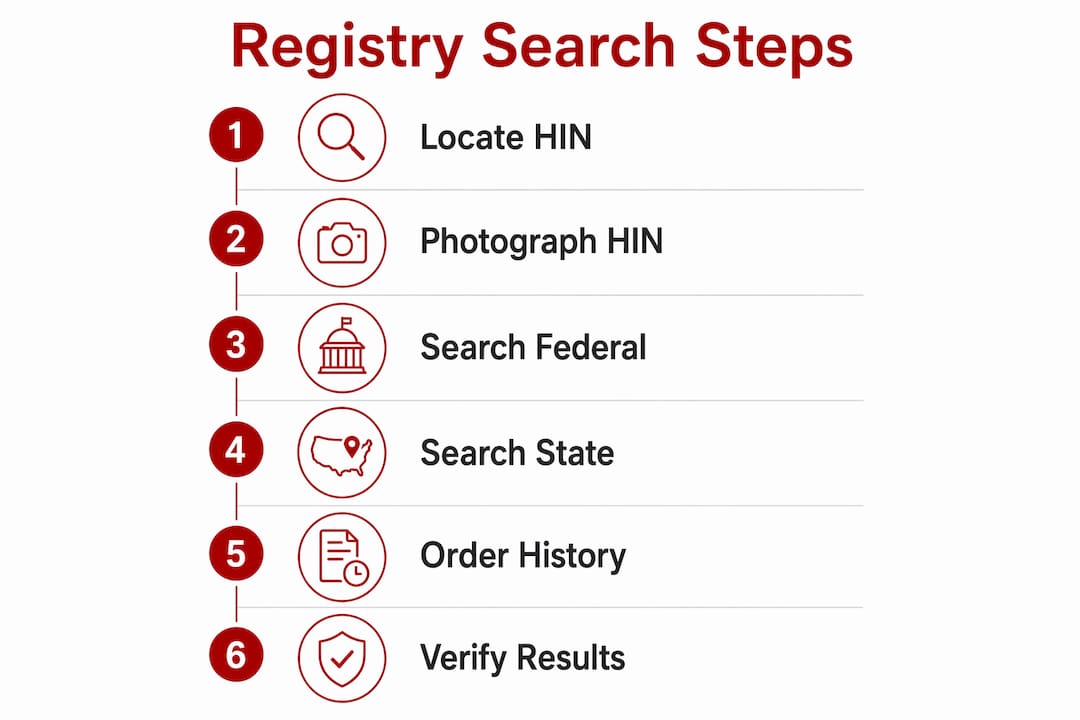
Gather all available identifiers. Collect the HIN, state registration number, federal documentation number if applicable, and any title documents the seller provides. Note the boat’s make, model, and year as secondary verification points.
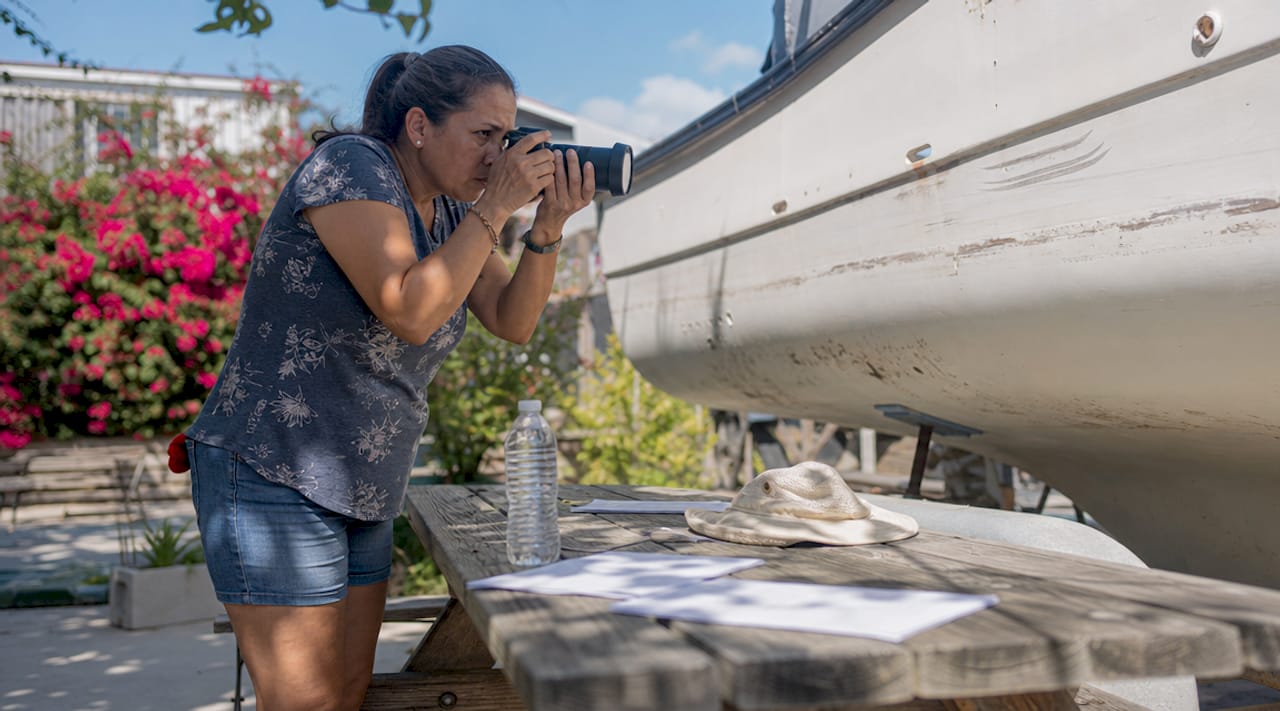
Physically verify the HIN on the boat. Locate the HIN on the transom (upper starboard corner) and at the secondary hidden location. Photograph both. Confirm they match each other and match the paperwork. Look for signs of tampering as described above.
Search the USCG CGMIX PSIX database. If the vessel is over five net tons or the seller claims federal documentation, run the documentation number through the NVDC portal. Confirm active status and note any encumbrances listed.
Search the relevant state registry. Identify the correct state agency (DMV, DNR, or fish and wildlife) for the state where the boat is currently registered. Run the HIN and registration number. If owner details are restricted, contact the agency directly or request a formal records check.
Order a comprehensive vessel history report. Use a service like Boat Alert to run the HIN through 90-plus databases. Review the report for theft flags, salvage history, lien filings, and title brands. In-person registration transfers for used boats take one to three hours, while mail-in processes can take two to four weeks. Factor this into your transaction timeline.
Cross-check all findings for consistency. Compare the owner name, HIN, and registration details across the title document, state registry, USCG records, and history report. Any inconsistency requires explanation before the transaction proceeds. Consult the vessel registration transfer guide for what documentation you will need once ownership is confirmed clean.
Common issues when searching boat registries
Registry searches surface problems more often than buyers expect. The most frequent issue is an ownership mismatch: the name on the title does not match the name in the state registry or USCG records. This can result from an incomplete prior transfer, a lien that was never discharged, or deliberate fraud.
Privacy restrictions create a separate challenge. Some states restrict owner information for privacy reasons, which means a public search returns registration status but not the owner’s name. In these cases, the recorded owner must request the record or be present with the buyer for verification. This is not a workaround. It is the legal process, and it adds time to any transaction.
Title washing is the most serious issue to watch for. This occurs when a boat with a salvage or theft title is re-registered in a state with less rigorous title branding requirements, effectively erasing the prior brand. Detecting it requires checking the ownership chain across multiple states, which is exactly what comprehensive history report services are designed to do.
- HIN mismatch between hull and documents: Stop the transaction. Request an explanation in writing and verify with the issuing state agency.
- Lien not disclosed by seller: Order an Abstract of Title from the USCG or a UCC search from the relevant state to confirm lien status before closing.
- Restricted state records: Contact the agency directly. Some states provide a lien-only search even when owner details are restricted.
- Suspected title washing: Run the HIN through a multi-database history service and check for ownership history across multiple states.
نصيحة من الخبراء: If the HIN area shows any signs of physical alteration, do not proceed with the purchase until a marine surveyor and the relevant state or federal authority have inspected the vessel. The cost of that inspection is far less than the cost of acquiring a stolen or fraudulently titled boat.
For boats registered under international flags, avoiding registration mistakes requires understanding how title and lien records transfer across jurisdictions, which adds complexity that domestic searches alone cannot resolve.
Key takeaways
Effective boat registry searches require combining HIN-based lookups across federal and state databases with a paid vessel history report to catch liens, theft flags, and title issues that no single source reveals alone.
| نقطة | التفاصيل |
|---|---|
| HIN is the primary identifier | Always use the 12-character HIN for searches; boat names produce unreliable results. |
| Federal and state databases differ | USCG CGMIX PSIX covers documented vessels; state agencies cover registered boats with varying privacy rules. |
| History reports fill the gaps | Services like Boat Alert aggregate 90-plus databases to surface salvage, theft, and lien records. |
| Physical HIN inspection is mandatory | Tampering signs like scratches or uneven rivets indicate possible fraud or title washing. |
| Cross-referencing catches discrepancies | Comparing title documents, registry records, and history reports is the only way to confirm a clean title. |
What years of registry work actually taught me
The most expensive mistake I see boat buyers make is treating a clean state registration as proof of a clean title. It is not. State registration confirms that someone paid the registration fee and received a number. It does not confirm that the seller owns the boat free and clear, that the HIN has not been altered, or that the vessel was never declared a total loss in another state.
The second mistake is skipping the physical HIN inspection because the paperwork looks correct. Paperwork can be forged. The hull cannot lie if you know what to look for. A few minutes with a flashlight and a camera at the transom has saved buyers from transactions that would have cost them tens of thousands of dollars.
My honest recommendation: treat every boat purchase as a title search exercise first and a mechanical inspection second. Run the HIN through a multi-database history service before you spend money on a survey. Request an Abstract of Title from the USCG if the vessel is documented. Call the state agency if the online portal does not return owner details. And if anything in the records does not match the seller’s story, ask for a written explanation before you proceed.
The process takes a few hours and costs less than a hundred dollars for a paid history report. The alternative, discovering a lien or theft flag after closing, can take months and thousands of dollars to resolve. Patience here is not caution. It is competence.
— Vesselflag
Simplify your registration and compliance with Vesselflag
Verifying a boat’s registry status is only part of the ownership picture. Once you have confirmed clean title and ownership, the next step is making sure your vessel is registered correctly for the waters you intend to use it in.
Vesselflag specializes in yacht and boat registration across multiple international flags, including San Marino, Malta, UK Part 1, Palau, and others. Whether you need to understand the difference between yacht and boat registration requirements or want expert guidance on registering your yacht for global compliance, Vesselflag handles the documentation, flag selection, and regulatory steps so you do not have to. Fast processing, transparent costs, and deep expertise in maritime regulations make it the resource serious owners rely on.
الأسئلة الشائعة
What is the most reliable identifier for a boat registry search?
The Hull Identification Number (HIN) is the most reliable identifier for any boat registry search. Unlike boat names or registration numbers, the HIN is permanently stamped on the hull and remains consistent across ownership changes and re-registrations.
How do I search a federally documented vessel’s registry?
Search the USCG National Vessel Documentation Center using the CGMIX PSIX portal with the vessel’s documentation number or name. For full ownership and lien history, submit a formal Abstract of Title request to the NVDC, since personal identifying information was removed from public online access in 2018.
Can a boat be registered in both a state and federally documented at the same time?
Yes. A vessel can hold both registrations simultaneously, particularly boats used offshore or internationally. Verifying both the USCG database and the relevant state registry is necessary for a complete ownership and compliance check.
What do vessel history report services reveal that official registries do not?
Professional history services like Boat Alert aggregate over 90 databases to surface theft records, salvage titles, accident history, and lien filings that state and federal registries do not cross-reference. This makes them the most thorough tool for pre-purchase due diligence.
What should I do if the HIN on the boat does not match the title documents?
Stop the transaction immediately. A HIN mismatch between the hull and the paperwork is a strong indicator of fraud, title washing, or theft. Contact the relevant state agency or USCG and request a formal inspection before proceeding.

[…] Boat Registry Search Methods: A Practical Owner’s Guide […]
[…] with your broker or registry contact before submission rather than after a request comes back. Our guide to registry search methods walks through how to confirm your HIN matches existing registry entries ahead of […]