
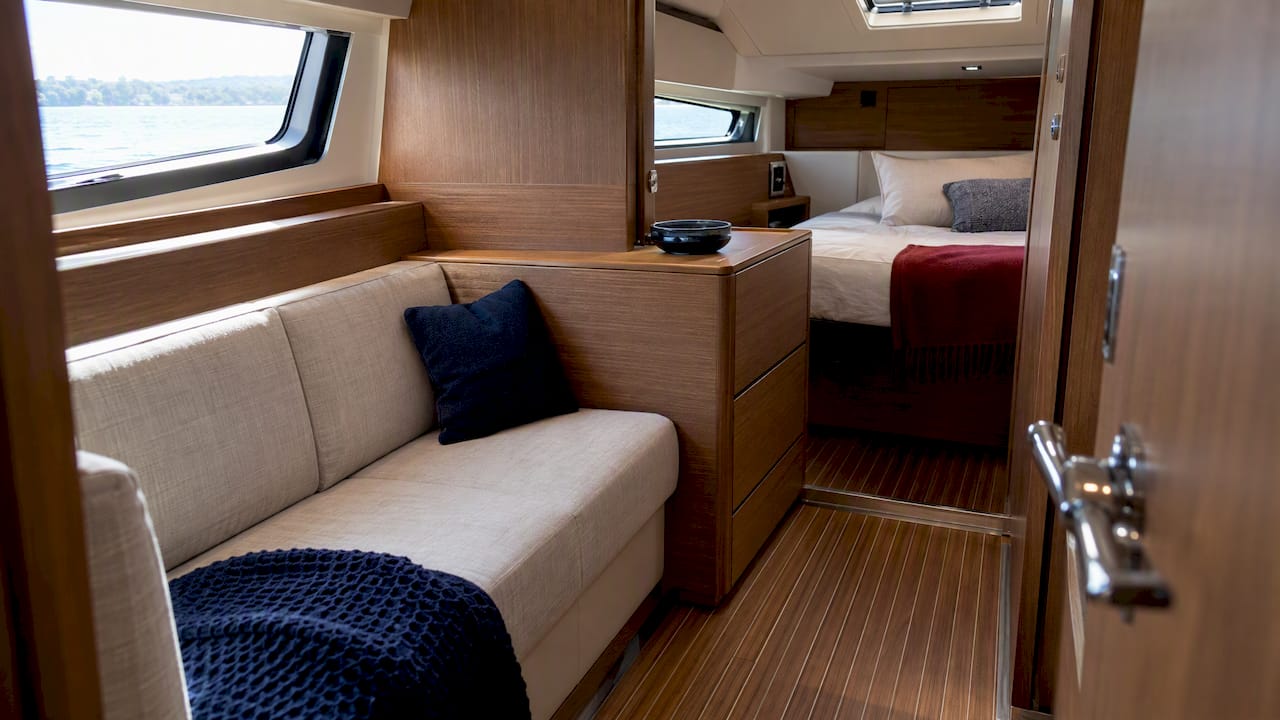
The best yacht interiors pair solution-dyed acrylics and closed-cell foam for upholstery, engineered teak or porcelain and sintered stone for flooring, and veneers over lightweight honeycomb or phenolic cores for cabinetry. These families hold color against UV, resist moisture and mildew, meet fire-safety rules, and cut the weight and replacement cycles that drive most of a yacht interior’s lifetime cost. Recycled composites and bamboo veneers round out a genuinely sustainable specification.
TL;DR:
- Use acrylic with pigment embedded in its fibers for sun, marine vinyl for wet seating, treated leather in cabins, and closed cell foam beneath cushions.
- Use engineered teak to reduce flooring weight; choose honed or textured finishes on wet decks, and seal every edge to prevent water from getting underneath.
- Veneer over honeycomb or phenolic cores can cut joinery weight by nearly 65%; seal both panel faces and edges, and use marine rated adhesives.
- Before approval, request fire certificates tied to the applicable FTP test class, foam reports for quoted grades, and Environmental Product Declarations for sustainability claims.
- A ship interior case study found recycled polypropylene, nylon, and PET carpet blends cut global warming potential by over 50% versus baseline options.
Índice
- What makes a material “marine grade”
- Upholstery: acrylics, vinyls, leathers and foam
- Flooring: teak, porcelain, sintered stone and HPL
- Cabinetry and joinery: veneers, cores and hardware
- A performance checklist before you sign off on materials
- Sustainability and the true lifecycle cost of materials
- What to verify before signing off on any supplier’s claims
- Antimicrobial and easy-clean surfaces are changing galley and head design
- Acoustic and thermal insulation choices that work inside a yacht hull
- Lighting integration changes what material choices actually work
- Safety standards beyond fire: emissions and slip resistance
- Balancing quiet-luxury aesthetics with marine performance
- Getting interior material decisions right with VesselFlag
- Perguntas frequentes
- Fontes
What makes a material “marine grade”
Marine grade is not a marketing label. It describes a material’s ability to survive sun, salt, movement, and fire scrutiny without failing early. Solution-dyed textiles carry pigment inside the fiber itself, rather than on the surface, which is why they resist fading far longer than printed or surface-dyed fabrics exposed to the same sun. Foam choice matters just as much: closed-cell foam resists water absorption, while open-cell foam soaks it up and becomes a mildew risk below cushions that rarely see full sun.
Structural demands add another layer. Panels and joinery flex with the hull, vibrate under engines, and need edges sealed against spray and condensation. Before approving any material, ask suppliers for:
- Confirmation that upholstery fabric is solution-dyed, not surface-printed
- Foam specification (closed-cell versus open-cell) for every cushion core
- Fire test references tied to the IMO FTP Code, Annex 1, which governs which accommodation surfaces need which test class
- Hardware grade: 316L stainless or powder-coated aluminum for anything exposed to moisture
A supplier who cannot produce these specifics on request is not quoting marine grade, regardless of how the brochure reads.
Upholstery: acrylics, vinyls, leathers and foam
Exposure zone decides the fabric family faster than color or texture ever should.
- Direct sun and exterior lounges: solution-dyed acrylics, the Sunbrella-style category, embed color into the fiber and avoid roughly the 15% color loss that standard fabrics suffer after a single Mediterranean summer.
- Wet exterior seating and high-traffic cockpits: marine-grade vinyl or premium synthetics shed water and scrub clean without the fading risk of natural fiber blends.
- Protected cabins and salons: marine-treated leathers deliver a residential feel, but they need conditioning on a seasonal cadence to resist salt air drying out the hide.
Under every cushion, specify closed-cell foam cores so moisture never gets trapped against fabric backing, a detail that industry practice treats as non-negotiable for humid, high-UV operating environments. Certified flame-retardant recycled polyester options also exist for owners who want a documented FR fabric certificate on file, though these carry their own installation limits worth reviewing with the supplier.
Expect a well-specified acrylic to hold its color for multiple seasons outdoors, vinyl to outlast fabric in wet zones, and treated leather to need re-conditioning roughly once a year in warm climates.
Dica de profissional: Ask for a fabric sample that has already spent 30 days taped to a south-facing window before you commit to a full upholstery order.
Flooring: teak, porcelain, sintered stone and HPL
Flooring choices live or die on weight, slip resistance, and how they behave when wet feet meet direct sun.
- Solid teak remains the benchmark for traction and a warm underfoot feel, but it needs regular oiling or sanding and carries real weight across large deck areas.
- Engineered teak or teak-look veneer over a lightweight core delivers the same visual warmth at a fraction of the weight and maintenance burden.
- Porcelain and sintered stone suit galleys and wet heads: both are non-porous, stain-resistant, and tolerate heat near cook tops without the sealing upkeep natural stone demands, while avoiding stone’s weight penalty on smaller or sailing yachts, a practical edge noted across design practice.
- HPL and laminate panels work well on large vertical surfaces and cabin soles where cost and weight matter more than a natural grain.
- Every edge, regardless of material, needs detailing that stops water from migrating under the surface, since ingress at seams is where flooring failures actually begin.
Sun-exposed decks also call for textured or honed finishes rather than polished ones. A glossy porcelain tile looks sharp in a showroom and turns slick the moment it gets wet underfoot.
Cabinetry and joinery: veneers, cores and hardware
High-end joinery visuals and marine weight limits used to be opposing goals. Thin wood veneer bonded to an aluminum honeycomb or phenolic core now delivers both: this construction can cut joinery weight by nearly 65% compared to solid-plank cabinetry, without sacrificing the grain and finish owners expect from a residential interior.
- Reserve solid wood for low-humidity, protected spaces, and detail it with movement joints so it can expand and contract without cracking.
- Seal every panel back, not just the visible face, since unsealed backs are where moisture gets in and delamination starts.
- Specify adhesives rated for marine humidity and temperature swings, and edge-band exposed plywood or MDF to stop water from wicking into the core.
- Choose corrosion-resistant hinges, slides, and fasteners, tested for salt exposure rather than rated only for residential interiors.
A performance checklist before you sign off on materials
A clear checklist keeps quotes comparable and stops a beautiful sample from hiding a weak spec.
- Map each space by exposure zone (full sun, wet exterior, protected cabin) and match the material family to that zone before looking at color or texture.
- Request written confirmation of solution-dyed fabric, foam type, and fire test references tied to FTP Annex parts for every fabric and upholstered item.
- Ask for an Environmental Product Declaration (EPD) alongside any sustainability claim, rather than taking “eco-friendly” at face value.
- Price materials over their service life, not just at purchase, since a cheaper fabric that needs replacing twice as often rarely saves money.
Tropical and high-humidity operating areas push every one of these specs higher. Expect more frequent varnish renewal and stricter fabric grades if the yacht spends most of its time in warm, humid waters rather than a temperate cruising ground.
Dica de profissional: Build a simple maintenance calendar at handover, with varnish and foam-check intervals tied to the yacht’s actual cruising region, not a generic annual schedule.
Sustainability and the true lifecycle cost of materials
Replacement, not manufacturing, is usually the biggest environmental cost of an interior over its lifetime. An LCA case study on ship interiors found that recycled polypropylene, nylon, and PET carpet blends cut global warming potential by over 50% compared to baseline carpet options, and durability-first material strategies that reduce replacement frequency can lower total material-related emissions by up to 31%.
- Favor recycled composite panels and carpet blends where the application allows it.
- Specify bamboo veneer as a rapidly renewable alternative to slower-growing hardwoods.
- Ask suppliers for an EPD rather than a general sustainability claim with no data behind it.
- Detail joinery with disassembly-friendly fixings so panels can be replaced or recycled individually instead of torn out whole.
What to verify before signing off on any supplier’s claims
A beautiful sample means little without paperwork behind it. Before approving a material, request the IMO FTP fire-test certificate tied to the specific product, an EPD for any sustainability claim, the foam test report for cushion cores, and the manufacturer’s material data sheet.
- Confirm fire certificates reference the correct FTP Annex part for that space and material type.
- Match foam test reports to the actual foam grade quoted, not a generic range from the supplier’s catalog.
- Cross-check EPD figures against the claim made in the sales material before approving a “sustainable” line item.
Refit and new-build material decisions often land in the same window as flag registration and compliance paperwork, and keeping that documentation aligned saves real time later. We help owners manage the compliance side of a refit, including MMSI and AIS setup, alongside the registration work that typically runs in parallel with an interior project.
Antimicrobial and easy-clean surfaces are changing galley and head design
Antimicrobial surface treatments have moved from a niche add-on to a standard spec on galley counters, head surrounds, and high-touch cabinet hardware. Sintered stone and solid-surface composites increasingly come with built-in antimicrobial additives baked into the material itself, rather than a sprayed-on coating that wears off after repeated cleaning.
Easy-clean finishes matter just as much as antimicrobial properties on a yacht, where cleaning crews need surfaces that shed grease, salt residue, and sunscreen without aggressive chemicals. Non-porous porcelain and sintered stone resist staining and bacterial growth better than natural stone or grouted tile, since there are no pores or seams for moisture and organic matter to collect in.
Ceramic-infused protective coatings extend this logic to a wider range of surfaces, including fiberglass, glass, and painted joinery. A marine ceramic coating applied to high-touch surfaces adds a sealed, easy-wipe layer that reduces how often crews need to use harsh cleaners near upholstery and veneer finishes.
For fabric, antimicrobial finishes are now common on marine vinyl and some acrylic blends, applied during manufacturing rather than as a topical spray. These treatments hold up through repeated cleaning cycles better than surface-applied antimicrobial sprays, which wash out within a season or two of regular use.
Acoustic and thermal insulation choices that work inside a yacht hull
Sound and heat move through a hull very differently than through a house wall, which is why standard residential insulation rarely performs well on board. Closed-cell foam insulation, often faced with a foil or fabric vapor barrier, handles both jobs at once: it dampens engine and generator noise while slowing heat transfer through the hull and deck.
Mineral wool and specialized marine acoustic panels work well behind joinery and in engine room bulkheads, where sound dampening matters more than a finished look. These materials pair naturally with the lightweight honeycomb and phenolic cores already used in cabinetry, since both prioritize weight savings alongside performance.
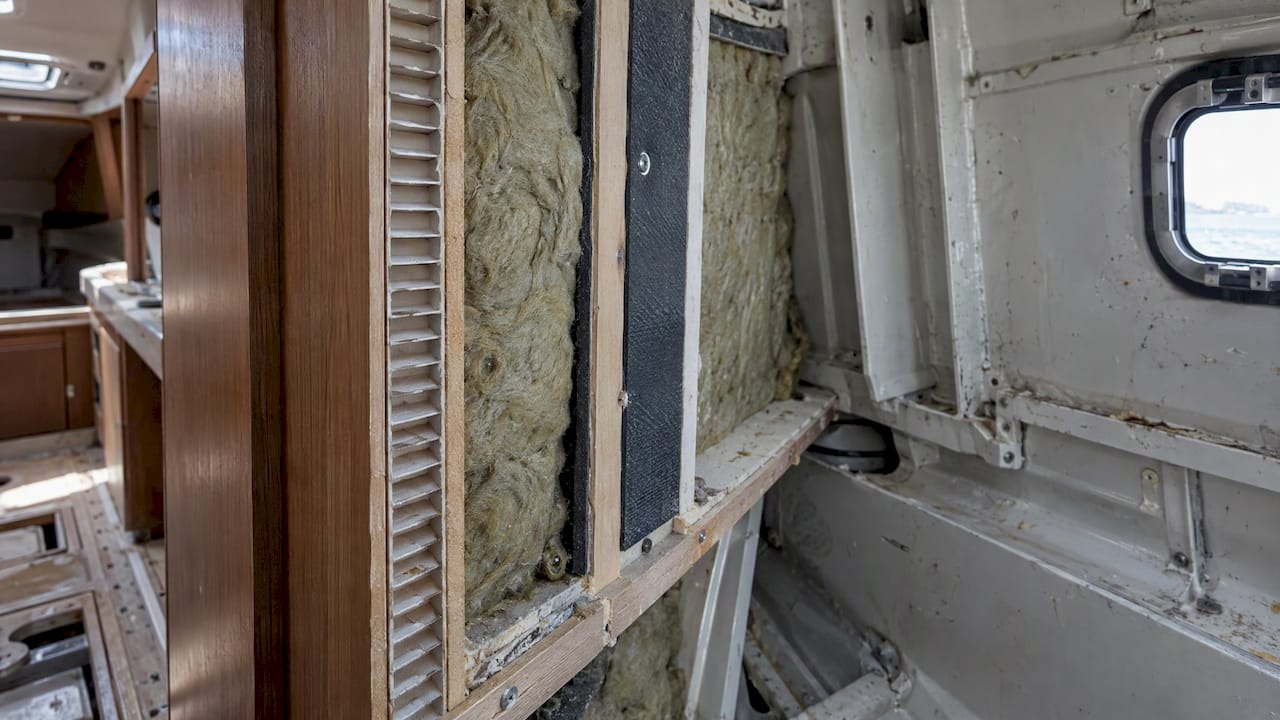
For cabin soles and overheads, a thin acoustic underlay beneath teak or engineered flooring cuts footstep noise transmission between decks, a detail that matters more on multi-level interiors than most owners expect until they hear the difference. Thermal insulation in the same areas also reduces condensation risk, since a warmer interior surface temperature means less moisture collecting against cold metal or fiberglass behind the panel.
Lighting integration changes what material choices actually work
LED lighting has made recessed and edge-lit fixtures standard in yacht interiors, and that shift affects which materials pair well with a given lighting plan. Veneer panels with integrated LED edge lighting need a core material stable enough to hold a straight channel cut without warping, which is another argument for honeycomb or phenolic cores over solid wood in lit panels.
Matte and low-sheen finishes, now the dominant quiet-luxury trend for 2026, also interact better with LED lighting than high-gloss surfaces, since gloss finishes bounce light unevenly and show every fingerprint under a direct downlight. Fabric and leather upholstery near reading lights or vanity mirrors should be specified with color temperature in mind, since a warm 2700K fixture shifts how a fabric’s dye lot reads compared to daylight.
Heat management matters too. LED fixtures run cooler than halogen, which reduces the risk of fading or drying out nearby leather and fabric, but any fixture embedded directly into teak or veneer paneling still needs a heat-rated backing to avoid scorching over years of use.
Safety standards beyond fire: emissions and slip resistance
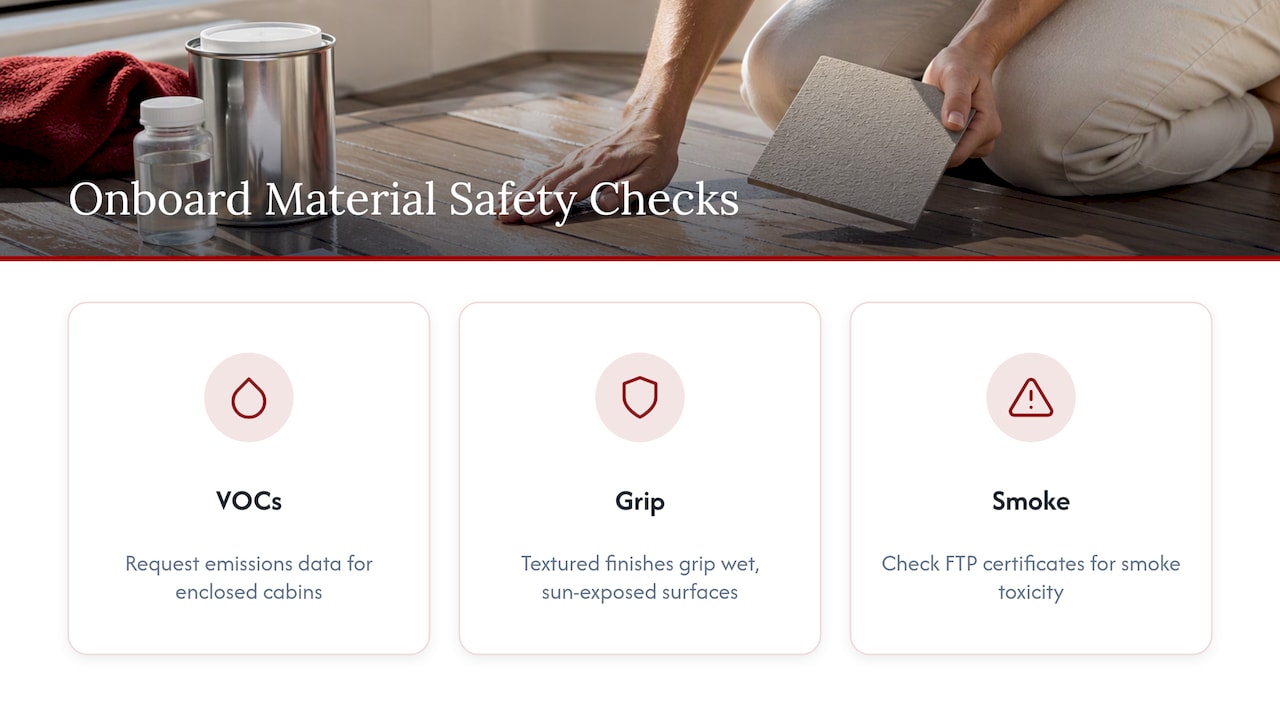
Fire testing gets most of the attention, but toxic emissions and slip resistance matter just as much day to day. Materials used in enclosed cabins should carry data on volatile organic compound emissions, since a sealed interior with poor ventilation can concentrate off-gassing from adhesives, foams, and laminates far more than an open residential room would.
Slip resistance is a practical safety standard that applies to every wet or sun-exposed surface on board, from swim platforms to head floors. A honed or textured finish on porcelain, sintered stone, or teak alternatives provides grip that a polished finish simply cannot, and this matters more on a moving deck than on any stationary floor ashore.
Smoke toxicity, not just flammability, also factors into FTP testing for enclosed accommodation spaces, since a material that burns slowly but releases dense, toxic smoke still poses a real risk in a confined cabin. Ask suppliers whether their fire certificate covers smoke toxicity specifically, rather than assuming a flame-spread rating alone covers the full safety picture.
Balancing quiet-luxury aesthetics with marine performance
The owners who get this right resist the urge to specify ten different materials. Repeating two or three tactile, matte finishes across a space reads calmer than a showcase of textures. Save natural wood and leather for protected cabins, lean on engineered materials everywhere exposed, and let the boat’s actual cruising region, not a mood board, decide the final specification.
— VesselFlag
Getting interior material decisions right with VesselFlag
Choosing the right material families is only half the project. Getting the documentation, fire certificates, and registration paperwork aligned with a refit timeline is where most delays actually happen.

- Our design de interiores de iates support connects owners with sourcing and specification help that matches the standards covered above.
- Our broader serviços page covers insurance, transport, and MMSI licensing that often run alongside an interior refit.
If a refit is coinciding with a new registration or flag change, request a documentation checklist through our registo da bandeira services so certificates and compliance paperwork stay on schedule from day one.
Perguntas frequentes
What are the different parts of a yacht?
A yacht is generally divided into the hull and deck structure, the accommodation interior (cabins, salon, galley), exterior living spaces (cockpit, flybridge, swim platform), and technical spaces (engine room, tender garage, crew areas). Interior material decisions covered in this guide apply mainly to the accommodation and exterior living spaces, where upholstery, flooring, and cabinetry take the most exposure and wear.
How much does a yacht interior designer make?
Yacht interior designer compensation is not publicly standardized and varies widely by project scope, region, and whether the designer works independently or through a design firm. We do not have a published figure to cite, so owners should request project-based quotes directly from designers or design-focused services.
What is the best material for covering boat interior walls?
Veneer panels bonded to a lightweight aluminum honeycomb or phenolic core are among the most reliable choices for boat interior walls, combining a high-end wood finish with significant weight savings over solid panels. Solution-dyed fabric wall coverings or marine-grade laminate are strong alternatives in wet or high-traffic areas where a hard, wipeable surface matters more than a natural wood look.
What is the 12 person rule on a yacht?
Passenger and crew limits on a yacht are set by the vessel’s flag state and classification society based on safety equipment, lifesaving capacity, and the vessel’s certified category, rather than a single universal rule on passenger limits. Owners should check the specific limit tied to their yacht’s registration and certification, since it varies by flag and vessel type, and our compliance guide outlines where to find that documentation.
Fontes
- Canvas Etc — Marine upholstery fabric
- Pianta Design — Yacht interior materials: the ultimate guide to marine-grade luxury (2026)
- IMORules — Annex 4 guidance materials matrix
- OLT Design — Materials that withstand the sea
- Life cycle assessment of materials for cruise ship interior spaces (case study)