
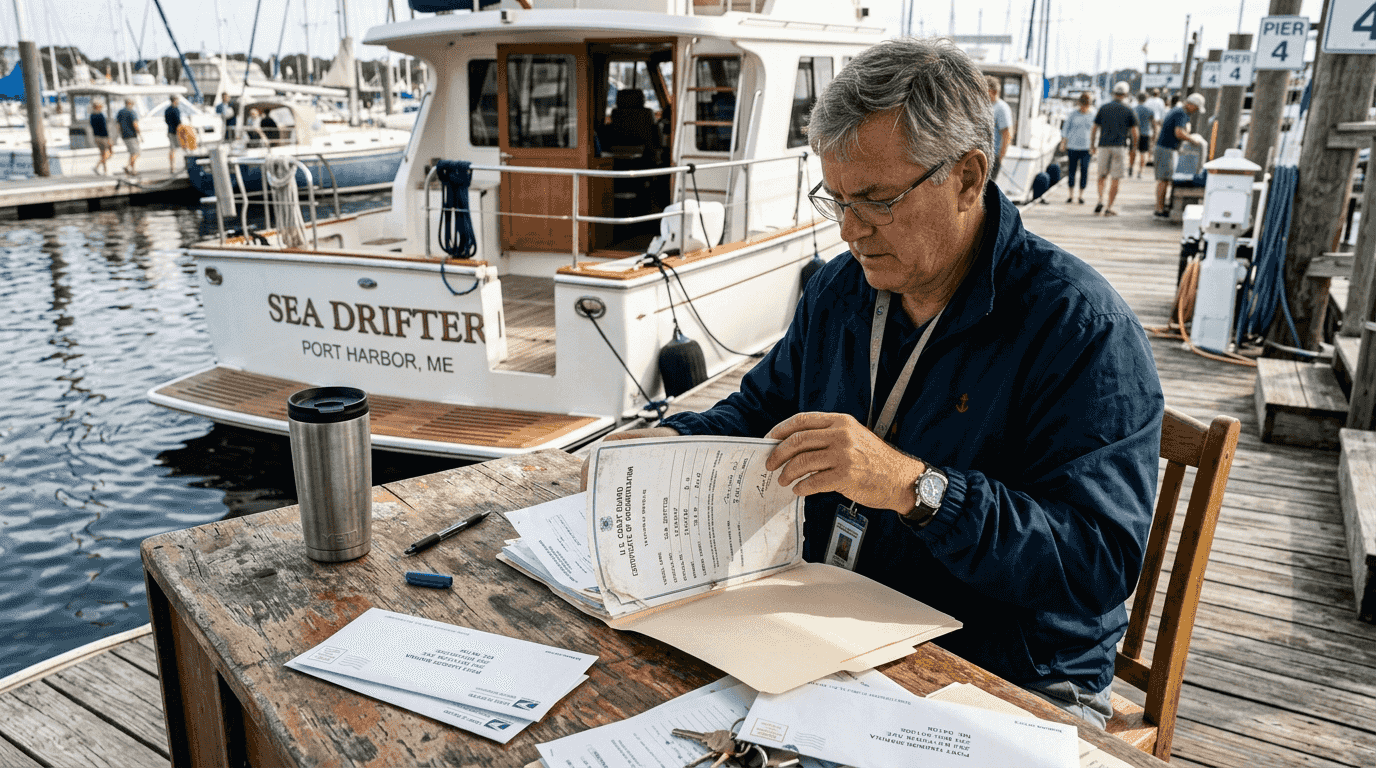
Registering your yacht or commercial vessel internationally shouldn’t feel like navigating uncharted waters. With multiple flag states offering different registration speeds, costs, and compliance requirements, vessel owners often face confusion about which option best serves their needs. This guide cuts through the complexity by explaining key international flag choices, required documentation, step-by-step registration procedures, and common pitfalls to help you complete your boat registration efficiently and compliantly in 2026.
Índice
- Understanding International Flag Options
- Prerequisites: What You Need Before Starting Registration
- Step-By-Step Vessel Registration Process
- Common Mistakes And How To Avoid Them
- Expected Outcomes And Success Metrics
- Streamline Your Boat Registration With Expert Support
- FAQ
Key takeaways
| Ponto | Detalhes |
|---|---|
| Flag selection matters | Choose based on registration speed, cost, legal reputation, and vessel type to optimize your registration experience. |
| Documentation is critical | Prepare proof of ownership, tonnage certificate, maritime insurance, and MMSI application before starting to avoid delays. |
| Process clarity saves time | Follow structured steps from flag selection through certificate receipt, typically completing within 10-20 days. |
| Common mistakes cost money | Incomplete paperwork causes 25% of delays while misunderstood compliance creates 40% of registration failures. |
| Expert help accelerates success | Maritime consultancies reduce registration time by up to 35% while ensuring full compliance and cost transparency. |
Understanding international flag options
Choosing the right flag state for your vessel directly impacts registration speed, ongoing costs, and legal protections. Popular international flags for yacht and commercial vessel registration include Malta, San Marino, Palau, UK Part 1, Poland, and Langkawi, each offering distinct advantages depending on your priorities.
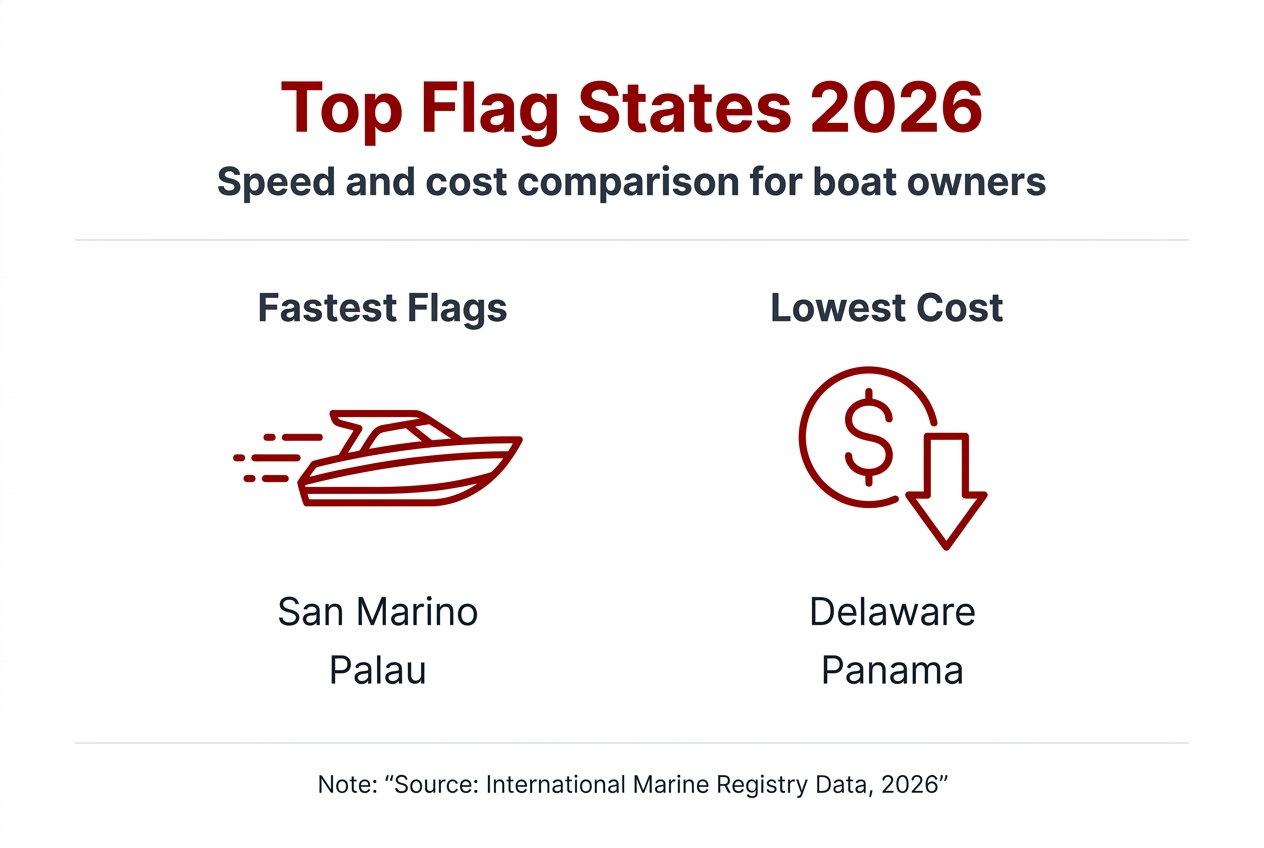
For vessel owners prioritizing speed, flag states like San Marino and Palau complete registrations in under 10 working days due to simplified compliance procedures and digital processing systems. These jurisdictions excel at processing straightforward yacht registrations with minimal bureaucratic overhead. Malta balances reputation and efficiency, typically completing registrations within 15-20 days while maintaining recognized maritime standing and competitive pricing structures.
The UK Part 1 flag serves complex ownership arrangements and commercial vessel operations requiring robust legal frameworks. Poland offers cost-effective registration with European Union benefits, though processing times extend slightly longer than fast-track options. Langkawi provides tax advantages and simplified procedures for specific vessel categories operating in Southeast Asian waters.
Flag Selection Criteria Comparison:
| Flag State | Velocidade de registo | Cost Level | Best For |
|---|---|---|---|
| São Marinho | 7-10 days | Medium | Fast yacht registration |
| Palau | 5-10 days | Medium-High | Speed priority vessels |
| Malta | 15-20 days | Medium | Balanced reputation/cost |
| Reino Unido Parte 1 | 20-30 days | High | Complex commercial vessels |
| Polónia | 15-25 days | Low-Medium | EU-compliant operations |
| Langkawi | 10-15 days | Low | Southeast Asia region |
When selecting your registo da bandeira option, consider these factors:
- Registration timeline requirements and operational deadlines
- Total cost including application fees, annual tonnage taxes, and supplementary services
- Legal reputation and international recognition for insurance and port access
- MMSI and AIS setup availability through the flag authority
- Tax implications and corporate structure requirements
- Ongoing compliance obligations and renewal procedures
Pro Tip: Matching your flag choice to vessel type and operational profile prevents registration delays and compliance issues. Commercial vessels benefit from flags offering corporate ownership structures, while private yachts often prioritize registration speed and simplified maintenance requirements.
The tradeoff between cost savings and processing speed requires careful evaluation. While budget flags reduce initial expenses, slower processing may delay vessel operations and create hidden costs through extended preparation periods. Review the complete vessel registration guide for San Marino, Malta, and Poland to understand specific requirements for popular flag choices.

Prerequisites: what you need before starting registration
Successful vessel registration depends on gathering complete, accurate documentation before submitting your application. Missing or incorrect paperwork accounts for the majority of registration delays, making thorough preparation essential for smooth processing.
Core Documentation Requirements:
- Proof of ownership: Bill of sale, builder’s certificate, or previous registration documents establishing clear vessel title
- Valid tonnage certificate: Official measurement documentation showing gross and net tonnage calculations
- Maritime insurance policy: Coverage meeting flag state minimum requirements with proper vessel identification
- Passport copies: Valid identification for all registered owners and operators
- Vessel survey report: Recent condition assessment for vessels over five years old
- Corporate documents: If registering under company ownership, articles of incorporation and shareholder information
MMSI licensing and AIS setup should be planned early in your registration process. Many flag authorities issue MMSI numbers as part of registration, but confirming this prevents last-minute compliance scrambles. AIS transponder installation requires coordination with certified marine electronics technicians and may need scheduling weeks in advance depending on your location.
Corporate registration offers significant advantages for tax optimization and liability protection. Establishing a maritime company in jurisdictions aligned with your flag choice streamlines ownership structures and simplifies ongoing compliance. However, corporate registration adds complexity and cost, requiring evaluation against your specific operational and legal needs.
Document verification prevents common registration pitfalls. Check that vessel identification numbers match across all paperwork, ownership chains show clear title transfer, and insurance policies list correct vessel specifications. Inconsistencies trigger review delays or outright application rejection by flag authorities.
Pro Tip: Create a registration checklist matching your chosen flag authority’s published requirements and have a maritime attorney or consultancy review your documents before submission. This verification step catches errors early when corrections are simple rather than after submission when delays compound. The boat registration compliance checklist provides detailed guidance for common flag states.
Additional considerations include confirming document language requirements, notarization needs, and apostille certification for international recognition. Some flag authorities accept English language documents while others require certified translations, adding time and expense if not planned appropriately. Review the smooth yacht registration checklist for comprehensive preparation guidance.
Step-by-step vessel registration process
Following a structured registration sequence ensures efficient processing while maintaining full compliance with maritime regulations. This systematic approach reduces errors and helps you track progress through each registration phase.
Complete Registration Sequence:
-
Select your flag state based on vessel type, operational requirements, budget, and timeline priorities. Research specific flag authority requirements and download application forms from official sources.
-
Gather required documentation including ownership proof, tonnage certificate, maritime insurance, and identification documents. Organize files systematically and create digital copies for electronic submission systems.
-
Verify document accuracy by cross-checking vessel identification numbers, ownership details, and technical specifications across all paperwork. Address any discrepancies before proceeding to avoid processing delays.
-
Submit your application through the flag authority portal or authorized maritime consultancy. Pay required fees and confirm receipt of your submission with tracking numbers or acknowledgment emails.
-
Register MMSI and arrange AIS by applying for your Maritime Mobile Service Identity number through proper channels and scheduling AIS transponder installation with certified technicians. Confirm MMSI activation before vessel departure.
-
Complete compliance reviews by responding promptly to any flag authority requests for additional information or clarification. Most authorities process applications within stated timelines when documentation is complete.
-
Obtain your certificate by downloading or receiving your official registration certificate, confirming all vessel details are correct, and storing copies both aboard your vessel and in secure backup locations.
Using specialized maritime registration consultancies reduces processing time by up to 35% compared to self-managed applications. These experts navigate complex requirements, handle document preparation, coordinate with flag authorities, and troubleshoot issues before they cause delays. Their fee structures typically include transparent pricing covering all aspects of the registration process.
Typical registration timelines vary by flag choice and application complexity. Fast-track flags like San Marino complete straightforward yacht registrations in 7-10 working days, while more complex commercial vessel applications through established flags may extend to 20-30 days. Expedited processing options exist for urgent operational needs, though premium fees apply.
Monitoring your application status prevents unnecessary delays. Most flag authorities provide online tracking systems showing processing stages and highlighting any pending requirements. Proactive communication ensures you address issues immediately rather than discovering problems after extended waiting periods. The complete yacht registration guide explains tracking procedures and communication protocols for major flag states.
Post-registration compliance includes displaying your registration certificate aboard the vessel, maintaining required insurance coverage, filing annual returns or tonnage declarations, and renewing registration before expiration dates. Understanding these ongoing obligations during initial registration prevents future compliance failures. Detailed process information appears in our boat registration process guide.
Common mistakes and how to avoid them
Registration failures stem from predictable errors that careful preparation prevents. Understanding these pitfalls helps you navigate the process without costly delays or compliance issues.
Incomplete or incorrect documentation causes roughly 25% of registration delays according to maritime authority processing reports. Missing signatures, outdated survey reports, insufficient insurance coverage, or unclear ownership chains trigger review holds requiring resubmission and extending timelines significantly. Double-checking every document against flag authority checklists before submission eliminates most documentation errors.
“Incomplete documentation accounts for 25% of vessel registration delays, with paperwork errors adding an average of 12-18 additional processing days to standard timelines.”
Failure to register MMSI creates serious operational and legal problems. Vessels operating without proper MMSI identification face fines, port access restrictions, and potential detention by maritime authorities. The registration process should always include MMSI application as an integral component, not an afterthought once the vessel certificate arrives.
Critical Mistakes to Avoid:
- Submitting applications with mismatched vessel identification numbers across different documents
- Providing expired insurance certificates or coverage below flag state minimum requirements
- Overlooking corporate registration requirements when beneficial for tax or liability purposes
- Ignoring hidden fees including annual tonnage taxes, renewal charges, and supplementary service costs
- Missing application deadlines or renewal dates due to poor calendar management
- Attempting complex registrations without professional guidance when flag requirements exceed your expertise
Misunderstanding legal compliance requirements causes up to 40% of registration failures. Different flag states impose varying obligations for safety equipment, manning requirements, survey schedules, and operational reporting. Assuming your previous flag’s rules apply universally creates compliance gaps that authorities catch during application review or subsequent inspections.
Hidden fees inflate final costs by 10-20% when overlooked during initial budgeting. Beyond application fees, consider annual tonnage taxes, mandatory survey costs, MMSI licensing fees, AIS equipment expenses, and potential translation or notarization charges. Request itemized cost breakdowns from flag authorities or consultancies before committing to specific registration options.
Proactive mistake prevention relies on thorough research, expert consultation, and systematic verification procedures. Using professional maritime consultancies mitigates risk by transferring compliance knowledge and documentation accuracy to experienced specialists. The investment in expert support typically recovers through faster processing, avoided penalties, and reduced stress. Our guide on yacht registration challenges and solutions addresses specific problem scenarios and remediation strategies.
Expected outcomes and success metrics
Setting realistic expectations about registration timelines, costs, and compliance requirements helps you plan vessel operations and budget appropriately. Understanding typical outcomes also provides benchmarks for evaluating your registration progress.
Registration completion typically occurs within 10-20 working days depending on flag state selection and application complexity. Fast-track jurisdictions process straightforward yacht applications at the lower end of this range, while comprehensive commercial vessel registrations through established maritime flags require longer timelines. Expedited services reduce standard timelines by 30-50% for urgent operational needs, though premium fees apply.
Registration Timeline and Cost Comparison:
| Flag State | Average Timeline | Small Yacht Cost | Large Yacht Cost | Commercial Vessel Cost |
|---|---|---|---|---|
| São Marinho | 7-10 days | $2,800-3,500 | $4,500-6,000 | $7,000-9,500 |
| Palau | 5-10 days | $3,200-4,000 | $5,000-7,000 | $8,000-11,000 |
| Malta | 15-20 days | $2,500-3,200 | $4,000-5,500 | $6,500-8,500 |
| Reino Unido Parte 1 | 20-30 days | $3,500-4,500 | $6,000-8,500 | $10,000-15,000 |
| Polónia | 15-25 days | $2,000-2,800 | $3,500-5,000 | $5,500-7,500 |
Costs vary significantly based on vessel tonnage, type classification, and chosen flag jurisdiction. Budget accordingly by requesting detailed fee schedules including application charges, tonnage taxes, MMSI licensing, and any required survey or inspection expenses. Understanding the complete factores de custo do registo de embarcações prevents budget surprises and enables accurate financial planning.
Successful registration produces several key deliverables confirming your vessel’s legal status:
- Official certificate of registration with unique registration number and vessel details
- MMSI number properly activated in international maritime databases
- Flag state endorsement for insurance coverage meeting regulatory requirements
- Documentation package for port authorities and maritime inspections
- Compliance confirmation for ongoing operational and reporting obligations
Professional maritime consultants accelerate registration while ensuring accuracy and compliance. Their expertise navigating complex requirements, established relationships with flag authorities, and systematic documentation processes deliver measurable value. Benefits include cost transparency through fixed-fee structures, compliance assurance reducing penalty risk, and time savings allowing you to focus on vessel operations rather than bureaucratic procedures.
Measuring registration success involves tracking timeline adherence, total cost versus budget, documentation completeness at first submission, and absence of compliance issues post-registration. Smooth registrations complete within projected timelines, stay within budgeted costs, require no document resubmission, and create no operational disruptions. Following yacht registration best practices maximizes your likelihood of achieving these optimal outcomes.
Streamline your boat registration with expert support
Navigating international vessel registration becomes straightforward when you partner with experienced maritime consultants who understand flag state requirements and compliance procedures. VesselFlag.com specializes in efficient yacht and commercial vessel registration across all major international flags, providing the expertise and support that reduces registration time while ensuring full legal compliance.
Our registration services cover everything from initial flag selection and document preparation through MMSI licensing and final certificate delivery. We handle complex paperwork, coordinate with flag authorities, and troubleshoot issues before they cause delays. This end-to-end support means you receive your registration certificate faster while avoiding common mistakes that plague self-managed applications.
Beyond core registration, we provide essential maritime services including Licença de rádio MMSI acquisition, maritime insurance consulting, and ongoing compliance support. Our transparent pricing structures eliminate hidden fees and surprise costs, giving you accurate budgets from the start.
Ready to register your vessel efficiently? Explore our complete yacht registration guide for detailed flag comparisons and requirements. Download our yacht registration checklist to prepare your documentation, or contact our team for personalized consultation on your specific vessel and operational needs.
FAQ
What documents are required for international boat registration?
Owners need proof of ownership like a bill of sale, valid tonnage certificate, maritime insurance meeting flag requirements, and MMSI license application or confirmation. Additional documents may include passport copies, vessel survey reports, and corporate registration papers if applicable. Consulting your chosen flag authority’s checklist ensures you gather all required paperwork before submission.
How long does the boat registration process typically take?
Registration usually takes 10-20 working days depending on the chosen flag state and application complexity. Fast-track flags like San Marino and Palau complete straightforward yacht registrations in 7-10 days, while comprehensive commercial vessel applications may require 20-30 days. Expedited services and professional consultancies can reduce standard timelines by 30-50% for urgent operational needs.
What are common mistakes that delay vessel registration?
Incomplete documentation and failure to register MMSI are leading causes of registration delays, accounting for roughly 25% of processing problems. Mismatched vessel identification numbers across documents, expired insurance certificates, and unclear ownership chains trigger review holds requiring resubmission. Misunderstood legal requirements contribute to compliance failures that add time and cost to the registration process.
Why should I consider using a maritime registration consultancy?
Consultants can speed registration by up to 35% while reducing compliance risks through their expert knowledge of flag state requirements. They provide cost transparency with fixed-fee structures covering all registration aspects, handle complex documentation preparation, coordinate directly with flag authorities, and troubleshoot issues before they cause delays. The investment typically recovers through faster processing, avoided penalties, and reduced administrative burden on vessel owners.
Can I register my vessel under any flag I choose?
Most flag states allow vessel registration regardless of owner nationality, though specific requirements vary by jurisdiction. Some flags impose restrictions on vessel age, type, or operational purpose, while others require genuine links like corporate presence or operational connection to the flag country. Reviewing eligibility criteria for your preferred flag options during initial planning prevents wasted effort on unsuitable jurisdictions and ensures you select flags matching your vessel profile and operational needs.