
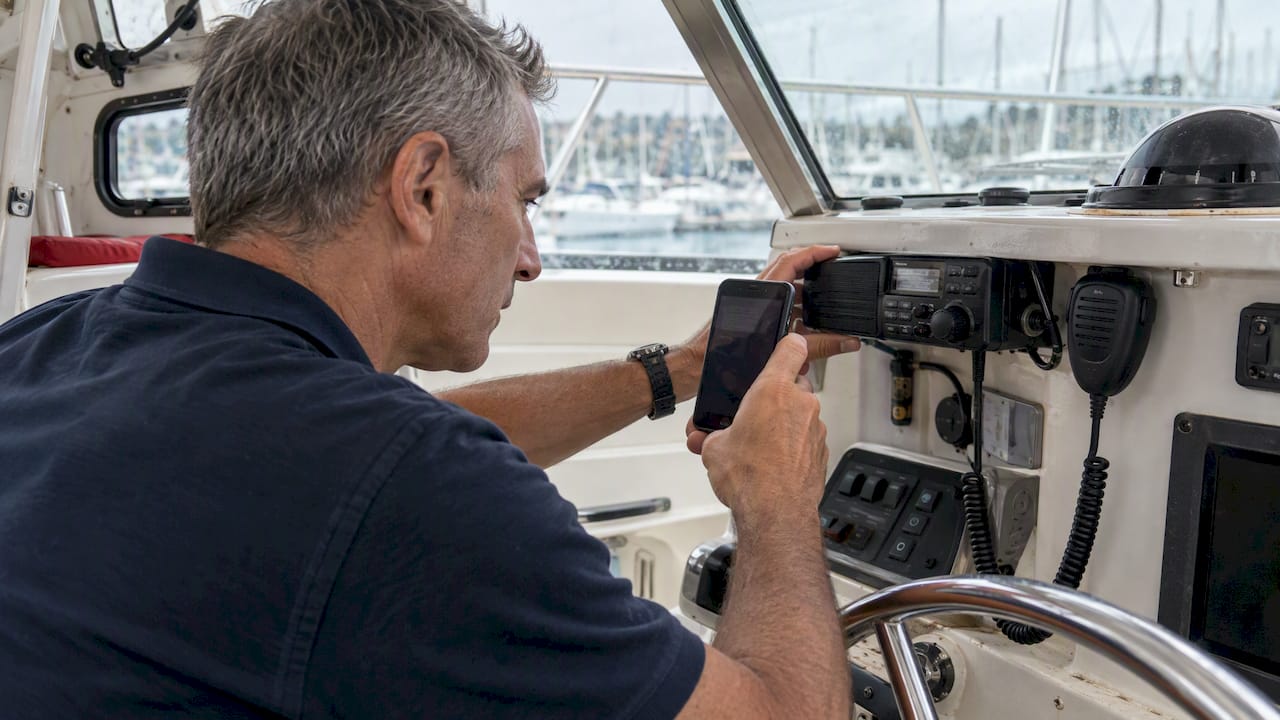
A Malta-registered vessel with maritime radio equipment needs a Ship Radio Station Licence, and Transport Malta, the flag administration, issues it and assigns the MMSI. Start by picking the correct Transport Malta application form. Then prepare your equipment list and, if you carry an EPIRB, its programming report. Everything else in the process hangs on those two steps.
En resumen:
- Choose the form for your vessel type and licence stage; SOLAS, non SOLAS, and provisional applications use different forms, and the wrong choice delays processing.
- A provisional licence lasts up to six months and can extend one or two months during a transfer; permanent licences align with registry expiry and renew annually.
- Transport Malta assigns the MMSI and must notify the ITU; owners cannot update MARS themselves, so confirm the notification and verify the vessel listing.
- At survey, a Recognized Organization may issue a statutory certificate for two months if the licence is absent and the radio installation has no deficiencies.
Índice
- When is a Malta ship radio licence required?
- Provisional, permanent and short-term certificates: what is the difference?
- Which documents and technical details does Transport Malta ask for?
- How do you apply, step by step?
- How does MMSI assignment and ITU/MARS listing work?
- What do fees and renewals look like?
- What happens to the licence during a transfer or survey?
- What should you prepare before submitting?
- Why do owners hand this to a specialist?
- Want us to manage your Malta radio licence and MMSI?
- Preguntas frecuentes
- Sources
When is a Malta ship radio licence required?
Transport Malta states that an individual ship radio station licence is needed to install or use radiocommunications equipment under the Electronic Communications (Regulation) Act (Cap.399), unless the equipment is licence-exempt or covered by a general authorisation. For most yachts, that means you need one.
The equipment you declare on the application typically includes:
- VHF sets, fixed and portable
- MF/HF radios, with or without DSC
- AIS transponders
- SART or AIS-SART units
- EPIRBs
Receive-only radionavigation gear such as a standard GPS does not need to be declared, according to Transport Malta’s individual licence form. The licence is an international document, so it must be current and kept on board. Operating radio equipment may require a licence, subject to the stated exemptions and general authorisations.
Provisional, permanent and short-term certificates: what is the difference?
Transport Malta issues provisional and permanent licences, and the main difference is timing. Technical Notice SLS.14 sets out the framework.
- Provisional licence: valid for up to six months, and during a change of flag or ownership it can be extended by one or two months while the permanent licence is finalized.
- Permanent licence: valid for up to 12 months, timed to your Certificate of Registry, then renewed annually.
- Short-term certificate: if the licence is not yet on board at a survey, a Recognized Organization may issue a two-month statutory certificate, provided it finds no radio installation deficiencies.
Think of the provisional licence as the bridge. It can serve as an interim licence while the registry work finishes, and the permanent licence follows once the Certificate of Registry timeline is set.
Which documents and technical details does Transport Malta ask for?
Transport Malta uses separate forms for SOLAS and non-SOLAS vessels, and for provisional licences. Choosing the wrong one is the most common source of administrative delay. Whichever form you use, it asks for:
- Ship name, call sign, IMO number and official number
- The MMSI, if one has already been assigned
- Quantity, type, manufacturer and model of each radio unit
- Details of VHF, MF/HF, AIS, SART and EPIRB equipment
- A valid EPIRB Data Sheet Test or Programming Report
The SOLAS ship form confirms that fees are set by S.L.35.01 and that the form includes sections for MMSI, official number and a detailed equipment list. The provisional licence form asks for the same ship identifiers.
Consejo de experto: Photograph every radio nameplate before you start the form, so model and serial numbers are copied exactly rather than typed from memory.
How do you apply, step by step?
Follow this sequence to avoid back-and-forth with the registry:
- Decide whether you need a provisional or permanent licence, then download the matching Transport Malta form.
- Gather registry and ownership documents, class or ISM evidence where applicable, and your radio equipment inventory, as listed in the Transport Malta registration process.
- Obtain the EPIRB Data Sheet Test or Programming Report and note serial and model numbers for AIS and EPIRB units.
- Email the completed form and supporting documents to the Transport Malta address printed on the form, and pay the fees referenced in S.L.35.01.
- Follow up to confirm that Transport Malta has notified the ITU of your MMSI, so the vessel appears in the MARS database.
The expected outcome is a provisional licence and MMSI assignment first, then a permanent licence aligned with your Certificate of Registry.
Transport Malta can issue a provisional licence valid for up to six months. That window is your working runway, so submit complete paperwork early.
How does MMSI assignment and ITU/MARS listing work?
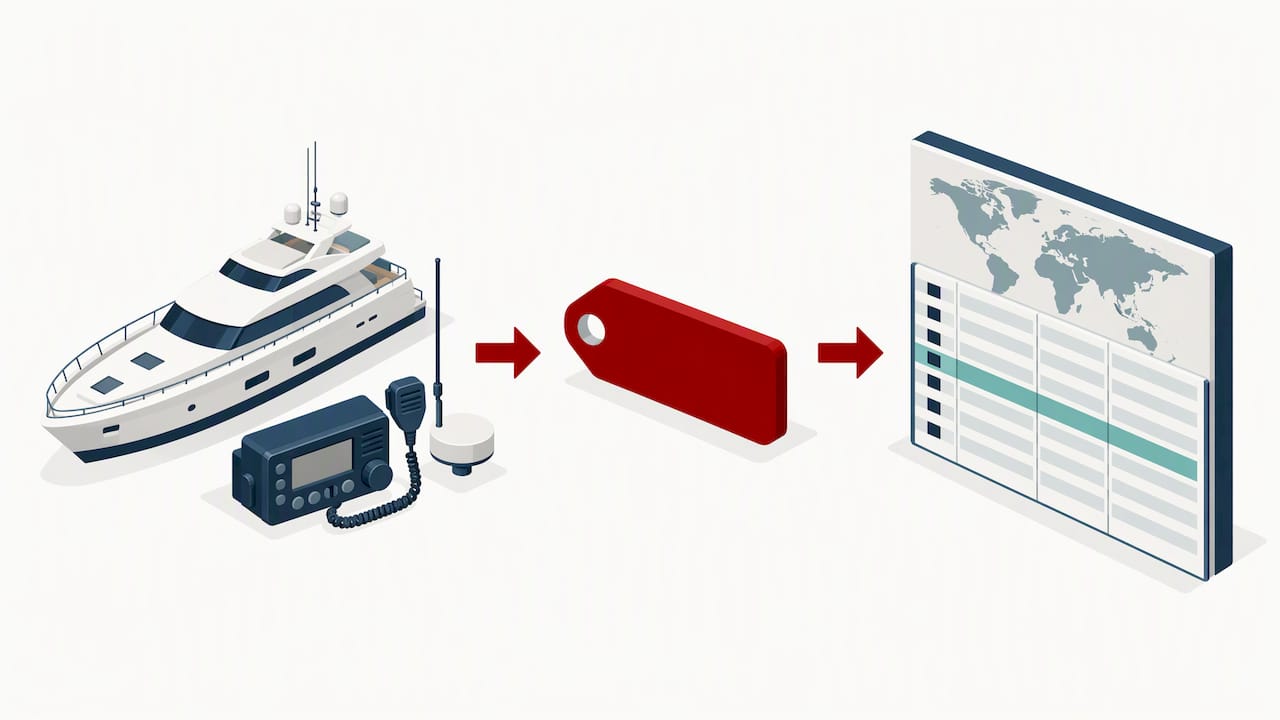
MMSI numbers come from the flag administration, which for you is Transport Malta, at the point the radio licence is issued. The ITU does not hand them out directly, as its terrestrial FAQ explains. The ITU also does not accept update requests from owners. Per the ITU MARS FAQ, the database changes only through official notifications from the flag administration.
What that means for you:
- Ask Transport Malta to send the notification to the ITU once your MMSI is assigned.
- Keep your MMSI and equipment list consistent with the licence, since discrepancies can invalidate it.
- Ask Transport Malta how long the notification takes, then check the public List of Ship Stations (List V), which is published annually.
For background on what the number does for safety and identity, see our MMSI number explainer.
What do fees and renewals look like?
Licence fees are not set by the radio forms themselves. They come from the Fees Leviable by Government Departments Regulations (S.L.35.01), which the Transport Malta forms reference. Check that regulation, or the form, for the current amount before you pay.
Renewal follows a predictable rhythm:
- The permanent licence is timed to match your Certificate of Registry renewal.
- After it is issued, you renew it annually.
- Applying early avoids a gap before a survey or registry expiry.
Consejo de experto: Put the licence renewal date in the same calendar entry as your Certificate of Registry renewal, so one reminder covers both.
For the wider cost picture, our article on Malta yacht registration costs covers what owners typically budget for.
What happens to the licence during a transfer or survey?
A sale, transfer or flag change is a time to check that radio compliance details remain current. Keep these rules in mind:
- The provisional licence is valid for up to six months and can be extended during a change of flag or ownership.
- If the licence copy is not on board at survey, a Recognized Organization may issue a two-month statutory certificate when it finds no radio installation deficiencies.
- Keep the original licence on board, and give the Recognized Organization the provisional licence reference so the survey record matches.
For owners comparing documentation expectations at survey time, our overview of ship station licence requirements maps the typical evidence.
What should you prepare before submitting?
Run through this list before you email Transport Malta:
- Certificate of Registry, proof of ownership or transfer, and class or ISM confirmation where needed
- Make, model and serial numbers for every VHF, MF/HF, AIS and EPIRB unit
- The EPIRB programming report, completed and current
- The correct Transport Malta form for your vessel type and licence stage
- Fees paid per S.L.35.01 and the form emailed to the address it specifies
- A planned follow-up to confirm the MMSI notification reached the ITU
An incomplete package is the usual reason a licence takes longer than expected.
Why do owners hand this to a specialist?
In our experience, the licence itself is rarely the hard part. The friction is in choosing the right form, matching equipment data to what is actually installed, and chasing the follow-up. That is why we handle the form selection, the equipment-list preparation, EPIRB checks and the managed submission to Transport Malta ourselves.
The benefit for you is cleaner paperwork on the first pass and someone confirming that the MMSI notification actually went through, instead of assuming it did. Radio compliance should be a checked box, not a loose end hanging over a survey or a sale.
— VesselFlag
Want us to manage your Malta radio licence and MMSI?
We run the Malta ship radio licence and MMSI application for yacht owners as part of our Malta yacht registration service. The MMSI application is listed at 649 EUR, one-off, so you know the cost before you start.
To get moving, have these ready when you contact us:
- Your Certificate of Registry or transfer paperwork
- The make, model and serial number of each radio unit
- Your EPIRB programming report, or the EPIRB details so we can help you get it
- Your target survey or renewal date
We prepare the correct Transport Malta form, submit it, and follow up with Transport Malta to confirm the MMSI notification to the ITU. Send us your documents today and we will tell you which form applies to your vessel.
Preguntas frecuentes
Do I need a ship radio licence for a Malta-registered yacht?
Yes, if you install or use radiocommunications equipment such as VHF, AIS or an EPIRB. Transport Malta requires an individual licence under Cap.399 unless the equipment is exempt or covered by a general authorisation.
Who assigns the MMSI for a Malta vessel?
Transport Malta does, as the flag administration, when the radio licence is issued. The ITU does not assign MMSIs directly, according to its terrestrial FAQ.
How long is a provisional licence valid?
A provisional licence can be valid for up to six months under Technical Notice SLS.14. During a change of flag or ownership it can be extended by one or two months while the permanent licence is finalized.
Can I ask the ITU to update my MMSI entry myself?
No. The MARS database is updated only through official notifications from the flag administration, per the ITU MARS FAQ. Ask Transport Malta to send the notification.
Do I have to declare my GPS on the application?
No. Receive-only radionavigation equipment such as a standard GPS does not need to be declared, while VHF and EPIRB equipment does, according to Transport Malta’s form.