
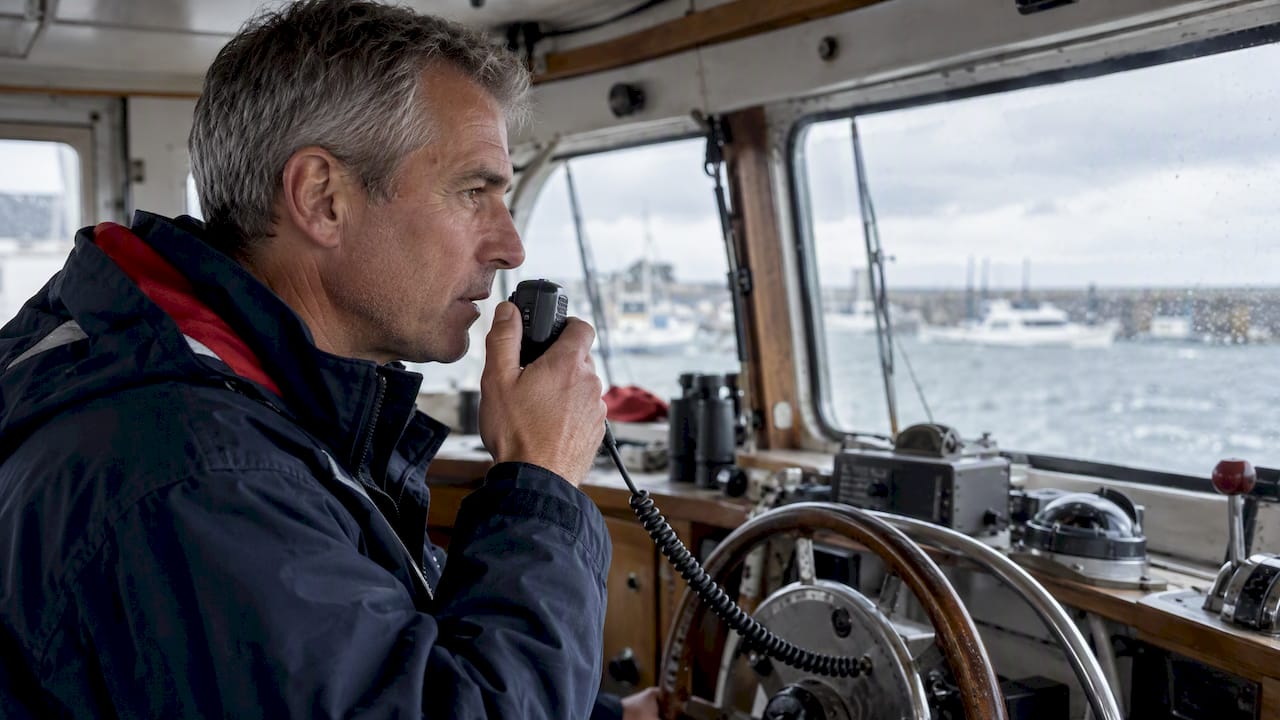
A yacht call sign is a unique alphanumeric identifier that a flag administration assigns to your vessel’s radio station, used for voice identification under ITU standards. If you are registering, reflagging or simply unsure about your status, confirm your current call sign and MMSI directly with your flag administration or MMSI agent before you use your radio.
TL;DR:
- Call signs are assigned by flag states and should be confirmed with your administration before use to avoid mismatches during emergencies.
- You must keep your call sign and MMSI updated after reflagging, sale, or name changes to ensure proper identification and compliance.
- Proper programming and display of identifiers on your radio equipment and documentation are crucial for legal operation and quick emergency response.
- Incorrect or unregistered call signs can lead to legal penalties, port delays, and hinder rescue efforts in critical situations.
- Professional handling of registration, licensing, and equipment programming reduces errors and ensures identifiers remain accurate across all systems.
جدول المحتويات
- What a maritime call sign is and why it still matters
- Who issues call signs: flag states, ITU prefixes and MIDs
- Call sign vs MMSI: two identifiers, two different jobs
- How to apply for a call sign: documents, fields and timeline
- Programming your radio and AIS: who does it and how to verify it
- What changes when you reflag, sell or rename your yacht
- Call sign formats and where to verify an assignment
- Regulations and legal consequences of incorrect call sign usage
- How call signs function in distress and emergency communication
- Best practices for displaying your call sign on board
- Why professional handling reduces call-sign risk
- Get your call sign and MMSI sorted without the back and forth
- الأسئلة الشائعة
- Sources
What a maritime call sign is and why it still matters
A maritime radio call sign is a data element defined under ITU standards and maintained in the ITU’s Maritime Mobile Access and Retrieval System. It follows a fixed structure: an alphanumeric string of limited length, built from a national prefix plus additional letters or numbers, designed so that a vessel’s radio station can be positively identified during radiotelephony and other transmissions. The USCG GMDSS data elements guidance lists call sign as a required identification field used across Morse, radiotelephone and emergency beacon transmissions.
Digital systems have not replaced the call sign. Vessel names get duplicated across registries, mispronounced over noisy channels or simply unreadable in a distress call, which is why a spoken identifier remains essential alongside digital codes.
- A call sign is an alphanumeric string with a defined maximum length under ITU rules.
- It supports manual voice identification during radiotelephony and distress traffic.
- It remains a required GMDSS data element even on vessels equipped with modern digital tracking.
Who issues call signs: flag states, ITU prefixes and MIDs
Your flag state’s national licensing authority, not the ITU directly, assigns your actual call sign. The ITU’s role sits one level up: it allocates blocks of prefix series to each member administration, and those administrations draw individual call signs from their assigned block when they license a vessel.
Maritime Identification Digits work the same way for MMSI numbers. The three-digit MID prefix identifies which administration issued the number, similar to how a call sign’s opening letters identify the flag state. FCC guidance on ship radio stations confirms that MMSI assignment runs through the flag administration rather than a global registry.
ITU Recommendation M.585 sets the format rules administrations must follow and asks them to conserve identity resources as they issue new numbers. When an administration’s available series run low or a new member joins the ITU system, it can request additional series from the ITU’s Radiocommunication Bureau, which is part of why call-sign allocation stays centralized at the flag-state level rather than handled ad hoc by owners or brokers.
- The flag state’s licensing authority assigns the specific call sign to your vessel.
- The ITU allocates prefix blocks and MIDs to each administration, not to individual boats.
- Administrations request additional series from the ITU Radiocommunication Bureau as needed.
Call sign vs MMSI: two identifiers, two different jobs
A call sign and an MMSI solve different problems, and confusing them is one of the most common mistakes new owners make. The MMSI is a nine-digit number built around a three-digit MID, used by digital systems including AIS broadcasts and DSC calls. The call sign is the alphanumeric identifier used for voice communication and manual identification.
In practice, your AIS transponder broadcasts your MMSI automatically, and a DSC distress call transmits it digitally to coast stations and nearby vessels. Your call sign comes into play when you speak on the radio, when a coast station logs a voice transmission, or when your documentation lists a station identity. Some equipment, like certain EPIRBs, ties both identifiers together in its registration record.
- MMSI is a nine-digit digital identifier used by AIS and DSC equipment.
- Call sign is an alphanumeric identifier used primarily for voice and manual identification.
- Both must be programmed correctly and kept consistent across your registration documents and onboard equipment.
Registering under a flag typically bundles both tasks together: our MMSI Radio License service covers the digital side while your flag registration generates the call sign.
How to apply for a call sign: documents, fields and timeline
Application forms vary by administration, but most ask for a consistent set of information: vessel name, official number or IMO number where applicable, owner details and contact information, tonnage, and the vessel’s intended use. Sample registration forms from various registries typically request proof of ownership, a tonnage certificate, identification documents and completed registration forms before they will process a call-sign or MMSI assignment.
Timelines depend heavily on the administration and how complete your paperwork is on first submission. Missing documents are the single biggest cause of delay, which is why many owners work through a registrar or agent who already knows each administration’s exact requirements.
A practical checklist looks like this:
- Confirm your chosen flag state and its specific application form for call sign and MMSI.
- Gather proof of ownership, tonnage documentation and identification for all owners.
- Complete the vessel particulars section accurately, including name, length, tonnage and intended trading area.
- Submit the application along with any required registration or licensing fee.
- Wait for confirmation of your assigned call sign and MMSI before activating onboard equipment.
- Update your radio license and vessel documentation with the new identifiers.
Pro Tip: Keep a digital copy of every submitted form and confirmation email. If a coast guard or port authority ever questions your identification, you want that paper trail within reach, not buried in an old inbox.
Owners juggling a yacht purchase, insurance and a looming cruising season often outsource this step to a registration specialist rather than chase paperwork themselves. Our step-by-step flag registration guide walks through the fuller documentation list if you want to see the complete picture before you start.
Programming your radio and AIS: who does it and how to verify it
Once your call sign and MMSI arrive, someone has to load them into your equipment. VHF/DSC radios, AIS transponders and, where applicable, EPIRBs all need the correct identifiers programmed before they transmit accurate information. Many manufacturers lock MMSI programming after the first entry specifically to prevent accidental changes at sea, which means an authorized technician, not the owner, often has to perform the task.
- VHF/DSC radios and AIS transponders both require the current MMSI and call sign entered correctly.
- Some units lock after initial programming, requiring an authorized service provider to make changes.
- EPIRBs registered with the same vessel identity need their registration updated to match.
After programming, verify the work before you leave the dock: check that your AIS broadcast shows the correct MMSI on a public AIS aggregator, place a test DSC call to confirm the radio transmits the right number, and confirm your EPIRB registration matches your current identifiers.
Pro Tip: Ask your technician for written confirmation of the MMSI and call sign they programmed. It takes one minute and saves an argument with your insurer later.
What changes when you reflag, sell or rename your yacht
Reflagging almost always triggers a new call sign and a new MMSI, because both are assigned by the flag administration rather than tied permanently to the hull. Once you move to a new flag state, the old identifiers issued by your previous administration no longer apply, and the new administration issues its own.
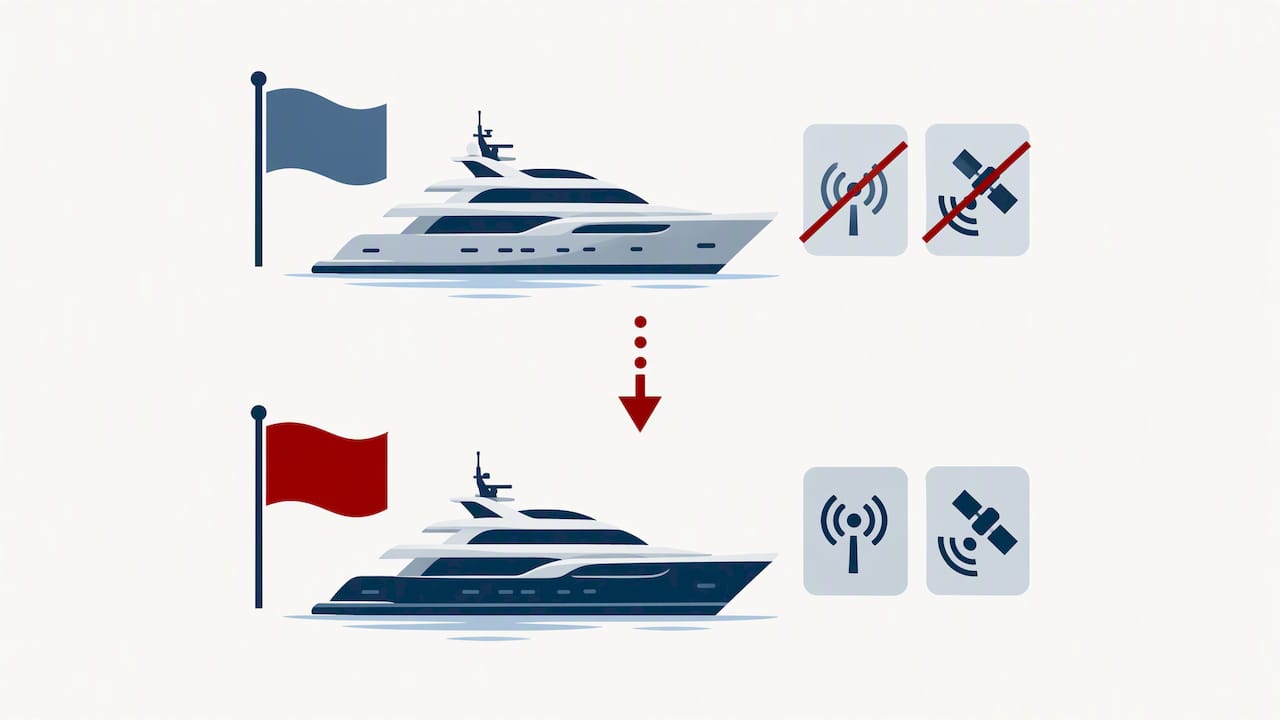
The IMO number works differently. For vessels that carry one, the IMO number is generally persistent across a reflag, but most pleasure yachts never have an IMO number in the first place, since it is typically limited to larger or SOLAS-regulated vessels.
After any reflag, sale or name change, you need to:
- Notify your previous and new flag administrations of the change.
- Apply for and receive new call sign and MMSI assignments where required.
- Reprogram your VHF/DSC radio, AIS transponder and EPIRB with the updated identifiers.
- Update your radio license, registration certificate and any insurance documentation.
Our guide to registering a yacht covers the full set of certificates that typically need updating alongside your identifiers.
Call sign formats and where to verify an assignment
Call signs follow a prefix-plus-suffix pattern set by each administration within ITU rules. A UK-flagged vessel, for example, typically carries a prefix beginning with “M,” while other administrations use different opening letters tied to their allocated series. Exact length and character combinations vary, but all fall within the alphanumeric limits set in the ITU’s data field standards.
- Formats combine a national prefix with additional letters and numbers assigned sequentially.
- Length and character sets stay within ITU-defined limits for the call sign data element.
- You can look up an assigned call sign through your flag administration’s vessel database or the ITU MARS system.
If your documentation and your radio display different call signs, that mismatch needs correcting before you rely on either one in an emergency.
Regulations and legal consequences of incorrect call sign usage
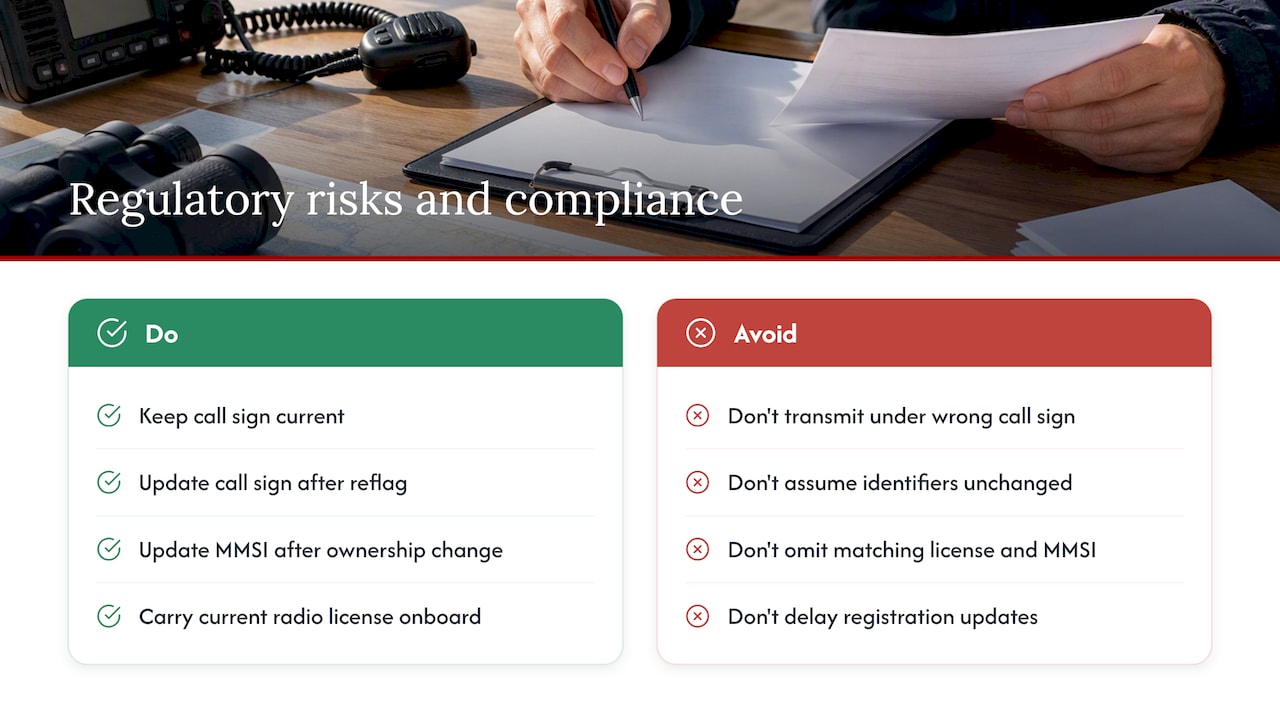
Operating with an incorrect, unregistered or mismatched call sign is not just a paperwork problem. Radio regulations in most jurisdictions treat unauthorized or misidentified transmissions as a compliance violation, since the entire purpose of the call sign system is accurate identification during both routine and emergency communication. A vessel broadcasting under a call sign it was never assigned, or one that no longer matches its current MMSI after a reflag, risks confusion with coast stations, port authorities and search and rescue coordinators.
Practical consequences range from administrative penalties to delays at port control inspections, where officials check that your radio license, call sign and MMSI all match your registration certificate. Insurance claims can also get complicated if an incident report shows a vessel transmitting under the wrong identity, since it raises questions about whether the vessel was operating in compliance with its flag state’s requirements at the time.
The safest approach is straightforward: treat your call sign the same way you treat your registration certificate, as a legal credential that has to stay current and accurate. Any time you reflag, change ownership or rename your vessel, update your call sign and MMSI before you transmit again, and keep your radio license document on board and current. If you are ever unsure whether your current identifiers are valid, confirm directly with your flag administration rather than assuming nothing has changed.
How call signs function in distress and emergency communication
In an actual emergency, your call sign is how a coast station, another vessel or a rescue coordination center confirms exactly who is transmitting. A distress call over VHF radiotelephony includes your call sign so responders can cross-reference it against registration records, confirm the vessel’s identity and avoid confusion with another station using a similar name.
Digital distress alerting through DSC transmits your MMSI automatically, giving responders an instant digital match, but voice traffic that follows still relies on the spoken call sign to maintain clear identification throughout the exchange. This dual layer, digital MMSI plus spoken call sign, is part of why GMDSS equipment guidance treats both as essential rather than redundant.
EPIRBs registered with your vessel’s identifiers add a third layer: when activated, they transmit identifying data that rescue coordination centers match against your registration, so keeping your EPIRB registration synced with your current call sign and MMSI directly affects how quickly responders can identify your vessel. A charter operator running events with guests aboard in a high-traffic harbor, for instance, depends on exactly this kind of accurate, fast identification if a radio call ever needs to go out during an event.
Clear, correctly programmed identifiers are not a bureaucratic formality in this context. They are the difference between a rescue coordinator confirming your position in seconds and losing time chasing a mismatch between what your radio broadcasts and what your paperwork says.
Best practices for displaying your call sign on board
Most flag administrations require your call sign to be marked on or near your radio installation, not just recorded on paper somewhere in a filing cabinet. GMDSS guidance on radio installations instructs that the call sign and ship station identity be marked clearly as part of standard radio watchkeeping arrangements.
Practical placement matters more than owners often realize. Keep a visible card or plate at the main radio station showing your current call sign and MMSI together, since anyone operating the radio, whether that is you, a crew member or hired captain, needs instant access to both without digging through a folder. Update that card immediately after any reflag or ownership change, since an outdated display is worse than none at all if it leads someone to transmit the wrong identity during an emergency.
Keep a second reference point: your radio license document stored on board in a waterproof sleeve, matching exactly what is programmed into your equipment and displayed at the station. Port inspections and coast guard checks routinely verify that all three, the physical display, the programmed equipment and the license document, agree with one another.
Why professional handling reduces call-sign risk
Call-sign and MMSI allocation sit at the intersection of flag-state bureaucracy and onboard equipment, which is exactly where small paperwork errors turn into compliance headaches. We handle flag registration, MMSI licensing and the documentation chain across multiple jurisdictions daily, which means we catch mismatches, missing fields and reprogramming gaps before they become your problem at a port inspection.
Self-managing works fine for owners with time and patience for the process in one jurisdiction. Reflagging, multi-owner structures or commercial operations tend to benefit from a specialist who already knows each registry’s exact requirements.
— VesselFlag
Get your call sign and MMSI sorted without the back and forth
We provide call-sign and MMSI allocation as part of flag registration services across multiple jurisdictions to simplify the process of obtaining these identifiers.
- Our تسجيل اليخوت في سان مارينو runs €290 to €2,990 one-off, with provisional registration often ready in days.
- Our تسجيل اليخوت في مالطا includes an MMSI application fee of €649 alongside the registration package.
- Our تسجيل اليخوت في المملكة المتحدة الجزء 1 pairs with UK Part 1 MMSI (OFCOM) registration at €150.
Check your flag options and start the paperwork through our yacht flag registration services page, where we handle the forms, the identifiers and the radio setup together.
الأسئلة الشائعة
What is a marine call sign?
A marine call sign is a unique alphanumeric identifier assigned by a flag administration to a vessel’s radio station, used to identify that station during voice communications under ITU standards. It stays linked to your flag registration and typically changes if you reflag to a different country.
What is a call sign for a boat?
For a recreational boat, a call sign works the same way as for any vessel: it identifies the boat’s radio station during radiotelephony and distress communication. Smaller boats without DSC-capable radios may not need one, but any vessel with a licensed radio station typically requires a call sign issued by its flag administration.
Can you give me an example of a ship’s call sign?
Call signs combine a national prefix with additional letters or numbers, so a UK-flagged vessel’s call sign typically starts with the letter “M” followed by other characters assigned by the administration. The exact pattern depends on which flag state issued it and which prefix series that administration holds under ITU allocation rules.
What is the IMO number for a yacht?
Most pleasure yachts do not carry an IMO number, since IMO numbers are generally reserved for larger or SOLAS-regulated commercial vessels rather than private yachts. When a vessel does carry an IMO number, it typically stays persistent across a reflag, unlike the call sign and MMSI, which usually change with a new flag administration.
Sources
- ITU MARS — list and description of data fields
- USCG Navcen — GMDSS data elements (CALL SIGN)
- FCC — Maritime mobile: ship radio stations and MMSI guidance