

باختصار:
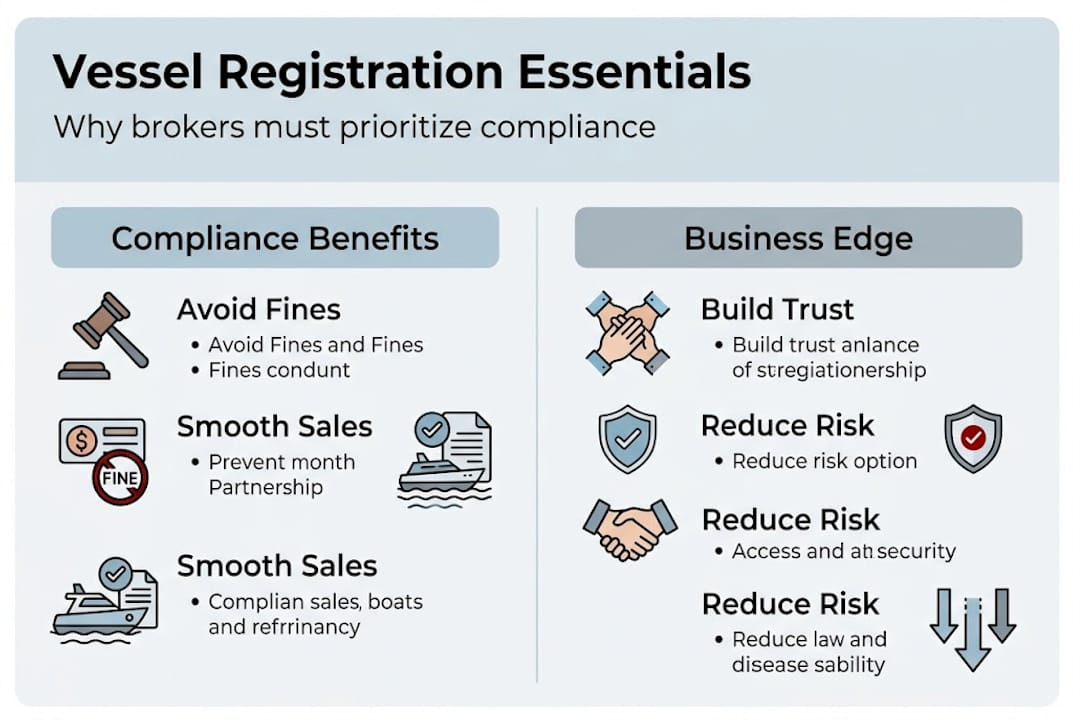
- Vessel registration is essential for legal operation, sale, and international travel of boats.
- Proper registration streamlines transactions, reduces delays, and builds client trust.
- Strategic flag choices offer tax benefits, operational freedom, and protect brokers from compliance risks.
Most boat brokers treat vessel registration as someone else’s problem. The owner handles it, the lawyer files it, and the broker moves on to the next deal. That assumption is costly. Legal compliance for operations, resale, and international travel depends directly on proper registration, and when something goes wrong, brokers face the liability, the lost commission, and the damaged reputation. This guide breaks down why registration is central to your value as a broker, how it affects every transaction you touch, and what the most effective brokers do differently.
جدول المحتويات
- Why vessel registration underpins broker value
- How vessel registration streamlines brokerage transactions
- Mitigating compliance, sanctions, and reputational risks
- Tax advantages and operational freedom: What elite brokers leverage
- The truth brokers rarely hear: Registration is your differentiator
- Empower your brokerage with efficient vessel registration solutions
- الأسئلة الشائعة
الوجبات الرئيسية
| نقطة | التفاصيل |
|---|---|
| Compliance prevents costly risks | Vessel registration is non-negotiable for brokers to avoid fines, detainment, and lost client trust. |
| Smooth sales and transfers | Registration ensures seamless title, tax verification, and faster transaction closures for brokers. |
| Boosts reputation and service | Managing registration enables brokers to provide premium cross-border service, reducing inspections and enhancing value. |
| Unlocks tax and operational benefits | Strategic flag choice can lower client taxes, speed processing, and offer global port access. |
Why vessel registration underpins broker value
Vessel registration is not paperwork. It is the legal foundation that allows a vessel to exist in commerce. Without it, a boat cannot legally operate in most jurisdictions, cannot be sold with a clean title, and cannot cross international borders without risk of detention. For brokers, ignoring this reality is not just an oversight. It is a business liability.
Every transaction a broker facilitates depends on the vessel having a valid and current registration. Banks will not finance a sale without verified title. Insurers will not bind coverage on an unregistered vessel. Customs officials can board and detain a vessel that lacks proper documentation. The consequences cascade quickly:
- Lost deals at closing due to unresolved registration issues
- Client liability passed to the broker through negligence claims
- Port detention that delays or destroys sale timelines
- Reputational damage that costs future referrals
- Heavy fines that buyers or sellers try to recover from the facilitating broker
Knowing the broker registration advantages before a deal reaches closing is not optional. It is what separates reactive brokers from those who build lasting client relationships.
Registration rules also vary dramatically by jurisdiction. A vessel registered in one country may face entirely different compliance requirements when operating or being sold in another. Brokers who serve international clients need working knowledge of flag state rules, processing timelines, and documentation standards across multiple registries. Failing to account for compliance screening risks in cross-border transactions is one of the most common and expensive mistakes in the brokerage industry.
“Brokers need vessel registration to ensure client vessels are legally compliant for operation, sale, and international travel, avoiding fines, detention, and liability issues.”
Brokers who proactively manage registration for their clients build a level of trust that closes more deals and generates more referrals. When you can walk a client through the entire compliance picture, not just the listing price, you become the advisor they call first.
How vessel registration streamlines brokerage transactions
Knowing the legal foundation, the next concern is how vessel registration supports your deal-making. Every boat sale involves a chain of paperwork, and registration sits at the center of that chain. When registration is current, accurate, and with a clean title, the transaction moves fast. When it is not, every step stalls.
Here is how a typical registration-supported transaction flows:
- Title verification – The broker pulls the current registration record to confirm ownership and check for any outstanding liens or encumbrances.
- Lien clearance – Registration documents identify any claims against the vessel that must be resolved before title can transfer cleanly.
- Tax status confirmation – Many jurisdictions require proof that sales tax, VAT, or import duties have been settled before a sale can close.
- Bank and lender requirements – Financing institutions require clean registration documents before approving a purchase loan.
- Insurance binding – Insurers need verified registration to bind coverage, a step that often happens simultaneously with closing.
- Title transfer filing – The registration process for brokers concludes with a formal transfer of registration to the new owner, creating a legal record of the transaction.
Following this sequence protects both buyer and seller and positions the broker as the competent professional managing the entire process. Title transfer and tax handling become smooth when registration is in order from the start, which builds the kind of client trust that generates repeat business.
Using a registration compliance checklist before any deal reaches the closing table is one of the simplest ways to prevent last-minute surprises. Reviewing flag, title, lien status, and tax history in advance means your clients never face unexpected delays on closing day.
Pro Tip: In cross-jurisdictional sales, always verify that the vessel’s flag state registration is recognized in both the seller’s and buyer’s home jurisdiction. Flags that are standard in one country may trigger additional paperwork or scrutiny in another, and discovering this at closing is expensive for everyone.
Mitigating compliance, sanctions, and reputational risks
But ensuring smooth transactions is only part of the story. Registration also shields you from regulatory headaches that can end a deal, a career, or worse.

Banks, insurers, and customs authorities all require proof of registration for good reason. A vessel without documented registry has no verifiable ownership history, no legal basis for insurance, and no standing in port authority records. For brokers operating internationally, sanctions and AML screening have become standard steps in any serious transaction. Regulators expect brokers to know who owns the vessel and under what flag it operates.
| Flag type | Inspection risk | Port access | AML scrutiny |
|---|---|---|---|
| White-list flag (e.g., Malta, UK) | Low | Broad global access | Minimal additional screening |
| Grey-list flag | معتدل | Restricted in some ports | Elevated review required |
| Black-list flag | Very high (5-10x detention risk) | Denied in many major ports | Intense AML and sanctions review |
The table above reflects a real operational reality. Paris MoU flag state inspections categorize flags by their detention and deficiency records, and vessels flying black-list flags face dramatically higher inspection rates. Brokers who present a client with a vessel under a grey or black-list flag are setting up a difficult conversation with every lender, insurer, and port authority involved.
For due diligence and KYC purposes, registration records are the first document set any compliance officer will request. Knowing which registry options reduce sanctions exposure is not just useful information. It is a professional obligation for brokers handling high-value or international transactions.
Key due diligence checks every broker should run:
- Verify flag state status on the Paris MoU white list
- Confirm no active liens or encumbrances on the registration record
- Check the beneficial ownership against active sanctions lists
- Review the vessel’s inspection history and detention record
- Confirm the registration is current and not expired or suspended
Brokers who build these checks into every transaction protect themselves, their clients, and their reputation.
Tax advantages and operational freedom: What elite brokers leverage
Having seen compliance’s impact on risk, let’s look at how advanced brokers use registration as a tool for tax and operational efficiency. This is where the strategic broker pulls away from the competition.
Flag selection directly affects how much a vessel owner pays in taxes, how freely the vessel can operate in major ports, and how often it faces inspection delays. Brokers who understand these variables can guide clients toward registration choices that save money and reduce operational friction.
| العلم | Registration cost (approx.) | Annual tax exposure | Processing time | Port access |
|---|---|---|---|---|
| ليبيريا | Low to moderate | الحد الأدنى | Fast (days to weeks) | Global white-list access |
| جزر مارشال | Low to moderate | الحد الأدنى | سريع | Global white-list access |
| مالطا | معتدل | EU VAT framework applies | معتدل | Full EU and global access |
| بنما | Low | Low | سريع | Broad global access |
Tax advantages and operational freedom through flags like Liberia and Marshall Islands are well-documented. Low annual costs, minimal tax exposure, and white-list status that reduces port inspections make these flags attractive for fleet owners and high-value yacht clients alike.
Pro Tip: Elite brokers use a practice sometimes called “flag shopping” to identify the optimal registration jurisdiction for each client’s specific operational profile, ownership structure, and tax situation. This is not a loophole. It is smart, legal, and expected at the top end of the market. Learn how commercial registration tax benefits work across flags before your next multi-jurisdictional deal.
For clients with complex ownership arrangements, corporate vessel registration under a holding company structure can layer additional tax efficiency on top of flag selection. Brokers who understand both dimensions offer a level of service that no listing-only competitor can match.
Registration in a reputable, fast-processing jurisdiction also speeds up deal timelines. When a vessel can be registered in days rather than weeks, you keep momentum in negotiations, satisfy lender requirements faster, and close before competing offers have time to surface.
The truth brokers rarely hear: Registration is your differentiator
With these structural benefits in mind, it is time to reframe how brokers value vessel registration. Most in the industry still treat it as back-office admin. Something to hand off and forget. That mindset is a missed opportunity.
Brokers who master registration do not just close deals more smoothly. They build a reputation as the professional who handles the hard stuff. Clients talk. When a buyer walks through a closing without a single surprise because their broker had every registration detail locked down, that story gets told to other yacht owners, other fleet managers, other high-net-worth individuals who are looking for exactly that kind of reliability.
Proactive registration management is one of the highest-leverage client retention strategies available to a broker, and almost no one positions it that way. Understanding the full picture of registration as a client differentiator means knowing when to recommend a flag change, when to flag a lien risk before it surfaces, and when to involve a specialist platform to accelerate processing. Registration is not a box to check. It is a service layer that earns loyalty and referrals.
Empower your brokerage with efficient vessel registration solutions
Ready to transform vessel registration from a pain point into your brokerage’s competitive edge? موقع VesselFlag.com is built specifically for brokers and maritime service providers who need fast, compliant, and transparent registration across multiple international jurisdictions.
Whether you are navigating a complex cross-border sale or helping a new client get compliant quickly, موقع VesselFlag.com gives you the tools to manage the full global registration process without the guesswork. Explore available flag registration services across major registries worldwide, and clarify any questions about تسجيل اليخوت مقابل تسجيل القوارب requirements that affect your clients’ specific vessels. Your clients expect expertise. This is where you build it.
الأسئلة الشائعة
What legal risks do brokers face if vessels are not registered?
Non-registered vessels can be detained, fined, or barred from international ports, directly exposing brokers to liability and reputational damage. Port access and fines for non-compliance are legally enforced across most major maritime jurisdictions.
How does vessel registration speed up the sales process?
Proper registration gives brokers immediate proof of title and tax status, allowing paperwork and bank requirements to be met quickly so sales close faster. Title transfers and tax handling move smoothly when registration records are clean and current.
What is the impact of flag state selection on brokerage services?
Choosing a reputable flag state reduces the chance of vessel inspection and detention by up to 5 to 10 times, strengthening the broker’s value case to clients and lenders. Flag state detention risk is one of the most underestimated variables in international brokerage.
Can brokers help clients gain tax benefits through strategic vessel registration?
Yes, brokers can guide clients to flags offering lower taxes and faster processing for substantial efficiency and financial gains across borders. Liberia and Marshall Islands are two well-established examples of low-tax, white-list flag options.