
TL;DR:
- Registration timelines vary from one day to six months based on flag choice and vessel details.
- Using an experienced agent can cut processing times by up to 60 percent.
- Proper preparation and complete documentation are crucial to avoid delays in the process.
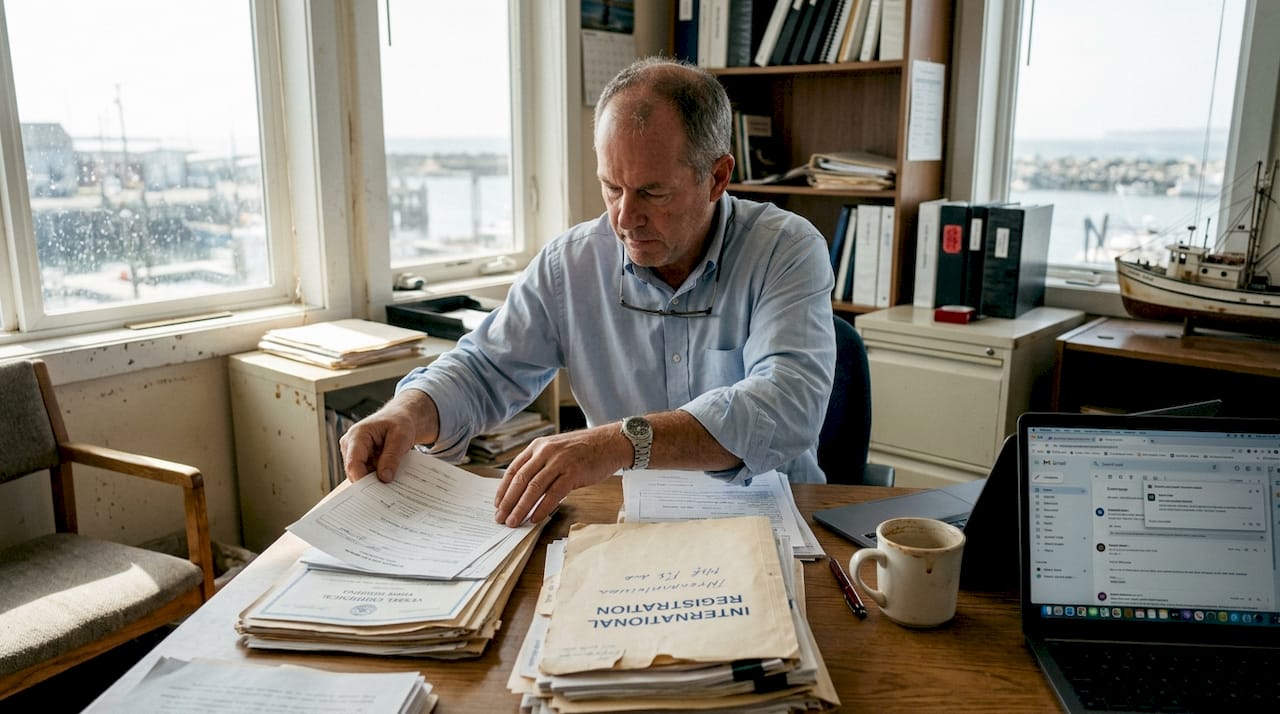
International boat registration can take anywhere from a single business day to six months, and that gap is not an accident. The flag state you choose, the completeness of your paperwork, and whether your vessel is private or commercial all drive that range. Many owners assume there is a universal timeline, plan their first voyage accordingly, and then find themselves stuck at anchor waiting for documents. This guide breaks down every step in the process, compares real timelines across the most popular flag states, and gives you a practical playbook for cutting delays before they cost you time and money.
جدول المحتويات
- Key steps in the international registration process
- How timelines differ by flag state and vessel type
- What can delay or speed up your registration?
- Costs, operational tips, and strategy for faster flag selection
- Our take: Why chasing ‘the fastest flag’ can backfire
- Accelerate your international registration with expert support
- Frequently asked questions
الوجبات الرئيسية
| نقطة | التفاصيل |
|---|---|
| No universal timeline | Boat registration can range from a single day to months depending on flag state and vessel type. |
| Document prep is critical | Mistakes or missing paperwork cause most delays and rejections in international registration. |
| Agent assistance accelerates | Hiring a professional agent speeds up processing and minimizes costly errors. |
| Flag choice impacts speed | Selecting the right flag for your needs can reduce wait times and future compliance headaches. |
| Provisional certificates enable use | Most jurisdictions allow legal yacht operation quickly after issuing a provisional certificate. |
Key steps in the international registration process
Understanding why timelines vary starts with knowing what actually happens during registration. The standard process for international registration involves six to seven distinct steps, and each one carries its own time risk.
- Choose your flag state. This is the single most consequential decision. The flag determines jurisdiction, compliance obligations, and how fast everything else moves.
- Prepare your documentation. This includes proof of ownership, builder’s certificate or bill of sale, tonnage measurement, and any existing registration deletion certificate from a previous flag.
- Appoint a registered agent. Most flag states require an in-country representative. Your agent submits paperwork, liaises with the registry, and keeps the process moving.
- Submit the application. The registry reviews your documents and flags any issues. Errors here reset the clock.
- Complete the survey (if required). Vessels over 24 meters and most commercial yachts need a physical inspection before registration is finalized.
- Receive your provisional certificate. This temporary document allows you to operate legally while the permanent registration is processed.
- Receive your permanent certificate and set up communications. MMSI and AIS registration typically follow once the permanent certificate is issued.
The distinction between provisional and permanent certificates matters enormously for planning. A provisional certificate gets your vessel moving, often within days. The permanent certificate is the full legal document, and it takes longer.
Review the detailed registration steps and use a registration checklist to make sure nothing is missing before you submit.
Pro Tip: Hiring an experienced agent before you even finalize your flag choice pays dividends. Agents who work with a specific registry daily know exactly what format documents need to be in, which saves you revision rounds and weeks of back-and-forth.
How timelines differ by flag state and vessel type
Now that you know each step, let’s look at how long the full process actually takes across the most popular flag options for yacht owners.
| Flag state | Provisional certificate | Permanent certificate |
|---|---|---|
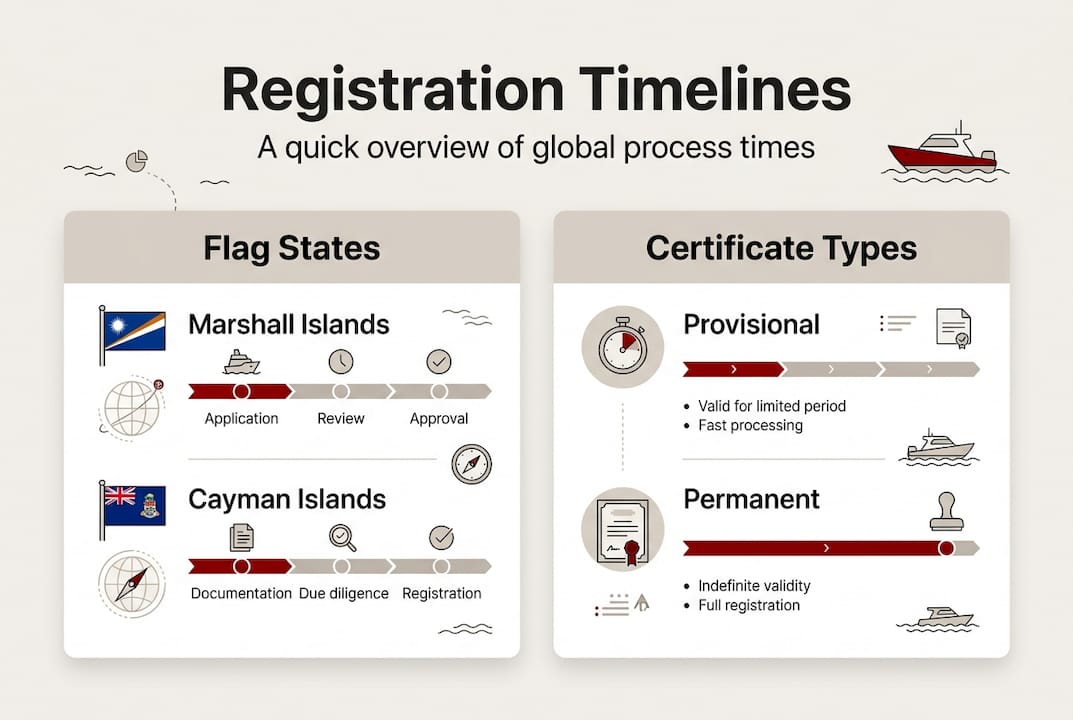
| جزر مارشال | 1 to 3 days | 2 to 4 weeks |
| جزر كايمان | 3 to 5 days | 3 to 6 weeks |
| مالطا | 1 to 2 weeks | Up to 6 months |
| بنما | 2 to 5 days | 3 to 8 weeks |
| سان مارينو | 1 to 3 days | 2 to 5 weeks |
| بالاو | 1 to 5 days | 3 to 6 weeks |
إن Marshall Islands registry is widely cited for issuing provisional certificates within 1 to 3 days on straightforward applications, making it one of the fastest options for owners who need to move quickly. Malta, by contrast, offers EU access and prestige but can take up to six months for a full permanent certificate.
Several factors push timelines in either direction:
- Vessel size. Yachts under 24 meters typically move faster because surveys are often optional. Those over 24 meters almost always require a formal inspection.
- Private vs. commercial use. Commercial vessel registration adds layers of compliance documentation, class certificates, and crew certification checks that extend the process.
- Bareboat charters and vessels under construction. These require additional documentation and often trigger extended review periods, as noted in Marshall Islands registry guidelines.
- Previous registry deletion. If your vessel was registered under another flag, you need a deletion certificate before the new registry will finalize your application.
Choosing your flag state strategically can shave weeks off your timeline. Review registration cost factors alongside speed when making this decision, because the cheapest or fastest option is not always the most cost-effective over a three to five year ownership period.
What can delay or speed up your registration?
You’ve seen how jurisdiction and vessel type shape timelines, but the details of your own paperwork are often the biggest variable. Here’s how to take control and what pitfalls to avoid.
The most common causes of delay are entirely preventable:
- Incomplete or incorrectly formatted ownership documents
- Missing deletion certificate from a prior registry
- Errors in vessel dimensions or tonnage figures on the application
- Survey scheduling backlogs, especially in peak season
- Apostille or notarization requirements that vary by country
Incomplete documentation causes most delays and rejections in international registration. This is not a minor administrative inconvenience. A single missing document can pause your entire application for two to four weeks while you source the correct paperwork.
On the acceleration side, the data is clear. Professional agents reduce delays by up to 60% and can cut overall processing time by as much as threefold compared to self-managed applications. The Marshall Islands registry, for example, processes straightforward agent-submitted applications in five to seven business days.
“The single biggest time-saver in yacht registration is submitting a complete, correctly formatted application on the first attempt. Every revision cycle adds days or weeks. Get it right before you submit.”
For a smooth yacht registration, prepare these documents in advance: bill of sale or builder’s certificate, proof of identity for all owners, deletion certificate from previous registry, vessel measurement certificate, and any corporate documents if registering under a company.

Pro Tip: Build a four to eight week buffer between your vessel purchase date and your first planned international passage. Unexpected survey delays, public holidays in the registry country, and banking verification steps all eat into your timeline in ways that are hard to predict.
Review the full registration process overview to map your specific scenario against typical timelines before committing to a schedule.
Costs, operational tips, and strategy for faster flag selection
Minimizing your timeline is not just about paperwork speed. Your flag strategy and cost structure interact directly with how fast you can get legally operational.
| Flag state | Setup cost | Annual fee | Speed | Key advantage |
|---|---|---|---|---|
| جزر مارشال | $800 to $2,500 | $1,200 to $4,000 | سريع جداً | Global acceptance |
| جزر كايمان | $1,500 to $5,000 | $2,000 to $8,000 | سريع | Prestige, banking |
| مالطا | $1,000 to $3,500 | $750 to $3,500 | Moderate to slow | EU flag access |
| بنما | $500 to $1,500 | $750 to $2,500 | سريع | Low cost |
| سان مارينو | $600 to $1,800 | $800 to $2,000 | سريع جداً | Inland, EU-adjacent |
Registration setup costs range from $500 to over $5,000, with annual fees reaching $18,000 for larger commercial vessels under premium flags. The Marshall Islands, Cayman, and Malta consistently rank as the most popular choices for private and charter yachts, each for different reasons.
Here is how to match your flag choice to your real-world needs:
- Define your primary cruising region first. EU waters favor EU flags like Malta for smoother port interactions and VAT compliance.
- Check your bank and insurer preferences. Some lenders and underwriters have approved flag lists. Choosing outside that list can complicate financing or coverage.
- Weigh speed against long-term compliance. A fast non-EU flag works well for blue-water cruising but may create friction in European marinas.
- Factor in renewal timelines. Some flags require annual renewals with fresh documentation, which adds recurring administrative work.
Understanding the difference between yacht vs. boat registration also matters here, as the classification affects which registry tier your vessel falls under and what fees apply. For a full breakdown, the registration costs explained resource covers every fee category in detail.
Our take: Why chasing ‘the fastest flag’ can backfire
Here is something most registration guides skip entirely. Speed is a legitimate priority, but optimizing purely for the fastest provisional certificate is one of the most common mistakes we see from first-time international owners.
We have worked with clients who chose a fast non-EU flag to get moving quickly for a Mediterranean season. Within weeks, they faced complications at Spanish and French ports where local officials requested additional documentation the flag state did not provide as standard. Their insurer also flagged the registry as outside their preferred list, triggering a policy review that delayed their charter license.
The registration itself was fast. Everything that followed was not.
What actually delivers the best outcome is choosing your flag based on your operating region, your insurer’s requirements, and your bank’s preferences, and then optimizing for speed within that shortlist. Review your flag selection strategies with those filters applied first. Speed is a tiebreaker, not the primary criterion. The owners who move fastest in the long run are the ones who spent an extra week choosing the right flag upfront.
Accelerate your international registration with expert support
If streamlined registration, minimal downtime, and expert support matter to you, here are your next steps.
موقع VesselFlag.com handles international boat registration across all major flag states, from the Marshall Islands and Cayman to Malta, Palau, and San Marino. Whether you are navigating how to register a yacht for the first time or switching flags on an existing vessel, the platform gives you a clear path from application to certificate. Not sure which flag fits your situation? The yacht vs. boat registration guide helps you clarify your vessel’s classification before you start. For personalized guidance and fast turnaround, connect directly with expert yacht registration help and get your vessel legally operational without unnecessary delays.
Frequently asked questions
How long does international boat registration usually take?
Registration timelines range from 1 to 3 days for provisional status in fast jurisdictions like the Marshall Islands to up to six months for a permanent certificate under Malta. Most owners receive a working provisional certificate within one to two weeks regardless of flag state.
Can I use my yacht while waiting for permanent registration?
Yes. Most flag states issue a provisional certificate within days of application approval, and provisional certificates enable legal operation while the permanent documentation is finalized. Always carry the provisional certificate onboard during this period.
What documents cause the most delays?
Missing deletion certificates from a previous registry and incomplete ownership documentation are the leading causes. Incomplete docs cause most rejections, so assembling a complete file before submission is the single most effective way to protect your timeline.
Do all registration processes require a survey or inspection?
Not always. Vessels over 24 meters and all commercial yachts typically require a formal survey, but private yachts under 24 meters may qualify for registration without one depending on the flag jurisdiction.
Will using an agent really speed up the registration timeline?
Yes. Professional agents cut processing time by up to threefold compared to self-managed applications, largely because they submit complete, correctly formatted files on the first attempt and maintain direct relationships with registry staff.