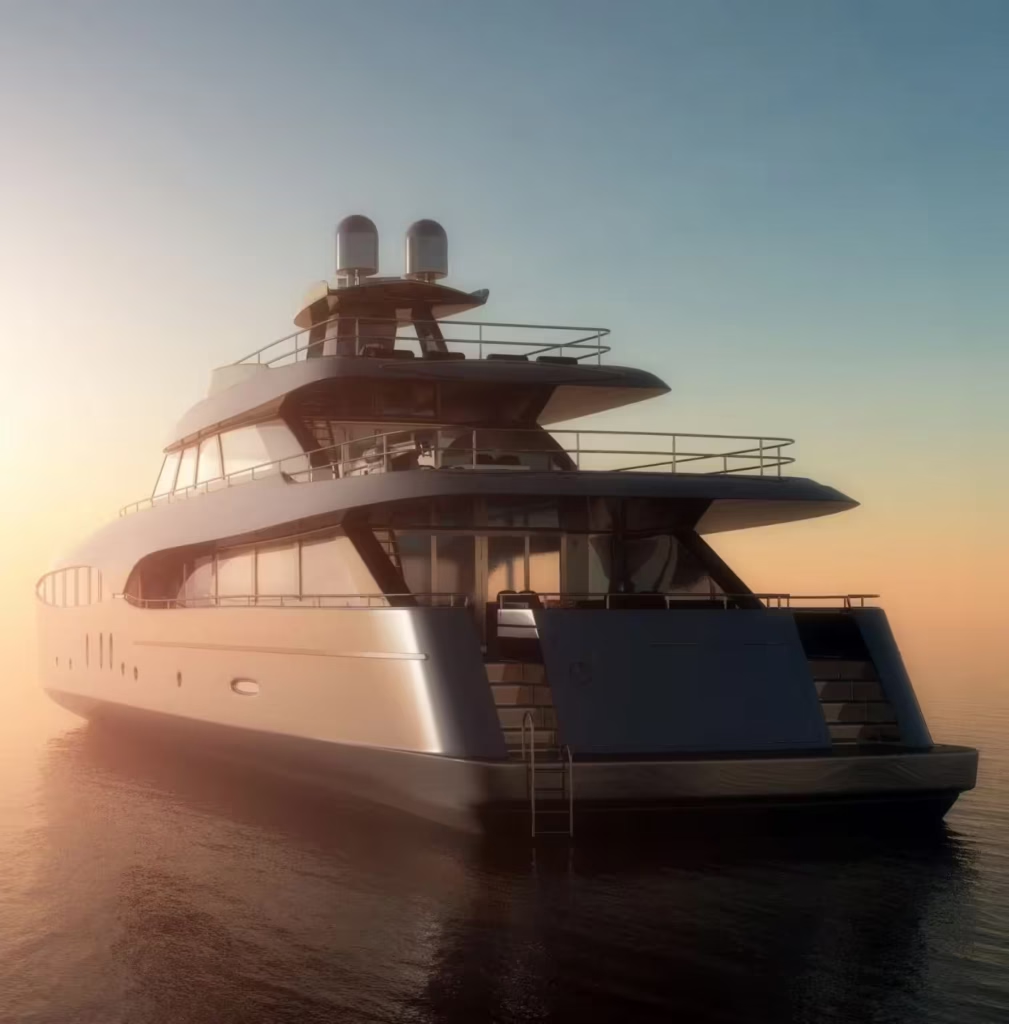
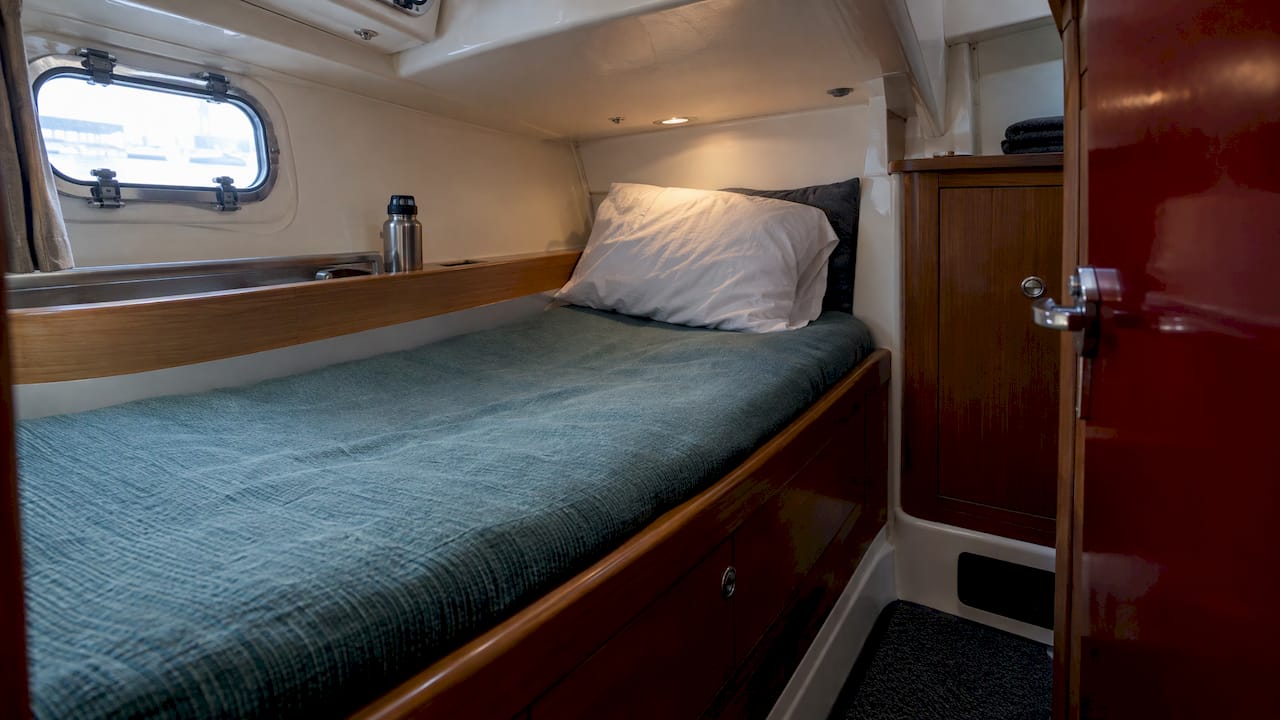
Crew cabin standards for yachts come from the Maritime Labour Convention (MLC) 2006, Title 3, which your flag state turns into its own detailed rules. They cover headroom, berth size, floor area, storage, ventilation, lighting, noise, sanitary facilities and fire safety. Which of them bind you depends on two things: whether the yacht is ordinarily engaged in commercial activities, and which flag it sits under. This guide sets out the figures that matter and the questions to settle before you draw a single cabin.
باختصار شديد
- MLC 2006 applies to ships ordinarily engaged in commercial activities. Ships not ordinarily engaged in commercial activities fall outside its scope, so private and charter yachts are treated differently.
- Typical flag-state figures: clear headroom of at least 2.03 m, a clothes locker of at least 475 litres per person, and a drawer or equivalent space of at least 56 litres.
- Berth size and floor area depend on gross tonnage and flag. For new UK vessels under 200 GT, berths are at least 190 by 70 cm, or 198 by 80 cm over half their length.
- Ventilation, lighting, noise, sanitary spaces and escape routes are all regulated, and the flag state’s notices set the detail.
- Choose the flag before the cabin layout, because the flag decides which numbers you design to.
جدول المحتويات
- Which rules govern crew cabin design
- Private, charter and commercial yachts
- Headroom, floor area and berth size
- Furniture, storage and finishes
- Ventilation, lighting, noise and sanitary spaces
- Fire protection and escape routes
- A cabin design checklist
- Why the flag decides your numbers
- Perspective
- Registering the yacht once the interior is settled
- الأسئلة الشائعة
- المصادر
Which rules govern crew cabin design
The starting point is MLC 2006, Title 3, Regulation 3.1. It sets out accommodation requirements including room size, heating and ventilation, noise, sanitary facilities and lighting. It is deliberately general. Each flag state publishes its own notice or ordinance giving the actual dimensions, and those are the numbers a surveyor checks you against.
The Convention applies to vessels engaged in international voyages, or flying a member State’s flag and operating from or between ports in another country, subject to stated exclusions. Classification guidance on MLC Title 3 also notes that flag-state criteria may apply on top of the Convention.
In practice you work with three layers:
- The Convention text, which sets the principles and some hard figures such as locker volumes.
- The flag state’s implementing rules, which turn those principles into floor areas, berth sizes and ventilation rates.
- Class rules or fire-safety codes, which add structural, thermal and fire requirements if the yacht is classed.
That is why a cabin that passes under one flag can need changes under another. The practical consequence is simple: confirm the flag first, then read that flag’s accommodation notice in full.
Private, charter and commercial yachts
The line that matters most is commercial use. The MLC applies to ships ordinarily engaged in commercial activities, and ships not ordinarily engaged in commercial activities fall outside its scope. A yacht used purely privately by its owner is therefore treated differently from a charter yacht or a commercial vessel.
That does not make crew comfort irrelevant on a private yacht. Many owners and builders design to the MLC figures anyway, for three reasons:
- the yacht may later enter charter, and retrofitting cabins is far more expensive than building them right;
- a resale buyer or their surveyor will often look at accommodation against the MLC benchmark;
- good crew accommodation helps retain good crew.
For a charter yacht or commercial operator, the standards are not optional. Your flag state will expect compliance, and the cabin plans form part of what is inspected for MLC certification.
A related question is how many people you can legally carry and what documents the yacht needs. Our guide to minimum safe manning for yachts covers that side, which feeds directly into how many berths you need.
Headroom, floor area and berth size
These are the numbers designers ask about first. They vary by flag and tonnage, so the examples below show the range rather than one universal figure.
Headroom
For vessels constructed on or after 20 August 2013, Barbados requires minimum clear headroom of 2.03 metres in accommodation. Germany’s ordinance sets a similar figure of at least 203 cm for merchant ships with keels laid after 1 November 2019. Treat 2.03 m as the working benchmark for new builds, and check whether your flag allows any reduction in specific spots such as under deckheads or beams.
Floor area
Germany’s ordinance gives a clear example of how area scales with size. Single-berth rooms need a minimum of:
| Gross tonnage | Minimum floor area, single berth |
|---|---|
| Under 3,000 GT | 4.5 m² |
| 3,000 to under 10,000 GT | 5.5 m² |
| 10,000 GT or over | 7.0 m² |
Most yachts sit at the bottom of that scale, but your flag state may set its own thresholds for smaller vessels. The German ordinance also requires private rooms, subject to exceptions, which is the direction most flags have moved.
Berth dimensions
The German ordinance specifies berths of 200 by 80 cm, or 198 by 80 cm on fishing vessels. For smaller commercial yachts, the UK is the reference many owners use. Under MGN 601 (M) Amendment 1, new UK vessels under 200 GT need berths of at least 190 by 70 cm, or at least 198 cm long and 80 cm wide over half their length.
A sensible design habit: draw the berth at the larger figure, then see what you can trim only if your flag allows it. Going the other way means rebuilding.
Furniture, storage and finishes
The Convention is specific here. Under Regulation 3.1, each occupant must have a clothes locker of at least 475 litres and a drawer or equivalent space of at least 56 litres. The locker must have a shelf and a lock. Each room must also have a table or desk and comfortable seating.
Two design points follow from that:
- Volumes are per person. In a twin cabin, you need two lockers meeting the figure, not one shared. Check the usable internal volume of a hanging locker after you have accounted for hull curvature and sloping sides.
- Surfaces matter. UK guidance in MGN 481 (M) says interior finishes and furniture in crew accommodation should be easy to clean and should not harbour dirt or vermin. Specify smooth, sealed laminates and avoid open grooves and fabric-lined voids where cleaning is hard.
If you are planning a refit of crew areas, our note on yacht interior refit compliance lists what owners should check before work starts.
Ventilation, lighting, noise and sanitary spaces
Ventilation and air conditioning
Barbados’ bulletin requires adequate ventilation in sleeping and mess rooms, and says air-conditioning must suit marine conditions, avoid excessive noise or vibration, and be easy to clean and disinfect.
For small UK vessels the numbers are explicit. On new vessels under 200 GT intended for voyages of 200 miles or more, or for tropical waters, MGN 601 (M) Amendment 1 requires mechanical ventilation giving 6 air changes per hour. Sanitary spaces must exhaust independently to open air. The same notice records that the UK has adopted the MLC exemption from the air-conditioning requirement for ships under 200 GT.
In design terms, that means a separate extract for each head, not a shared duct back into the cabin corridor.
Lighting and noise
Barbados requires both natural and artificial lighting, including 200-lumen reading lamps at sleeping-room berths. Noise limits refer to the specified ILO and IMO codes, so involve your naval architect early. Crew cabins near engine rooms, thrusters, stabiliser rooms or generators are where noise problems usually appear, and acoustic insulation is cheapest at build stage.
Sanitary facilities
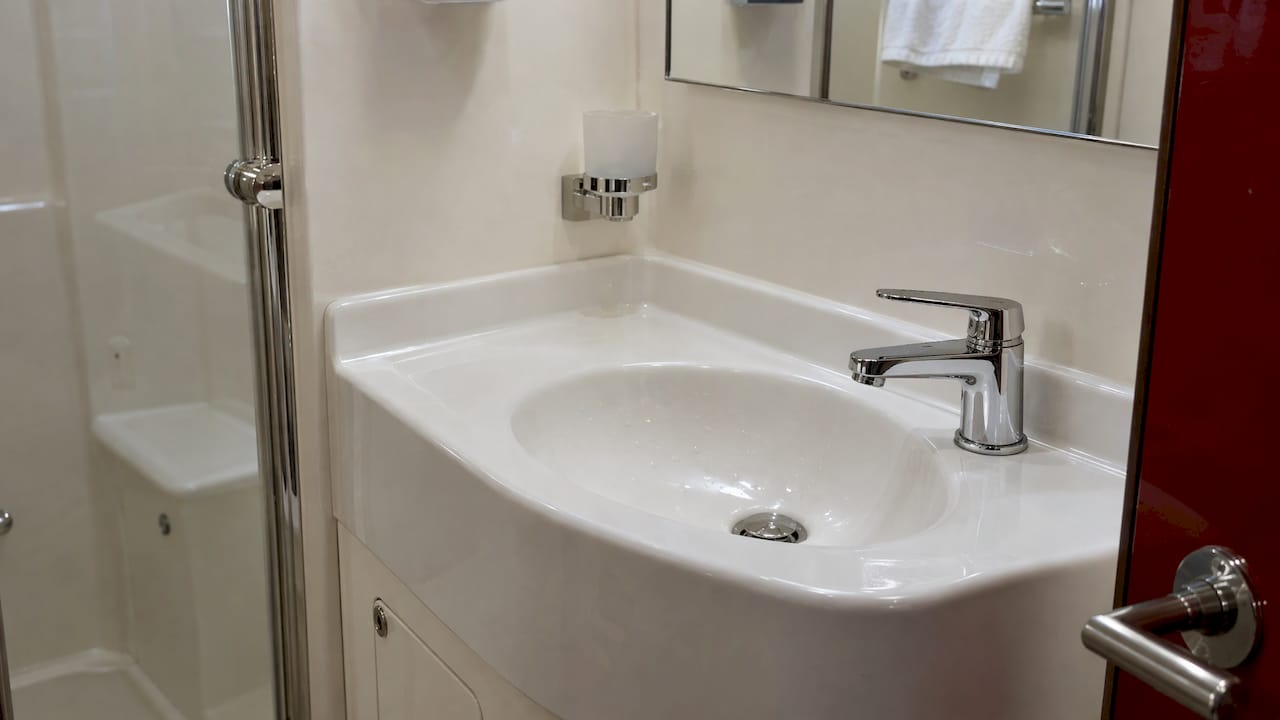
Washbasins and tub baths should be adequately sized and have a smooth surface not liable to crack, flake or corrode, according to the Cayman Islands’ MLC notice. Specify solid-surface or marine-grade finishes and sealed joints in crew heads and showers.
Fire protection and escape routes
Sleeping accommodation is one of the most scrutinised areas on any vessel. Under UK guidance in MGN 629 Part 9, sleeping accommodation must be equipped with fire detection systems, and emergency escape hatches or doors must be operable from both sides without special tools.
On escape, the IMO fire safety provisions on means of escape say that in regularly manned or accommodated areas two separate escape routes should be provided where practicable. Routes should be accessible and unobstructed, and marked by lighting or photoluminescent indicators. The Administration may permit one route.
For crew cabins below deck, this shapes the layout early:
- avoid a single corridor as the only way out where a second route can be arranged;
- keep hatches clear of fixed furniture;
- agree detector positions with the fire-safety designer before joinery drawings are final.
A cabin design checklist
Use this before you sign off crew accommodation drawings:
- Confirm vessel use. Private, charter or commercial?
- Confirm the flag and download its accommodation notice.
- Check gross tonnage against the floor-area bands.
- Headroom: 2.03 m clear is the common benchmark for new builds.
- Berths: check length and width against the flag’s figures, including any half-length rule.
- Storage: per person, a locker of at least 475 litres with shelf and lock, plus a drawer or equivalent space of at least 56 litres.
- Table or desk and seating in each room.
- Ventilation: adequate in sleeping and mess rooms, independent exhaust from sanitary spaces.
- Lighting: natural and artificial, with a reading lamp at each berth.
- Fire detection and two escape routes where practicable.
- Cleanable finishes throughout.
Why the flag decides your numbers
The examples above come from Germany, Barbados, the UK and the Cayman Islands. They are similar in principle and different in detail, which is exactly the point. A yacht designed to one flag’s berth size or ventilation rate may need rework if it moves to another.
If you are still choosing, our comparison of Poland, San Marino and UK Part 1 registration sets out how those flags differ for owners. Settling the flag before final interior drawings avoids redesign later.
Perspective
Owners tend to treat crew cabins as the last item on the interior list. We see the opposite pay off: decide the flag and the intended use first, then design the crew quarters to that flag’s notice.
Our work is registration, not naval architecture, and we do not design cabins. What we see every week is yachts whose paperwork and interior plans were prepared separately. When the flag is chosen late, the accommodation has to be reviewed again against a different notice.
Our practical advice is to settle the registration route early, because we prepare and file applications under eight flags and can tell you what each registry will expect to see. The registry issues the certificates. We prepare the file and keep the process organised, remotely, with published one-off prices.
If a yacht may move into charter later, design the crew areas to the stricter figures from day one. It is the cheaper path every time.
VesselFlag
Registering the yacht once the interior is settled
Vessel Flag is a private consultancy. We prepare and file yacht registration applications; the flag registries issue the certificates. Published one-off prices start from €320 for Poland, from €290 for San Marino and from €550 for UK Part 1. Malta starts from €849 and Palau from €700. Marshall Islands is a €250 service fee plus registry fees, and Cayman Islands a €450 service fee plus registry fees.
We also arrange MMSI numbers and ship radio licences: €149 for Poland, €150 for the UK and €200 for San Marino, VAT included, with no annual fees. For interiors, insurance and transport enquiries, see our صفحة الخدمات. To compare routes, start with the UK Part 1 yacht registration أو تسجيل علم بولندا pages.
الأسئلة الشائعة
Do private yachts have to meet MLC crew cabin standards?
The MLC applies to ships ordinarily engaged in commercial activities, and ships not ordinarily engaged in commercial activities fall outside its scope. A purely private yacht is therefore treated differently. Many owners still build to MLC figures so the yacht can enter charter later without rework.
What is the minimum headroom in a crew cabin?
Flag states commonly set 2.03 m of clear headroom for newer vessels. Barbados applies it to vessels built on or after 20 August 2013, and Germany applies 203 cm to ships with keels laid after 1 November 2019. Check your own flag’s notice for the exact rule.
How big must a crew berth be?
It depends on the flag and tonnage. For new UK vessels under 200 GT, berths must be at least 190 by 70 cm, or at least 198 cm long and 80 cm wide over half their length. Germany specifies 200 by 80 cm for merchant ships.
Does each crew member need their own locker?
Yes. MLC Regulation 3.1 sets a clothes locker of at least 475 litres and a drawer or equivalent space of at least 56 litres for each occupant. The locker needs a shelf and a lock.
المصادر
- MLC 2006, Title 3, Regulation 3.1
- Guide for Compliance with the ILO Maritime Labour Convention, Title 3
- Cook Islands MLC Guidance Document
- Barbados Bulletin 028, accommodation standards (PDF)
- Barbados Bulletin 028, accommodation standards (web page)
- MGN 601 (M) Amendment 1, UK crew accommodation for small vessels
- MGN 481 (M)
- Cayman Islands MLC crew accommodation notice
- MGN 629 Part 9, outfit and structural fire protection
- IMO means of escape provisions
Ready to register? See the relevant flag page, such as UK Part 1 yacht registration, then book a consultation and we will prepare your application.
موصى به
- الامتثال لمتطلبات تجديد التصميم الداخلي لليخوت: ما يجب على المالكين التحقق منه
- الحد الأدنى الآمن للطاقم على متن اليخوت: من يحتاج إلى وثيقة
VesselFlag is a private consultancy that prepares and files yacht registration applications for owners. We are not a government body or flag registry; certificates are issued by the relevant registry. This article is general information, not legal advice.