

TL;DR:
- Langkawi registration is an open Malaysian yacht registry allowing anyone to register vessels without local ownership or residency, offering significant duty-free benefits. The process is fast, typically taking about a week, and requires notarized ownership documents, technical specifications, and name options. While cost-effective and efficient, the flag has limited global recognition, which may impact insurance and port acceptance in some regions.
If you’ve been researching flag options for your yacht or commercial vessel, you’ve likely come across the term “Langkawi registration” and found surprisingly little plain-English explanation of what it actually means. What is Langkawi registration? At its core, it’s an open international yacht registry based in Malaysia that allows vessel owners of any nationality to register under a Malaysian flag, accessing significant financial benefits without requiring local ownership, residency, or a local agent. This article walks you through definitions, documentation, real advantages, honest limitations, and how it compares to competing registries.
جدول المحتويات
- Key takeaways
- What is Langkawi registration: definitions and legal basis
- The Langkawi registration process and required documents
- Benefits and advantages of Langkawi registration
- Considerations and limitations you should know
- How Langkawi compares to other yacht registries
- My perspective on Langkawi registration
- Ready to register your vessel under the Langkawi flag?
- الأسئلة الشائعة
Key takeaways
| نقطة | التفاصيل |
|---|---|
| Open to all nationalities | Langkawi registration has no residency or local ownership requirements for foreign vessel owners. |
| Significant duty-free benefits | Registered vessels are exempt from import duties and sales tax under Langkawi’s duty-free status. |
| Fast processing timeline | Registration typically completes within one week through digital document submission. |
| Not proof of ownership | The Certificate of Registry confirms nationality and status only, not legal ownership of the vessel. |
| Limited global recognition | The flag is growing but still less widely recognized than traditional registries like Malta or the Cayman Islands. |
What is Langkawi registration: definitions and legal basis
إن Langkawi International Yacht Registry (LIYR) is an open international registry established under the Malaysia Marine Department. It was created in 2003 specifically to attract foreign vessel owners by offering a simplified, duty-free registration framework. The registry is governed by the Langkawi International Yacht Registry Act, 2003, which defines the eligibility rules, documentation requirements, and the rights and obligations of registered vessel owners.
What makes it genuinely unique is its open structure. The LIYR is open to all nationalities with no requirement for local ownership or Malaysian residency. You don’t need a Malaysian partner, a locally incorporated company, or even a local representative to maintain your registration. That openness sets it apart from many traditional flag states that impose citizenship or residency conditions on at least one owner or director.
Eligibility under the LIYR covers a wide spectrum:
- Private yachts and pleasure craft of any size
- Commercial vessels used for charter or trade
- Vessels with unlimited tonnage, length, and type
- New builds as well as previously registered vessels
- Vessels from any country of origin
Langkawi flagged vessels fly a civil ensign with a Malaysian flag canton, giving them clear national identification at sea. The registry operates under IMO standards, which means the flag carries internationally recognized maritime compliance credentials.
The Langkawi registration process and required documents
Many owners assume the Langkawi registration process is complicated. It’s actually one of the more straightforward yacht registry procedures available if you prepare your documents correctly from the start.
Here’s how the registration process works, step by step:
- Submit three preferred vessel names. The LIYR requires three name choices in order of preference. They check availability and assign the first available option.
- Provide notarized evidence of title. This means a notarized Bill of Sale or ownership document showing a clear chain of title. Photocopies are not accepted.
- Submit technical specifications or CE certification. For vessels built to European standards, CE certification covers this requirement. Non-CE vessels need full technical specifications.
- Provide a deletion certificate if the vessel is currently registered elsewhere. You cannot hold registration in two flag states simultaneously. The deletion certificate proves the previous registration has been closed.
- Complete due diligence documentation. This includes owner identity verification, an engagement letter, and any corporate documents if the owner is a company rather than an individual.
- Submit digitally and pay applicable fees. The entire package can be submitted electronically, which speeds up the process considerably.
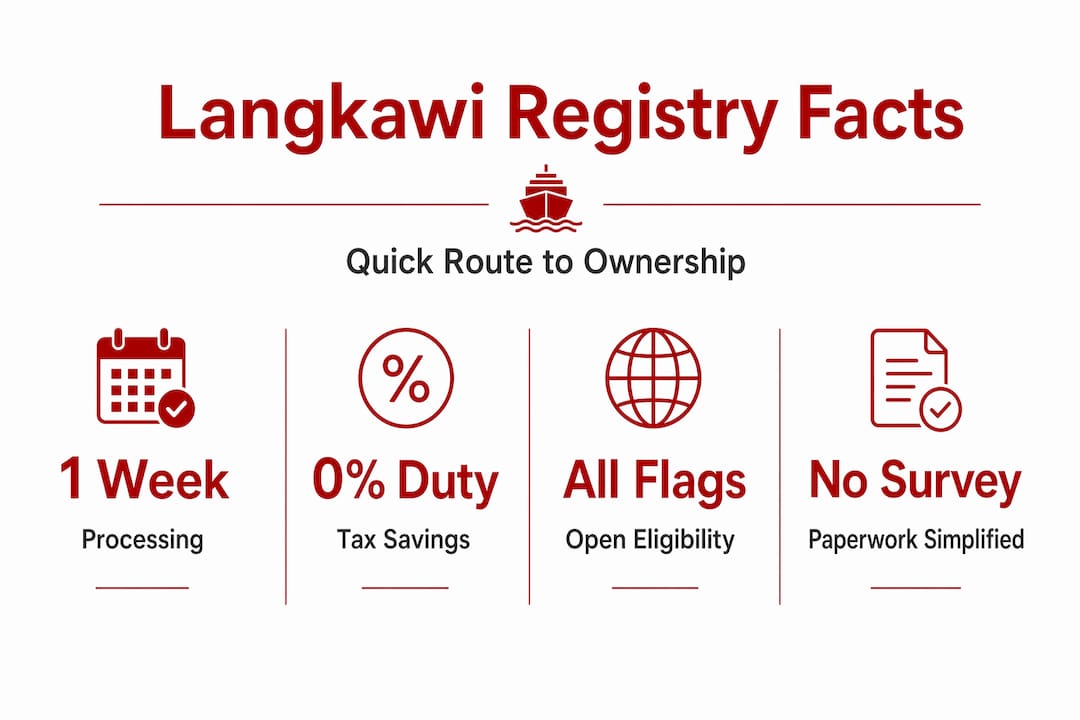
Registration typically completes within one week once all documents are received and verified. A provisional certificate is issued immediately in many cases and is valid for up to three months, allowing you to operate legally while the permanent Certificate of Registry is processed. The permanent certificate remains valid indefinitely unless the registration is deleted or terminated under the Act.
Pro Tip: The most common reason for registration delays is incomplete notarization. Make sure every ownership document is notarized by a certified public notary, not just witnessed or signed. An apostille may also be required depending on your country of origin.
You can also review the full documentation checklist for commercial vessel registration if your use case involves charter or commercial operations.
Benefits and advantages of Langkawi registration
This is where Langkawi genuinely earns its appeal. The benefits are real, measurable, and relevant to both private yacht owners and commercial operators.
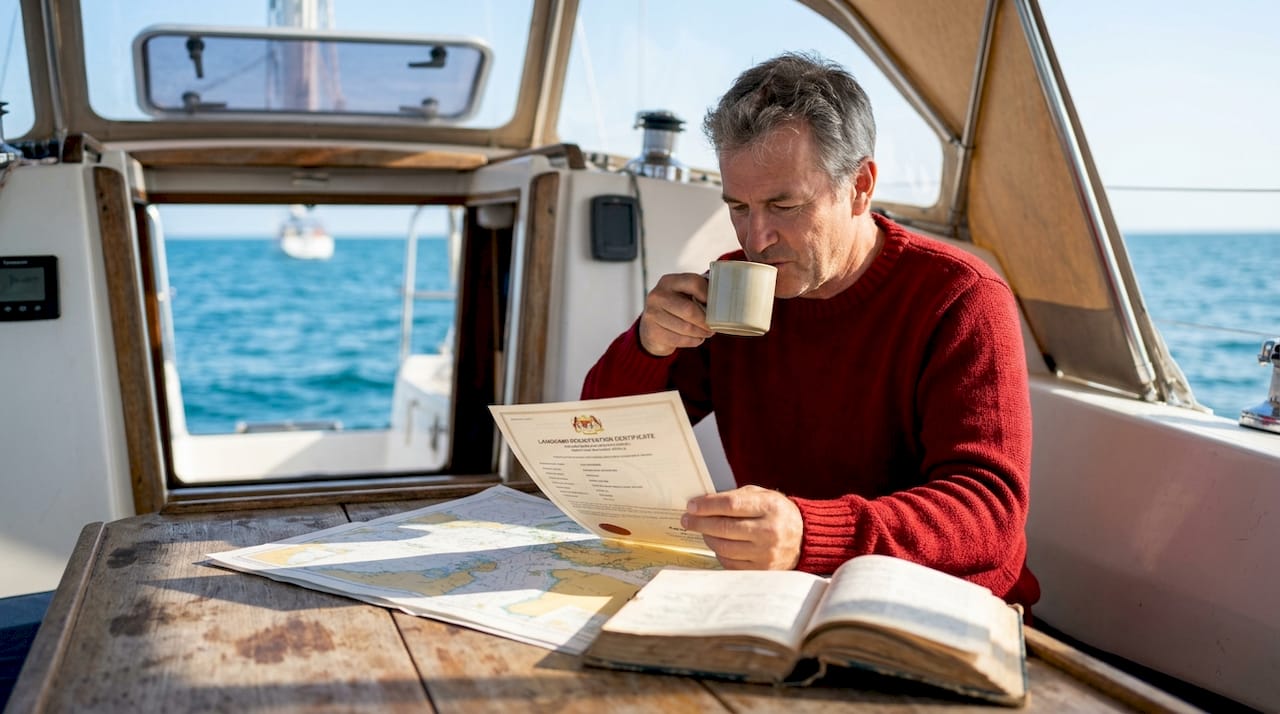
The single biggest financial draw is duty-free status. Langkawi registered yachts are exempt from import duties and sales tax as part of the island’s broader duty-free designation. For high-value vessels or those importing expensive equipment, that exemption translates into substantial savings. It’s the kind of advantage that pays for multiple years of registration fees in a single customs encounter.
Beyond duty-free status, the operational benefits are equally attractive:
- No local agent required. Unlike many flag states, the LIYR does not mandate a local representative or agent to maintain registration in good standing.
- No survey for vessels under 24 meters. Yachts up to 24 meters are not required to undergo a formal survey as part of the registration process, reducing both cost and time.
- IMO compliance. The registry operates under IMO standards, giving it legitimate international standing for port entry and customs clearance in most jurisdictions.
- Marine mortgage registration. Owners can register marine mortgages against their vessels through the LIYR, which is a meaningful tool for financing arrangements.
- No nationality or residency restriction. Any individual or company, regardless of country, can register without partnership requirements.
“The primary appeal of Langkawi registration is its duty-free status, exempting vessels from import duties and sales tax, representing a major financial advantage for international owners.” Pen Marine
For businesses running charter fleets or managing multiple vessels, the combination of no mandatory agent, no survey requirements for smaller vessels, and duty-free access creates a genuinely cost-efficient operational structure. You can explore the full breakdown of yacht registration benefits across different registries to see how Langkawi stacks up for your specific situation.
Considerations and limitations you should know
No registry is perfect, and Langkawi is no exception. Understanding the limitations before you commit is exactly how you avoid frustration later.
The most significant challenge is global recognition. The Langkawi flag is still gaining international acceptance and is less recognized in many jurisdictions compared to established registries like Malta, the British Cayman Islands, or Gibraltar. That gap in recognition can create practical problems.
Here are the key limitations to weigh carefully:
- Insurance complications. Some marine insurers are unfamiliar with the LIYR or apply higher premiums to vessels flying less-recognized flags. You may need to shop harder for competitive coverage.
- Port acceptance. In certain regions, port authorities or customs officials may be less familiar with LIYR documentation, causing occasional processing delays.
- The Certificate of Registry is not proof of ownership. This is a point many first-time registrants miss. The Certificate of Registry confirms nationality and registration status only. Ownership is established through notarized documents like a Bill of Sale. Keep those separate documents secure and accessible.
- Annual renewal obligations. Tonnage-based annual fees apply, and the renewal process must be maintained consistently to keep the registration valid.
- Original and notarized documents are mandatory. The LIYR does not accept unverified copies for core ownership documents. Submitting unnotarized paperwork is one of the fastest ways to stall your registration.
For owners whose routes take them primarily through Southeast Asian waters, the recognition issue is far less pronounced. For those planning extended passages through the Mediterranean or the Caribbean, pairing your Langkawi flag with thorough documentation and vessel insurance from a boating compliance-familiar insurer is a smart precaution.
How Langkawi compares to other yacht registries
Context matters when choosing a flag state. Here’s how Langkawi stacks up against several popular alternatives:
| Registry | Residency required | Survey required | Duty-free | Processing time | الاعتراف العالمي |
|---|---|---|---|---|---|
| Langkawi (LIYR) | لا يوجد | No (under 24m) | نعم | ~1 week | Growing |
| مالطا | لا يوجد | نعم | لا يوجد | 2 to 4 weeks | Strong |
| جزر كايمان | لا يوجد | نعم | لا يوجد | 2 to 4 weeks | Very strong |
| جبل طارق | لا يوجد | نعم | Partial | 2 to 3 weeks | Strong |
| UK Part 1 | لا يوجد | نعم | لا يوجد | 3 to 6 weeks | Very strong |
Langkawi wins on speed and operational simplicity. For owners who prioritize fast turnaround, minimal bureaucracy, and cost savings through duty-free access, it is genuinely competitive. The tradeoff is that you sacrifice some of the global name recognition that comes with a Malta or Cayman Islands flag.
The practical decision usually comes down to where you sail most frequently and how your insurance and financing arrangements are structured. You can review a global registration comparison to see how different flag states perform across regions.
My perspective on Langkawi registration
I’ve worked with vessel owners across dozens of registries, and the Langkawi registry is consistently underestimated. Most of the skepticism I hear comes from owners who assume that a less well-known flag means a less legitimate one. That’s not what I’ve found.
What I’ve seen in practice is that LIYR’s efficiency is real. The one-week processing window isn’t marketing. When documentation is properly prepared, it holds. And the duty-free benefit is not theoretical. It’s the kind of tangible saving that shows up immediately on the first equipment import or provisioning run.
The area where I think owners get into trouble is treating the Certificate of Registry as their primary ownership document. It isn’t. I’ve seen situations where owners couldn’t prove ownership quickly in a foreign port because they didn’t keep their Bill of Sale accessible. That’s not a Langkawi-specific problem, but it’s amplified when port officials are already less familiar with your flag.
My honest take: Langkawi is an excellent choice for owners operating primarily in Southeast Asia or anyone who values speed, cost efficiency, and minimal bureaucratic overhead over maximum international prestige. It’s not the right flag for every vessel or every route, but it’s far more capable than its reputation suggests.
— VesselFlag
Ready to register your vessel under the Langkawi flag?
Langkawi registration offers a genuinely attractive combination of speed, financial benefits, and open eligibility that few registries can match. But getting the documentation right from the start is what separates a smooth one-week registration from a drawn-out revision process.
Vesselflag specializes in Langkawi yacht registration and handles the full process, from document preparation and due diligence to certificate issuance and renewal management. Whether you’re registering a private yacht or a commercial vessel, the team at Vesselflag ensures your application is complete, compliant, and processed without unnecessary delays. Explore Langkawi flag registration services or get a full breakdown of international owner registration steps to understand exactly what to expect before you begin.
الأسئلة الشائعة
What is Langkawi registration for vessels?
Langkawi registration refers to registering a yacht or boat under the Langkawi International Yacht Registry (LIYR), an open international registry established in Malaysia in 2003 that allows owners of any nationality to register vessels without residency or local ownership requirements.
How long does the Langkawi registration process take?
Registration typically completes within approximately one week once all required documents, including notarized ownership evidence and technical specifications, are submitted digitally and pass due diligence review.
What documents are required for Langkawi registration?
Key documents include three preferred vessel names, notarized evidence of title, CE certification or technical specifications, a deletion certificate from any previous registry, and owner identification for due diligence purposes.
Does Langkawi registration prove vessel ownership?
No. The Certificate of Registry issued by LIYR confirms the vessel’s registration status and nationality, but legal ownership must be established through separate notarized documents such as a Bill of Sale.
Is the Langkawi flag accepted internationally?
The LIYR operates under IMO standards and is recognized in many jurisdictions, but it has less global acceptance than established registries like Malta or the Cayman Islands, which can occasionally affect insurance arrangements and port processing in certain regions.